Whether you are looking to sharpen your focus during a morning coffee break or seeking a deeper way to challenge your linguistic processing speed, engaging in word chain and construction puzzles offers a uniquely satisfying workout for the brain. These activities go far beyond simple vocabulary recall; they require you to balance creative flexibility with rigorous logical constraints. By exploring the mechanics of these word puzzle games, you can unlock new levels of mental agility that translate into better problem-solving skills in your daily life.
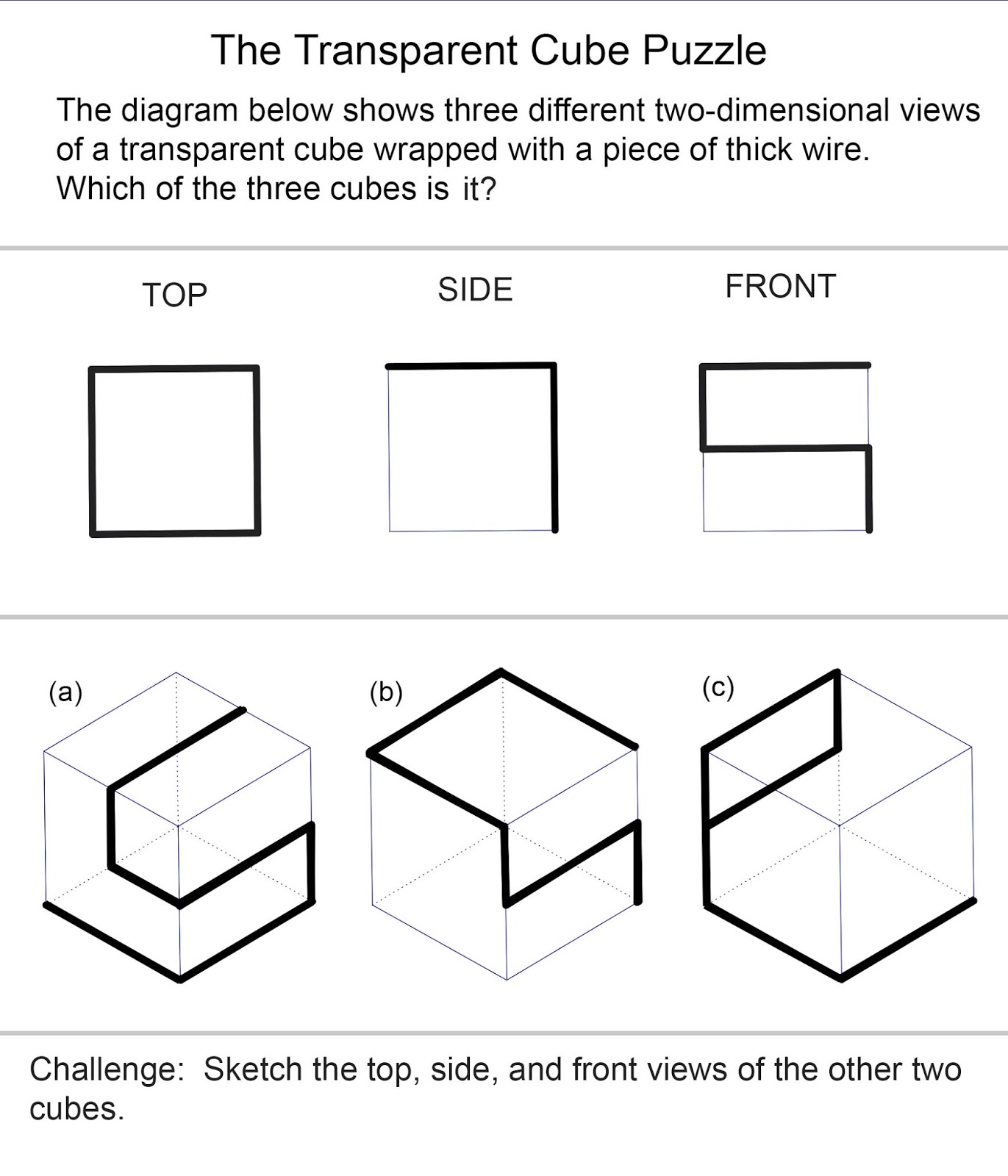
In this guide, we will break down the fundamental logic behind successful word chains and the advanced construction techniques required to master more complex puzzles. We will also explore how these challenges mirror lateral thinking riddles, forcing you to look at familiar language structures in entirely new ways. By the end, you will have a clear, actionable pathway to improving your pattern recognition games proficiency and strengthening your overall cognitive sharpness. If you enjoy testing your brain through these types of mental exercises, you might also find our spatial reasoning riddles to be an excellent complementary training tool.
1. Mastering Word Chain and Construction Mechanics for Cognitive Development
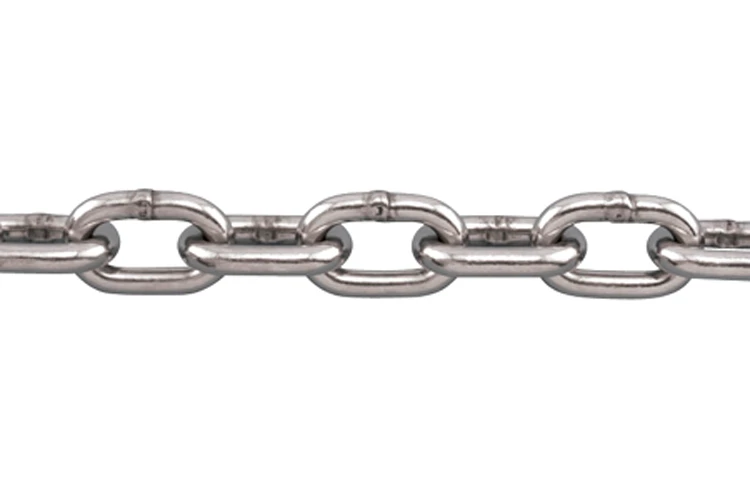
Word chain and construction represent more than just casual entertainment; they are rigorous brain workouts that demand precision, speed, and creative flexibility. By engaging with these puzzles, you aren’t just passing time—you are actively participating in a form of intellectual conditioning that bridges the gap between basic vocabulary recall and complex lateral thinking.
1.1 The Fundamentals of Word Chain Logic
The core of these puzzles lies in the strict application of constraints. Whether you are participating in a simple round of “last-letter linking” or navigating intricate linguistic webs, understanding the mechanics of sequence is vital.
1.1.1 Rules of engagement for classic last-letter linking
The standard format requires that the last letter of the current word becomes the first letter of the next. The challenge escalates quickly when you implement a “no-repeat” rule, which forces players to exhaust their primary vocabulary banks and dig into less-frequently used lexicon, effectively expanding the mental search space.
1.1.2 Navigating thematic and constraint-based chain variations
Moving beyond simple linking, thematic chains require players to categorize words within a specific domain, such as science or history. Constraint-based puzzles add layers of difficulty by prohibiting certain letters or requiring specific vowel placements, pushing players to practice problem solving educational quests that mirror real-world analytical hurdles.
1.1.3 Why linguistic agility is essential for mental sharpness
Linguistic agility is the brain’s ability to pivot between different semantic and structural requirements. Developing this skill keeps neural pathways flexible, allowing for faster processing of information and more efficient communication in daily life.
1.2 Techniques for Advanced Word Construction
Moving into advanced territory requires a shift from passive recognition to active manipulation of language structures.
1.2.1 Deconstructing complex anagrams through root word analysis
Advanced players learn to see past the arrangement of letters by identifying root words, prefixes, and suffixes. By stripping a complex word down to its base, you can more easily identify potential permutations and solve even the most stubborn anagrams.
1.2.2 Using morphological building blocks like prefixes and suffixes
Mastery of morphology—the study of how words are formed—is a secret weapon. When you understand how common affixes modify a root, you unlock hundreds of potential word construction possibilities that remain hidden to those who only look at the word as a single entity.
1.2.3 Solving grid-based word construction challenges systematically
Grid puzzles require a top-down approach. By focusing on the intersections first, you can pin down “anchor letters” that limit the possibilities for the remaining empty spaces, effectively collapsing the complexity of the grid until only the correct solution remains.
1.3 Cognitive Advantages of Linguistic Problem Solving
The benefits of these exercises extend far beyond your ability to finish a puzzle.
1.3.1 Strengthening working memory through sequential retention
Keeping a sequence of words in your head while simultaneously searching for the next link is a prime exercise for your working memory. This constant “buffer” of information helps you maintain focus and improves your capacity to hold multi-step instructions in your mind.
1.3.2 Improving lexical retrieval speed and neural connectivity
Regular practice facilitates faster “lexical access.” Essentially, your brain becomes more efficient at pulling words from your internal dictionary, which reduces the “tip-of-the-tongue” phenomenon and boosts overall cognitive processing speed.
1.3.3 Enhancing pattern recognition skills for non-linguistic applications
Pattern recognition is a universal cognitive skill. The ability to spot structural sequences in word puzzles directly correlates to how you identify trends in data, solve visual puzzles, or navigate complex social situations, making these games a powerful tool for holistic cognitive development.
2. Practical Application and Skill Progression in Word Chain and Construction

2.1 Structured Training Pathways for All Skill Levels
2.1.1 Beginner strategies for thematic vocabulary expansion
For those new to the genre, the best approach is to anchor your play in specific categories. By focusing on themes like geography, biology, or household items, you reduce the massive pool of potential words to a manageable subset. Start by memorizing common letter endings for these categories to build automaticity, as this reduces the cognitive load during fast-paced play.
2.1.2 Intermediate tactics for navigating mandatory letter constraints
As you advance, you will encounter games that enforce strict limitations, such as word length requirements or forbidden letters. Here, pattern recognition games become your strongest asset. Instead of searching for the longest word possible, scan your mental lexicon for “anchor words”—short, common connectors that end in difficult letters like ‘X’, ‘Z’, or ‘Q’. This strategy forces you to think ahead, turning a reactive puzzle into a proactive game of strategy.
2.1.3 Expert maneuvers for reverse-engineering target word chains
Expert players treat these challenges like a grandmaster playing chess. Rather than starting at the beginning, visualize the desired end goal or the total chain structure. By identifying the critical bottlenecks—where a specific letter must transition to another—you can work backward to select words that pave the perfect path. This ability to manipulate strings of text demonstrates high-level linguistic agility.
2.2 Developing a Sustainable Daily Practice
2.2.1 Integrating ten-minute logic drills into your morning routine
Consistency is more vital than intensity when training the brain. Dedicating just ten minutes each morning to word chain and construction exercises primes the neural pathways for the day. You can treat these as a warm-up for your cognitive faculties, much like a physical stretch before a workout, to improve mental focus and alertness.
2.2.2 Tracking performance metrics for speed and vocabulary accuracy
To see genuine improvement, you need objective data. Keep a simple log of your completion times and the number of words generated without hesitation. If you find your progress stalling, you might enjoy exploring top memory concentration builders for sharper focus, which can complement your linguistic training by enhancing your ability to retain sequences.
2.2.3 Choosing the right tools from digital apps to paper-based puzzles
The best tool is one you will actually use. Digital apps provide immediate feedback and adaptive difficulty, while paper-based puzzles allow for a tactile, contemplative experience. Combining both ensures you develop both rapid-fire response speeds and the deep analytical patience required for more complex construction tasks.
2.3 Addressing Common Challenges and FAQ
2.3.1 Overcoming mental blocks when chain possibilities run dry
When you hit a dead end, stop looking for perfect words and switch to root-word modification. Apply common prefixes and suffixes to known words to bridge the gap. This lateral thinking technique often reveals options you might have overlooked in a linear search.
2.3.2 Differentiating word construction from conventional crosswords
While crosswords rely on external definitions and static grids, word construction is inherently generative. It is less about “knowing” the answer and more about “building” one based on existing sequences. This distinction is crucial for understanding how these games uniquely challenge your creative problem-solving skills.
2.3.3 Utilizing logic puzzles for standardized test preparation
Many standardized exams test vocabulary and analogy recognition. Engaging in word chain puzzles regularly improves your morphological awareness, allowing you to deconstruct complex terms and understand how words relate to one another structurally, which directly aids in testing scenarios.
2.3.4 Leveraging collaborative play for social and deductive growth
Word chain and construction games are excellent for collaborative play. When solving with others, you are forced to justify your word choices, which sharpens your deductive reasoning. Discussing the logic behind a difficult connection helps both players expand their vocabulary and learn new strategies from their peers.
Mastering the art of word chain and construction is more than just a way to pass the time; it is a profound exercise in cognitive conditioning. By engaging with these puzzles regularly, you are essentially training your brain to become more agile, improving your lexical retrieval, and honing the pattern recognition skills necessary for complex problem-solving in everyday life. Whether you are navigating the structured constraints of a word chain or deconstructing an anagram, you are actively strengthening your neural pathways and boosting your mental endurance.
We encourage you to start small, perhaps by incorporating a few minutes of word-based challenges into your daily routine. As you progress from simple thematic vocabulary games to more complex linguistic maneuvers, you will find that these skills translate into clearer communication and faster, more confident thinking. For those looking to further challenge their deductive reasoning beyond linguistics, exploring spatial reasoning riddles can provide a fantastic complement to your mental training. Stay curious, keep playing, and enjoy the lifelong journey of sharpening your most valuable tool—your mind.