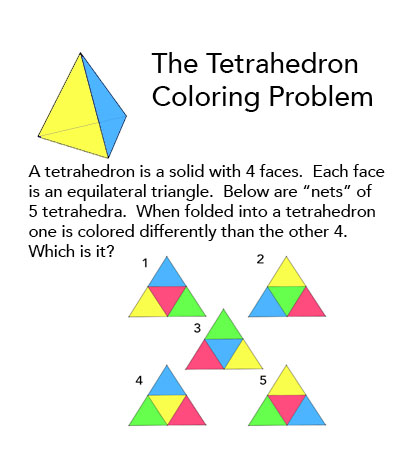
Have you ever looked at a complex object and intuitively understood how its pieces fit together, or found yourself mentally rotating a piece of furniture to see if it would clear a doorway? That ability to visualize and manipulate items in your mind is known as spatial intelligence, and it is a fascinating cognitive skill that can be sharpened through consistent practice. Engaging with spatial reasoning riddles is one of the most effective and enjoyable ways to boost your brain power. By challenging yourself with these mental gymnastics, you train your mind to identify patterns, navigate complex structures, and solve problems with greater efficiency.
In this guide, we will explore the science behind these cognitive exercises and provide you with actionable techniques to enhance your visualization capabilities. Whether you are interested in refining your skills through physics-based object manipulation or simply want to improve your daily problem-solving speed, you will find a wealth of strategies here. Get ready to stretch your mental muscles, master the art of the mind’s eye, and elevate your logical thinking to new heights.
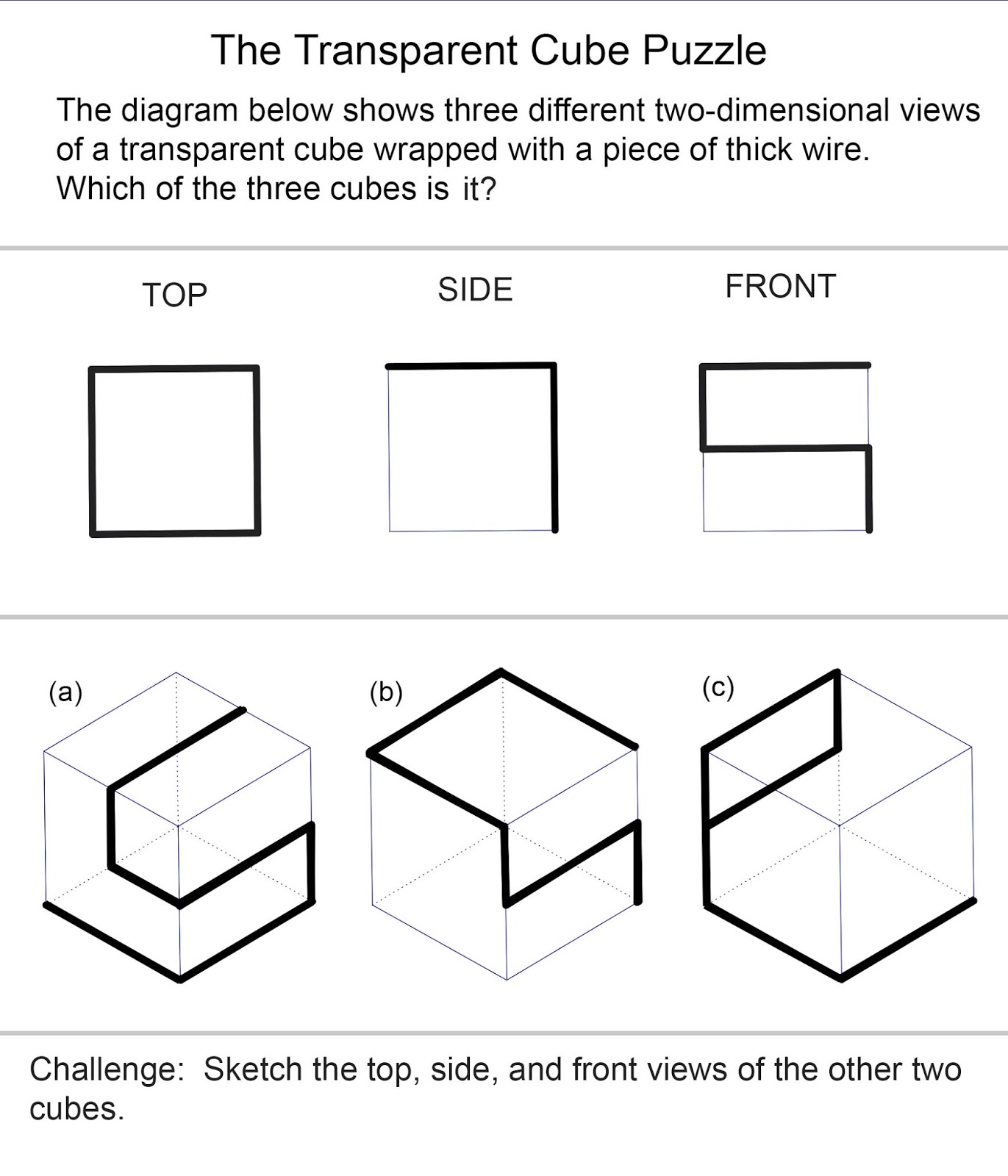
1. Mastering Spatial Reasoning Riddles: Fundamentals and Cognitive Training
1.1 The Science of Spatial Intelligence and Mental Visualization
1.1.1 Defining the link between spatial awareness and cognitive performance
Spatial reasoning riddles are more than just games; they are rigorous workouts for your brain. Spatial intelligence is the ability to visualize, manipulate, and mentally transform objects in two or three dimensions. When you engage with these challenges, you are actively strengthening the connection between your visual processing centers and your executive functions. This cognitive link allows you to navigate complex environments, understand structural relationships, and solve abstract problems with greater efficiency and accuracy.
1.1.2 The role of neuroplasticity in developing advanced visualization skills
The human brain is remarkably adaptable, a trait known as neuroplasticity. By consistently tackling tasks that require mental rotation or perspective shifting, you trigger the growth of new neural pathways. Much like training a muscle, repeated exposure to spatial challenges increases your “mental workspace,” allowing you to hold more complex images in your mind’s eye for longer durations. This physiological development is what transforms an initial struggle with a puzzle into an intuitive ability to grasp spatial relationships instantly.
1.1.3 Why spatial reasoning is a critical pillar of STEM-related success
Spatial ability is a foundational requirement for success in Science, Technology, Engineering, and Mathematics. Whether you are visualizing molecular structures, interpreting architectural blueprints, or debugging complex software architectures, you are using spatial reasoning. If you enjoy sharpening these skills through physics-based object manipulation, you are essentially honing the same mental tools required for high-level engineering and data modeling. By mastering these riddles, you are building the mental agility necessary for technical fields.
1.2 Proven Techniques for Enhancing Your Mental Rotation Abilities
1.2.1 Strategies for manipulating 3D objects within your mind eye
To improve your mental rotation, start by practicing “anchoring.” Instead of trying to flip an entire object at once, focus on identifying one specific landmark or vertex on the shape. As you mentally rotate the object, track how that single point moves in relation to the center. This reduces cognitive load and prevents you from losing your place in your visualization.
1.2.2 How to practice mental paper folding without physical aids
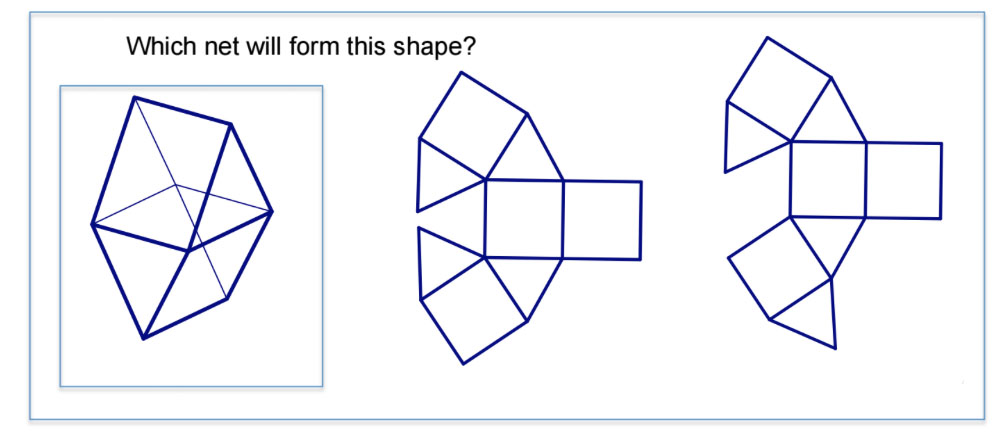
Mental paper folding involves imagining a flat, 2D shape being creased and transformed into a 3D construct. To practice this, look at a flattened 2D pattern (a net) and attempt to predict exactly where each edge will meet once folded. Begin with simple cubes and move toward complex polyhedra. If you find yourself stuck, try to describe the transformation in words—this forces your brain to process the geometry more deeply.
1.2.3 Developing the skill of identifying mirror images and geometric transformations
Mastering mirror images requires you to shift from “what the object is” to “how the object is oriented.” Train your eyes to scan for asymmetry. If an object has a unique protrusion or a specific color pattern, use that as your primary reference point to check for a reflection. By consciously ignoring the general shape and focusing on these specific coordinates, you will quickly become more accurate at detecting even the subtlest geometric transformations.
2. Progressive Spatial Reasoning Riddles and Advanced Problem-Solving
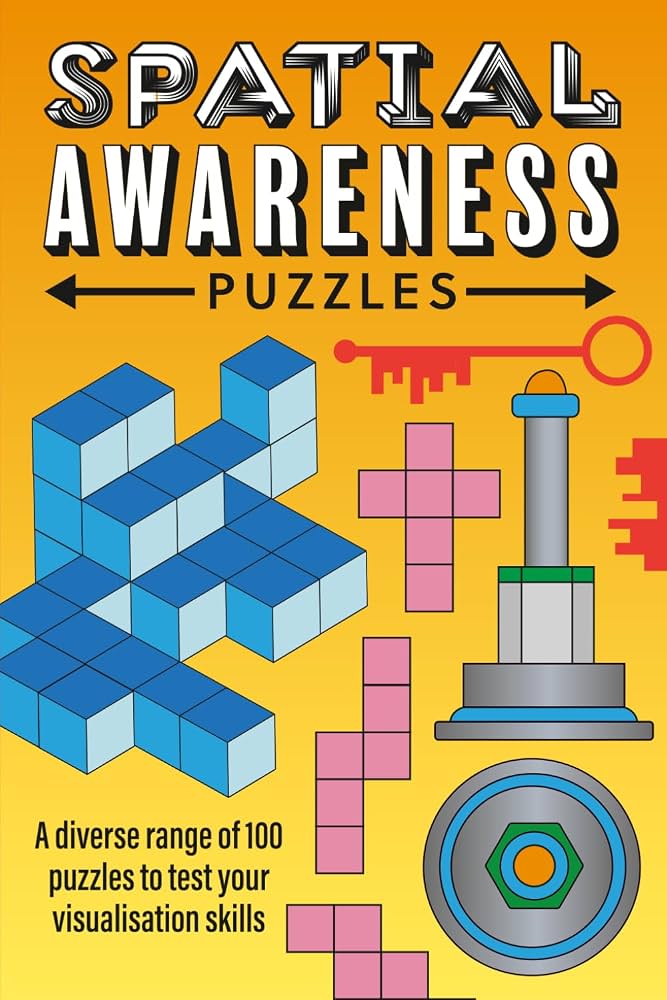
2.1 Tiered Challenges to Sharpen Your Logical Thinking
To truly improve your cognitive agility, you must approach spatial reasoning riddles as a progressive training program. Just like physical exercise, starting with manageable tasks allows you to build the neural architecture necessary for more complex mental manipulations.
2.1.1 Foundational puzzles involving 2D to 3D shape transitions
The first step in your training involves visualizing how flat surfaces transform into volumetric structures. Common exercises include unfolding a cube to determine which faces are opposite one another or predicting how a complex geometric shape looks when rotated. Mastering these transitions helps you build a foundational library of mental models.
2.1.2 Intermediate pattern recognition and symmetry identification exercises
Once you are comfortable with basic rotations, move on to geometric pattern jigsaw tasks. These puzzles require you to identify symmetry axes and repeating sequences within a chaotic field. By breaking down complex visuals into manageable segments, you sharpen your ability to spot irregularities and restore order, which is a vital skill in both logic puzzle games and real-world planning.
2.1.3 Advanced spatial pathfinding for complex mental structures
The most challenging tier involves navigating virtual environments entirely within your mind’s eye. This might include visualizing a path through a three-dimensional maze or predicting the final position of an object after a series of transformations. This practice effectively bridges the gap between static visualization and dynamic, lateral thinking riddles.
2.2 Strategies for Sustainable Brain Development and Long-Term Retention
Consistency is the secret to unlocking higher-level spatial cognition. Instead of sporadic bursts of intense activity, integrate brief, targeted sessions into your daily routine to ensure lasting cognitive growth.
2.2.1 Creating a consistent daily regimen for cognitive workouts
Treat your brain like a muscle. Set aside 10 to 15 minutes each day to tackle block sliding brain teasers or similar challenges. By keeping your brain engaged regularly, you strengthen the neural connections associated with spatial processing, leading to faster and more accurate mental imagery over time.
2.2.2 Tips for analyzing objects from multiple perspectives simultaneously
Try to hold an object steady in your mind while mentally “walking” around it. Imagine viewing the object from above, below, and from the sides without losing focus on the central form. This technique prevents your mind from getting “stuck” on a single perspective and improves your overall object manipulation abilities.
2.2.3 Measuring progress and accuracy in speed-based spatial tasks
Use a timer to track how quickly you can solve specific spatial problems. Recording your time and accuracy allows you to identify areas where your visualization might be lagging. A steady improvement in speed—without sacrificing precision—is a strong indicator that your spatial reasoning skills are reaching a more advanced level.
2.3 Frequently Asked Questions Regarding Spatial Cognition
2.3.1 Addressing the impact of age on spatial reasoning capabilities
It is a common misconception that spatial ability declines inevitably with age. While some natural changes occur, neuroplasticity allows the brain to continue building new pathways throughout adulthood. Regular practice with spatial riddles can effectively counteract cognitive aging by keeping your visualization circuits active and responsive.
2.3.2 Distinguishing between general logic puzzles and spatial intelligence
While both categories fall under the umbrella of problem-solving, they utilize different areas of the brain. General logic puzzles often focus on verbal or numerical sequence patterns, whereas spatial intelligence specifically requires the manipulation of geometric forms and relative positions in space. Both are valuable, but they target distinct cognitive strengths.
2.3.3 Best practices for implementing spatial training for both children and adults
For children, focus on play-based learning using physical blocks and tangible puzzles to bridge the gap to mental imagery. For adults, the focus should shift toward abstract tasks that challenge the limits of mental rotation. Regardless of age, the most effective training involves a sense of curiosity and a willingness to fail, as the act of correcting a mental error is often where the most significant learning occurs.
Mastering spatial reasoning riddles is more than just an entertaining way to pass the time; it is a dedicated workout for your brain that refines how you perceive and interact with the physical world. By consistently challenging yourself with logic puzzle games and mental rotation tasks, you are effectively strengthening the neural pathways responsible for visualization, problem-solving, and structural analysis. Whether you are navigating complex geometric transformations or simply visualizing how objects fit together, the benefits of these cognitive exercises extend far beyond the screen, enhancing your performance in everyday tasks and professional challenges alike.
As you continue your journey toward sharper cognitive agility, remember that consistency is the key to lasting improvement. Even spending a few minutes daily engaging with group puzzle solving or similar mental drills can lead to significant gains in your pattern recognition speed and spatial awareness. Start small, embrace the challenge of difficult puzzles, and enjoy the process of expanding your mental horizons. By staying curious and keeping your brain active, you ensure that your analytical skills remain sharp and adaptable for years to come.