In the digital age, the line between playing a game and building an entire world has blurred significantly. Sandbox creative simulation titles have revolutionized how we interact with software, offering players an expansive digital canvas where the rules of the real world—gravity, friction, and tension—apply in fascinating, emergent ways. By focusing on physics-based object manipulation, these games invite users to become architects, engineers, and scientists within highly responsive virtual environments. Whether you are looking for complex engineering challenges or simply seeking out atmospheric relaxation games that allow you to unwind by experimenting with digital materials, there is a title suited to every playstyle.
In this guide, we will explore the engines that make these simulations possible, examine the technical nuances of object interaction, and curate a selection of the best experiences available today. From accessible free HTML5 games to high-fidelity desktop simulators, you will learn how to master these tools to create your own unique interactive art experiences while optimizing your setup for the best possible results.

1. Mastering Sandbox Creative Simulation Mechanics and Physics Foundations
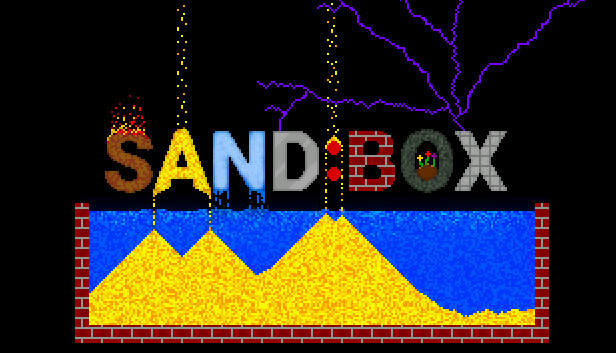
1.1 Defining the Appeal of Emergent Sandbox Gameplay
1.1.1 The Shift from Scripted Narratives to Systemic Interactivity
Modern gaming has seen a significant transition from linear, scripted storytelling toward systemic design. In a sandbox creative simulation, the environment acts as a playground of interconnected rules rather than a directed path. Players are no longer passive observers following a plot; they are experimenters interacting with complex, overlapping systems that generate unpredictable outcomes. This systemic approach transforms every session into a unique narrative authored by the player’s own choices and logical interventions.
1.1.2 Psychological Rewards of Creative Freedom and Unbounded Exploration
The core allure of these titles lies in the psychological satisfaction of agency. When users are granted the tools to build, break, or modify their environment, they engage in a process of cognitive play that fosters both problem-solving and relaxation. These atmospheric relaxation games allow players to enter a state of flow, where the absence of strict win conditions removes performance anxiety, leaving room for pure, intrinsic motivation and imaginative expression.
1.1.3 Balancing Player Agency with Simulation Constraints
True sandbox freedom requires a delicate balance. Developers must provide enough structural “boundaries” to keep the simulation grounded in meaningful logic, while ensuring that player agency remains the primary driver. If a simulation is too restrictive, creativity is stifled; if it is too loose, the world may lack the coherence needed for complex creations. Success in this genre depends on how intuitively the game communicates its limitations to the player, turning those constraints into part of the creative challenge.
1.2 Decoding the Physics Engines Powering Modern Simulations
1.2.1 Rigid Body Dynamics and Structural Integrity Modeling
At the heart of physics based object manipulation are rigid body dynamics. These engines calculate how solid objects—like steel beams or concrete blocks—interact, collide, and rest. Advanced simulations take this a step further by modeling structural integrity, where players must consider load-bearing capacities and center-of-gravity shifts. This creates a realistic feedback loop where a bridge or machine succeeds or fails based on physical laws rather than arbitrary game triggers.
1.2.2 Soft Body Deformation and Material Science Applications
Beyond rigid structures, soft body physics simulate elasticity, plasticity, and friction. Whether it is the realistic crushing of a vehicle frame or the fluid-like behavior of a jelly-based structure, soft body modeling adds a layer of tactile realism. When you understand how materials react to stress, you can apply these principles to create more durable designs, a common theme in racing career management and engineering-focused simulators.
1.2.3 Fluid Dynamics and Thermodynamics in Interactive Environments
High-end simulations often incorporate environmental variables like fluid dynamics and thermodynamics. These elements govern how heat travels through materials, how pressure moves within a vessel, or how liquids flow through pipes. By integrating these systems, developers allow players to create interactive art experiences where fire, water, and gases react to the environment in real-time, providing a profound level of immersion that feels responsive and alive.
1.3 Technical Considerations for Sandbox Simulation Enthusiasts
1.3.1 Why Physics Calculations Demand Significant CPU Overhead
Physics simulations are computationally expensive because every individual object requires constant calculation. Unlike static game assets, every piece in a physics-based world must track its position, velocity, and collision data relative to every other object in the frame. As the number of objects increases, the processor (CPU) must perform exponentially more calculations per frame to maintain the simulation’s integrity, which is why complex physics often become the primary bottleneck in system performance.
1.3.2 Optimizing Hardware for High Object Counts and Complex Calculations
To maintain high frame rates in dense simulations, users often look toward hardware optimization. High-clock-speed processors are generally more beneficial than high core counts for physics because these calculations often run sequentially. Efficient memory usage and optimized GPU compute shaders can also offload some of the burden, but for those pushing the limits of object counts, managing your background processes and ensuring thermal headroom for your CPU is essential for a stable experience.
1.3.3 Troubleshooting Common Simulation Issues Like Physics Jitter and Clipping
Even the best engines encounter issues like “jitter,” where objects vibrate uncontrollably, or “clipping,” where two solid objects pass through each other. These often occur when the simulation’s sub-stepping—the frequency at which it updates its physics calculations—is too low to keep up with high-speed impacts. If you encounter these errors, check for collision layer overlaps or try lowering the density of your creations to give the engine more breathing room.
2. The Ultimate Curated List of Sandbox Creative Simulation Games
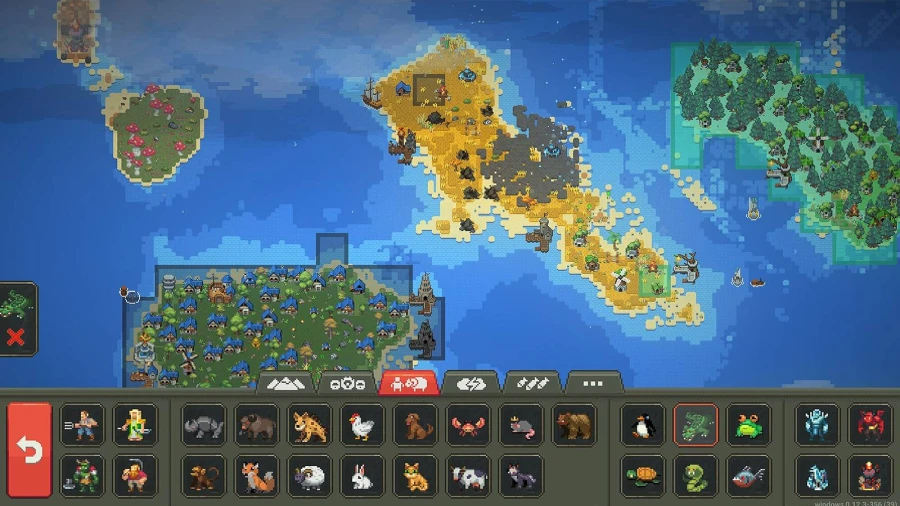
The beauty of a sandbox creative simulation lies in its refusal to dictate how you should play. Whether you are aiming to replicate real-world engineering feats or explore the limits of physics-based object manipulation, these titles provide the digital tools necessary to turn abstract ideas into functional, interactive art experiences.
2.1 Engineering, Architecture, and Kinetic Physics Titles
These games cater to the inner architect, focusing on structural integrity and mechanical logic. By utilizing complex physics engines, these titles allow players to build from the ground up, testing every joint and beam for stability before unleashing the forces of destruction or momentum.
2.1.1 Orbital Mechanics and Space Flight Simulation
For those fascinated by the cosmos, space-faring sims offer a rigorous look at orbital mechanics. Here, you aren’t just piloting a ship; you are calculating fuel consumption, managing thrust-to-weight ratios, and understanding gravity wells to reach stable orbits.
2.1.2 Structural Stress Testing and High Fidelity Demolition
Some simulations focus on the fragility of construction. These games provide detailed tools for structural stress testing, allowing you to build bridges, towers, or machines and see exactly where they fail under load. The satisfaction of observing a building crumble under precise physical constraints serves as a masterclass in material science.
2.1.3 Advanced Vehicle Handling and Suspension Modeling
If you prefer kinetic challenges, titles featuring advanced suspension modeling allow for total control over drivetrain and chassis design. You can refine your skills by exploring racing career management and mastering physics-based vehicle mods to ensure your custom builds can handle the most punishing terrain.
2.2 Molecular, Elemental, and Experimental Simulation Categories
Moving beyond macro-engineering, these simulations delve into the micro-scale of reality, where the rules of chemistry and biology dictate the gameplay loop.
2.2.1 Particle Interaction and Chemical Reaction Simulators
These sandboxes treat the screen as a laboratory. By manipulating elements like heat, cold, and pressure, players can watch how matter interacts at a granular level, creating chain reactions that feel surprisingly organic.
2.2.2 Ecosystem and Environmental Management Systems
These simulations offer a top-down view of life itself. You act as the architect of a biosphere, balancing resource availability with population density to see how different organisms adapt to the environment you have crafted.
2.2.3 Sandbox Tools for Educational Engineering and Science
Modern gaming has blurred the line between play and instruction. Many of these tools are now used as gateways to STEM fields, providing a safe, cost-effective way to iterate on complex scientific hypotheses.
2.3 Maximizing Your Experience Through Customization
To truly master a simulation, you must look beyond the base game. Most successful titles provide an ecosystem of user-generated content that extends their lifespan indefinitely.
2.3.1 The Impact of Modding Communities on Long-term Replayability
Modding communities are the lifeblood of sandbox games. They introduce new assets, physics tweaks, and quality-of-life improvements that keep the experience fresh long after the initial novelty wears off.
2.3.2 Streamlining Workflow for Builders and Perfectionists
High-end simulation requires a balance between creative flow and technical precision. Learning keyboard shortcuts, using asset-snapping tools, and employing mirror-build features can save hours of time, allowing you to focus on the fine details of your project.
2.3.3 Choosing the Right Simulator Based on Your Creative Playstyle
Not every simulator is built for every user. Before investing, determine if you prefer the meditative quality of atmospheric relaxation games or the high-intensity stress of solving complex engineering puzzles.
2.4 Frequently Asked Questions About Physics Simulations
2.4.1 Distinguishing Physics-Based Simulations from Standard Sandbox Games
While standard sandboxes offer freedom, physics-based simulations apply consistent mathematical rules to every object, ensuring that interactions are predictable and grounded in reality rather than scripted animations.
2.4.2 Hardware Requirements for Entry-Level Versus Professional Simulations
Complex simulations are CPU-heavy. Entry-level games may run on integrated hardware, but high-fidelity physics modeling often requires a multi-core processor and dedicated RAM to avoid lag during peak calculation moments.
2.4.3 Educational Potential of Modern Physics-Based Games
These titles foster critical thinking by requiring players to troubleshoot systems, optimize for efficiency, and learn the fundamental laws of nature through trial and error.
2.4.4 Finding Accessible Simulations for Beginners with Complex Controls
If the learning curve feels daunting, look for games with modular difficulty settings or robust, community-created tutorials designed to walk you through the core logic before you start building your own complex systems.
The world of sandbox creative simulation gaming offers far more than simple entertainment; it provides a digital canvas where the laws of physics become your primary creative tools. Whether you are engineering intricate space stations, conducting complex material science experiments, or simply seeking the meditative flow of atmospheric relaxation games, these titles empower you to build, break, and explore without the constraints of traditional linear narratives. By mastering the fundamental mechanics of physics-based object manipulation, you unlock a deeper appreciation for how virtual environments respond to your intent.
As you dive into these simulations, remember that the most rewarding experiences often come from the intersection of failure and discovery. If you are looking to further refine your ability to evaluate complex digital systems, check out our guide on game critique and analysis to sharpen your perspective on modern design. Whether you are playing professional-grade engineering software or exploring accessible free HTML5 games in your browser, the joy lies in the autonomy you wield. Embrace the trial-and-error process, engage with modding communities to expand your toolkit, and most importantly, let your imagination dictate the rules of your virtual world.