Have you ever noticed how quickly your brain lights up when you spot a sequence in a jumble of numbers or recognize a recurring shape in a complex image? That intuitive spark is more than just a passing moment of clarity; it is the result of your mind’s sophisticated ability to process information. Pattern recognition games act as a digital gymnasium for this mental faculty, offering engaging challenges that go far beyond simple entertainment. By consistently interacting with these puzzles, you are essentially training your neural network to identify trends, predict outcomes, and filter out irrelevant noise more effectively.
In this guide, we will explore the fascinating science behind these games and how they sharpen your cognitive focus. From engaging in spatial reasoning riddles to mastering the nuances of hidden sequence discovery, you will learn how to build a brain fitness routine that truly lasts. Whether you are looking to boost your fluid intelligence or simply want to improve your daily decision-making skills, we’ll show you how to turn game time into genuine cognitive growth.
1. Understanding the Science and Benefits of Pattern Recognition Games
1.1 The Cognitive Mechanics of Pattern Detection
1.1.1 How the Brain Decodes Symbols and Sequences
The human brain is naturally hardwired to seek order within chaos. When you engage in pattern recognition games, you are essentially activating the brain’s ability to decode symbols, sequences, and relationships between disparate elements. This process begins in the visual cortex, where the brain identifies basic shapes and colors, before moving to higher-order processing centers in the prefrontal cortex. Here, your mind performs a rapid analysis to predict what comes next in a hidden sequence discovery task, effectively teaching the brain to become more efficient at information processing.
1.1.2 Strengthening Neural Pathways via Neuroplasticity
Engaging in these mental exercises fosters neuroplasticity, the brain’s incredible ability to reorganize itself by forming new neural connections. Every time you solve a logic puzzle or identify a recurring motif, you are reinforcing the synaptic pathways associated with analytical thinking. Over time, these reinforced pathways allow the brain to switch tasks more rapidly and process complex data with less exertion, essentially acting as a gym for your mind.
1.1.3 Boosting Fluid Intelligence and Cognitive Reserve
Fluid intelligence is the capacity to solve novel problems independently of acquired knowledge. Pattern recognition games specifically target this capability by stripping away the need for prior memorization and requiring real-time deduction. By consistently challenging yourself with these tasks, you build cognitive reserve, a protective buffer that keeps the mind sharp, adaptable, and resilient against the natural cognitive decline associated with aging.
1.2 Categorizing Effective Pattern Recognition Games
1.2.1 Numerical and Mathematical Logic Puzzles
These games require you to identify the underlying rules governing numerical series or grids. By focusing on mathematical relationships, you sharpen your ability to spot irregularities and trends that aren’t immediately obvious.
1.2.2 Spatial Reasoning and Visual Analysis Tasks
Spatial reasoning riddles are essential for developing your mental imagery skills. These tasks involve rotating objects, visualizing 3D structures from 2D representations, or managing spatial constraints to solve complex environmental challenges.
1.2.3 Linguistic Sequences and Rule-Based Strategy Games
Language-based puzzles often rely on grammatical or semantic patterns. Whether you are working with word chains or uncovering complex syntax rules, these games improve your verbal fluency. For those looking to get started with this type of mental conditioning, exploring word chain and construction logic puzzles is a great way to improve your cognitive flexibility and linguistic processing speed.
1.3 Measuring the Impact of Consistent Training
1.3.1 Defining Metrics for Cognitive Improvement
Cognitive improvement is best measured through changes in your reaction time, accuracy, and the complexity of puzzles you can solve comfortably. Instead of focusing solely on your final score, track how quickly you identify the “aha!” moment when a pattern finally clicks.
1.3.2 Distinguishing Between Memory Retention and Pattern Processing
It is important to differentiate between rote memorization and true pattern processing. Memory retention involves recalling past solutions, while pattern processing involves applying logic to unfamiliar scenarios. Effective training prioritizes the latter, ensuring your brain remains flexible rather than simply becoming a repository for stored answers.
1.3.3 The Role of Novelty in Preventing Cognitive Plateaus
The brain adapts quickly, meaning that repeating the same type of puzzle eventually yields diminishing returns. To maintain progress, you must introduce variety, such as shifting between color sorting logical tasks and complex deduction-based mystery games. Novelty forces the brain to abandon old, automatic strategies and develop new, more complex neural frameworks, which is the key to preventing cognitive plateaus.
2. Practical Strategies for Implementing Pattern Recognition Training

2.1 Designing a Customized Brain Fitness Regime
Building an effective mental workout requires more than just picking up a random puzzle book. To truly benefit from pattern recognition games, you need a structured approach that mirrors physical exercise.
2.1.1 Assessing Your Current Cognitive Baseline
Before starting, identify where your strengths and weaknesses lie. Do you breeze through numerical sequences but struggle with visual layout puzzles? By tracking your performance in [spatial reasoning riddles](https://gameturn.net/spatial-reasoning-riddles-boost-your-logic-and-brain-power/), you can identify your cognitive baseline. Keep a simple journal to note which types of games feel intuitive and which ones cause “mental friction.” This baseline helps you understand whether your brain is being challenged or if you are simply reinforcing skills you have already mastered.
2.1.2 Balancing Difficulty Levels for Progressive Overload
Cognitive growth occurs when you move just beyond your comfort zone. If a task is too easy, your brain goes on autopilot; if it is too difficult, you may become discouraged. Implement a policy of “progressive overload”—once you can consistently solve a specific type of puzzle, such as color sorting logical tasks, within a target timeframe, increase the complexity. This might involve adding more variables, reducing the allowed time, or introducing hidden sequence discovery elements that force your brain to work harder to find the underlying logic.
2.1.3 Establishing Sustainable Daily Training Habits
Consistency is the most important factor in long-term brain health. Rather than intense, sporadic sessions, aim for 15 to 20 minutes of daily practice. Slotting these games into your morning routine or during a commute helps build a habit loop. By keeping your training predictable and sustainable, you avoid the burnout that often accompanies overly ambitious “brain training” schedules.
2.2 Transitioning Cognitive Skills into Real-World Scenarios
The ultimate goal of training is to apply these sharpened skills to your daily life, effectively turning “game time” into “brain power.”
2.2.1 Optimizing Professional Workflows through Pattern Identification
Pattern recognition is a core component of professional problem-solving. Whether you are analyzing project timelines or identifying recurring bugs in a workflow, the skills practiced in deduction based mystery games translate directly to your career. By learning to strip away extraneous data and focus on the repeating structures within a problem, you can identify efficient solutions much faster.
2.2.2 Improving Information Chunking for Better Memory Recall
Our working memory is limited, but we can bypass this by “chunking” information. By practicing games that require you to group disparate items—such as identifying sequences in a chaotic visual field—you train your brain to organize incoming data more effectively. This makes it easier to remember complex information, as your brain learns to treat a set of related pieces as a single, manageable unit.
2.2.3 Enhancing Situational Awareness and Decision-Making
Regularly engaging in pattern-based challenges improves your ability to read a room or anticipate outcomes. By training your mind to look for subtle cues and deviations, you enhance your overall situational awareness. This proactive mental stance allows for better, faster decision-making when you are faced with new or high-pressure situations in your personal or professional life.
2.3 Selecting the Best Tools for Your Needs
Finding the right medium is essential for keeping your brain engaged and challenged over the long term.
2.3.1 Comparing Digital Gamified Apps versus Traditional Puzzles
Digital apps often provide the benefit of adaptive difficulty and instant feedback, which is helpful for fast-paced training. Conversely, traditional pen-and-paper puzzles encourage a slower, more deliberate form of deep thinking. Neither is inherently superior; a mix of both ensures you exercise different facets of your cognitive toolkit, from reaction time to analytical patience.
2.3.2 Assessing Age-Related Benefits for Long-Term Brain Health
Cognitive maintenance becomes increasingly important as we age. For older adults, the focus should be on games that encourage mental flexibility, such as complex logic grids or strategy-based tasks. These activities can help maintain cognitive reserve, acting as a mental buffer that supports executive function and helps keep the mind sharp well into later years.
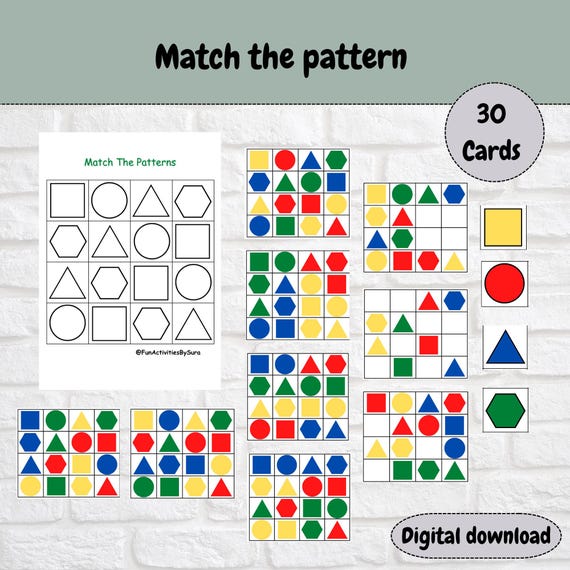
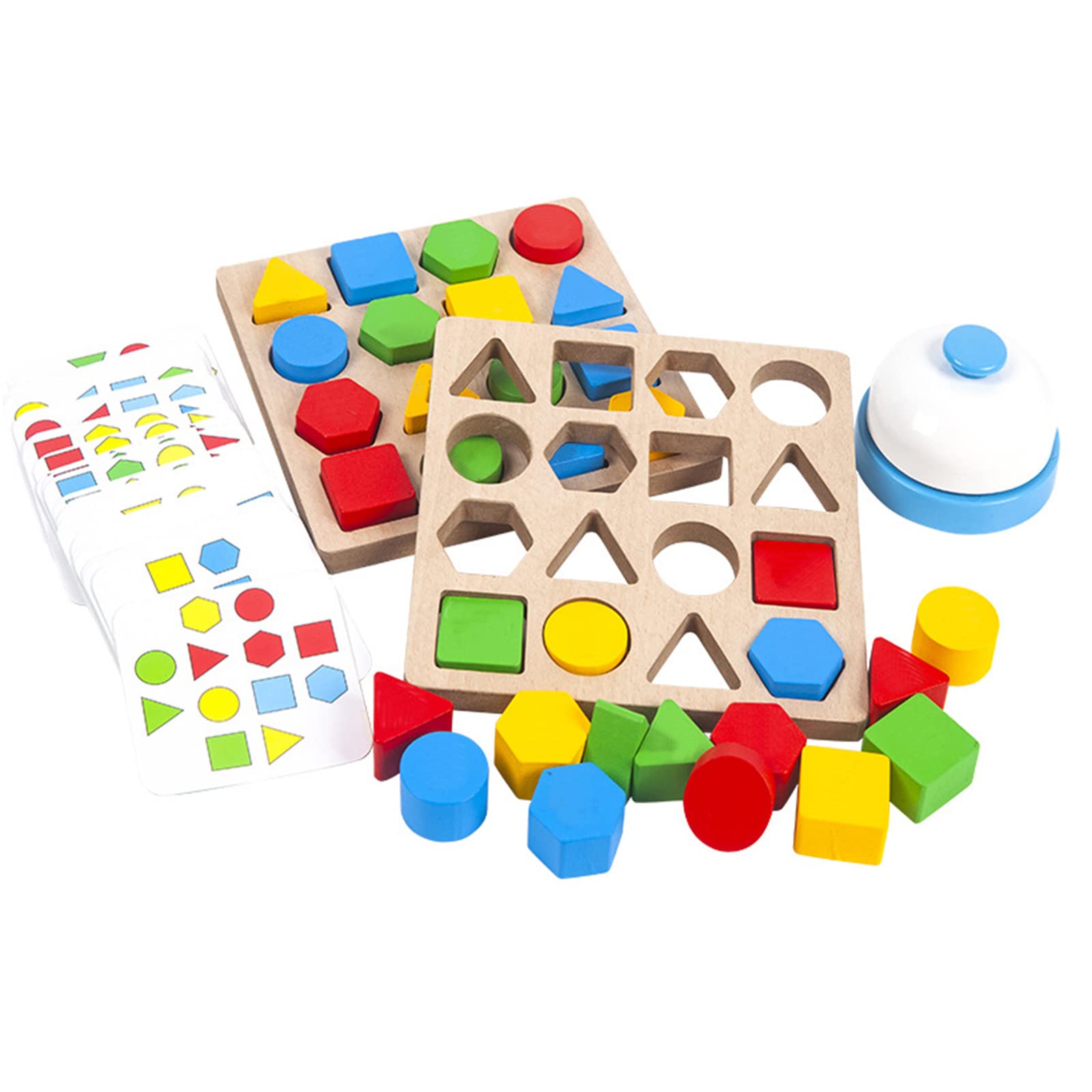
2.3.3 Introducing Pattern Games for Child Development
For younger learners, pattern recognition is a critical developmental milestone. Introducing games centered on shapes, colors, and simple logic sequences provides a foundational boost to their analytical thinking. By turning these training sessions into a collaborative family activity, you foster an environment where problem-solving is viewed as a rewarding, engaging experience rather than a chore.
Engaging with pattern recognition games is more than just a way to pass the time; it is a dedicated workout for your cognitive health. By regularly challenging your brain to decode sequences, identify hidden relationships, and practice deduction, you are effectively strengthening the neural pathways responsible for fluid intelligence and critical thinking. Whether you are sharpening your mind through complex spatial reasoning riddles or enjoying the lighthearted satisfaction of color sorting logical tasks, the consistent application of these skills translates into tangible real-world benefits, from improved memory recall to faster, more confident decision-making.
As you build your own brain fitness regime, remember that the goal is progress rather than perfection. Start with a baseline that feels comfortable and gradually introduce more complex challenges to avoid cognitive plateaus. If you are looking for new ways to keep your mind agile, you can explore our collection of top memory concentration builders for sharper focus to complement your training. Ultimately, the best tool is the one you enjoy enough to use consistently. By making pattern recognition a regular part of your daily routine, you are investing in a sharper, more resilient brain for the years to come.