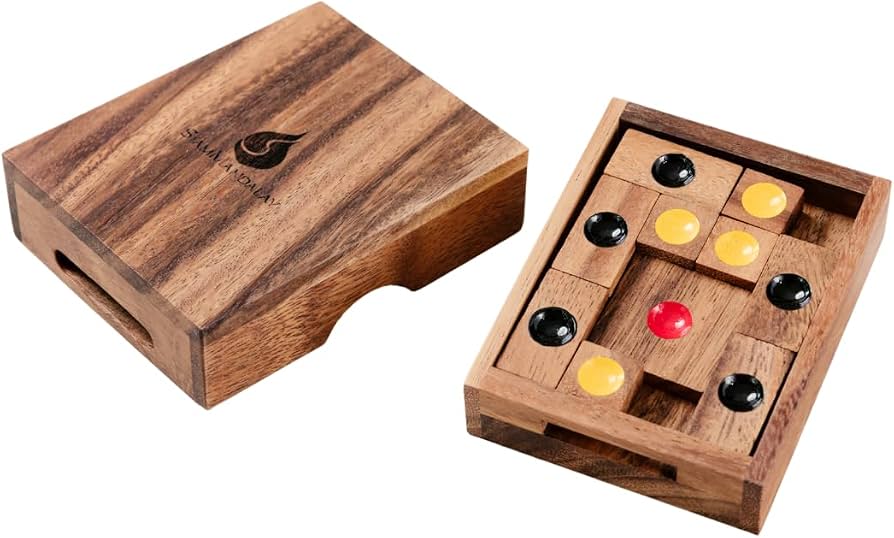
There is a unique, quiet satisfaction that comes from navigating a chaotic board until every piece falls perfectly into place. Block sliding brain teasers have long served as the gold standard for testing our patience and cognitive precision. These games strip away complex graphics and narrative fluff, leaving you with nothing but a set of constraints and a clear objective. Whether you are nudging tiles on a physical handheld frame or swiping through a digital grid on your smartphone, these puzzles require a blend of tactical foresight and calm, methodical execution.
In this guide, we will break down the fundamental logic behind these challenges, exploring how to analyze grid configurations and manage limited space to reach your goal state. You will learn the core strategies used by seasoned enthusiasts to improve their efficiency, along with the surprising neurological benefits of integrating these logic puzzle games into your daily routine. By mastering the art of the slide, you can sharpen your mind and turn every idle moment into a rewarding mental workout.
1. Mastering the Mechanics and Logic of Block Sliding Brain Teasers

1.1 Understanding the Foundational Mechanics of Sliding Puzzles
1.1.1 Defining Goal State and Constraint-Based Movement
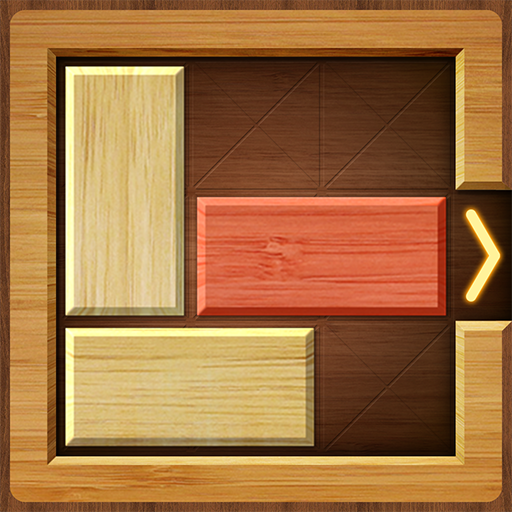
At their core, block sliding brain teasers are defined by a singular, rigid objective: navigating a specific piece or a group of blocks to a target destination on a bounded grid. Every move is governed by strict constraint-based movement. Unlike open-ended games, these puzzles restrict your options based on the positions of surrounding blocks, effectively limiting your pathing possibilities. The challenge lies in recognizing that every slide you make—whether vertical or horizontal—creates a domino effect that alters the entire board geometry. Success requires players to visualize the final configuration before making their first move, turning the board into a space where each action is a calculated trade-off.
1.1.2 Historical Evolution from the 15-Puzzle to Digital Interfaces
The lineage of these puzzles dates back to the late 19th century with the invention of the 15-puzzle, which required players to reorder numbered tiles within a square frame. This classic format laid the groundwork for modern spatial reasoning riddles, shifting from purely physical, tactile tiles to the complex digital interfaces we use today. While the physical version relied on gravity and friction, digital iterations allow for advanced mechanics, such as multi-block movement and non-linear boards, expanding the depth of logic puzzle games beyond what was possible in analog formats.
1.2 Core Problem-Solving Strategies for Beginners and Experts
1.2.1 Analyzing State Space and Identifying Bottlenecks
To solve a sliding puzzle efficiently, you must first analyze the state space, or the total number of possible configurations the board can take. Beginners often focus on moving the target block immediately, but this frequently leads to dead ends. Experts instead look for bottlenecks—specific grid configurations where only one or two moves are available. By mapping out these constricted areas, you can create a path of least resistance. Identifying these “choke points” allows you to clear the path ahead of time, ensuring the target block isn’t blocked by auxiliary pieces during the final phase of the solve.
1.2.2 Applying Algorithmic Thinking to Complex Grid Configurations
As grid complexity increases, trial and error becomes an ineffective strategy. Adopting algorithmic thinking helps you break down a complex board into sub-problems. This involves creating “sequences” of moves that effectively relocate a block to a specific quadrant of the board. By viewing the grid as a set of zones, you can move pieces into “holding patterns” while you manipulate the primary target. This method of systematic deduction ensures that every move brings you closer to the solution, rather than simply reshuffling the board without a clear, logical purpose.
1.3 Essential Tactics for Improving Solve Speed and Efficiency
1.3.1 Mastering Edge Management and Peripheral Movement
Efficient solvers rarely move blocks toward the center of the board. Instead, they prioritize edge management. By keeping essential blocks tucked along the perimeter, you keep the central space clear, providing maximum freedom of movement for the rest of your pieces. Utilizing the edges acts as a storage system, allowing you to bypass grid-wide congestion that often traps less experienced players in recursive loops.
1.3.2 Transitioning from Trial and Error to Systematic Deduction
Moving from a reactive, trial-and-error approach to a proactive, deductive one is the most significant leap for any player. This requires training your brain in pattern recognition. By observing how similar configurations respond to specific move sequences, you build a mental library of solutions. This shift reduces the “cognitive load” of each puzzle, as you begin to recognize familiar board states rather than calculating every single move from scratch.
1.3.3 Techniques for Minimizing Unnecessary Moves and Fluid Execution
True mastery in block sliding games is measured by the move count. Fluid execution comes from “look-ahead” planning, where you anticipate the secondary and tertiary consequences of a single slide. If a move forces you to backtrack later, it is likely an inefficient choice. Focus on “locking” blocks into their final positions sequentially, rather than pushing blocks across the entire board repeatedly. This minimalist philosophy transforms a chaotic grid into a predictable, orderly flow of motion.
2. Cognitive Benefits and Selecting the Best Block Sliding Brain Teasers
2.1 The Neurological Impact of Regular Puzzle Engagement
Regularly interacting with block sliding brain teasers does more than just fill idle time; it functions as a rigorous workout for the brain. By engaging with these logic puzzle games, you are essentially challenging your mind to visualize movement before it occurs, which directly stimulates the prefrontal cortex—the area of the brain responsible for complex decision-making and cognitive control.
2.1.1 Strengthening Executive Functions and Planning Capabilities
Sliding block puzzles require you to look at a stagnant grid and map out a sequence of moves to reach a goal state. This process demands high-level executive function, specifically working memory and inhibitory control. You must hold the current configuration in your mind while simulating future states to avoid getting blocked by restricted pieces.
2.1.2 Promoting Neuroplasticity and Cognitive Resilience
As you encounter increasingly difficult configurations, your brain must adapt by developing new neural pathways for pattern recognition. This plasticity helps keep the mind agile, potentially delaying age-related cognitive decline by forcing you to constantly adapt your strategy to novel constraints.
2.1.3 Utilizing Puzzle Solving as a Therapeutic Tool for Stress Reduction
The “flow state” often achieved during these puzzles provides a healthy distraction from daily anxieties. When you focus intently on pathfinding logic puzzles, your attention shifts away from stressors and toward a tangible, solvable objective. This quiet, deep-focus activity can lower cortisol levels and provide a sense of accomplishment that improves your overall mood.
2.2 Choosing the Right Equipment for Your Skill Level
Selecting the appropriate tools is essential to maintaining your interest and growth. Whether you prefer a tactile, physical experience or the convenience of a digital interface, the core mechanics of sliding block puzzles remain consistent.
2.2.1 Comparing Physical Tactile Boards versus Electronic App-Based Games
Physical puzzles provide a tactile feedback loop that many find grounding; the sound of plastic or wood blocks clicking into place can be incredibly satisfying. However, electronic versions often include hint systems and infinite level generation, making them ideal for portability and rapid skill-building.
2.2.2 Evaluating Difficulty Metrics Including Grid Size and Piece Complexity
When selecting a game, look at the grid dimensions. A 3×3 grid is a great starting point for beginners, while a 5×5 or larger grid introduces significant complexity in piece interactions. Pay attention to whether the pieces are uniform or have varying sizes, as irregular shapes force you to account for different blocking patterns.
2.2.3 Identifying Quality Markers for Durable and Responsive Puzzles
For physical sets, seek smooth-sliding mechanics that do not stick or catch. For digital apps, ensure the interface has high responsiveness and intuitive touch controls so you can master spatial reasoning riddles without technical frustration.
2.3 Frequently Asked Questions Regarding Brain Teaser Practice
2.3.1 Age Appropriateness and Cognitive Accessibility
These puzzles are generally suitable for all ages. Younger players can use simpler grids to develop early logic skills, while older adults may use complex, non-time-pressured boards to maintain mental sharpness.
2.3.2 The Role of Daily Practice in Sustaining Focus and Concentration
Consistency is key to cognitive growth. Even 15 minutes of daily practice can improve your ability to visualize patterns and manage sequences in your daily life.
2.3.3 Distinguishing Sliding Logic Puzzles from Traditional Jigsaw Puzzles
While jigsaws rely on visual matching of fragmented images, sliding puzzles are strictly constraint-based. They require you to understand how a single move impacts the entire board’s potential.
2.3.4 Recommended Daily Durations for Measurable Mental Improvements
There is no “magic number,” but experts suggest that 20 to 30 minutes of focused play is sufficient to reap the rewards of improved concentration without causing mental fatigue.
Block sliding brain teasers are far more than simple pastimes; they are powerful tools for sharpening cognitive focus, refining spatial reasoning, and developing systematic problem-solving skills. By understanding the mechanics behind these pathfinding logic puzzles, you move beyond mere trial and error, instead adopting an analytical approach that treats every grid configuration as a challenge to be solved with efficiency and foresight. Whether you are navigating a physical board or engaging with a complex digital interface, the mental benefits—from improved planning capabilities to enhanced pattern recognition—remain significant.
As you incorporate these games into your daily routine, remember that consistency is the key to unlocking better concentration and cognitive resilience. There is a vast world of mental challenges waiting to be explored, and starting with [spatial reasoning riddles](https://gameturn.net/spatial-reasoning-riddles-boost-your-logic-and-brain-power/) can further diversify your approach to logic-based gameplay. We encourage you to challenge yourself with varying difficulty levels, embrace the process of deduction, and enjoy the satisfaction that comes with mastering complex board states. Why not pick up your next puzzle today and see how far your logic skills can take you?