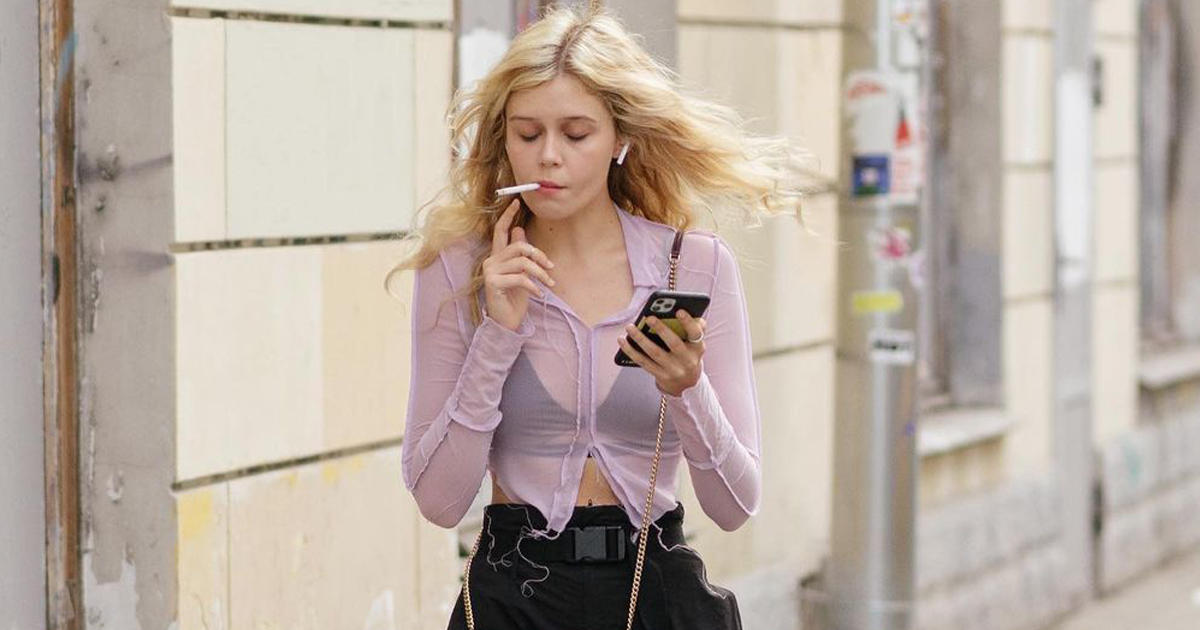

Moscow is usually introduced through monumental images: the Kremlin glowing at night, onion domes r ornate subway stations, and skyscrapers competing to see which one can look the most important. However, photographer Grisha Besko turns his camera away from the postcard landmarks and toward something much more unpredictable: ordinary people walking down the street.
Besko’s photographs document Muscovites on their way to work, meeting friends, running errands, waiting for transportation, or simply crossing the city while wearing an outfit too interesting to ignore. The viral photo feature describes him as a Russian photographer, although biographical reporting identifies him as a Belarusian photographer who relocated to Moscow. His project, commonly known as Watching Moscow, grew from his fascination with people-watching and everyday urban fashion. he resulting collection of 30 pictures is not a polished fashion campaign filled with wind machines and models pretending that standing beside a dumpster is glamorous. It is a visual record of real Moscow street style: layered, practical, experimental, occasionally eccentric, and frequently cooler than anyone carrying groceries has a right to be.
Moscow Street Style Beyond the Fashion-Week Bubble
Street-style photography is often associated with fashion weeks, where invited guests arrive knowing that dozens of cameras are waiting outside. Those images can be entertaining, but they are also performances. The clothes are carefully planned, the poses are practiced, and everybody seems mysteriously capable of walking in six-inch heels over broken pavement.
Besko’s work feels different because his subjects are discovered within the normal rhythm of the city. They are not necessarily celebrities, professional models, influencers, or fashion editors. Their outfits were chosen for actual lives rather than front-row appearances. That distinction gives the photographs their energy.
Moscow fashion-week coverage has frequently highlighted oversized coats, bright puffer jackets, heavy boots, dramatic scarves, streetwear, sharp tailoring, flashy footwear, and unexpected combinations of luxury and casual clothing. Besko finds many of the same visual ideas away from organized events, showing how runway trends are translated into practical personal style. Clothing That Has to Survive the City
Moscow’s climate encourages creative layering. A beautiful outfit is not especially useful when the wearer becomes an icicle before reaching the subway. Coats, scarves, sweaters, hats, thick socks, and sturdy footwear therefore become both necessities and opportunities for self-expression.
The most memorable looks often balance protection with personality. A bulky jacket may be paired with narrow sunglasses. A classic wool coat may appear beside chunky sneakers. A formal blazer might sit over a hoodie. The outfit says, “I understand the weather forecast, but I refuse to surrender aesthetically.”
Vogue’s Moscow street-style galleries have documented this same conversation between climate and creativity, from vintage fur and bright puffers to thick scarves, Dr. Martens boots, head coverings, bucket hats, and boldly patterned accessories. tion>
Why Moscow Creates Such a Powerful Visual Background
Fashion does not exist separately from its surroundings. A person wearing a long black coat looks one way against a blank studio wall and completely different beneath a giant stone façade, beside a Soviet-era apartment block, or reflected in the glass of a modern commercial tower.
Moscow gives street photographers an unusually varied stage. Historic churches, Stalinist skyscrapers, broad avenues, residential courtyards, subway entrances, luxury storefronts, concrete underpasses, and contemporary glass buildings can appear within the same urban journey. The metropolitan scale also supplies a nearly endless stream of possible subjects. hat architectural contrast strengthens Besko’s compositions. Minimal clothing can stand out against an ornate building. A bright accessory can puncture a gray streetscape. An oversized silhouette can echo the monumental proportions of the city around it.
Photographers have long been attracted to the unusual mixture of grandeur, experimentation, and visual contradiction found in Moscow’s built environment. Architectural projects photographed in the post-Soviet period, for example, often combine glass, gilded decoration, bold colors, and theatrical scale against much plainer surroundings. The Street Becomes a Moving Studio
A studio photographer controls the lights, backdrop, subject, pose, and timing. A street photographer controls almost nothing. Pedestrians move unpredictably. Cars block the frame. Someone steps directly in front of the lens at the perfect moment, usually while carrying the world’s least photogenic plastic bag.
That lack of control is precisely what makes urban photography exciting. Reflections, shadows, advertisements, traffic signals, and passing strangers create visual combinations that cannot be completely planned. The photographer’s job is to notice when those elements briefly align.
What the 30 Pictures Reveal About Moscow Urban Fashion
The gallery should not be read as a rigid list of trends or as proof that every Muscovite dresses a certain way. Moscow contains millions of people with different ages, incomes, professions, backgrounds, and tastes. Instead, the series works as a collection of individual visual discoveries.
As you move through the 30 pictures, these are the details and recurring ideas worth noticing:
- Oversized outerwear: Large coats and jackets create strong silhouettes while leaving room for practical layers underneath.
- Dark foundations: Black, charcoal, navy, and gray often provide a versatile base for more expressive accessories.
- Unexpected color: A red bag, neon hat, bright shoe, or patterned scarf can transform an otherwise restrained outfit.
- Structured tailoring: Long coats and sharp jackets bring formality to clothing worn with sneakers, denim, or hoodies.
- Comfortable footwear: Boots and athletic shoes recognize the inconvenient truth that cities require actual walking.
- Vintage references: Older silhouettes and accessories are mixed with modern streetwear rather than worn as costumes.
- Gender-fluid styling: Oversized shapes, neutral colors, and shared streetwear elements weaken traditional divisions between menswear and womenswear.
- Headwear with character: Beanies, caps, scarves, hoods, and unusual hats add both warmth and personality.
- High-and-low combinations: Designer pieces can appear beside inexpensive basics, secondhand finds, or purely functional clothing.
- Deliberate proportions: Wide trousers, long coats, cropped jackets, and thick shoes change the visual balance of the body.
- Subcultural clues: Punk, skate, post-Soviet, minimalist, hip-hop, workwear, and club influences appear without requiring labels.
- Personal uniforms: Some outfits suggest a carefully repeated formula rather than a constantly changing wardrobe.
- Practical bags: Backpacks, totes, crossbody bags, and shopping bags remind viewers that these people are going somewhere.
- Texture over decoration: Leather, wool, denim, nylon, faux fur, and knitwear create visual depth even in limited colors.
- Quiet confidence: Many compelling subjects are not posing dramatically; they simply look comfortable in their clothes.
- Old-meets-new styling: Traditional references can be combined with contemporary pieces without becoming nostalgic theater.
- Statement eyewear: Small sunglasses, angular frames, or bold lenses can alter the mood of an entire portrait.
- Weather-aware creativity: Warmth is treated as a design challenge instead of an excuse to abandon style.
- Monochrome dressing: Outfits built around one color emphasize silhouette, layering, and material.
- Controlled disorder: Some looks appear casual or mismatched at first, yet their proportions and colors are carefully balanced.
- Generational variety: Street style belongs to more than young fashion enthusiasts; older residents also bring distinctive visual identities.
- Local adaptation: International trends are adjusted to Moscow’s climate, pace, architecture, and social environment.
- Movement: Coats swing, hair shifts, shopping bags bounce, and fabric folds differently when subjects are photographed mid-stride.
- Architectural echoes: Straight lines in clothing may repeat windows, railings, paving stones, or building edges behind the subject.
- Accidental color coordination: An outfit can unexpectedly match a bus, storefront, road sign, wall, or advertisement.
- Individual rebellion: A small styling choice may resist workplace expectations, seasonal conventions, or mainstream taste.
- Ordinary objects: Phones, coffee cups, umbrellas, headphones, and grocery bags make the photographs feel lived rather than staged.
- Expressions without performance: Concentration, boredom, curiosity, and hurry can reveal more personality than a practiced smile.
- Fashion as daily communication: Clothes quietly indicate mood, community, ambition, humor, and cultural influence.
- The value of being noticed: Every frame suggests that an apparently ordinary pedestrian can become visually extraordinary when someone pays attention.
The Return of Traditional Details in Modern Streetwear
One of the most interesting features of contemporary Russian fashion is the reuse of familiar cultural references. A headscarf, for example, can move from traditional or religious clothing into youthful urban styling. It may be combined with a leather jacket, technical outerwear, sneakers, or an oversized coat.
Vogue has documented the revival of the so-called babushka scarf among younger wearers, describing how traditional head coverings entered contemporary street style and international fashion. The trend demonstrates how clothing can retain cultural memory while acquiring a new meaning. his mixing of old and new is more interesting than simply copying global trends. It allows Moscow street fashion to participate in an international conversation while maintaining local references. The strongest outfits do not shout, “Please notice my cultural symbolism.” They simply make the combination feel natural.
Street Photography as Social Documentation
Besko’s pictures are enjoyable as fashion inspiration, but they also perform a documentary function. Clothing records social life. It shows how people respond to climate, available products, workplace rules, economic realities, technology, music, advertising, and cultural change.
Researchers analyzing large collections of street images have demonstrated that public photographs can reveal geographic and seasonal differences in clothing. Fashion trends are not merely sequences of products announced by brands; they are patterns created when real people adopt, reject, remix, and repurpose ideas in different cities. photograph of a coat or pair of shoes may seem trivial today. Decades later, the same image can help viewers understand how people moved, what they valued, what they could buy, and how they wanted to be seen. The everyday detail becomes historical evidence almost by accident.
The Photographer, Subject, and Viewer
Candid street photography also raises questions about observation, privacy, and representation. A responsible photographer must think beyond whether an image looks interesting. The subject should not be reduced to a joke, stereotype, or strange outfit captured for online attention.
Discussions surrounding documentary photographers such as Diane Arbus have long examined the complicated relationship among photographer, subject, and audience. Street photography can discover unexpected beauty in everyday people, but it also asks viewers to consider how and why they are looking. esko’s strongest pictures feel curious rather than cruel. The people are presented as individuals with agency, not as specimens from an exotic city. That difference matters, especially when images travel internationally and viewers may know little about the place beyond familiar stereotypes.
Why These Moscow Street-Style Photos Feel So Refreshing
Social media often turns fashion into repetition. The same pose, handbag, neutral interior, coffee cup, and carefully arranged “spontaneous” moment appear again and again. Eventually, the entire internet begins to resemble one very large beige waiting room.
Candid street photography interrupts that sameness. It introduces imperfect weather, awkward movement, surprising backgrounds, unusual ages, practical accessories, and clothing that may not be available through an affiliate link. The images remind viewers that style is not limited to people who work in fashion or own enormous closets.
The project also broadens the international picture of Moscow fashion. Earlier global coverage often concentrated on a small group of famous Russian fashion personalities. Even Vogue acknowledged that Moscow street style extended beyond the familiar stars repeatedly photographed on the international circuit. esko’s lens expands the cast. A commuter can be as visually compelling as a runway guest. A pensioner may offer a stronger color combination than a professional stylist. A person walking the dog may accidentally produce the best layered look of the dayand the dog will still receive most of the compliments.
A Street Photographer’s Experience: Learning to Watch Moscow
Photographing urban style begins long before pressing the shutter. The first task is learning how to observe without searching only for obvious extravagance. A beginner may chase the loudest coat, the brightest hair, or the person dressed as though a nightclub has declared a daytime emergency. An experienced photographer also notices subtler details: the relationship between a scarf and a painted doorway, the rhythm of footsteps, or the way two strangers briefly mirror each other.
Imagine beginning a day near a busy Moscow subway entrance. The flow of pedestrians is fast, and everyone appears to have somewhere important to be. Standing directly in the middle of the sidewalk would be an excellent way to meet an irritated commuter at high speed, so the photographer chooses a position near the edge of the movement.
At first, nothing seems photographable. People pass in dark coats. Cars pass in darker colors. The sky appears to have selected “industrial gray” from a paint catalog. Then a person in a bright green scarf enters the frame. Behind them, a matching sign creates a temporary connection. The photographer has only a second to recognize it, adjust the composition, and shoot.
A few minutes later, another possible subject approaches in an oversized leather jacket and wide trousers. The outfit is interesting, but the background is cluttered with parked cars and advertising. Instead of immediately taking the picture, the photographer walks parallel for a moment. When the subject reaches a plain wall, the silhouette becomes clear. Patience turns a messy snapshot into a purposeful street portrait.
The experience also involves rejection. A subject may notice the camera and signal that they do not want to be photographed. The correct response is not an argument about artistic freedom delivered like a courtroom speech. It is respect. Lower the camera, apologize when appropriate, and continue walking. No photograph is so important that basic courtesy must be thrown into traffic.
Communication can produce stronger images as well. After making a candid frame, the photographer may approach the subject, explain the project, show the picture, and ask permission to share it. Some people decline. Others become curious and offer a more direct portrait. A quick conversation can reveal that an impressive coat came from a relative, a flea market, a small local designer, or a fortunate encounter with a clearance rack.
By midday, the photographer begins recognizing neighborhood patterns. Business districts provide polished coats, office shoes, and restrained colors. Creative areas offer vintage clothing, experimental shapes, and DIY accessories. Parks and residential streets introduce families, older residents, athletes, dog walkers, and people dressed for comfort rather than display.
The most satisfying picture may arrive when nobody looks especially fashionable in the conventional sense. An older couple walks together in coordinated neutral coats. Their posture, pace, and quiet familiarity make the frame memorable. Street style becomes less about owning remarkable garments and more about how clothing participates in a person’s life.
At the end of the day, hundreds of exposures may produce only a small number of strong photographs. Editing is therefore another form of observation. The photographer selects images that reveal variety rather than repeating the same fashionable body type, age group, neighborhood, or aesthetic. A meaningful urban archive should show a city’s complexity, not merely confirm the photographer’s existing preferences.
This is the central experience behind people-watching photography: the city becomes more detailed the longer you look. Clothing stops being background information. Gestures become stories. Ordinary routes become moving exhibitions. You may return home with tired feet and too many nearly successful frames, but you also return with a sharper awareness of how creatively people construct their everyday identities.
Conclusion: Moscow’s Real Runway Is the Sidewalk
Grisha Besko’s Moscow street-style photography succeeds because it treats everyday residents as worthy visual subjects. The pictures do not require famous models, exclusive invitations, or carefully manufactured spontaneity. They rely on curiosity, timing, composition, and the understanding that personal style is often most revealing when people are simply living their lives.
The 30-photo collection presents Moscow as a city of contrasts: historic and modern, restrained and theatrical, practical and experimental. Its residents borrow from global fashion while adapting those ideas to local weather, architecture, traditions, and routines.
Moscow Fashion Week continues to showcase established and emerging designers, including major events involving numerous domestic brands, but projects such as Watching Moscow reveal what happens after fashion leaves the runway. Trends enter subway stations, offices, parks, grocery stores, and neighborhood streets, where individuals reshape them into something personal. erhaps that is the real pleasure of these photographs. They encourage us to look more closely at people we might otherwise pass without a second thought. Every city contains remarkable outfits, unexpected characters, and accidental compositions. Most of the time, we are simply walking too quickly to notice.