Have you ever felt like your mind needs a bit of a workout, something more stimulating than just scrolling through a feed? We often focus on physical health, but our cognitive fitness requires consistent, active engagement to remain sharp. This is where numerical logic challenges come into play. These puzzles are far more than just busywork; they are precision tools designed to fire up dormant neural pathways, improve your analytical processing speed, and enhance your ability to navigate complex information.
Whether you are trying to break through a midday mental fog or looking to build a more resilient cognitive foundation, incorporating logic puzzles into your daily routine offers tangible benefits. In this guide, we will explore the science behind why these challenges work, compare them to other brain-training methods, and break down five essential categories—ranging from pattern recognition games to deduction-based tasks—that will help you sharpen your brain. Get ready to transform the way you approach problem-solving and unlock your mental potential.
1. Understanding the Science and Cognitive Mechanics of Numerical Logic Challenges
1.1 The Neurobiology of Problem Solving
1.1.1 Neuroplasticity and the Brain Gym Concept
Neuroplasticity is the brain’s remarkable ability to reorganize itself by forming new neural connections throughout life. When you engage in numerical logic challenges, you aren’t just passing time; you are effectively hitting the gym for your gray matter. This mental exertion forces the brain to adapt, increasing the density of synaptic connections in regions responsible for executive function, such as the prefrontal cortex. Just as physical exercise strengthens muscle fibers, consistent cognitive training encourages the brain to build more efficient pathways for information processing.
1.1.2 Strengthening Neural Pathways Through Consistent Mental Exertion
By regularly tackling complex numerical problems, you reinforce the myelination of neural pathways. Myelin acts as an insulator for your neurons, allowing electrical signals to travel faster and with less energy loss. This translates into improved mental stamina. When you consistently expose your mind to varying levels of complexity, you prevent cognitive stagnation, ensuring that your brain remains agile and capable of handling intricate tasks with greater ease.
1.2 Why Numerical Logic Challenges Outperform Passive Learning
1.2.1 Developing Analytical Processing Speed and Working Memory
Unlike passive activities such as reading or watching documentaries, solving puzzles requires active, high-level engagement. These challenges force your working memory to juggle multiple variables at once—storing temporary data while simultaneously applying rules and logic to reach a solution. This process significantly boosts your cognitive bandwidth. For those interested in broader applications of these mental mechanics, exploring pattern recognition games can provide a necessary expansion to your cognitive toolkit by refining how your brain categorizes and interprets incoming data.
1.2.2 Differentiating Mathematical Reasoning from Verbal Puzzles
Numerical reasoning relies on a distinct set of cognitive mechanisms compared to verbal or linguistic puzzles. While verbal riddles often tap into semantic memory and language centers, numerical logic focuses on spatial-mathematical processing. This activates the parietal lobes, which are essential for number sense and spatial awareness. By training these specific areas, you develop a more balanced cognitive profile, allowing you to switch between quantitative and qualitative problem-solving modes fluidly.
1.3 Cognitive Gains and Long-Term Mental Health
1.3.1 Impact on Fluid Intelligence and Executive Function
Fluid intelligence is your ability to solve novel problems, identify patterns, and use logic in new situations, independent of acquired knowledge. Engaging with numbers and sequences is a proven method to maintain and improve this aspect of intelligence. These tasks demand high levels of executive function—the mental processes that enable us to plan, focus attention, and juggle multiple goals.
1.3.2 The Relationship Between Logical Deduction and Cognitive Reserve
Consistent mental stimulation contributes to what researchers call cognitive reserve—the brain’s resistance to damage and decline. By frequently utilizing deductive reasoning, you build a “buffer” that can help maintain cognitive function as you age. This isn’t about avoiding decline entirely, but rather about equipping your brain with a robust, well-exercised network of connections that remains resilient even in the face of physiological stressors.
2. Mastering Five Essential Categories of Numerical Logic Challenges
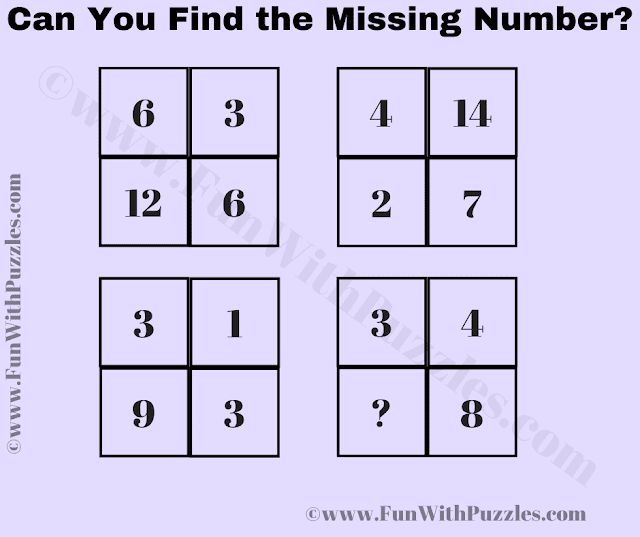
2.1 Grid-Based Deductive Puzzles and Sequential Math
Grid-based puzzles are the cornerstone of logical training because they force your brain to map out possibilities systematically. By utilizing pattern recognition games in a grid format, you train your mind to hold multiple variables in working memory simultaneously.
2.1.1 Sudoku Strategies for Beginners to Expert Practitioners
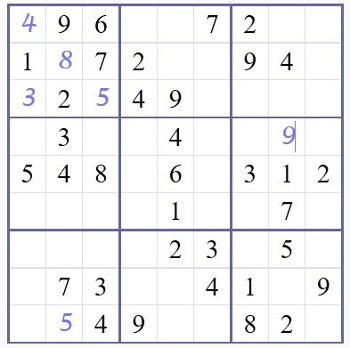
Sudoku is less about math and more about the process of elimination. Beginners should focus on scanning rows and columns for missing numbers in constrained 3×3 blocks. As you progress to expert levels, the challenge shifts toward identifying X-Wings and hidden pairs, which require you to evaluate the entire board’s constraints rather than just individual cells.
2.1.2 Identifying Patterns in Arithmetic and Geometric Sequences
Beyond static grids, numerical sequences test your ability to detect underlying growth rules. Arithmetic sequences require identifying a common difference, while geometric sequences involve ratios. Training yourself to spot these fluctuations quickly enhances your ability to predict outcomes in real-world data sets.
2.2 Strategic Summation and Algebraic Cryptography
Summation puzzles shift the focus from spatial placement to quantitative accuracy under strict constraints.
2.2.1 Kakuro Techniques for Improved Mental Math Fluency
Kakuro functions similarly to a crossword puzzle but with numbers. By restricting sums to specific, non-repeating digits, you improve your mental math speed. Successful players learn to recognize “combinations of necessity”—knowing, for instance, that a sum of 6 in two cells must be 1+5 or 2+4, which narrows the logical field rapidly.
2.2.2 Deciphering Alphametics through Abstract Reasoning
Alphametics—where letters represent digits—require deep deductive reasoning. These challenges force you to hypothesize, test, and discard logical paths. This exercise is excellent for developing the patience and analytical flexibility required for more complex problem-solving scenarios.
2.3 Real-World Application through Analytical Estimation
Numerical logic is not limited to pen-and-paper puzzles. Analytical estimation bridges the gap between abstract numbers and tangible, real-world complexity.
2.3.1 Fermi Estimates for Developing Reasoning Under Uncertainty
A Fermi estimate involves making educated guesses about quantities that are difficult to measure directly, such as the number of piano tuners in a city. This practice sharpens your ability to break down massive problems into manageable, logical chunks, fostering confidence in decision-making when information is incomplete.
2.3.2 Applying Logical Constraints to Complex Problem Scenarios
This skill involves looking at a chaotic situation and identifying the non-negotiable boundaries. By establishing what is impossible, you naturally isolate the remaining potential solutions, a strategy heavily relied upon in engineering and strategic planning.
2.4 Designing a Sustainable Mental Fitness Routine
Consistency is more important than intensity when it comes to cognitive development.
2.4.1 The Efficacy of Micro-Dosing Cognitive Training
Instead of marathon sessions, dedicate 15 minutes daily to numerical challenges. This keeps the brain in a state of consistent, low-stress engagement, which is far more effective for long-term retention and neuroplasticity than sporadic, high-intensity cramming.
2.4.2 Balancing Difficulty Levels to Achieve Flow State
To keep the brain challenged without inducing frustration, balance “easy” maintenance puzzles with “hard” growth challenges. Staying within this zone of optimal difficulty ensures you experience the flow state, where deep concentration and learning occur most efficiently.
2.5 Overcoming Plateaus and Tracking Cognitive Improvement
Eventually, every puzzle type becomes easier. Recognizing this shift is key to continued growth.
2.5.1 Techniques for Breaking Through Mental Blocks
When you feel stuck, change your medium. Switching from digital puzzles to manual ones, or from grid-based to algebraic tasks, forces your brain to re-engage using different neural pathways, effectively resetting your cognitive approach.
2.5.2 Measuring Speed, Accuracy, and Logical Progression
Track your performance over time. While speed is a factor, prioritize accuracy. Keep a simple log of your completion times and error rates to visualize your progress; seeing tangible improvement is one of the most effective ways to maintain the motivation required for a long-term mental fitness journey.
Mastering numerical logic challenges is more than just a pastime; it is a dedicated workout for your mind. By integrating diverse exercises like grid-based puzzles, strategic summation, and analytical estimation into your daily routine, you move beyond simple busywork. Instead, you build cognitive reserve, enhance your fluid intelligence, and sharpen your ability to navigate complex problems with speed and precision. The journey toward mental clarity is not about being a math genius, but about cultivating a consistent practice that promotes neuroplasticity and sharpens your analytical edge.
Whether you are breaking through a mental plateau with a new Sudoku strategy or applying logic to real-world scenarios, every effort you make contributes to a more resilient brain. As you continue to explore new ways to challenge yourself, remember that the most significant gains come from a balanced routine that keeps you in the flow state. If you are looking to diversify your mental workout, you can also explore pattern recognition games to further hone your deductive capabilities. Stay consistent, track your progress, and enjoy the process of becoming a more agile, strategic thinker one puzzle at a time.