
There is something uniquely satisfying about unraveling a tangled web of secrets from the comfort of your gaming chair. Whether you are dusting off a vintage crime scene or stepping into a surreal, hand-drawn landscape, mystery adventure games offer a cerebral escape that challenges your perception and logic. These titles move beyond quick-twitch reflexes, inviting you instead to slow down, observe the environment, and piece together narratives that often go deeper than they initially appear. If you have ever been the kind of person who enjoys unusual stories you’ll never forget, you will find a natural home in this genre.
In this guide, we will explore the core mechanics that define great detective experiences and help you categorize the titles that best suit your personal playstyle. From complex logic puzzles to immersive, atmosphere-heavy narratives, we will provide the insights you need to choose your next investigative journey with confidence and get straight to the heart of the mystery.
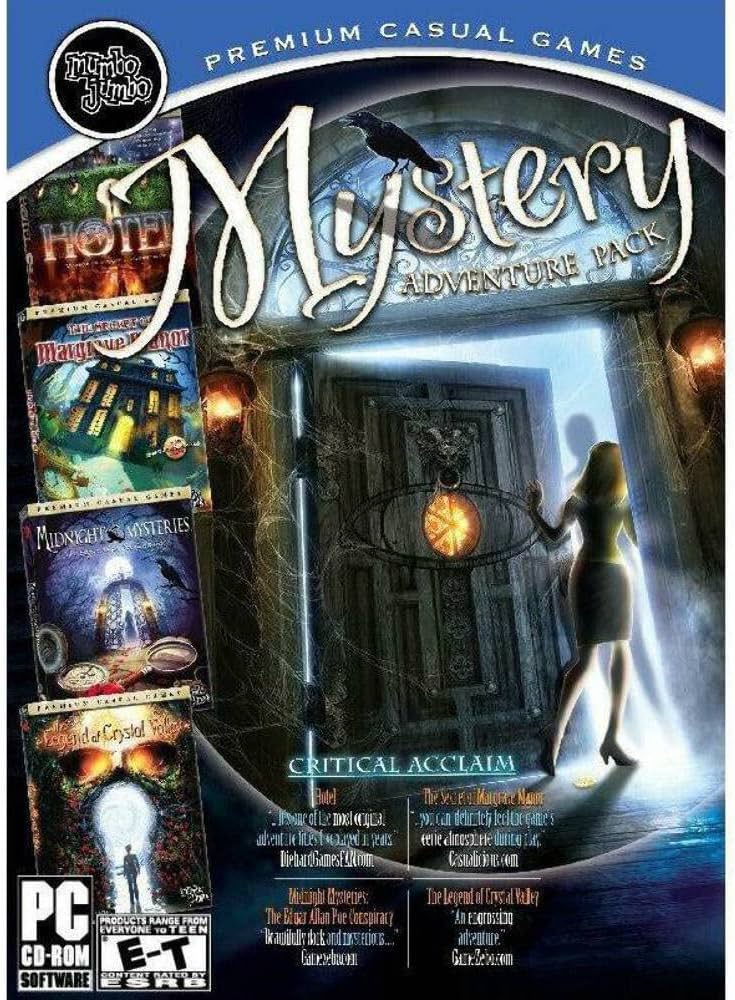
1. Mastering the World of Mystery Adventure Games: Mechanics and Selection
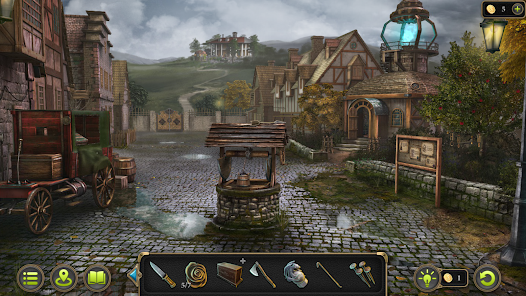
Stepping into the shoes of an investigator requires more than just a sharp eye; it demands an understanding of the underlying systems that power the genre. Whether you are navigating complex environments or dissecting a suspect’s alibi, mastering these digital detective tools is essential for unraveling the truth.
1.1 Understanding the Core Elements of Digital Detective Work
1.1.1 Inventory Management and Object Interaction
At the heart of many mystery adventure games lies the classic inventory system. You will frequently collect seemingly mundane items—a torn ticket, a rusted key, or a discarded matchbook—that become vital evidence later. Success often depends on how you combine these objects or use them on specific environmental triggers. The challenge is rarely in the mechanics themselves, but in your ability to recognize the potential utility of an item before a crisis arises.
1.1.2 Navigating Dialogue Trees and Information Gathering
Information is the most potent weapon in any detective’s arsenal. Narrative driven mystery games often rely on intricate dialogue trees where your choice of questioning directly influences the outcome. You must learn to read between the lines, identifying when a character is withholding information or attempting to lead you astray. Successful investigators approach conversations with skepticism, cross-referencing witness accounts to spot contradictions that might break a case wide open.
1.1.3 The Role of Deductive Reasoning and Environmental Clues
Modern titles often move beyond simple point and click detective puzzles by requiring genuine deductive reasoning. Environmental storytelling—noticing a shifted rug, a lingering scent, or the specific way a room is disheveled—often provides more context than explicit text logs. Players who actively observe the world rather than relying solely on quest markers find themselves much more immersed in the mystery.
1.2 Categorizing the Best Mystery Adventure Games for Your Playstyle
1.2.1 Narrative Driven Cinematic Thrillers
These titles prioritize high-stakes storytelling and character development, often blurring the line between games and interactive cinema. The focus remains on emotional impact and the weight of your decisions.
1.2.2 Logic and Deduction Based Puzzle Classics
If you prefer mechanical challenges, these games emphasize intricate logic grids, ciphers, and classic inventory puzzles. They reward patience and methodical thinking.
1.2.3 Cozy Atmospheric Investigations
These atmospheric walking simulators offer a more relaxed pace. They are perfect for those who want to solve a mystery while soaking in a detailed, curated world without the pressure of time limits.
1.2.4 Indie Gems for Quick Sessions
For those short on time, many indie developers are crafting tight, focused interactive fiction stories that can be finished in a few sittings, providing a satisfying “whodunit” experience without the hundred-hour commitment.
1.3 Selecting the Right Game Based on Difficulty and Accessibility
1.3.1 Identifying Your Preferred Challenge Level
Before diving into a new investigation, consider how much hand-holding you enjoy. Some players thrive on obscure riddles that force them to keep a physical journal, while others prefer streamlined experiences that emphasize the narrative. If you are new to the genre, check if the game offers “story mode” or “detective mode” toggles to adjust the complexity of the puzzles.
1.3.2 Assessing Built In Hint Systems and Accessibility Tools
Modern mystery games are increasingly considerate of player frustration. Many now include tiered hint systems that offer gentle nudges toward the solution rather than revealing it outright. If you find yourself stuck, these features are invaluable for maintaining momentum. To learn more about how games can be tailored to different skill sets and movement preferences, you can read our guide on the best platform action games, which shares insights on mechanical accessibility.
2. Advanced Strategies for Solving Puzzles in Mystery Adventure Games

2.1 Professional Investigative Techniques for Players
Moving beyond basic mechanics requires a shift in mindset. If you want to truly master mystery adventure games, you have to stop playing as a passive observer and start thinking like a private investigator. This means moving from mere trial-and-error to systematic analysis of the game’s internal logic.
2.1.1 The Importance of Manual Note Taking and Documentation
While many modern titles feature built-in journals, relying solely on them can often leave you missing the bigger picture. Keep a physical notebook or a digital document open while you play. Record recurring symbols, character alibis, and timeline discrepancies as soon as you encounter them. This external memory bank is vital for narrative-driven mystery games where small details mentioned in a conversation three hours prior are often the keys to solving a late-game deduction puzzle.
2.1.2 Utilizing Peripheral Vision for Environmental Cues
In atmospheric walking simulators, the solution is rarely sitting in the center of your screen. Developers often use lighting, color grading, and subtle object placement to guide the player’s eye. Practice scanning environments in a grid pattern rather than just looking at the focal point. Often, a crucial clue will reside in your peripheral vision—a slightly different wallpaper texture, an unread note on a desk, or an object that is slightly out of alignment with its surroundings.
2.1.3 Managing Cognitive Fatigue Through Scheduled Breaks
Detective work is mentally taxing. When you reach a point where you feel stuck or frustrated, your brain is likely experiencing cognitive fatigue. Pushing through this wall often leads to missing obvious solutions or becoming over-reliant on hint systems. If a logic puzzle has you spinning your wheels for more than twenty minutes, step away from the screen entirely. Sometimes, stepping back allows your subconscious to process the information, making the solution clear the moment you return.
2.2 Looking Ahead to Future Trends in the Genre
The landscape of interactive mystery gaming is shifting rapidly as developers integrate new technologies to deepen immersion and agency.
2.2.1 The Rise of Immersive VR Mystery Experiences
Virtual Reality is arguably the most significant advancement for the genre. By placing the player physically inside the crime scene, VR demands a new level of environmental awareness. Future titles will likely emphasize haptic feedback and realistic physics, making object interaction feel tactile and meaningful. You can learn more about how video upscaling could make your VR experience much better as these high-fidelity investigations become more common.
2.2.2 Procedural Generation and AI Driven Investigation
Developers are beginning to experiment with procedural generation to move away from rigid, linear storylines. By using AI-driven dialogue trees, games can create unique investigations where the culprit or the motive changes with every playthrough. This evolution promises to turn interactive fiction stories into endlessly replayable detective simulators.
2.2.3 The Impact of Cross Platform Play on Genre Accessibility
Cross-platform capabilities are breaking down barriers, allowing players to start an investigation on a desktop and continue on a mobile device or console. This portability is essential for point and click detective puzzles, which are often best enjoyed at a steady, thoughtful pace across different settings.
2.3 Frequently Asked Questions for Aspiring Detectives
- Best Entry Level Titles for New Players: Start with titles that offer a balanced mix of narrative and light puzzle solving to build your intuition without immediate frustration.
- Determining Technical Hardware Requirements: While most mystery games are not graphically demanding, ensure your system has a stable frame rate to prevent motion sickness during complex environmental scanning.
- Finding Help When Walkthroughs Are Unavailable: If you are playing a niche or indie title without a dedicated wiki, try searching community forums or Discord servers, where dedicated fan bases often share hints without spoiling the entire resolution.
Whether you are drawn to the methodical pace of point and click detective puzzles or the emotionally resonant depth of narrative driven mystery games, this genre offers a unique way to engage your intellect and curiosity. We have explored how the best mystery adventure games challenge you to act as both a storyteller and an investigator, rewarding patience, observation, and deductive reasoning. By focusing on environmental cues and managing your investigative approach, you can transform a simple gaming session into a deeply rewarding mental journey.
As the landscape of interactive media continues to evolve, we are seeing more diverse, atmospheric walking simulators and complex indie titles that push the boundaries of how we uncover secrets. If you are looking for more ways to challenge your mind and sharpen your focus beyond the screen, you might enjoy exploring how 10 unusual stories you will never forget can inspire your next interactive session. Whether you are a seasoned sleuth or a newcomer eager to solve your first case, the perfect mystery is waiting for you to uncover it. Grab your digital magnifying glass, trust your intuition, and dive into your next great investigation today.



Pingback: Point and Click Detective Puzzles: A Genre Guide - GameTurn