
Learning about the world shouldn’t feel like a chore restricted to dusty textbooks or static wall maps. In an increasingly interconnected global society, geography learning games have emerged as one of the most effective ways to foster a deep, lasting appreciation for the planet we share. By transforming dry data into interactive challenges, these tools help students and curious minds alike grasp everything from complex border shifts to diverse cultural landscapes. Whether you are looking for educational games for kids to spark an early interest in world cultures or seeking to sharpen your own mental acuity, the right digital or physical tools can make all the difference.
In this guide, we explore how to choose the best resources for your needs, examine the science behind gamified education, and share practical strategies to help you turn screen time into a productive, knowledge-building habit. From memory concentration builders to complex problem solving educational quests, we have everything you need to master global literacy with ease.
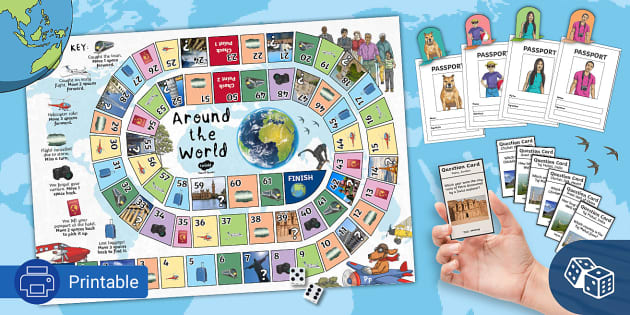
1. Selecting and Evaluating Top-Tier Geography Learning Games
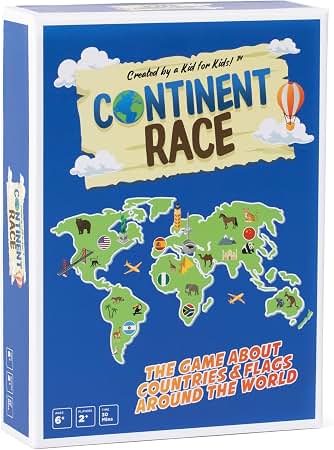
Choosing the right educational tools requires more than just picking a colorful interface. To effectively teach geography, games must balance entertainment with cognitive engagement. Whether you are looking for educational games for kids to supplement classroom learning or tools for adults to sharpen their global knowledge, evaluating these resources based on pedagogical value is essential for meaningful progress.
1.1 Understanding the Cognitive Benefits of Gamified Education
1.1.1 The Science of Spatial Memory and Active Recall
Geography learning games leverage the brain’s natural capacity for spatial reasoning. By requiring players to place countries, capitals, or physical features on a map, these games utilize active recall—a proven study technique where the brain is forced to retrieve information rather than passively reviewing it. This process strengthens neural pathways, making geographic data easier to store in long-term memory compared to traditional rote memorization.
1.1.2 Transitioning from Rote Memorization to Contextual Learning
While identifying flag colors or capital names is a start, true geographic literacy comes from understanding context. Modern games often incorporate problem solving educational quests that require players to consider terrain, climate, and proximity. By placing a location within its broader environmental or geopolitical context, learners develop a deeper, more durable understanding of the world.
1.1.3 Measuring Improvements in Global Awareness and Test Performance
Consistent engagement with interactive tools has been shown to improve both test scores and general global awareness. By tracking progress through high scores or completion times, learners can quantify their improvement in memory concentration builders. This feedback loop provides a sense of achievement that keeps students motivated to tackle more complex regional data.
1.2 Categorizing Geography Tools by Delivery Format
1.2.1 Mobile Applications for On-the-Go Map and Flag Mastery
Mobile apps excel at providing bite-sized learning opportunities. Their accessibility makes them perfect for practicing map mastery during short breaks, effectively turning downtime into productive study sessions.
1.2.2 Browser-Based Platforms for Rapid-Fire Trivia and Map Puzzles
Browser-based games often offer the most robust mechanics for rapid-fire trivia and detailed map puzzles. These platforms are frequently updated to reflect current political borders and can be easily accessed in a school or home environment, sometimes providing features similar to those found in engaging browser-based entertainment.
1.2.3 Tactile Learning via Physical Board Games and Atlases
Despite the digital shift, physical board games offer a unique benefit: the tactile experience of manipulating game pieces on a board. This sensory engagement can reinforce spatial relationships in a way that digital clicks cannot always replicate.
1.2.4 Leveraging Augmented Reality for Immersive Topography Visualization
Augmented Reality (AR) tools bring geography to life by overlaying digital topographic data onto a physical view of the world. This allows students to visualize elevation changes, historical border shifts, and climate zones in three dimensions, making abstract map concepts tangible.
1.3 Criteria for Choosing Tools by Age and Skill Proficiency
1.3.1 Early Childhood Foundations: Visual Recognition and Basic Landforms
At the elementary level, the focus should be on visual recognition. Games that emphasize identifying basic landforms, oceans, and major continents through simple, bright interfaces help children build an early, intuitive sense of our planet’s structure.
1.3.2 Middle and High School Levels: Economic Zones and Political Geography
As students move into middle and high school, the curriculum shifts toward political geography and economic systems. Games designed for this age group often incorporate historical timeline challenges, requiring students to understand how resources and trade routes have shaped national boundaries over time.
1.3.3 Advanced Challenges for Lifelong Learners: Historical Border Shifts and Cultural Complexity
For advanced learners, the complexity increases. Top-tier tools for adults often explore cultural nuance, demographic data, and the fluid nature of historical borders. These games serve as both mental stimulation and a way to maintain a high level of global literacy in an ever-changing world.
2. Implementing Strategies to Maximize Geography Learning Games
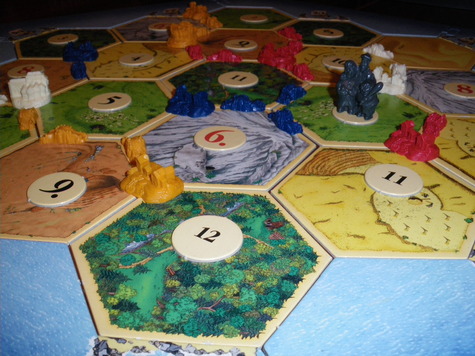
To truly harness the power of geography learning games, learners must move beyond passive play and adopt a structured approach. Integrating these tools into a daily routine turns casual screen time into a potent educational habit that builds lasting geographic fluency.
2.1 Integrating Gameplay into Formal Study Routines
Consistency is the bedrock of learning. By incorporating educational games for kids or adults into a set schedule, you move from sporadic interest to measurable progress. Treating these sessions like a workout for the brain ensures that the material sticks rather than fading away after a few days.
2.1.1 Applying the Spaced Repetition Method for Long-Term Retention
The secret to memorizing borders and capitals isn’t cramming—it is spaced repetition. By revisiting specific regions or country facts at increasing intervals, you solidify the information in your long-term memory. Most digital platforms now offer built-in algorithms that highlight the areas you frequently miss, ensuring you practice the items you find most challenging.
2.1.2 Setting Daily Goals to Maintain Consistent Geographic Literacy
Small, achievable goals prevent burnout. Whether it is mastering three new countries a day or reaching a specific score on a continent-wide quiz, setting daily targets keeps motivation high. Much like learning how to homeschool on one income requires careful planning and resource management, effective geography study requires a consistent, bite-sized curriculum that fits naturally into your existing life.
2.1.3 Combining Digital Games with Physical Reference Maps
Digital interaction is excellent for speed, but physical maps provide spatial context that screens sometimes lack. Keeping a wall map or a globe near your workspace allows you to cross-reference digital results with physical scale, helping you visualize the actual distance between regions.
2.2 Comparing Platforms Based on Specific Learning Outcomes
Not all games serve the same purpose. Choosing the right tool depends on whether your goal is simple identification or deep analytical understanding.
2.2.1 Drag-and-Drop Mapping for Enhanced Spatial Skills
These games are best for developing memory concentration builders. By manually placing borders or flags, the learner creates a mental map of where regions exist in relation to their neighbors, which is far more effective than choosing the correct answer from a list.
2.2.2 High-Stakes Leaderboard Competitions for Motivation
For competitive learners, games that feature global rankings or timer-based challenges provide a high-pressure environment that mimics a real exam. These problem solving educational quests test your ability to recall facts under stress, which is essential for academic performance.
2.2.3 Platforms Aligned with K-12 Social Studies Standards
Teachers often prefer platforms that track progress against national standards. These tools ensure that the gameplay is not just fun, but directly relevant to current classroom curriculum regarding historical timeline challenges and geopolitical shifts.
2.3 Addressing Frequently Asked Questions About Geography Gaming
New users often wonder how to filter the vast array of available options to find high-quality, accurate content.
2.3.1 Identifying Quality Free Resources for Students and Teachers
Look for platforms maintained by educational non-profits or public institutions. These sites generally avoid invasive advertisements and prioritize accurate, vetted information over entertainment value.
2.3.2 Determining Optimal Daily Duration for Skill Development
Research suggests that 15 to 20 minutes of focused, high-intensity gameplay is more effective than an hour of mindless clicking. This window is long enough to cover new ground but short enough to keep the learner fully engaged.
2.3.3 Navigating Differences Between World Geography and U.S. Regional Games
Global games focus on broad recognition, while U.S.-specific games often dive deeper into sub-regional identities, such as state capitals, river systems, and major economic hubs. Choose the depth based on the specific test or curiosity level of the user.
2.3.4 Ensuring Accuracy of Political Borders and Contemporary Data
Political geography is fluid. Always verify that your chosen game updates its maps and data annually. Avoid platforms that haven’t been modified in years, as they may present outdated borders that could confuse learners or lead to incorrect test answers.
Geography learning games do far more than just help students memorize capitals and flags; they serve as a dynamic gateway to understanding our complex, interconnected world. By blending cognitive science with engaging interactive mechanics, these tools turn passive study sessions into active, memorable experiences. Whether you are using high-stakes leaderboard competitions to boost motivation in the classroom or utilizing spaced repetition methods to ensure long-term retention of political borders and economic zones, the right approach makes all the difference in achieving true geographic literacy.
As you incorporate these resources into your daily routine, remember that the most effective learning often happens through a balance of digital innovation and traditional study habits. If you are interested in exploring how to structure your learning environment effectively, especially if you are managing your education from home, you may find our guide on how to homeschool on one income helpful for balancing resources and time. Ultimately, the best path to mastery is consistency. Start small, challenge yourself with new formats, and enjoy the process of mapping out the world one game at a time. Why not pick a new region to explore today and see how much your spatial awareness has improved?



Pingback: Kids Jigsaw Puzzles: Choosing the Best Types for All Ages - GameTurn