
There is a unique, enduring thrill that comes from standing before a glowing monitor, white-knuckling a joystick, and pushing for that elusive high score on a classic cabinet. For many, high score arcade games represent the purest form of competitive gaming, stripping away complex narratives in favor of raw mechanical mastery and rapid-fire decision-making. Whether you are a retro enthusiast looking to climb the ranks of a local leaderboard or a modern gamer aiming to understand the roots of esports, the pursuit of perfection in these titles requires a blend of mental discipline and physical precision.
In this guide, we will break down the essential tactics needed to elevate your gameplay. From decoding complex spawn patterns to mastering the fine art of ergonomic input, you will learn how to transition from casual play to serious competitive performance. We will explore how to turn these high score chasing challenges into a science, helping you optimize your runs and consistently beat your personal bests across your favorite titles.
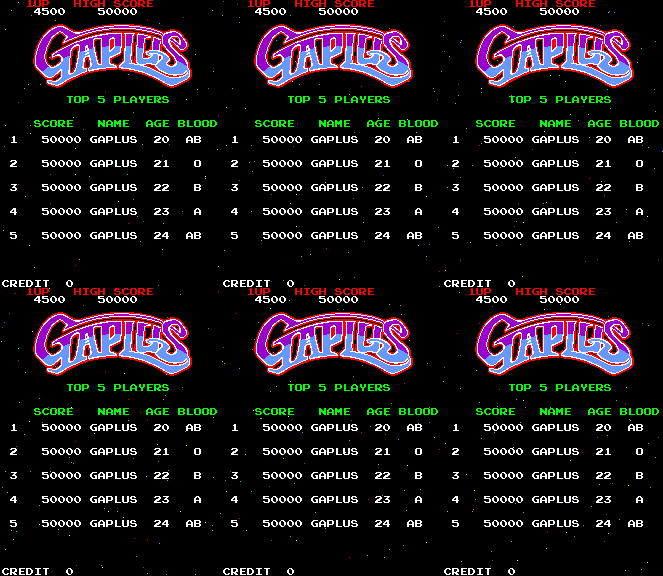
1. Mastering High Score Arcade Games through Fundamental Mechanics and Tactical Training
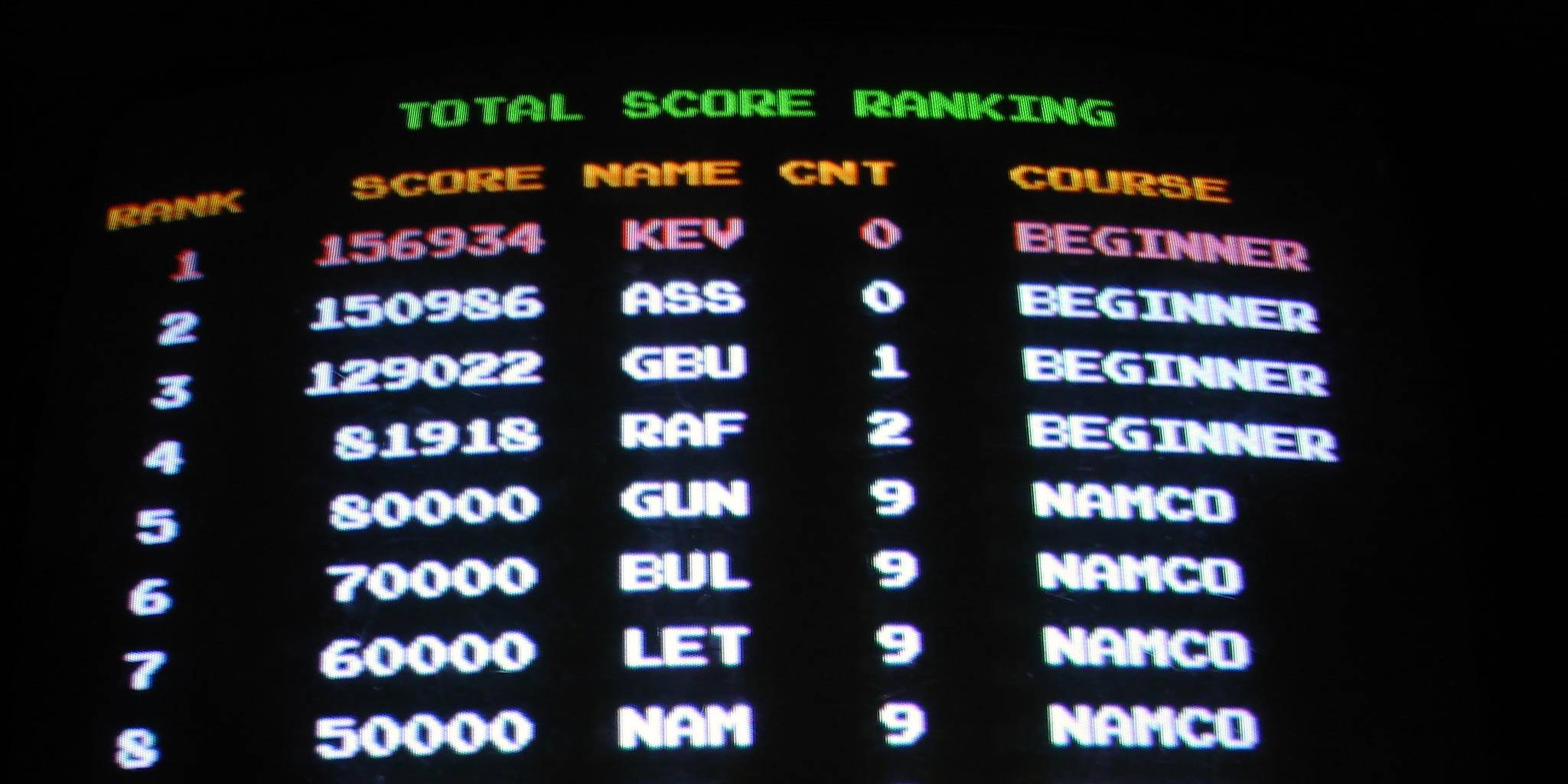
Achieving a top position on a leaderboard requires more than just quick reflexes; it demands a deep understanding of the core systems governing high score arcade games. Whether you are navigating intense platform action games or classic shooters, success is built upon a foundation of pattern recognition and efficient mechanical execution. By deconstructing how these machines function, you can shift from reactive play to calculated, high-scoring performance.
1.1 Analyzing Game Patterns and AI Behavior
1.1.1 Decoding Spawning Algorithms and Enemy Pathing
Most classic arcade games operate on set logic rather than true chaos. Enemy behavior is typically dictated by fixed spawning algorithms that trigger based on your score, the time elapsed, or your current position on the screen. By observing enemy pathing, you can identify “safe zones”—areas where threats are minimized—allowing you to manipulate the AI into positions that favor your scoring strategy. Spending time in practice mode or watching high-level replays will reveal these invisible boundaries, turning unpredictable encounters into manageable routines.
1.1.2 Identifying RNG versus Deterministic Game Cycles
Understanding the difference between deterministic and random number generation (RNG) is crucial for arcade skill games. While some titles utilize pure RNG to keep you on your toes, many iconic cabinets run on deterministic cycles. In these games, enemies will react exactly the same way every time you reach a specific point total or level. Learning to recognize these cycles allows you to memorize optimal routes, turning high-stakes runs into a choreographed sequence of precise inputs.
1.2 Optimizing Physical Execution and Ergonomics
1.2.1 Mastering Joystick Grip and Button Actuation
Your physical connection to the cabinet is the final link in the chain. Different joysticks require different grip styles—such as the bat-top grip for precise directional inputs or the ball-top for rapid, flick-based movement. Similarly, button actuation should be deliberate. Avoid “mashing” buttons; instead, train yourself to press with the minimum amount of force required to trigger the switch. This reduces fatigue during long sessions and allows for faster, more accurate inputs during critical moments.
1.2.2 Developing Muscle Memory for Precise Movement
High score chasing challenges rely heavily on subconscious response. To develop muscle memory, focus on consistent, repeatable motions rather than erratic reactions. Practice short, controlled bursts of movement to navigate tight gaps or hazards. By automating these basic movements, you free up your mental bandwidth to focus on advanced scoring strategies and long-term pathing instead of basic navigation.
1.3 Strategic Resource Allocation for Maximum Scoring
1.3.1 Balancing Survival Tactics with Point Multiplier Chasing
The core tension in any classic arcade game is the trade-off between safety and score. Survival often requires playing conservatively, but high scores frequently demand risky maneuvers, such as clearing hazards in close proximity for bonus points. Developing a “multiplier mindset” means knowing when to prioritize clearing a screen and when to hold back to gather collectibles or bait enemies into high-value formations.
1.3.2 Identifying High-Yield Scoring Opportunities in Classic Cabinets
Every cabinet has specific “money” spots—areas or scenarios that offer exponentially higher rewards than others. Whether it is a specific enemy wave that grants bonus points for perfect accuracy or a hidden item tucked into a corner of a single screen arcade challenge, identifying these high-yield opportunities is the secret to scaling your score. Audit your gameplay to see where you are leaving points on the table.
1.4 Hardware Awareness and Environmental Adaptation
1.4.1 Compensating for Dead Zones and Joystick Latency
Not every cabinet is in peak condition. Many vintage machines feature joysticks with worn-out switches or noticeable dead zones. You must learn to “feel” the hardware; if a joystick requires a longer throw to register an input, adjust your movement timing accordingly. Proactive players learn to compensate for these mechanical imperfections before they lose a life.
1.4.2 Calibrating Playstyle to Specific Cabinet Sensitivity
Sensitivity varies wildly between machines. A stiff, heavy-spring joystick requires a different approach than a loose, responsive one. When approaching a new or unfamiliar cabinet, spend the first few minutes of your session testing the limits of the controls. Adjust your speed and button pressure to match the sensitivity of the specific machine, ensuring your muscle memory doesn’t cause you to overshoot or undershoot in high-pressure scenarios.
2. Advanced Psychological Frameworks for Competitive Arcade Dominance
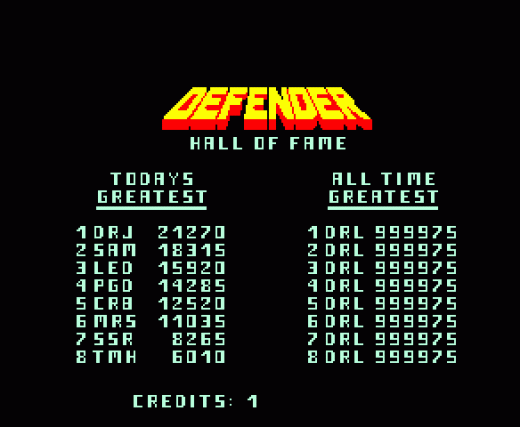
Achieving a high score in arcade games is as much a mental discipline as it is a test of hand-eye coordination. To compete at the highest level, you must master the cognitive demands of these high-pressure environments.
2.1 Achieving the Flow State and Managing Adrenaline
The “flow state”—often called being “in the zone”—is that elusive period where your actions feel automatic and your focus is singular. To reach this, you must first manage your body’s physiological response to high-stakes gameplay.
2.1.1 Breathing Techniques for Performance Stability
Adrenaline spikes can lead to shallow, rapid breathing, which negatively impacts fine motor control. Practice rhythmic, diaphragmatic breathing to stabilize your heart rate. By maintaining steady oxygen flow, you prevent the muscle tension that often leads to errors in critical moments.
2.1.2 Controlling Tilt and Maintaining Focus During High-Stakes Runs
In the world of arcade skill games, “tilt” is the state of emotional frustration that occurs after a preventable mistake. If you lose your cool, your decision-making degrades rapidly. Recognize the signs of mounting frustration and implement a “reset” ritual, such as a brief pause or a specific breathing cycle, to clear your mind before re-engaging with the cabinet.
2.2 The Science of Deliberate Practice and Performance Tracking
High score chasing challenges are rarely won by luck. Top players rely on deliberate practice, which involves focused, repetitive drills rather than aimless play.
2.2.1 Utilizing Emulation for Frame-by-Frame Analysis
Modern emulation software allows you to dissect classic arcade games with surgical precision. By slowing down game speeds or utilizing save states, you can study complex patterns frame-by-frame. This helps you understand the underlying logic of enemy spawns and environmental hazards that are impossible to parse during real-time play.
2.2.2 Establishing Structured Practice Routines to Break Skill Plateaus
If you find yourself stuck, shift your focus from playing for a high score to playing for improvement. Isolate specific sections of a level that consistently result in lost lives. By mastering these “choke points” in isolation, you build the muscle memory required to navigate them flawlessly during a full run.
2.3 Genre-Specific Advanced Tactics for World Record Chasing
Different genres require unique cognitive approaches. Whether you are playing classic arcade games or modern competitive titles, you must adapt your strategy to the specific mechanics at play.
2.3.1 Hitbox Manipulation in Shoot Em Ups and Bullet Hell Titles
In bullet hell titles, the difference between a high score and a game-over is often a matter of pixels. Learn the exact dimensions of your character’s hitbox. Often, you will find that you can graze bullets that seem to be touching your sprite, allowing for safer movement through dense patterns.
2.3.2 Input Buffering and Frame Data Mastery in Fighting Games
Fighting games reward players who understand the “hidden” timing of the game. Input buffering—entering commands slightly before the previous animation ends—is essential for linking combos. Mastering these frames is the difference between a casual player and a leaderboard contender.
2.3.3 Predictive Piece Management in Competitive Puzzle Games
When playing fast-paced puzzle titles, you must look several steps ahead. Instead of reacting to current pieces, focus on the “next” indicator and build structures that prepare the playfield for upcoming shapes. This proactive planning is the hallmark of professional-level play.
2.4 Engaging with Global Arcade Leaderboards and Communities
You do not have to master these games in isolation. Engaging with the broader community provides the insights needed to push your scores to the limit.
2.4.1 Navigating Score Databases and Verified Recording Standards
If you aim to submit your scores to global databases like Twin Galaxies or Speedrun.com, you must adhere to strict verification standards. This often includes recording your full gameplay, from startup to the final score screen, to ensure authenticity. For those looking to sharpen their strategic mind, exploring best platform action games can also provide insight into movement optimization that applies across many arcade sub-genres.
2.4.2 Studying World Record Replays for Route Optimization
The fastest way to learn is to watch the best. World record replays serve as a masterclass in efficiency. Watch these runs not just for entertainment, but to analyze their pathing, resource management, and risk-taking. Replicating the routes of top players is the most effective way to optimize your own performance.
Mastering high score arcade games is about more than just lightning-fast reflexes; it is a blend of scientific pattern recognition, psychological resilience, and deliberate practice. By moving beyond casual play and into the realm of structured training—whether that means analyzing enemy spawning algorithms or refining your physical ergonomics at the cabinet—you transform the experience from simple entertainment into a rewarding pursuit of mastery. Success in these classic arcade games requires patience, as you learn to balance the aggressive urge to score with the tactical necessity of survival.
Ultimately, the journey of high score chasing challenges is a deeply personal one. Every missed opportunity or high-score reset is simply data to be analyzed for your next attempt. If you find yourself enjoying the technical aspects of these challenges, you might also appreciate the precision required in mastering combat and movement in modern platform action games. As you continue to push your limits, remember that the true thrill lies in the incremental progress you make toward leaderboard dominance. Stay focused, keep your practice intentional, and enjoy the process of turning your dedication into a legendary score.



Pingback: Master Blackjack Simulator Strategy: Improve Your Odds - GameTurn
Pingback: Mastering Rhythm Arcade Challenges: Tips for High Scores - GameTurn
Pingback: Mastering Reflex Based Obstacle Dodging: Tips & Skills - GameTurn
Pingback: Mastering Color Matching Arcade Action: Tips for High Scores - GameTurn
Pingback: Retro Pixel Art Shooters: A Guide to High Score Challenges - GameTurn