Finding the right balance between screen time and meaningful education is a challenge for many parents and teachers today. Fortunately, science educational games have evolved from simple digital flashcards into sophisticated tools that bridge the gap between entertainment and academic rigor. These interactive platforms do more than just occupy a student’s attention; they foster a genuine curiosity about the natural world, engineering, and the scientific method.
In this guide, we explore how to choose high-quality digital experiences that turn passive screen time into active cognitive growth. Whether you are looking for educational games for kids that introduce basic biological concepts or advanced brain training games that challenge a high schooler’s grasp of physics and coding logic puzzles, we have curated the best resources to suit your needs. You will learn how to evaluate game quality, effectively integrate these tools into your curriculum, and use math learning games as a foundation for data-driven scientific analysis. For those interested in balancing digital exploration with offline skills, you can also explore 10 best math learning games for kids to further supplement your educational toolkit.

1. Selecting the Best Science Educational Games for Every Learning Level
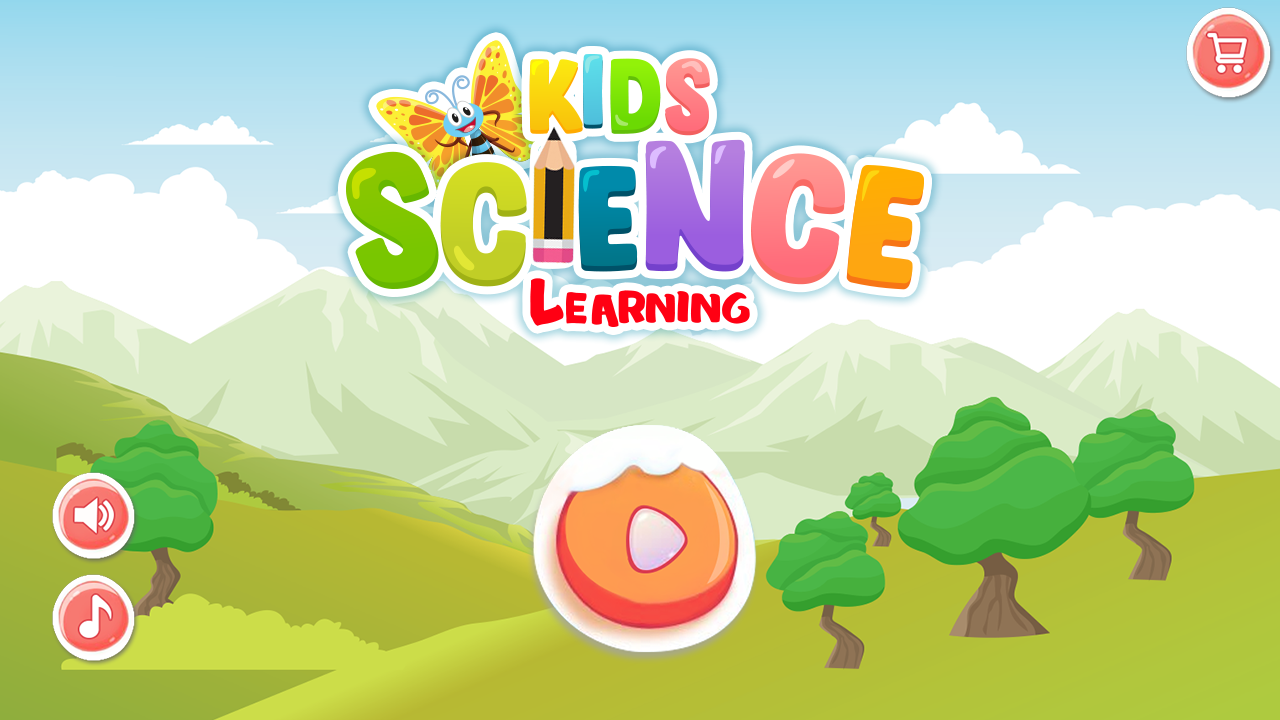
1.1 Evaluating Game Quality and Educational Value
Choosing the right science educational games requires more than just checking for a colorful interface. To ensure genuine academic growth, parents and educators should look for a seamless blend of engagement and curriculum-aligned STEM content. High-quality games avoid “chocolate-covered broccoli” syndrome—where educational goals are clumsily tacked onto a game—and instead weave core scientific principles directly into the mechanics of play. This ensures that the user isn’t just mindlessly clicking, but actually grappling with cause-and-effect relationships or hypothesis testing.
For school-aged children, it is beneficial to look for titles that incorporate Next Generation Science Standards (NGSS). These standards emphasize cross-cutting concepts and scientific practices, such as analyzing data or constructing explanations. When a game follows these benchmarks, it serves as a reliable reinforcement of classroom learning rather than a mere distraction. Furthermore, effective digital tools utilize immediate feedback loops. By providing instant validation or constructive guidance when a student makes a mistake, these games help solidify retention far more effectively than traditional, static materials, which often leave students waiting hours or days for grading.
1.2 Recommended Science Educational Games by Developmental Stage
Developmental appropriateness is the cornerstone of effective learning. For early childhood, the focus should be on building a foundation of logic and curiosity about the natural world. Games that involve simple observation, pattern recognition, and basic inquiry help young learners build the vocabulary and mental frameworks needed for more advanced concepts later on. For those looking to support general cognitive growth, many parents also find success using math learning games as a bridge to reinforce the quantitative side of scientific observation.
As students transition to middle school, the curriculum demands a shift toward specialized subjects like chemistry and environmental science. Look for simulation-based platforms that allow students to manipulate variables in a virtual lab environment, enabling them to test chemical reactions or ecosystem changes safely. By the time students reach high school, the complexity should increase to include coding logic puzzles and intricate physics modeling. At this level, platforms that mirror real-world engineering or software development challenges allow students to apply physics principles to build functional, complex systems, turning abstract theories into tangible digital creations.
1.3 Platform Accessibility and Learning Environments
The choice between web-based browser games and dedicated mobile applications often comes down to the specific learning environment. Browser-based games are highly accessible and require no complex installation, making them ideal for school computer labs or shared family devices. Conversely, mobile applications often provide a more polished, tactile user interface that feels more like a traditional leisure game, which can significantly increase motivation for reluctant learners.
Beyond the platform, the social context of the game matters. Single-player focus is excellent for deep, contemplative study where a student needs to concentrate on mastering a specific scientific process at their own pace. However, multiplayer collaborative platforms offer the unique benefit of social learning. In these environments, students must communicate findings, divide labor for experiments, or troubleshoot technical hurdles together, mimicking the collaborative nature of real-world scientific research teams.
2. Integrating Science Educational Games into Modern Curricula
2.1 Strategic Implementation for Parents and Educators
2.1.1 Establishing structured screen time boundaries for home learning
Integrating science educational games into a daily routine requires a balanced approach. Rather than viewing digital play as passive entertainment, frame it as an intentional block of time dedicated to active discovery. For younger students, aim for 20 to 30-minute sessions that coincide with their peak focus hours, typically in the morning. Using tools like timers can help children anticipate the end of a session, reducing frustration when it is time to log off. By designating specific educational apps or platforms, you differentiate between recreational device usage and intentional brain training games.
2.1.2 Techniques for facilitating post-game discussions to solidify scientific concepts
The true power of digital learning lies in the bridge between the screen and the real world. To maximize retention, encourage students to explain the “why” behind their in-game actions. Ask open-ended questions like, “What happened when you adjusted the variables in that simulation?” or “How did that strategy solve the problem?” These discussions transform gameplay into a metacognitive exercise. If a student encounters a difficult level, treat it as a laboratory report where they identify what went wrong, test a hypothesis, and try again. This reflection solidifies the science concepts far more effectively than isolated play.
2.1.3 Supplementing digital play with physical, hands-on experiments
Digital platforms provide an excellent sandbox for theory, but physical application makes science tangible. If a student is playing a game focused on physics or environmental science, pair it with a DIY experiment. For instance, after exploring a simulation of ecosystems or water cycles, go outside to observe local flora and fauna or conduct a small-scale observation in your backyard. You can even find inspiration for projects by exploring guides on how to grow plants from seed, which reinforces biological cycles discussed in many science curricula.
2.2 Future Directions in Science Gaming Technology
2.2.1 The impact of virtual and augmented reality on immersive field trips
Virtual reality is changing the definition of a classroom by allowing students to visit environments that were previously inaccessible. From exploring the surface of Mars to journeying inside the human circulatory system, these immersive experiences provide a sense of scale and presence that traditional media cannot replicate. Augmented reality (AR) adds another layer, overlaying digital data onto the physical world, which helps students visualize complex abstract concepts in real-time.
2.2.2 Leveraging AI-driven adaptive learning to customize difficulty levels
One of the most promising advancements is the integration of AI-driven adaptive learning. These systems monitor a student’s progress and adjust the difficulty level in real-time. If a student masters coding logic puzzles, the game seamlessly increases the complexity of the challenges, preventing boredom. Conversely, if a student struggles with a specific concept, the game offers additional support or alternative visual representations to bridge the gap, ensuring personalized growth.
2.2.3 Emerging trends in gamified scientific inquiry and citizen science projects
Gamification is increasingly being used to crowdsource scientific research. Some platforms now allow students to participate in genuine citizen science, where the data they generate through gameplay contributes to real-world research projects, such as classifying galaxies or tracking migratory patterns. This shift empowers students to view themselves not just as learners, but as contributors to the global scientific community.
2.3 Frequently Asked Questions
2.3.1 Determining the effectiveness of games versus traditional textbooks
Games often excel at fostering procedural knowledge and spatial reasoning, while textbooks remain superior for dense, historical, or theoretical context. The best results occur when the two are used in tandem: use the game to build engagement and practical intuition, and the textbook to provide the foundational facts and terminology.
2.3.2 Resources for finding high-quality free science games
Many top-tier educational institutions and non-profits offer free access to high-quality science gaming platforms. Look for resources hosted by national science associations, university-led outreach programs, or government-funded education portals. These sites are typically vetted for academic rigor and do not rely on aggressive advertising models.
2.3.3 Methods for monitoring academic progress within digital game environments
Many modern educational platforms include a “parent” or “teacher” dashboard. These tools track time spent, concepts mastered, and areas where the student is struggling. If a platform lacks these features, ask your student to narrate their progress periodically or keep a simple learning log where they jot down one new thing they discovered during their gaming session.
Science educational games offer more than just a break from traditional coursework; they provide a dynamic sandbox where curiosity meets complex problem-solving. By blending entertainment with core STEM principles, these tools empower learners of all ages to test hypotheses, model complex systems, and develop the coding logic puzzles that define our modern technical landscape. Whether you are a parent looking to supplement home schooling or an educator seeking to boost engagement in the classroom, the right digital resources can transform how students perceive and interact with scientific inquiry.
As you incorporate these games into your daily routine, remember that the most significant learning often happens during the transition from screen to reality. Pairing high-quality digital simulations with hands-on practice helps anchor abstract concepts in the physical world, creating a well-rounded educational experience. For those looking to broaden their toolkit further, exploring a variety of math learning games can also provide a strong foundation for the data analysis skills necessary for advanced science work. By fostering a consistent habit of exploration and critical thinking, you are setting the stage for long-term academic success. Why not start today by introducing one new science-focused challenge into your student’s schedule and seeing where their curiosity leads?