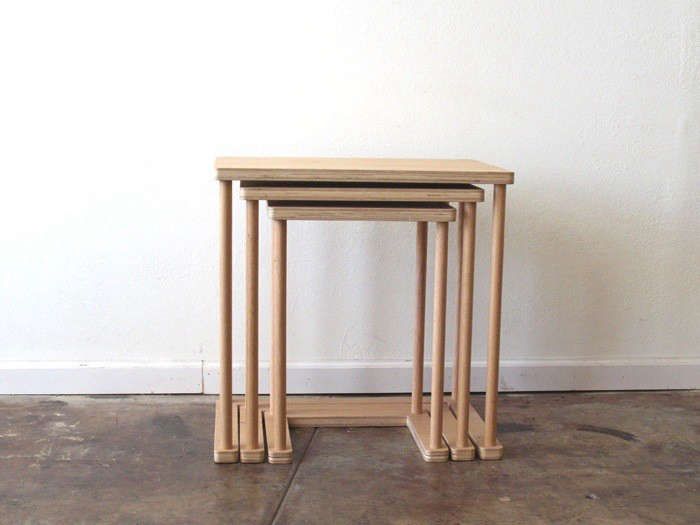

Square nesting tables are the furniture equivalent of a friend who arrives with extra chairs, snacks, and a plan. Most of the time, they sit quietly together in a compact stack. When guests appear, a movie-night buffet develops, or your laptop suddenly needs a temporary home, the smaller tables slide out and get to work.
Typically sold in sets of two or three, nesting tables are designed in graduated sizes so that the smaller pieces fit beneath the largest one. This simple arrangement provides multiple usable surfaces without permanently occupying the floor space required by several separate tables. That flexibility makes square nesting tables especially useful in apartments, compact living rooms, multipurpose bedrooms, and homes where furniture must adapt throughout the day.
Yet space-saving convenience is only part of their appeal. Square nesting tables can also strengthen a room’s geometry, balance sectional seating, provide temporary work surfaces, and introduce materials such as wood, glass, marble, or metal without requiring a major decorating commitment. The trick is choosing a set that fits both your measurements and your real lifenot merely the beautifully staged life where nobody spills coffee.
What Are Square Nesting Tables?
Square nesting tables are a coordinated group of tables with square or nearly square tops and progressively smaller dimensions. Their frames are constructed so one table can slide partly or completely underneath another. When nested, the set resembles one layered accent table. When separated, it becomes two or three independent surfaces.
Unlike a conventional coffee table, a nesting set does not have to remain in the center of the room. The largest table can stay beside a sofa while the smaller one moves next to a reading chair. During a gathering, the pieces can be distributed around the seating area so guests do not have to perform an awkward forward lunge every time they reach for a drink.
Why the Square Shape Matters
Square tables have straight edges and clearly defined corners, allowing them to align neatly with sofas, walls, rugs, modular seating, and architectural lines. They can make a room feel organized and intentional, particularly when the existing furniture already includes rectangular or square forms.
The shape also provides generous usable surface area relative to its footprint. A square top can comfortably hold a lamp, a stack of books, a coaster, and a decorative object without turning into a tabletop version of rush-hour traffic. In larger rooms, square accent tables can fill negative space effectively, while compact square models fit naturally beside loveseats and apartment-scale sofas.
Why Square Nesting Tables Work So Well
They Save Floor Space
The biggest advantage is obvious: several tables can occupy approximately the footprint of one. When the smaller pieces are tucked away, walkways remain open and the room feels less crowded. When more surface area is needed, the tables can be separated in seconds.
This arrangement is particularly practical in a studio apartment where the living room may also function as a dining room, office, exercise area, and occasional place to fold an ambitious mountain of laundry. Nesting tables can be expanded during work or entertaining, then condensed when open floor space becomes more valuable.
They Are Easy to Reconfigure
A traditional coffee table usually has one job and one assigned parking space. A nesting set is less committed. One table can hold a lamp beside the sofa, another can serve as a temporary laptop stand, and the smallest can become a drink table next to an accent chair.
Design publications and furniture retailers frequently recommend nesting tables as flexible alternatives to oversized coffee tables because the individual pieces can be moved aside during daily use and brought forward when guests need additional surfaces.
They Can Visually Organize a Room
Repeating the same shape, finish, and construction across multiple tables creates visual continuity. Even when the pieces are separated, they still look related. This is useful in open-concept rooms, where matching tables can subtly connect a sofa area, reading corner, and nearby chair without making the room appear overly coordinated.
They Offer Better Surface Distribution
One large coffee table creates a single central surface. Multiple nesting tables distribute that surface area closer to the people using it. This can improve comfort during conversation, game night, or casual dining because each seat can have a nearby place for a cup, plate, remote, or phone.
Popular Materials for Square Nesting Tables
The best material depends on the room’s style, the amount of maintenance you are willing to perform, and whether the table will encounter children, pets, hot mugs, or adults who insist that coasters are merely decorative suggestions.
| Material | Best Qualities | Important Considerations |
|---|---|---|
| Solid wood | Warm, durable, naturally textured | Can scratch, stain, or change color in sunlight |
| Wood veneer | Consistent appearance, lighter weight, often affordable | Damage can be harder to repair than solid wood |
| Metal | Strong, slim, suitable for industrial or modern rooms | Check welds, finish quality, and floor protection |
| Glass | Creates an open, visually light appearance | Shows fingerprints and requires careful handling |
| Marble or stone | Distinctive natural pattern and upscale character | Heavy, potentially porous, and often more expensive |
| Engineered wood | Budget-friendly and available in many finishes | Quality and moisture resistance vary considerably |
Wood Square Nesting Tables
Wood brings warmth and visible texture to a living room. Oak, walnut, mango, acacia, and ash can work across styles ranging from farmhouse to Scandinavian modern. Natural grain also helps disguise minor dust and fingerprints more effectively than glossy glass.
Mixing wood tones can create depth, but the undertones should relate to one another. Warm woods generally look most harmonious with other warm finishes, while gray or cool-toned stains work better beside similarly cool materials.
Metal and Glass Nesting Tables
Metal frames allow manufacturers to create slimmer legs and more open bases. Black steel can produce an industrial look, while brass, bronze, or gold-toned finishes introduce warmth and a hint of glamour.
Glass tops help maintain an airy appearance because they do not create a large opaque visual block. This makes them popular in compact rooms, although glass demands more frequent cleaning and may not be the easiest choice for households where toys, pets, and flying game controllers regularly test the laws of physics. Furniture buying guides commonly describe glass as visually open and metal as durable and design-forward.
Marble and Stone Nesting Tables
Marble and natural stone create a substantial, luxurious presence. Because every slab may have different veining, the tables can function as decorative objects even when little else is placed on them.
However, stone is heavy, and some varieties are vulnerable to staining or etching. Buyers should review the manufacturer’s care instructions, weight limits, and sealing recommendations. A table that looks like a museum pedestal should not require museum staff to move it every time you vacuum.
How to Choose the Right Size
Measure the Full Set in Both Positions
Do not consider only the dimensions of the largest table. Measure how much space the set will occupy when fully nested and when all pieces are separated. Use painter’s tape, newspaper, or cardboard to create full-scale outlines on the floor before ordering.
This simple test reveals whether cabinet doors can open, whether people can walk past the tables, and whether the smallest piece will actually be useful once pulled out. Layout guidance often recommends creating floor templates before buying and preserving approximately 30 inches where a comfortable circulation path is needed.
Compare the Height With Your Seating
For use as side tables, the tallest nesting table should be reasonably close to the height of the sofa or chair arm. This makes it easier to reach a drink without leaning sideways like a tree in a windstorm.
For coffee-table use, the top is generally most comfortable when it is near the seat-cushion height or slightly lower. Furniture guides commonly place standard coffee tables around 15 to 18 inches high, while emphasizing that sofa height matters more than a universal number.
Check the Nesting Clearance
Study the product photos and measurements to determine how completely the tables overlap. Some sets disappear neatly into one compact unit. Others overlap only partially, producing a stepped or layered appearance.
Neither design is automatically better. Full nesting saves maximum space, while partial nesting displays more of each tabletop and can create a more decorative composition. The important thing is knowing which version you are buying before a large delivery box appears at your door.
How to Style Square Nesting Tables
Create a Layered Arrangement
Pull the smaller table out by one-third or one-half to create a stepped display. Place a taller object, such as a lamp or vase, on the largest table and a lower object, such as a bowl or book, on the smaller one. The variation in height adds dimension without requiring many accessories.
Use Them as a Flexible Coffee Table
Position two square nesting tables together in front of a compact sofa. Keep them close for an orderly geometric look, or separate them slightly to create more width. When open floor space is needed, slide the smaller table underneath or move both pieces to the side of the room.
Divide the Set Across the Room
A matching set does not need to stay together permanently. Use the largest table beside the sofa and the smaller one next to a reading chair. Their common finish will make the room feel connected even though the pieces are several feet apart.
Turn One Into a Plant Stand
The smallest table can elevate a houseplant near a window while the larger table remains beside the seating area. Use a waterproof saucer and avoid allowing moisture to sit on wood, veneer, or metal surfaces.
Keep the Accessories Under Control
Because square nesting tables already have layered frames and multiple surfaces, they do not need a decorative parade. A lamp, a small stack of books, and one sculptural object may be enough. Leave open space for the practical items that will inevitably arrive, including glasses, keys, remotes, and the snack bowl everyone claims they are sharing.
Square Nesting Tables for Different Rooms
Living Room
Use the set as side tables, a compact coffee-table arrangement, or movable surfaces for entertaining. Models with open metal frames are useful where visual lightness matters, while wood sets add warmth to neutral upholstery.
Bedroom
The largest table can serve as a minimalist nightstand. Pull out the smaller table when you need extra room for a laptop, breakfast tray, humidifier, or stack of books that you fully intend to read someday.
Home Office
Nesting tables can hold a printer, files, reference books, or a second monitor used only occasionally. They are not substitutes for an ergonomic full-time desk, but they work well as movable supporting surfaces.
Entryway
A compact square set can provide a landing area for keys and mail. The smaller table can be pulled out when organizing packages or preparing bags before leaving home. Choose a stable model that will not wobble when someone drops a heavy backpack on it.
Guest Room
Guests can separate the tables to create two bedside surfaces or use one as a luggage accessory table. After the visit, the pieces nest together and return the room to its usual configuration.
Quality Details to Check Before Buying
- Frame stability: Each table should stand firmly without rocking.
- Weight capacity: Confirm that the tables can safely support lamps, books, or other intended items.
- Floor protection: Look for adjustable feet, rubber caps, or felt pads.
- Edge quality: Inspect corners for sharpness, rough seams, or chipped veneer.
- Finish consistency: Metal coatings should be even, and wood finishes should not feel sticky or excessively thin.
- Nesting action: The smaller tables should move underneath without scraping the top, frame, or floor.
- Assembly: Read the instructions and check whether tools are included.
If children are present, avoid unstable designs that can be easily pulled or climbed upon. Keep heavy objects off lightweight tables and follow all manufacturer safety instructions. Square corners may also justify corner guards in rooms used by toddlers.
Care and Maintenance
Use coasters, trivets, placemats, and felt pads to protect surfaces from moisture, heat, and scratches. Blot spills promptly rather than rubbing them across the finish. Avoid household chemicals unless the manufacturer specifically approves them.
For many wood finishes, a soft dry cloth or slightly damp cloth followed by immediate drying is sufficient. Direct sunlight and heating vents can contribute to uneven fading or dryness. General furniture-care guidance also recommends keeping hot or damp objects off exposed surfaces and addressing spills immediately.
Clean glass with a suitable nonabrasive product and a lint-free cloth. Dust metal frames regularly and watch for chips in painted finishes. For marble or natural stone, follow the supplier’s recommendations because cleaning and sealing requirements depend on the exact material.
Common Buying Mistakes
Choosing Appearance Before Measurements
A dramatic three-piece set may look compact online but dominate a narrow room once expanded. Measure first, admire second, and order third. This sequence prevents expensive furniture-based plot twists.
Ignoring the Smallest Table
Consider whether the smallest table is tall and wide enough to hold anything useful. A tiny piece may look charming but become little more than an elegant platform for one coaster.
Buying a Heavy Set That Must Move Daily
Stone and solid-wood tables can be beautiful, but weight matters when the pieces are frequently rearranged. For everyday mobility, a lighter wood, veneer, glass, or slim metal design may be more practical.
Overlooking the Open Side
Some nesting frames allow the smaller table to enter from only one direction. Make sure that opening faces the correct way in your planned layout. Otherwise, you may have to rotate the entire set every time you want to pull out a table.
Assuming Every Set Nests Completely
Product names can be generous. Review side-view photos and listed clearances instead of assuming the smallest table disappears entirely beneath the largest.
Are Square Nesting Tables Worth It?
Square nesting tables are worth considering when you need furniture that can change roles without taking over the room. They are especially valuable in smaller homes, but their usefulness is not limited to tight spaces. Even a large living room benefits from movable surfaces that can be placed beside individual seats during gatherings.
The best set will have stable construction, useful differences in height, enough clearance for easy nesting, and materials suited to your household. A delicate glass-and-brass design may be ideal in a formal sitting room. A sturdy wood or powder-coated metal set may survive family life with fewer nervous glances.
Ultimately, square nesting tables succeed because they solve an ordinary problem elegantly: sometimes you need more table, and sometimes you need more floor. With nesting furniture, you do not have to choose permanently.
Real-World Experiences With Square Nesting Tables
One of the first things people notice after living with nesting tables is that the smallest piece often becomes the busiest. The large table may hold the lamp and decorative objects, but the small table follows people around the room. It moves beside the sofa during coffee, toward the window during laptop work, and next to an armchair when someone wants to read. The table originally treated as the supporting actor frequently steals the entire production.
In compact living rooms, the greatest benefit is not simply saving square footage. It is being able to change how that square footage works. Imagine a one-bedroom apartment with a loveseat, one lounge chair, and a narrow walking path. During an ordinary evening, both tables remain nested beside the loveseat. The middle of the rug stays open, making the room feel calmer and easier to cross. When two friends visit, the smaller table moves beside the chair while the larger table shifts forward for snacks. The room accommodates more people without requiring a permanent coffee table in the center.
Another common lesson involves weight. A substantial marble nesting set can look spectacular, but owners may hesitate to separate it because moving the pieces feels like a surprise strength-training session. Lightweight tables are generally more convenient for daily rearrangement. Heavier models work better when they are usually left in one arrangement and separated only for special occasions.
The nesting clearance also matters more in daily life than it appears to matter in product photographs. If the frames fit too tightly, pulling out the smaller table can scrape the floor or bump the underside of the larger top. Adjustable feet and protective pads can improve the experience, but a well-designed set should slide together without requiring advanced furniture negotiation skills.
Families often discover that separate tables are more practical than one large coffee table. A child can use the lower piece for coloring while adults keep drinks on the taller table. During board games, one table can hold the game while the other holds snacks and spare pieces. The surfaces can then be nested quickly when the room needs to be cleared.
Pet owners encounter a different reality. An open-frame nesting table can become a favorite tunnel, sleeping nook, or strategic location from which a cat attacks unsuspecting ankles. This is mostly harmless entertainment, but lightweight tables should be stable enough not to shift when bumped. Breakable objects should remain off tables that active pets can easily move.
Styling habits also change over time. New owners may initially decorate every level with books, candles, bowls, plants, and framed photographs. Within a few weeks, they usually remove half of those objects because the tables need room for real activities. Nesting tables look bestand function bestwhen at least part of each surface remains empty.
The most successful experience comes from treating the set as adaptable equipment rather than a fixed display. Separate the pieces, reverse their positions, move one into another room, or use them together as a compact coffee table. Their value lies in that freedom. A good nesting set does not demand that the room serve the furniture; it allows the furniture to serve the room.