For many enthusiasts, the transition from casual play to serious competition requires more than just luck; it demands a deep, analytical understanding of probability and game theory. Poker simulation games have emerged as the gold standard for players looking to sharpen their edge, providing a risk-free environment where every decision can be dissected and perfected. Unlike the broad appeal of best casual online games, these specialized simulators bridge the gap between recreational interest and professional-grade skill acquisition. By leveraging advanced software, you can move past the limitations of intuition and begin making moves based on mathematical precision.
In this guide, we will explore how to use these digital tools to gain a competitive advantage. You will learn how to identify the right software for your skill level, the importance of structured training drills, and how to successfully translate your virtual practice into real-world table performance. Whether you are aiming to master GTO strategies or refine your exploitative play, these simulations offer the clearest path to long-term success.
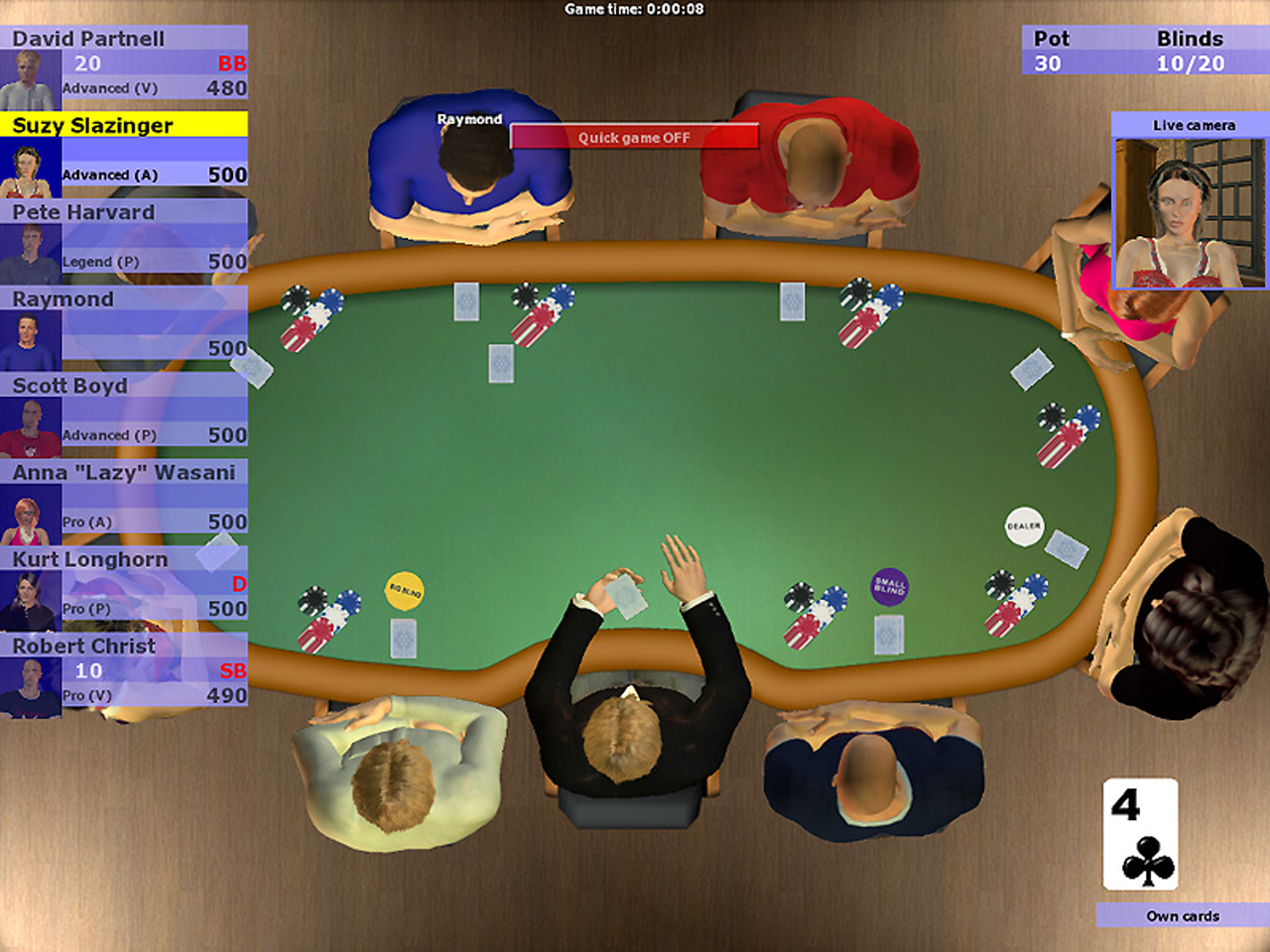
1. Leveraging Poker Simulation Games for Strategic Mastery
The transition from a casual hobbyist to a formidable player often hinges on the ability to treat poker as a game of incomplete information and mathematical probability. Leveraging poker simulation games serves as a critical bridge in this evolution, allowing players to practice high-stakes decision-making in a risk-free environment. Unlike the chaotic nature of physical play, simulators provide a controlled laboratory where every variable can be adjusted to isolate specific strategic leaks.
1.1 The Science of Accelerated Learning in Simulated Poker Environments
1.1.1 Reducing Cognitive Bias and Emotional Decision Making
In a real-world scenario, the fear of losing money—often referred to as tilt—can cloud even the most logical mind. Simulations decouple the action from the emotional weight of financial loss. By repeatedly facing adverse scenarios, players learn to rely on their pre-calculated strategies rather than “gut feelings,” effectively training the brain to prioritize long-term expected value over short-term gratification.
1.1.2 The Role of Immediate Feedback Loops in Skill Retention
The brain learns fastest when it receives near-instantaneous feedback. High-quality poker simulators provide immediate analysis of your hand, showing you exactly where your decision diverged from optimal play. This rapid error-correction cycle is far more efficient than waiting for a post-game review session, as the context of your reasoning is still fresh in your mind.
1.1.3 Moving Beyond Intuition Toward Mathematical Precision
Many beginners lean heavily on intuition, but seasoned pros understand that poker is rooted in combinatorics and probability. Simulations force you to move beyond feeling and into calculating. By engaging with these tools, you begin to internalize complex frequencies, such as how often you should bluff based on the pot odds, moving your game toward true mathematical precision.
1.2 Essential Tools and Software for Poker Simulation
1.2.1 Comparing GTO Solvers, Range Trainers, and Decision Tree Simulators
Understanding the distinction between these tools is vital. GTO (Game Theory Optimal) solvers calculate the theoretical “perfect” response to any given situation. Range trainers, by contrast, focus on teaching you which hands to play in specific positions, ensuring your pre-flop fundamentals are rock-solid. Decision tree simulators help you visualize the branching possibilities of a hand, allowing you to map out your strategy across multiple streets of play.
1.2.2 Key Performance Indicators to Look for in Training Software
When selecting software, prioritize programs that offer customizable board textures and adjustable stack-to-pot ratios. You want tools that allow you to export hand histories, providing a clear audit trail of your performance. If you are exploring broader free online games, ensure the simulator you choose allows for deep-dive statistical tracking rather than just offering a superficial gaming experience.
1.2.3 Tailoring Tool Selection to Your Current Proficiency Level
Beginners should start with range trainers to master starting hand charts, while intermediate players should pivot toward GTO solvers to understand post-flop equilibrium. Do not overwhelm yourself with complex solvers before you have mastered the basics of positional advantage and fundamental hand selection.
1.3 Implementing Structured Drills for Competitive Advantage
1.3.1 Perfecting Pre-flop Ranges and 3-Bet Defense Fundamentals
Structured drills involve setting up specific, repetitive scenarios, such as defending against a 3-bet from the big blind. By simulating these specific spots hundreds of times, you develop an instinctual understanding of when to fold, call, or four-bet, which is invaluable during high-pressure live play.
1.3.2 Mastering Post-flop Texture Analysis and Equity Calculation
Post-flop, the board texture dictates your range strength. Use simulation drills to practice how your hand interacts with various flops—such as dry, connected, or monotone boards. This builds a mental library of board textures, allowing you to estimate your equity almost instinctively, even when the cards aren’t in your favor.
1.3.3 Navigating High-Variance Scenarios in Tournament and Cash Games
Variance is an inescapable reality in poker. Through simulation, you can stress-test your bankroll management and decision-making during downswings. By playing through high-variance simulations, you learn how to remain disciplined during losing streaks, an essential skill for any professional or serious amateur.
2. Bridging the Gap Between Poker Simulation Games and Real-World Success
Mastering poker simulation games provides a robust theoretical foundation, but the transition to live play requires a shift from static analysis to dynamic execution. While software provides perfect mathematical baselines, the real world introduces variables that simulations simply cannot replicate perfectly.
2.1 Transitioning from Theoretical Training to Live Table Execution
Translating Game Theory Optimal (GTO) recommendations into real-time decisions is an exercise in adaptability. Beginners often err by attempting to play perfectly balanced strategies against opponents who are not playing optimally. Understanding that AI recommendations serve as a baseline, not a rigid script, is vital. You must learn to bridge the gap by identifying when to deviate from theory to capitalize on specific opponent leaks.
When facing human opponents, you encounter a range of non-mathematical factors. Unlike software, humans have emotional biases, tilt, and varying levels of experience. While simulations help you understand the math behind a shove or a fold, you must remain aware of how physical tells or social dynamics influence betting patterns. Effectively using [https://gameturn.net/best-casual-online-games-fun-html5-simulation-picks/](best casual online games) to practice speed and focus can help sharpen your reactions, ensuring you remain calm when the pressure of a live environment mounts.
2.2 Developing Advanced Frameworks for Consistent Performance
Consistency in poker is not about winning every hand, but about making the best possible decision in every scenario. To maintain a competitive edge, players must integrate exploitative adjustments into their playstyle. If you identify a player who folds too often to aggression, you should expand your bluffing range far beyond what a balanced simulator would suggest. Building a sustainable practice regimen involves balancing this aggressive exploitation with long-term bankroll management.
Data-driven improvement is the cornerstone of professional play. Maintaining detailed session logs allows you to track your progress and identify recurring mistakes. By reviewing your hands—both the winning ones and the costly errors—you can compare your actual decisions against the advice of your simulation tools. This cycle of play, record, and review is what separates casual hobbyists from serious students of the game.
2.3 Addressing Common Questions About Simulation-Based Learning
Many players wonder how much time they should dedicate to simulations. The key is quality over quantity; even thirty minutes of intense, focused drilling on pre-flop ranges is more effective than hours of mindless play. It is critical to distinguish between rote memorization and true conceptual understanding. If you only memorize charts, you will crumble when a board texture changes in an unexpected way. Aim to understand the “why” behind the software’s suggested action.
Finally, recognize when your current software has reached its limit. As your skills advance, you may find that basic decision trees no longer challenge your decision-making process. Moving toward more complex GTO solvers or dynamic equity calculators is a natural step for those looking to compete at higher stakes. Always ensure your tools match your current proficiency level to maximize your return on training time.
Mastering poker simulation games is more than just a hobby; it is a dedicated pursuit of mental discipline and strategic depth. By utilizing advanced software to bridge the gap between theoretical knowledge and live table execution, you transform your approach from one driven by gut instinct to one built on mathematical precision. Whether you are refining your pre-flop ranges or learning to navigate high-variance tournament scenarios, consistent practice is the bedrock of long-term success. While tools like GTO solvers provide the necessary foundation, remember that the true art of the game lies in adapting those frameworks to the dynamic, often unpredictable nature of real human opponents.
As you continue to refine your craft, remember that the goal is not to become a robotic player, but to use simulation as a lens to view the game with greater clarity. Keep your sessions focused, track your progress through data, and never stop questioning your assumptions. If you find yourself looking for other ways to test your mental mettle, you might enjoy exploring other logic-based challenges to keep your analytical skills sharp. Stay patient with your development, embrace the learning curve, and enjoy the journey toward becoming a more formidable player at the table.