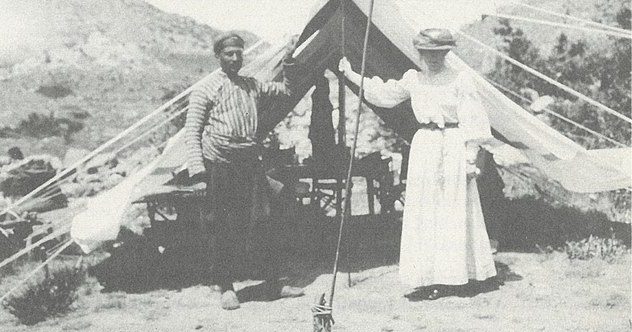

History loves an adventurous man with a compass, an impressive mustache, and a habit of naming places that local people already named centuries earlier. Women explorers, meanwhile, were often treated as unusual footnoteseven when they crossed oceans, climbed the world’s highest mountains, mapped deserts, pioneered aviation, or lived beneath the sea.
The female adventurers on this list did more than survive difficult journeys. They changed journalism, science, transportation, conservation, geography, and the public understanding of what women could accomplish. Some traveled to collect knowledge. Others chased records, challenged discrimination, or turned exploration into a platform for social change.
Their stories are not all simple tales of heroic conquest. Exploration has often been connected to colonial power, unequal access, commercial publicity, and romanticized versions of history. Understanding these complications makes the achievements of these pioneering women more meaningful, not less. Pack lightly, check the weather, and prepare to meet 10 female adventurers who changed the world.
1. Jeanne Baret: The Woman Who Sailed Around the World in Disguise
In 1766, French botanist Jeanne Baret joined Louis Antoine de Bougainville’s expedition around the world. There was one rather large administrative problem: women were prohibited from serving aboard French naval vessels. Baret solved it with a haircut, men’s clothing, and a new identity as “Jean.”
She worked as the assistant of naturalist Philibert Commerson, helping collect, organize, and preserve botanical specimens. The work was physically punishing. Expedition members traveled through unfamiliar environments, battled illness, endured overcrowded ships, and hauled equipment through forests and rough terrain. Baret was doing all this while attempting to conceal her identity from an entire ship’s companyan arrangement offering less privacy than a crowded airport security line.
Baret eventually completed a global circumnavigation after leaving the expedition in Mauritius and returning to France on a later voyage. She is widely recognized as the first woman to travel around the world. Her contribution also reminds historians that women participated in early scientific exploration even when institutions deliberately excluded them.
2. Isabella Bird: The Victorian Traveler Who Refused to Stay Home
Isabella Bird was born in England in 1831 and experienced recurring health problems throughout her life. Victorian doctors frequently prescribed travel and fresh air, possibly proving that “take a long vacation” was once legitimate medical advice.
Bird took that advice with uncommon enthusiasm. She traveled through North America, Hawaii, Japan, China, Korea, India, Tibet, Persia, and the Middle East. She rode thousands of miles on horseback, crossed mountain passes, photographed communities, and published vivid books about the people and landscapes she encountered.
Her writing made distant regions accessible to readers who would never see them firsthand. Although her observations sometimes reflected the assumptions of her era, Bird often displayed more curiosity and independence than many contemporary travel writers.
In 1892, she became the first woman elected as a Fellow of the Royal Geographical Society. The honor mattered because professional geographical institutions had long accepted information gathered by women while resisting the idea that women could be recognized as geographers. Bird helped kick open that particular doorpolitely, literarily, and probably while wearing an extremely impractical amount of fabric.
3. Nellie Bly: The Reporter Who Circled the Globe in 72 Days
Nellie Bly, born Elizabeth Jane Cochran, had already transformed journalism before beginning her most famous journey. In 1887, she went undercover inside a New York psychiatric institution and exposed abuse, poor sanitation, inadequate food, and dangerous treatment. Her reporting helped bring public attention and reform to institutional conditions.
Two years later, Bly proposed traveling around the world faster than Phileas Fogg, the fictional hero of Jules Verne’s Around the World in Eighty Days. Her editors initially doubted that a woman could make the journey alone. They worried she would require too much luggage and need a male protector. Bly responded by packing a small bag and becoming the human equivalent of “challenge accepted.”
She departed in November 1889 and traveled by steamship, train, horse, rickshaw, and other forms of transportation. Bly returned after approximately 72 days, setting a widely celebrated record and turning the journey into a global media event.
Her trip demonstrated that a woman could travel independently, report from abroad, and command an international audience. More importantly, Bly helped redefine journalism as something active, investigative, and capable of producing real social consequences.
4. Annie Londonderry: The Rolling Billboard Who Bicycled Around the World
In 1894, Annie Cohen Kopchovsky left Boston on a bicycle and returned 15 months later as Annie Londonderry, an international celebrity. She was a Latvian-born Jewish immigrant, a working mother of three, and one of the earliest women to turn athletic adventure into a personal brand.
Londonderry said her journey began because of a wager claiming that a woman could not circle the globe by bicycle while earning money along the way. Historians have questioned whether the bet existed, but the story was excellent publicityand Annie understood publicity better than many modern influencers with ring lights and affiliate codes.
She financed the trip through speaking appearances, photograph sales, advertising, and sponsorships. She even adopted the name “Londonderry” after a mineral-water company paid to place its advertisement on her bicycle.
Londonderry crossed substantial distances by bicycle, although ships and trains were also essential to the journey. Her achievement was never simply about pedaling every inch of the planet. She challenged expectations concerning women’s clothing, motherhood, physical ability, financial independence, and public visibility. At a time when the bicycle was becoming a symbol of female mobility, Annie transformed herself into one of the world’s first internationally recognized female sports stars.
5. Harriet Chalmers Adams: The Explorer Who Built Her Own Professional Club
American explorer Harriet Chalmers Adams spent years traveling through South America, Central America, Asia, North Africa, and Europe. Beginning in 1904, she and her husband undertook an extensive journey through South America that covered roughly 40,000 miles.
Adams documented Indigenous communities, historic routes, languages, landscapes, and the effects of Spanish colonization. Her photographs, lectures, and articles introduced large American audiences to places that mainstream media rarely covered. During World War I, she also worked as a correspondent in France and received unusual access to areas near the front.
Despite publishing in National Geographic and becoming a respected lecturer, Adams encountered professional organizations that refused to admit women. Rather than waiting several decades for the gentlemen to become reasonable, she helped create an alternative.
In 1925, Adams became the first president of the Society of Woman Geographers. The organization provided professional recognition and community for women working in geography, anthropology, journalism, science, and exploration. Its later members included Amelia Earhart, Margaret Mead, Jane Goodall, and Sylvia Earle. Adams changed exploration not only through her journeys but by building an institution in which other women could thrive.
6. Gertrude Bell: The Desert Explorer with a Complicated Political Legacy
Gertrude Bell was a British traveler, mountaineer, linguist, archaeologist, writer, and political officer whose knowledge of the Middle East gave her remarkable influence during and after World War I.
Bell crossed deserts, visited archaeological sites, learned Arabic and Persian, photographed ancient architecture, and established relationships with tribal leaders and political figures. Her journeys required detailed logistical planning, local cooperation, diplomatic skill, and extraordinary endurance.
After the war, she participated in British political planning in Mesopotamia and played a significant role in the establishment of the modern state of Iraq. That involvement remains controversial. The boundaries and political systems imposed by European powers served imperial interests and contributed to long-term regional tensions. Bell should therefore be studied as both a pioneering woman and an influential participant in British imperialism.
Her archaeological work produced a more constructive legacy. Bell helped establish Iraq’s antiquities administration and supported the creation of the Baghdad Archaeological Museum, which became the Iraq Museum. Her life demonstrates that female adventurers could influence governments, scholarship, and cultural institutionswhile also reminding us that exploration and political power are often uncomfortable traveling companions.
7. Amelia Earhart: The Aviator Who Made the Sky Look Possible
Amelia Earhart became an international celebrity in 1928 after serving as a passenger on the first transatlantic flight carrying a woman. She was grateful for the opportunity but dissatisfied with being treated as cargo with good publicity.
In May 1932, Earhart became the first womanand only the second person after Charles Lindberghto fly nonstop and solo across the Atlantic. She battled mechanical trouble, freezing conditions, and dangerous weather before landing in Northern Ireland.
Earhart continued setting altitude, distance, and speed records. She also wrote books, lectured, promoted commercial aviation, supported women pilots, and helped establish the Ninety-Nines, an organization for female aviators.
Her 1937 disappearance during an attempted flight around the world remains one of history’s most famous aviation mysteries. Yet focusing only on the mystery can overshadow what Earhart achieved while alive. She used her public platform to argue that women should participate fully in aviation, science, technology, and professional life. Millions saw her climb into a cockpit and began to imagine the sky as a workplace rather than a ceiling.
8. Bessie Coleman: The Pilot Who Found Freedom Above Segregation
Bessie Coleman wanted to fly, but American aviation schools refused to teach her because she was Black and a woman. Her response was refreshingly direct: she learned French, traveled to France, and enrolled in aviation school there.
In 1921, Coleman earned an international pilot’s license from the Fédération Aéronautique Internationale. She became the first Black woman and the first woman of Native American ancestry widely recognized as a licensed pilot.
Returning to the United States, Coleman built a career as a barnstormer. She performed loops, dives, parachute jumps, and other aerial stunts before large crowds. Her flights were thrilling, but her broader mission was even more ambitious. She wanted to establish an aviation school where Black students could receive training denied to them elsewhere.
Coleman also refused to perform at events that excluded Black spectators and rejected degrading roles offered by the film industry. She died in a flying accident in 1926 before opening her planned school, but her influence continued through later generations of Black aviators. Coleman did not merely enter a restricted profession; she challenged the system responsible for restricting it.
9. Junko Tabei: The Mountaineer Who Stood on Top of the World
Japanese mountaineer Junko Tabei founded the Ladies Climbing Club in 1969 after experiencing sexism in established climbing circles. Some male climbers refused to climb with women, while others assumed women joined mountaineering clubs only to find husbands. Tabei preferred mountains to matchmaking.
In 1975, she joined an all-women Japanese expedition to Mount Everest. An avalanche buried members of the team at approximately 20,700 feet, and Tabei briefly lost consciousness. She recovered and continued upward.
On May 16, 1975, Tabei became the first woman to reach Everest’s summit. She later resisted attempts to define her only by gender, explaining that she had climbed because she loved mountains, not because she wanted to become a symbol.
In 1992, she became the first woman to complete the Seven Summits by climbing the highest mountain on every continent. She also promoted environmental responsibility, organized mountain-cleaning projects, and encouraged young people affected by the 2011 Japanese earthquake and tsunami to experience climbing. Tabei changed mountaineering by showing that leadership, endurance, and high-altitude judgment did not belong to one gender.
10. Sylvia Earle: The Ocean Explorer Who Turned Adventure into Conservation
While earlier adventurers crossed the surface of the planet, Sylvia Earle went in the opposite direction. The American marine biologist and oceanographer has spent thousands of hours underwater, led more than 100 expeditions, tested new diving technologies, and become one of the world’s most recognizable advocates for ocean protection.
In 1970, Earle led the first all-woman team of aquanauts in the Tektite II project. The scientists lived for two weeks in an underwater habitat in the U.S. Virgin Islands, conducting research while demonstrating that women could perform demanding subsea missions just as effectively as men.
In 1979, Earle descended approximately 1,250 feet in an atmospheric diving suit and walked untethered on the seafloor near Hawaii, setting a depth record. She later became the first woman appointed chief scientist of the National Oceanic and Atmospheric Administration.
Earle’s most important contribution may be the way she connected exploration with environmental responsibility. Through Mission Blue and its network of “Hope Spots,” she has encouraged governments, scientists, businesses, and communities to protect ecologically important marine areas. Her career makes one point perfectly clear: discovering the world is not very useful if we destroy it immediately afterward.
What These Female Adventurers Changed
These women explored in radically different ways. Jeanne Baret collected plants. Nellie Bly reported the news. Annie Londonderry transformed a bicycle into an advertising platform. Amelia Earhart and Bessie Coleman challenged aviation’s barriers. Junko Tabei climbed into the thin air above Everest, while Sylvia Earle descended into the dark pressure of the deep ocean.
Their shared achievement was expanding the definition of who could explore. Before many of their journeys, women were routinely described as too fragile, dependent, emotional, distracting, or physically incapable of serious expedition work. Every completed voyage made those arguments look a little more ridiculous.
They also broadened the purpose of adventure. Exploration was no longer limited to planting flags or racing toward a geographic “first.” It could support investigative journalism, environmental conservation, scientific research, cultural documentation, entrepreneurship, or professional community building.
Experiences and Lessons Inspired by These World-Changing Adventurers
Adventure Begins Long Before Departure
The most useful lesson from these women is that adventure rarely begins with a dramatic leap into the unknown. It starts with preparation. Bessie Coleman studied French before entering flight school. Nellie Bly planned a global journey around transportation schedules. Sylvia Earle spent years developing scientific and diving expertise before attempting record depths.
Modern travelers sometimes confuse spontaneity with courage. Spontaneity means booking a weekend trip at midnight. Courage means researching the risks, developing the necessary skills, and going anyway. A serious adventure requires physical conditioning, financial planning, route research, emergency procedures, cultural awareness, and the humility to ask experts for help.
Equipment Matters, but Adaptability Matters More
Equipment failed for many of these adventurers. Ships became dangerous, bicycles broke, aircraft developed mechanical problems, avalanches destroyed camps, and diving systems operated under enormous pressure. Good gear reduces risk, but no equipment removes uncertainty.
The deeper lesson is adaptability. Annie Londonderry changed bicycles and clothing when her original setup became inefficient. Junko Tabei reorganized after an avalanche. Amelia Earhart made difficult decisions when weather and machinery refused to cooperate. Successful adventurers do not stubbornly follow a plan after conditions change. They preserve the goal while adjusting the method.
Tell the Story, or Someone Else Will Tell It Badly
Exploration has always depended on storytelling. Isabella Bird published travel books. Nellie Bly sent reports from the road. Harriet Chalmers Adams used photography and public lectures. Their journeys influenced society because audiences could experience those journeys through words and images.
Anyone undertaking a meaningful modern expedition should consider how to document it responsibly. Keep accurate notes. Record local names correctly. Ask permission before photographing people. Separate observation from assumption. Avoid turning communities into exotic scenery for a personal hero narrative. A good adventure story should reveal the traveler’s limitations as honestly as it celebrates the traveler’s courage.
Understand the Difference Between Risk and Recklessness
These female explorers accepted danger, but their best decisions were not reckless. They trained, gathered information, worked with guides, formed teams, and understood that retreat could be wiser than continuing.
Modern adventure culture sometimes rewards dramatic footage more than sound judgment. A dangerous selfie is not the spiritual successor to climbing Everest. It is usually the spiritual successor to dropping an expensive phone. Meaningful risk serves a purpose, whether that purpose is discovery, scientific research, personal growth, or public service. Recklessness merely creates an emergency for somebody else to solve.
Respect the People Who Make Exploration Possible
Famous adventurers rarely travel entirely alone. Sailors, mechanics, translators, porters, pilots, scientists, local residents, and family members make ambitious journeys possible. Junko Tabei climbed with Sherpa support. Scientific expeditions relied on technicians and research teams. Global travelers depended on workers operating railways, ships, hotels, and communication networks.
Ethical exploration recognizes this hidden labor. Credit collaborators. Pay guides fairly. Learn local customs. Reduce environmental impact. Never treat a destination as an empty stage waiting for a visitor to become its main character.
Leave a Path for the Next Person
The strongest legacy of these adventurers was not a single record. It was the opportunity created for those who followed. Bessie Coleman wanted to train Black pilots. Harriet Chalmers Adams helped build a professional society for women. Sylvia Earle turned underwater exploration into a global conservation campaign.
Personal achievement becomes world-changing when it lowers barriers for someone else. An adventurer can mentor beginners, share safety knowledge, fund scholarships, support conservation, document neglected history, or challenge exclusionary institutions. Reaching the summit is impressive. Building a safer and more welcoming route behind you is better.
Conclusion: Adventure Can Redraw More Than Maps
The 10 female adventurers who changed the world did not share one background, profession, nationality, or motivation. Some sought knowledge, some pursued freedom, and some simply wanted to do the thing everyone insisted they could not do.
Their journeys expanded scientific understanding, transformed public attitudes, exposed injustice, promoted conservation, and opened professional fields to future generations. Just as importantly, their stories reveal that exploration is never purely about distance. A person can cross an ocean without changing anything, or cross one institutional barrier and transform thousands of lives.
These pioneering women explored deserts, mountains, skies, seas, cities, and social boundaries. Their greatest discovery was not a hidden island or an untouched peak. It was proof that ability does not ask permission from tradition.