
When the outside world became unusually quiet, my imagination got extremely loud. Social isolation reduced daily life to a strange loop of news updates, cautious grocery trips, unanswered questions, and conversations conducted through glowing rectangles. Rather than photograph that experience literally, I decided to transform it into something brighter, stranger, and a little more magical.
The result was The Alchemy of Being, a surreal photography series exploring imagination, creative uncertainty, and the mysterious process through which an ordinary idea becomes a finished work of art. It was created during the COVID-19 lockdown, when making conceptual self-portraits became both a creative challenge and a welcome escape from stress.
How Social Isolation Changed My Creative World
Before isolation, inspiration often appeared while traveling, meeting people, visiting new places, or simply wandering through the world without a detailed plan. Suddenly, those familiar sources of stimulation disappeared. The calendar emptied, routines collapsed, and even a casual trip outside required the organizational precision of a small military operation.
At first, the silence did not feel peaceful. It felt heavy. There was an uncomfortable amount of time to think, and thinking is not always as relaxing as lifestyle magazines suggest. Sometimes the mind offers profound insights. Sometimes it reminds you of something mildly embarrassing that happened in 2007.
Photography gave that nervous energy somewhere useful to go. Instead of repeatedly checking the news, I could search for locations, sketch compositions, collect props, test poses, and solve visual problems. The circumstances were limiting, but those limits gradually became part of the creative language of the series.
Turning Inward When the World Closed Down
I was not the only photographer who turned the camera inward. During lockdowns around the world, self-portraiture became a way for artists to document solitude, examine identity, and process emotions when models, studios, and familiar working environments were unavailable. Some photographers created daily portraits; others used windows, bedrooms, gardens, clothing, shadows, and household objects to turn private experiences into visual stories.
That broader movement helped confirm something important: isolation may reduce physical space, but it does not automatically reduce creative space. A single room can become a theater. A backyard can become an enchanted forest. A dress can become a character, a curtain can become weather, and a pile of branches can become a conversation with an invisible world.
The Idea Behind “The Alchemy of Being”
I called the series The Alchemy of Being because creativity often feels like alchemy. You begin with materials that seem ordinary or unrelated: a location, a feeling, a color, a piece of fabric, an awkward pose, and perhaps a branch that has already scratched you twice. Somehow, after enough experimentation, those ingredients combine into an image that did not exist before.
The series was partly inspired by Elizabeth Gilbert’s ideas about creative living in Big Magic. I was especially interested in treating inspiration as something playful rather than something that must arrive carrying a trumpet and an official certificate. Ideas can be small, odd, inconvenient, and difficult to explain. They still deserve attention.
Instead of concentrating on fear and confinement, I chose vivid colors, natural settings, dreamlike characters, and gentle visual absurdity. That choice was not an attempt to deny what was happening. It was a deliberate effort to create an imaginative counterweight to it.
Why Surreal Photography Fit the Moment
Surreal photography uses recognizable elements while arranging them in impossible, dreamlike, or psychologically suggestive ways. The genre grew from the wider Surrealist movement and has long used techniques such as photomontage, double exposure, unusual perspectives, symbolic objects, mirrors, silhouettes, and manipulated scale.
Artists including Man Ray, Herbert Bayer, Florence Henri, and Claude Cahun demonstrated that a photograph did not have to behave like a neutral record. It could question identity, fracture space, create visual contradictions, or turn the artist’s own body into a stage for experimentation. Modern editing software expands that tradition by allowing photographers to combine images and construct convincing worlds that could never be photographed in a single exposure.
Lockdown itself already felt surreal. Streets were empty, familiar routines became impossible, and time developed the consistency of cold oatmeal. Surreal imagery seemed more honest than straightforward documentation because ordinary realism could not fully express how strange the period felt.
Creating Surreal Self-Portraits in the Countryside
I live in rural Ontario, where open fields, quiet roads, wooded areas, and changing weather provided a natural stage for the project. The countryside made it possible to work in isolated locations while maintaining distance from other people.
Each photograph began with an emotional or conceptual theme. I was interested in ideas such as surrender, listening, collaboration, inspiration, patience, and the relationship between people and the natural world. The titles included Collaboration, Surrender, Dialogue, Listen, Muse, The Vine, Striped Ideas, The Language of Trees, Search and Wait, Magical Thinking, and the title image, The Alchemy of Being.
Working as Photographer and Subject
Self-portraiture sounds wonderfully independent until you are standing in a field trying to remember exactly where you placed the focus point. When you work alone, you are simultaneously the photographer, model, stylist, prop assistant, location scout, and person responsible for checking whether the camera is still upright.
A tripod and self-timer became essential. I would compose the frame, mark my position, trigger the camera, hurry into place, and attempt to look calm. The finished image might suggest quiet communion with nature. The actual process often involved running through grass while counting seconds and hoping my hat would cooperate.
That gap between the graceful final photograph and the clumsy process behind it is one of the charming secrets of conceptual photography. Magic frequently begins with practical problem-solving, repeated mistakes, and one person asking a tree branch to please stay where it was placed.
How Photoshop Helped Build the Surreal World
Some images were captured largely in camera, while others required digital compositing. When a subject, prop, and landscape could not be photographed safely or effectively together, I photographed the elements separately and combined them in Photoshop.
Successful photo manipulation is not simply a matter of dropping one image on top of another and hoping confidence will do the rest. Perspective, direction of light, shadows, color temperature, scale, depth of field, and texture must work together. Even a deliberately impossible scene needs internal visual logic. Otherwise, it does not look dreamlike; it looks as though an object missed its connecting flight.
Digital composites are particularly effective for surreal photography because they allow familiar objects to form unfamiliar relationships. A human figure can appear to merge with a tree, duplicate itself, float, disappear, or communicate with a landscape. Layers, masks, selections, tonal adjustments, and careful blending turn separate photographs into one coherent visual environment.
Color as an Emotional Decision
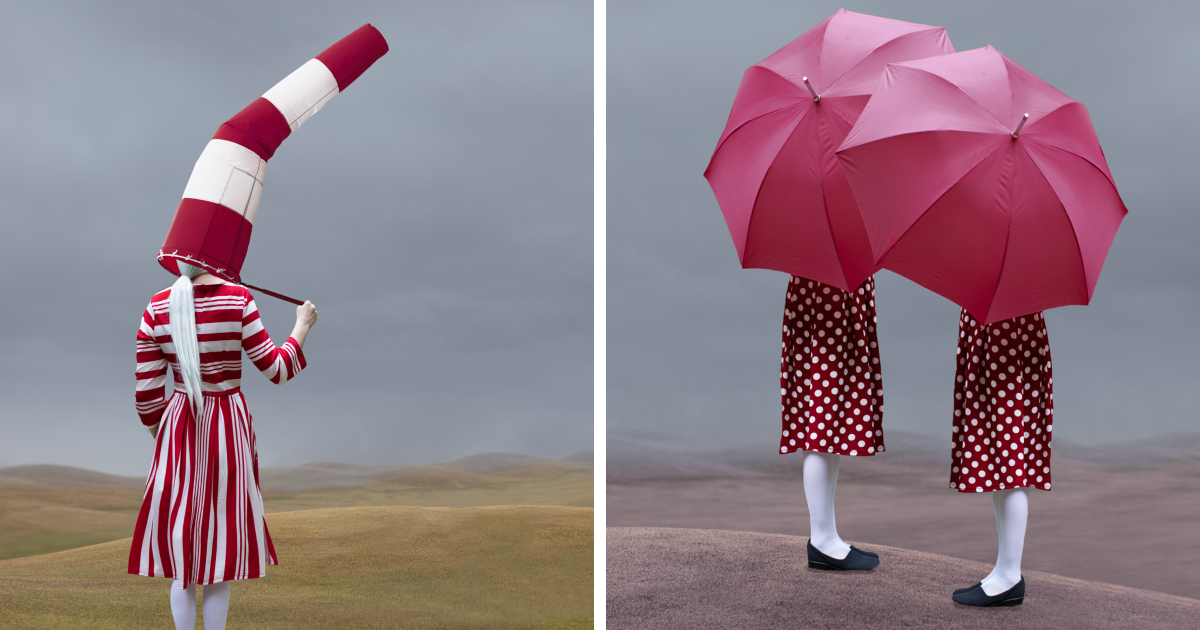
Bright color became one of the defining elements of the series. During a period dominated by uncertainty, I wanted the images to contain visual optimism. Red, yellow, blue, and green were not merely decorative choices; they created energy, separated figures from landscapes, and helped establish the playful tone of the work.
Color also provided continuity. The photographs could explore different ideas while still feeling as though they belonged to the same imagined universe. Repeated fabrics, natural textures, concealed faces, human silhouettes, and bold clothing became visual threads connecting the series.
The Meaning Behind the Hidden Faces
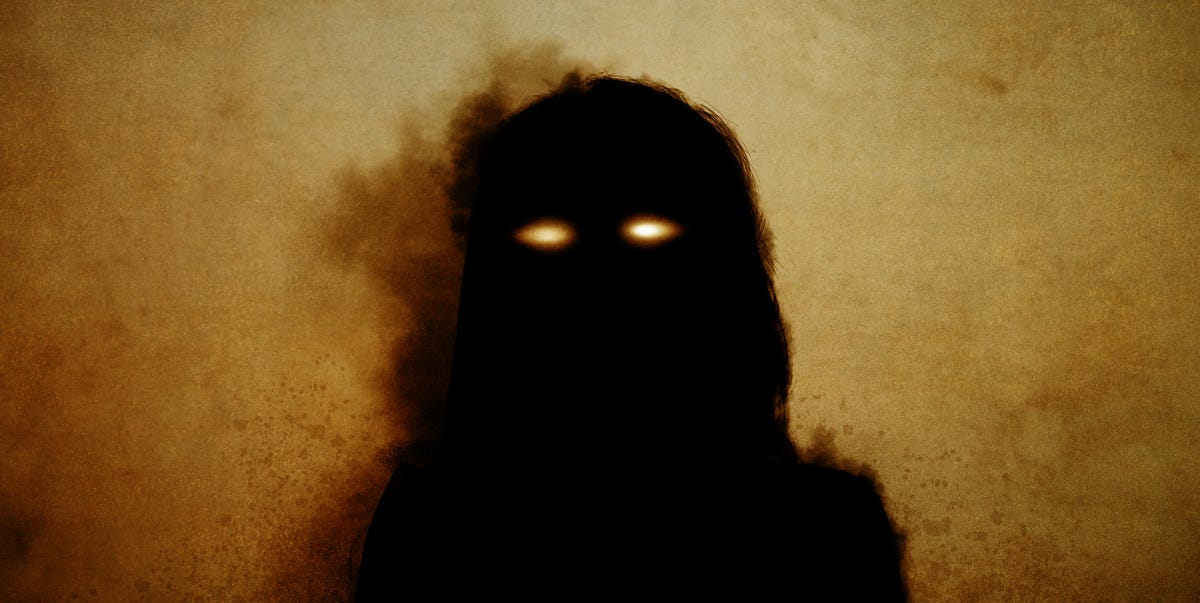
Many of my figures do not show their faces. They turn away from the camera, disappear under fabric, or become partly absorbed into their surroundings. Removing a recognizable facial expression creates ambiguity and gives viewers more room to place themselves inside the story.
A visible face can make an image feel like a portrait of one specific person. A concealed face can make the figure feel universal. The subject becomes less of a named individual and more of an emotional character representing curiosity, fear, creative hesitation, wonder, or surrender.
Concealment also reflects the nature of imagination. Creative ideas are rarely complete when they first appear. They arrive partly hidden. We sense them before we understand them, rather like recognizing someone through fogor trying to identify the mysterious container at the back of the refrigerator.
Nature as a Creative Partner
Trees, vines, grass, flowers, and open fields are more than backgrounds in the photographs. They act as collaborators. Branches suggest thought, growth, and communication. Vines represent connection and persistence. Fields create space for waiting, searching, and becoming.
Nature also introduced unpredictability. Wind moved dresses and props. Clouds changed the light between exposures. Plants refused to respect the composition. Yet those complications often produced better images because they prevented the work from becoming too polished or controlled.
Creative work is a negotiation between intention and accident. You arrive with a plan, and reality edits it.
Can Making Art Help During Stressful Times?
I did not begin this project as a formal therapeutic exercise. I began because I needed to make something. Nevertheless, the routine of developing ideas, working outdoors, and editing photographs gave structure to days that otherwise felt shapeless.
Research into creative activities suggests that making visual art may help some people manage stress and support emotional well-being. One study of healthy adults found that a brief art-making session was associated with reduced cortisol levels for many participants. Broader reviews have also linked participation in creative pursuits with potential psychological, physical, and social benefits, although art is not a replacement for professional mental health care.
For me, the benefit came from attention. While planning an image, I had to notice light, shape, texture, weather, and movement. Anxiety tends to pull attention toward imagined futures. Photography pulled mine toward the immediate task: Is the horizon straight? Is the fabric catching the light? Did I leave the lens cap on again?
The project did not remove uncertainty, but it gave uncertainty a different form. Stress became color. Isolation became landscape. Confusion became metaphor. The camera allowed difficult feelings to be observed, rearranged, and occasionally made funny.
What the Individual Images Represented
Collaboration and Dialogue
Creativity is often described as an individual achievement, but ideas are shaped by conversations, influences, memories, places, and previous works. Images such as Collaboration and Dialogue explore the sense that the creative self is never completely alone, even during physical isolation.
Surrender and Listen
Not every creative problem can be solved through force. Sometimes the best response is to stop pushing and pay attention. Surrender and Listen reflect the quieter stages of creativity, when progress depends on patience rather than production.
Muse and Magical Thinking
The idea of a muse can sound grand, but inspiration is often delightfully undignified. It may arrive through a damaged prop, an accidental shadow, an odd dream, or a plant leaning in an unexpected direction. Muse and Magical Thinking celebrate the willingness to follow an idea before knowing where it will lead.
Search and Wait
Creative life requires both activity and stillness. We search for ideas, techniques, and answers, but we also have to wait for them to develop. Search and Wait acknowledges that waiting is not always laziness. Sometimes it is the invisible part of the work.
Lessons From Creating the Series
The greatest lesson was that creativity does not require ideal circumstances. In fact, ideal circumstances may be mythical creatures, like unicorns or perfectly organized camera bags.
Limitations can encourage invention. Being unable to work with a large team led me deeper into self-portraiture. Restricted travel made familiar rural locations more important. Limited access to props encouraged me to transform ordinary materials. Emotional uncertainty pushed the images toward fantasy and symbolism.
The project also taught me to value process over immediate results. Some photographs worked quickly. Others required multiple shoots or extensive editing. A few ideas failed completely, which is a normal and necessary part of making art. An unsuccessful photograph may still reveal a useful color combination, pose, location, or concept.
Failure is not the opposite of creativity. It is usually sitting right beside creativity, eating its snacks.
More Personal Experiences From Photographing in Isolation
One of the strangest parts of working during social isolation was the way my sense of time changed. Days that once seemed crowded with obligations became wide, quiet spaces. At first, I interpreted that emptiness as a lack of momentum. Later, I understood that it offered a rare opportunity to observe how ideas actually develop.
I noticed that inspiration rarely arrived as a complete picture. It usually began as a fragment: a figure standing with her back to the camera, a blue dress against tall grass, two bodies connected by branches, or a person waiting in a landscape that seemed to be waiting too. I learned to write down these fragments without demanding that they immediately explain themselves.
Some ideas became photographs within days. Others remained notes because they needed a different season, location, or visual solution. Accepting that delay made the creative process less intimidating. An unfinished idea was not a failure. It was simply an idea that had not finished introducing itself.
Learning to Be Comfortable in Front of the Camera
Working as my own model also changed my relationship with self-portraiture. The purpose was not to create flattering photographs or perform a polished version of myself. My body became one of the available materials in the composition, like fabric, light, or a tree.
That approach reduced some of the self-consciousness that often comes with being photographed. I did not need to smile naturally, find my “best side,” or pretend that standing motionless in a field was completely normal. The character mattered more than the person playing it.
Concealing the face helped. It shifted attention toward posture, gesture, clothing, and the relationship between the figure and the environment. A slight tilt of the shoulders could suggest uncertainty. An extended arm could imply trust or resistance. A figure leaning toward a tree could look as though she were listening to itand perhaps the tree had better advice than the internet.
Discovering Familiar Places Again
Isolation also changed how I viewed the landscape near my home. Places I had passed many times suddenly became potential sets. A patch of tall grass could suggest an ocean. A narrow path could represent a decision. A bare tree could become a nervous system, family history, or unfinished sentence.
Photography encouraged me to look slowly. Instead of searching only for spectacular scenery, I began noticing ordinary locations at different hours and in different weather. Morning fog erased distracting details. Overcast skies softened colors. Strong afternoon light created theatrical shadows. A location that seemed unremarkable on Monday could become perfect on Thursday because the light had finally decided to cooperate.
This renewed attention was one of the most valuable parts of the project. The world had not physically expanded, but my perception of it had.
Finding Humor Inside the Seriousness
The subjects of isolation, stress, and creative uncertainty are serious, but the process of photographing them did not have to be solemn. Humor protected the series from becoming emotionally heavy. Bright clothing, improbable situations, awkward behind-the-scenes moments, and playful visual contradictions created breathing room.
There were many occasions when a carefully arranged prop collapsed just before the shutter fired. Fabric blew over my head. Branches became tangled in clothing. The camera focused beautifully on the background while turning me into an artistic blur. These moments were frustrating, but they also reminded me not to treat every creative decision as a referendum on my worth as a human being.
Art matters. It can also be ridiculous while it is being made. Both things can be true.
Why I Would Create the Series Again
Looking back, The Alchemy of Being represents more than a group of surreal self-portraits. It records a period when imagination became a practical form of resilience. The images did not solve the problems outside the frame, but creating them helped me remain curious, active, and emotionally connected to something hopeful.
I would create the series again because it taught me that difficult periods can contain unexpected creative openings. When familiar paths disappear, we may discover new methods, subjects, and parts of ourselves. The result does not have to be monumental. It only has to be honest enough to begin.
A camera, a quiet field, an unusual idea, and the willingness to look slightly foolish can be more than enough.
Conclusion: Imagination Can Make a Small World Larger
Social isolation narrowed my physical world, but surreal photography expanded my imaginative one. Through self-portraiture, nature, color, symbolism, and digital compositing, I created a series that transformed uncertainty into visual possibility.
The Alchemy of Being celebrates what can happen when we stop waiting for perfect conditions and begin working with what is already around us. Creativity may not always arrive dramatically. Sometimes it appears quietly, disguised as boredom, a strange idea, or a branch found beside the road.
The important thing is to notice itand perhaps bring a tripod.