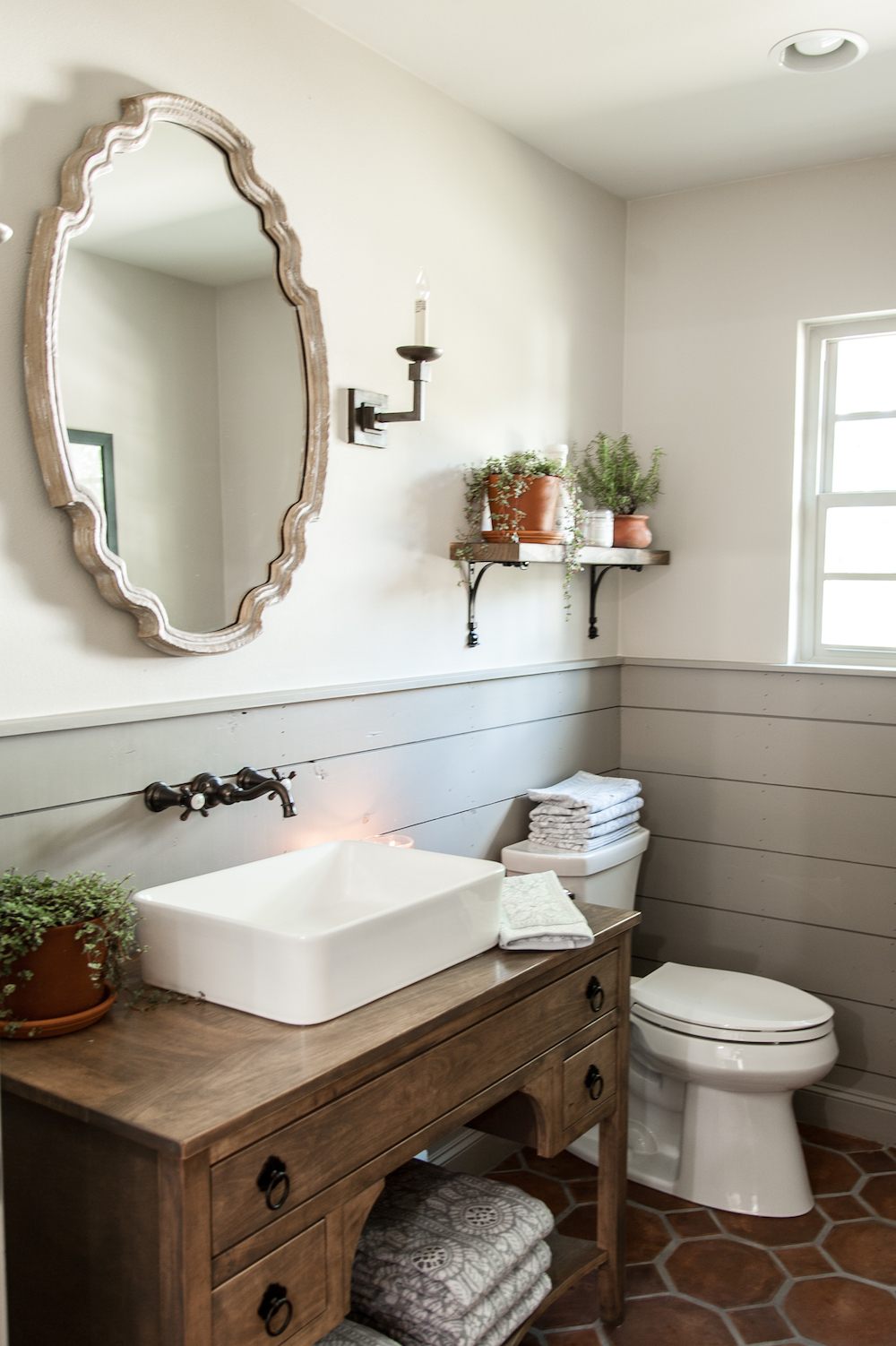

Some powder rooms quietly do their job and ask for nothing more than a hand towel and functioning plumbing. The Fixer Upper Hot Sauce House powder room is not one of those rooms. This little space manages to squeeze rustic Italian character, farmhouse warmth, textured walls, earthy flooring, natural wood, and a healthy dose of personality into a remarkably small footprint.
The Hot Sauce House appeared during Season 4 of Fixer Upper, when Chip and Joanna Gaines transformed a Waco-area home for the Ignacio family. The memorable nickname came from the home’s pre-renovation Tabasco-themed wallpaper. Thankfully, the finished design took the concept of “hot sauce” in a considerably more tasteful direction. Instead of condiment-covered walls, Joanna created a warm European-country interior with rustic farmhouse elements, aged-looking materials, handmade character, and an earthy Mediterranean influence.
The powder room is an especially useful design lesson because none of its individual ingredients are outrageously complicated. Gray walls, shiplap, wood, tile, greenery, and vintage-inspired hardware sound simple enough. The magic comes from combining them in the right proportions. Here is how to recreate the look without accidentally turning your half bath into a farmhouse theme park.
What Defines the Hot Sauce House Powder Room?
The room succeeds because it feels collected rather than purchased as a matching set. The major visual ingredients include warm gray neutral walls, gray-painted shiplap used like wainscoting, rich wood tones, terracotta-inspired flooring, rustic metal accents, open shelving, a character-filled vanity, and plants.
That combination bridges several decorating styles. There is obvious modern farmhouse DNA, but the earthy floor and weathered materials push the room toward rustic Italian and European country design. It feels older and warmer than the bright-white farmhouse bathrooms that became common during the same era.
Most importantly, there is contrast. Cool gray meets warm brown. Smooth ceramic meets textured wood. Dark metal hardware meets pale walls. Living greenery sits against mineral and earth tones. Take away those contrasts and the room becomes flat surprisingly quickly.
1. Begin With Warm Neutral Walls
The smartest starting point is the simplest one: a warm gray or gray-beige wall color. The original inspiration avoids icy blue-gray tones. Instead, the walls have enough warmth to cooperate with brown wood and reddish flooring.
Look for shades described as warm gray, greige, mushroom, stone, putty, or soft taupe. Paint samples are particularly important in a powder room because these spaces frequently have limited natural light. A shade that looks perfectly balanced in a paint store may suddenly appear lavender, green, or battleship gray under your bathroom lighting. Paint is sneaky like that.
Use the Room’s Materials to Choose the Undertone
If your flooring contains orange, rust, or red undertones, select a wall color with a little warmth. If the floor is more muted clay or beige, a softer greige can work beautifully.
Test samples beside the actual tile, vanity wood, and trim. Observe them during daytime and after turning on your bathroom lighting. This simple step can prevent the unfortunate discovery that your “perfect warm gray” becomes purple every evening at 7:00.
2. Add Gray Shiplap as Wainscoting
Shiplap provides much of the architectural character associated with the Hot Sauce House powder room. Instead of covering every visible wall with white boards, use painted shiplap on the lower portion of the room like traditional wainscoting.
Gray shiplap introduces texture without fighting the earthy palette. It also makes a newly remodeled bathroom feel less sterile. Horizontal boards visually stretch a narrow room, while the shadow lines between boards add detail even when the palette remains restrained.
How High Should the Shiplap Go?
For a similar effect, consider bringing the paneling approximately halfway up the wall or to a visually logical point near the vanity backsplash and window trim. There is no magical universal height. Let the room’s proportions make the decision.
In a compact powder bath, stop before the paneling overwhelms the upper wall. Leaving visible painted wall above it provides breathing room and keeps the design layered instead of boxy.
If true wood shiplap is impractical, moisture-resistant MDF paneling, tongue-and-groove boards, or convincing panel treatments can create a related effect. Powder rooms generally experience less direct moisture than full bathrooms containing showers, but materials and paint should still be appropriate for bathroom conditions.
3. Warm Everything Up With Natural Wood
This is where the room stops feeling gray and starts feeling inviting.
The Hot Sauce House look layers multiple wood elements instead of depending on a single perfectly matched finish. Think rustic vanity, wood-framed mirror, chunky shelves, and possibly small decorative accents. Slight variation is desirable. Real old houses rarely contain six pieces of wood that appear to have arrived together in the same cardboard box.
Choose a Furniture-Style Vanity
A vanity that resembles an old table, cabinet, or repurposed chest works especially well. Look for visible grain, warm medium-to-dark staining, simple legs, and a slightly aged finish.
For a small powder room, measure carefully before buying. Single-sink vanities are naturally suited to compact bathrooms, while narrow pedestal and wall-mounted sinks can preserve even more visual floor area when space is extremely limited.
Before selecting a vanity, open the bathroom door completely and note the locations of the toilet, plumbing, trim, outlets, and nearby walls. A beautiful 36-inch vanity loses some of its charm when its drawer permanently collides with the door.
Do Not Over-Match the Wood
The vanity, shelf, and mirror frame can share similar warmth without sharing identical stains. Mixing medium walnut, weathered oak, and slightly darker brown tones often creates a more authentic collected appearance.
4. Bring in Terracotta or Brick-Toned Flooring
The flooring may be the most important ingredient for distinguishing this powder room from a standard modern farmhouse bathroom.
Terracotta-inspired tile brings red, brown, clay, and orange tones into a room dominated by gray. Suddenly the palette feels Mediterranean and old-world rather than purely American farmhouse.
You can recreate the mood with genuine terracotta, terracotta-look porcelain, brick-look tile, quarry tile, or ceramic flooring in earthy rust shades. Each option has different maintenance requirements, so choose based on your household rather than appearance alone.
Real Terracotta vs. Porcelain
Authentic terracotta offers natural irregularity, variation, and handmade charm. That imperfection is part of the appeal. Depending on the product, however, it may require sealing and more attentive maintenance.
Porcelain tile can reproduce clay colors while delivering easier maintenance and greater resistance to water and staining. For busy households, it can be the practical way to get the rustic look without developing a new hobby called “maintaining my bathroom floor.”
Whichever material you choose, avoid flooring that looks excessively uniform. Some variation in color helps create the relaxed European-country effect.
5. Use Rustic Metal Finishes
Chrome would not necessarily ruin this room, but darker, aged-looking metals fit the design more naturally. Consider oil-rubbed bronze, aged brass, antique brass, blackened iron, or matte black for faucets, shelf brackets, towel holders, lighting, and cabinet hardware.
You do not need every metal finish to match exactly. In fact, carefully mixing finishes can strengthen the collected feeling. The trick is repetition. If you introduce dark bronze at the faucet, repeat a similarly dark tone on brackets or lighting so the choice looks deliberate.
6. Build Simple Open Shelves
Open shelving above the toilet is one of the easiest parts of the Hot Sauce House powder room style to recreate yourself.
A thick wood board paired with substantial iron brackets provides storage and decoration without the visual weight of a wall cabinet. It is an excellent place for a small plant, folded hand towels, a ceramic container, framed artwork, or one interesting vintage object.
Notice the word one. Shelving is not an invitation to display seventeen miniature signs explaining that this is, in fact, a bathroom.
Keep accessories sparse. Empty space around objects allows the wood, brackets, and decorative pieces to be noticed individually.
7. Incorporate Greenery
Plants are a small addition with a disproportionately large visual payoff. Green leaves provide a natural counterpoint to gray shiplap, reddish flooring, and brown wood.
If the room has adequate daylight, select a houseplant suited to the actual light conditions. If the powder room is windowless, high-quality faux greenery is perfectly acceptable. Botanical artwork can provide another option when keeping a plant alive would require supernatural intervention.
Terracotta pots are particularly effective because they echo the floor color and help repeat warm clay tones around the room.
8. Choose a Mirror With Character
A wood-framed mirror works naturally with this design because it reinforces the rustic warmth of the vanity and shelves. Avoid making the frame unnecessarily ornate. The goal is old-world simplicity rather than palace ballroom.
A rectangular reclaimed-wood mirror is an obvious choice, but a round mirror can modernize the composition while maintaining the same earthy palette. Vintage brass or dark metal framing can also work if there is already enough wood elsewhere.
Mirrors are particularly valuable in small powder rooms because they reflect available light and visually expand the space. Choose the largest appropriately scaled mirror the vanity wall can comfortably support.
9. Get the Lighting Right
Powder-room lighting must perform two jobs: illuminate faces and contribute to the design.
Wall sconces with dark metal, aged brass, seeded glass, or simple vintage-inspired shades suit this aesthetic particularly well. A double sconce mounted above the mirror can save wall space, while paired sconces create attractive symmetry when room dimensions permit.
Use warm-to-neutral bulbs rather than extremely cool light. Harsh blue-white lighting can make warm gray paint and terracotta floors look strangely disconnected.
10. Keep Accessories Rustic but Restrained
The Hot Sauce House style works because the materials carry most of the decorative responsibility. You do not need mountains of themed accessories.
Useful finishing pieces might include a woven hand towel, stoneware soap dispenser, small vintage print, wooden tray, ceramic planter, woven basket, and a muted rug if the floor plan allows one.
Choose objects that look as though they could have been collected over time. Avoid buying every accessory in exactly the same finish. A little variation creates depth.
A Simple Hot Sauce House Powder Room Shopping Formula
If you are starting from scratch, use this practical design formula:
- Warm greige or soft gray wall paint
- Gray horizontal shiplap or paneled wainscoting
- Terracotta, clay, quarry, or brick-look floor tile
- Warm wood single-sink vanity
- Wood or aged-metal framed mirror
- Oil-rubbed bronze, aged brass, or black faucet
- Simple vintage-inspired wall lighting
- Wood shelf with iron brackets
- Green plant or botanical accent
- One or two handcrafted-looking accessories
If those ten elements are working together, you will already be remarkably close to the spirit of the room.
How to Recreate the Look on Three Different Budgets
Budget Refresh
Keep your existing toilet, sink, and flooring. Paint the walls warm gray, install a DIY shiplap treatment, replace the mirror, add a stained wood shelf, switch cabinet hardware, and introduce greenery. These changes can radically alter the character of a powder room without moving plumbing.
Midrange Remodel
Add new terracotta-look porcelain flooring and a furniture-style vanity along with fresh paint, paneling, lighting, mirror, faucet, and accessories. Keeping plumbing locations unchanged helps prevent costs from wandering off into the wilderness.
Full Character Renovation
For the strongest interpretation, use handmade or naturally varied clay flooring, a custom or converted furniture vanity, solid wood paneling, artisan-style lighting, upgraded plumbing fixtures, and vintage decorative pieces. Spend more on materials that visibly age well rather than expensive objects whose primary feature is a fashionable brand name.
Common Mistakes to Avoid
Using Too Much Gray
The room is not successful because it is gray. It is successful because gray provides a calm background for warm wood, clay, metal, and greenery. Without those elements, the room can quickly resemble an office restroom that received a promotion.
Choosing Bright Orange Tile
Terracotta should feel earthy, dusty, and natural. Seek muted rust, burnt orange, brown-red, and clay tones rather than highly saturated orange.
Making Everything Look Brand-New
A rustic Italian farmhouse room benefits from texture and variation. Extremely glossy cabinets, perfectly uniform faux wood, mirror-polished hardware, and identical accessories can undermine the relaxed appearance.
Adding Too Many Farmhouse Clichés
You do not need signs reading “Wash,” “Brush,” “Relax,” or “Powder Room.” Your guests will probably determine the function of the toilet without written instructions.
Use architecture and natural materials to communicate farmhouse character instead.
Why This Fixer Upper Powder Room Still Works
Design trends inevitably change, but the Hot Sauce House powder room has several qualities that age better than trend-dependent decoration. Natural wood has been used in interiors for centuries. Terracotta has an even longer history. Gray stone-like colors, iron, greenery, and handcrafted materials are similarly difficult to tie to one short-lived decorating cycle.
The shiplap may immediately remind some people of the modern farmhouse boom, but pairing it with rustic European materials makes the treatment feel more distinctive. The result is warmer, less polished, and more timeless than a room assembled entirely from whatever happened to be trending during a single year.
500-Word Experience Guide: What It Is Actually Like to Create This Look
Recreating an inspiration room teaches you something quickly: copying every item is usually less important than understanding why the original design works. Homeowners often begin a project like this searching for the exact mirror, faucet, tile, or shelf. Years after a television renovation airs, many original products may be discontinued, renamed, unavailable, or simply inappropriate for your particular room.
The more practical approach is to identify the design relationships. In the Hot Sauce House powder room, warm flooring balances cool walls. Natural wood prevents the gray palette from feeling sterile. Dark hardware provides definition. Plants introduce color without breaking the earthy scheme. Once you understand those relationships, finding substitutes becomes much easier.
Floor samples are especially revealing. A terracotta tile that appears softly rust-colored online may become dramatically orange when twenty pieces are installed together. Bring samples into the actual room and place them beside paint, wood, and plumbing finishes. If possible, inspect several tiles rather than one because products designed to imitate handmade clay often include substantial variation.
Shiplap requires similar restraint. Installing it may seem like the obvious first move, but the height and color matter more than the mere presence of boards. Too much dark paneling can visually compress a tiny powder room. Too much white can erase the earthy character you are trying to create. A medium warm gray often provides enough contrast to make the boards noticeable while remaining quiet.
Wood selection is usually the enjoyable part because perfection is unnecessary. A mirror with slightly different coloring from the vanity can actually improve the room. The same applies to shelves. Rather than attempting to create an exact furniture suite, aim for a shared family of warm, slightly rustic wood tones.
Another useful lesson is to complete the permanent surfaces before buying decorative accessories. Paint, paneling, floor tile, vanity, mirror, plumbing, and lighting establish most of the room’s personality. Only after these elements are installed can you accurately judge how many baskets, plants, pictures, and decorative containers are needed.
Frequently, the answer is fewer than expected.
Small powder rooms punish clutter much faster than larger rooms. One plant can look intentional. Five plants may suggest the toilet has been relocated to a greenhouse. A shelf displaying a ceramic pot and framed print can feel curated. A shelf packed from edge to edge feels like overflow storage.
Finally, prioritize usability. Leave comfortable clearance around the toilet and sink. Make sure doors open freely. Provide accessible hand towels, soap, toilet paper, and adequate lighting. Beautiful bathrooms stop being charming remarkably fast when guests cannot find a towel.
The strongest version of the Fixer Upper Hot Sauce House powder room look is therefore not a museum-quality reproduction. It is a room that captures the same warmth and balance while responding intelligently to your home’s dimensions, lighting, budget, and daily routine.
Conclusion
The Fixer Upper Hot Sauce House powder room remains memorable because it proves that a small room can carry substantial personality without becoming visually chaotic. Warm gray walls establish a quiet backdrop. Painted shiplap supplies farmhouse texture. Terracotta-toned flooring introduces Italian-country warmth. Natural wood adds age and character, while rustic metal fixtures and greenery complete the composition.
If you want to recreate the design, resist the urge to obsess over exact products. Focus instead on its formula: cool neutrals plus warm natural materials plus old-world texture. Maintain that balance and your powder room can feel inspired by the Hot Sauce House without looking like you tried to rebuild a television set in your hallway.
Note: Exact products and finishes used in older television renovations may no longer be available. Use the original Hot Sauce House as design inspiration, verify measurements before purchasing fixtures, and select flooring, paint, paneling, and plumbing materials rated appropriately for bathroom use.