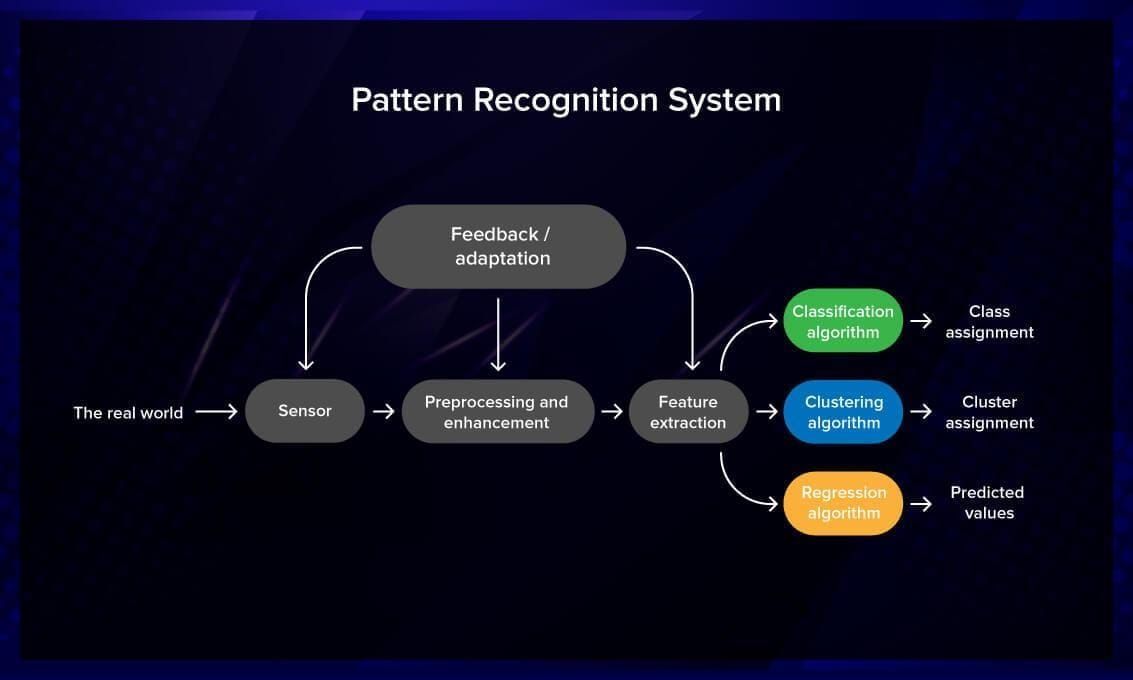
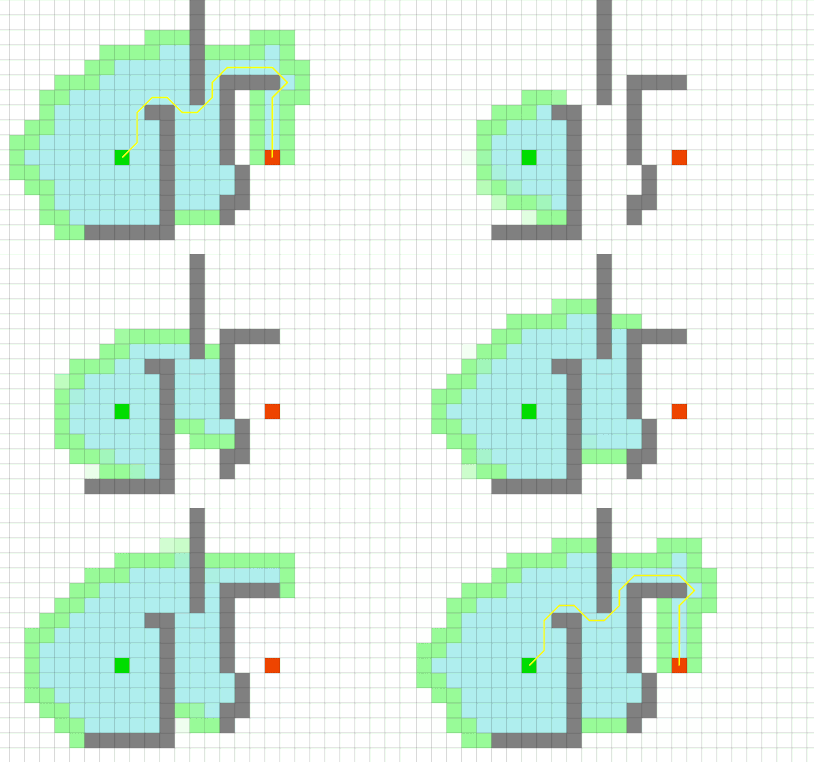
Have you ever stared at a series of seemingly random numbers or visual cues, feeling that familiar tug of logic trying to decode the underlying message? That experience is the essence of hidden sequence discovery. It is more than just a pastime for puzzle enthusiasts; it is a sophisticated cognitive process that bridges the gap between raw data and actionable insight. Whether you are navigating complex pattern recognition games to pass the time or analyzing subtle market trends in a professional setting, the ability to identify repeating sequences is a powerful mental asset.
In this guide, we will explore the science behind how your brain interprets order from chaos and provide actionable strategies to sharpen your analytical edge. You will learn how to deconstruct numerical, linguistic, and spatial challenges systematically, turning “stuck” moments into opportunities for intellectual growth. By mastering the art of sequence identification, you are not just solving a puzzle—you are training your brain to think more clearly and effectively in every area of your life.
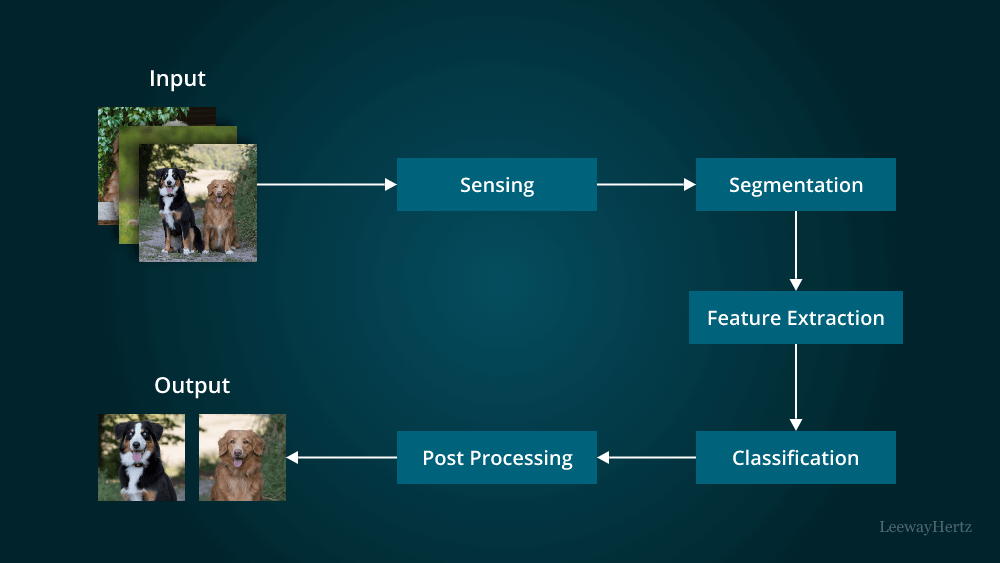
1. The Science and Cognitive Framework of Hidden Sequence Discovery
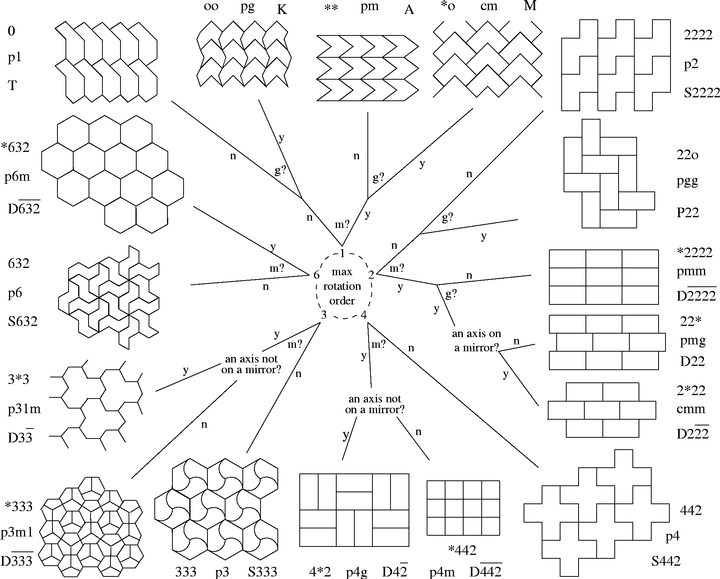
1.1 Neurological Foundations of Pattern Recognition
1.1.1 How the Prefrontal Cortex Processes Sequential Logic
The human brain is a natural pattern-seeking machine, primarily driven by the prefrontal cortex. This region acts as the command center for executive function, allowing us to parse complex information, identify recurring structures, and derive logical conclusions from incomplete datasets. When you engage in pattern recognition games, your prefrontal cortex works to encode sequential data, store it in working memory, and manipulate those variables to predict what comes next. By isolating consistent rules within a chaotic set of inputs, the brain effectively transitions from reactive processing to proactive analysis.
1.1.2 The Role of Predictive Coding in Mental Efficiency
Predictive coding is the brain’s elegant way of minimizing metabolic cost. Rather than processing every single piece of sensory information from scratch, the brain forms internal models based on past experiences. When you attempt hidden sequence discovery, your mind makes a “best guess” about the underlying rule. If the next piece of data fits that hypothesis, the brain rewards you with a dopamine release, reinforcing the accuracy of your model. This cognitive shortcut is what allows masters of logic to identify complex sequences at a glance, bypassing the tedious trial-and-error phase that beginners often experience.
1.2 Categorizing Hidden Sequences
1.2.1 Numerical and Mathematical Progressions
Numerical sequences are the bedrock of logical analysis. These puzzles often require identifying arithmetic shifts, geometric ratios, or Fibonacci-style summations. By stripping away extraneous details, you focus solely on the relationship between integers, which helps sharpen your raw computational speed.
1.2.2 Linguistic and Syntactic Pattern Architectures
Language contains deep structural sequences often overlooked in casual reading. These architectures rely on syntax, phonetics, and repeating word structures. Identifying these patterns forces the brain to shift from semantic meaning to structural form, an essential skill for anyone looking to improve their critical reading and analytical communication.
1.2.3 Visual and Geometric Logic Transformations
Visual sequences challenge your ability to track rotations, reflections, and spatial shifts. These tasks require a different type of mental processing, often overlapping with spatial reasoning riddles where the “rule” is defined by orientation or symmetry rather than number or text.
1.3 Cognitive Benefits of Mastering Sequence Analysis
1.3.1 Enhancing Fluid Intelligence and Problem-Solving Speed
Mastering these sequences correlates strongly with gains in fluid intelligence—the ability to think abstractly and solve novel problems. Because sequence discovery demands constant adaptation, your brain develops a more flexible architecture for handling unfamiliar information, significantly boosting your real-world problem-solving speed.
1.3.2 Mitigating Cognitive Decline through Neuroplasticity
Continuous engagement with logic-based challenges fosters neuroplasticity. By forcing your brain to form new synaptic connections to navigate complex sequences, you build a “cognitive reserve.” This serves as a vital safeguard, keeping the mind agile and resilient even as you age.
1.3.3 Strengthening Analytical Thinking in Complex Environments
In professional and personal environments, information is rarely presented linearly. The ability to extract hidden logic from “noisy” data is an elite analytical skill. Whether in business strategy or data analysis, those who have mastered sequence discovery can cut through the clutter to identify the core drivers of any system.
2. Applied Strategies for Solving and Mastering Hidden Sequence Discovery
2.1 Systematic Frameworks for Deconstructing Complexity
Success in hidden sequence discovery begins with a disciplined approach to information processing. When you encounter a puzzle, you must move beyond intuition and employ a structured methodology to translate chaos into clarity.
2.1.1 Baseline Data Collection and Variable Identification
Before attempting a solution, document the observable elements of the sequence. Whether you are dealing with numerical logic challenges or abstract symbols, identify the “units” of the puzzle. Note the frequency of specific variables, their positions, and any obvious changes in state. By creating an accurate mental or physical ledger of these variables, you prevent cognitive oversights that often lead to premature, incorrect conclusions.
2.1.2 Hypothesis Testing and Iterative Rule Validation
Once you have a baseline, propose a working rule. Test this hypothesis against the middle and end segments of the sequence. If the rule holds for the beginning but fails later, your initial pattern was likely a local coincidence rather than a global rule. Iteration is key; treat every failed hypothesis as a piece of data that narrows the field of possible solutions, moving you closer to the underlying logic.
2.1.3 Eliminating Noise to Isolate Core Logic
Many sequences contain “noise”—distracting elements that serve no functional purpose in the underlying logic. To master this, strip away aesthetic flourishes or redundant data points. By isolating the core progression, you reduce the cognitive load, allowing your brain to focus on the structural mechanics of the sequence rather than the surface-level presentation.
2.2 Advanced Methodologies for Sequence Completion
Moving from basic observation to expert mastery requires a transition into formal logic systems. Understanding how to navigate these challenges often overlaps with the skills required for pattern recognition games, where speed and accuracy are paramount.
2.2.1 Utilizing Inductive Reasoning for Pattern Prediction
Inductive reasoning allows you to make broad generalizations based on specific instances. In sequence discovery, this involves observing a trend in the first three or four elements and projecting that trend forward. While inductive leaps can be risky, they are essential for maintaining pace when dealing with complex, multi-layered sequences.
2.2.2 Applying Deductive Logic to Rule Extraction
Deduction is the process of working backward from a known certainty. Once you identify a governing law—such as a specific mathematical operator—apply it strictly to the entire set. If a proposed rule creates an internal contradiction, it is objectively false. Using deduction allows you to verify your findings and move with higher confidence.
2.2.3 Managing Cognitive Load and Avoiding Bias
The human brain is prone to pattern seeking, often finding sequences where none exist. To avoid confirmation bias, intentionally seek out information that contradicts your current theory. If your sequence model survives this “stress test,” it is likely accurate. Additionally, taking brief, timed breaks can reset your focus, preventing the mental fatigue that causes simple, avoidable errors.
2.3 Professional and Real-World Integration
The skills honed in sequence puzzles have direct applications in high-stakes professional environments. The ability to identify hidden trends is a core competency that translates across multiple disciplines.
2.3.1 Leveraging Pattern Recognition in Data Science and Programming
In software development, debugging is essentially an exercise in hidden sequence discovery. Developers must trace execution flows to identify where a logical progression breaks down. Mastering these puzzles trains your brain to spot anomalies in code and data structures, leading to faster problem resolution and cleaner system architecture.
2.3.2 Improving Strategic Decision-Making in Business Operations
Business environments are filled with complex, often opaque data. Leaders who excel at pattern recognition can synthesize disparate reports to forecast market shifts. By treating market data as a sequence, you can identify leading indicators that others miss, providing a significant competitive advantage in long-term strategic planning.
2.3.3 Enhancing Logical Argumentation and Critical Reading Skills
Sequence analysis sharpens your ability to track the logic of an argument. By identifying the premises and the progression of thought in a text, you can quickly evaluate the validity of a conclusion. This makes you more resistant to logical fallacies and more adept at constructing persuasive, evidence-based arguments in professional and social discourse.
2.4 Creating a Sustainable Training Regimen
Consistency is the primary driver of cognitive improvement. To turn pattern recognition into an intuitive skill, you must integrate training into your daily life.
2.4.1 Evaluating Digital Brain Training vs. Traditional Logic Puzzles
Digital platforms offer the benefit of adaptive difficulty and instant feedback, which is excellent for building reflex-based recognition. However, traditional pen-and-paper puzzles encourage deeper, slower contemplation. A balanced approach—combining the two—maximizes both your speed and your depth of analytical reasoning.
2.4.2 Designing Daily Habit Stacks for Mental Agility
Incorporate sequence discovery into existing daily habits. For example, use a morning coffee break to solve a quick numerical sequence or a commute to engage with a logic-based mobile app. By stacking these sessions onto existing routines, you ensure consistent training without needing to carve out significant extra time in your schedule.
2.4.3 Tracking Progress and Quantifying Cognitive Gains
Maintain a simple log of your performance. Track your completion times and the difficulty levels of the puzzles you tackle. When you notice that previously challenging sequences become trivial, you have clear evidence of increased cognitive agility. Tracking progress not only validates your efforts but also keeps you motivated to tackle increasingly complex challenges.
Mastering the art of hidden sequence discovery is more than just a pastime; it is a profound exercise in cognitive refinement that impacts how you process information in your daily life. By consistently engaging with pattern recognition games, you are effectively training your brain to identify underlying structures, optimize decision-making, and remain agile in the face of complex problems. Whether you are deconstructing numerical progressions or navigating the nuances of linguistic puzzles, the mental habits you build through these challenges translate directly to improved analytical thinking and sharper focus.
The journey toward cognitive mastery is a marathon, not a sprint. By applying systematic frameworks to your practice, you move beyond simple trial and error, developing a robust toolkit for logic and deduction. As you continue to challenge yourself, remember that the goal is not merely to solve the puzzle, but to understand the logic that governs it. We encourage you to start small, stay consistent, and explore new challenges to keep your mind engaged and evolving. Every sequence you decipher is another step toward unlocking your full intellectual potential.