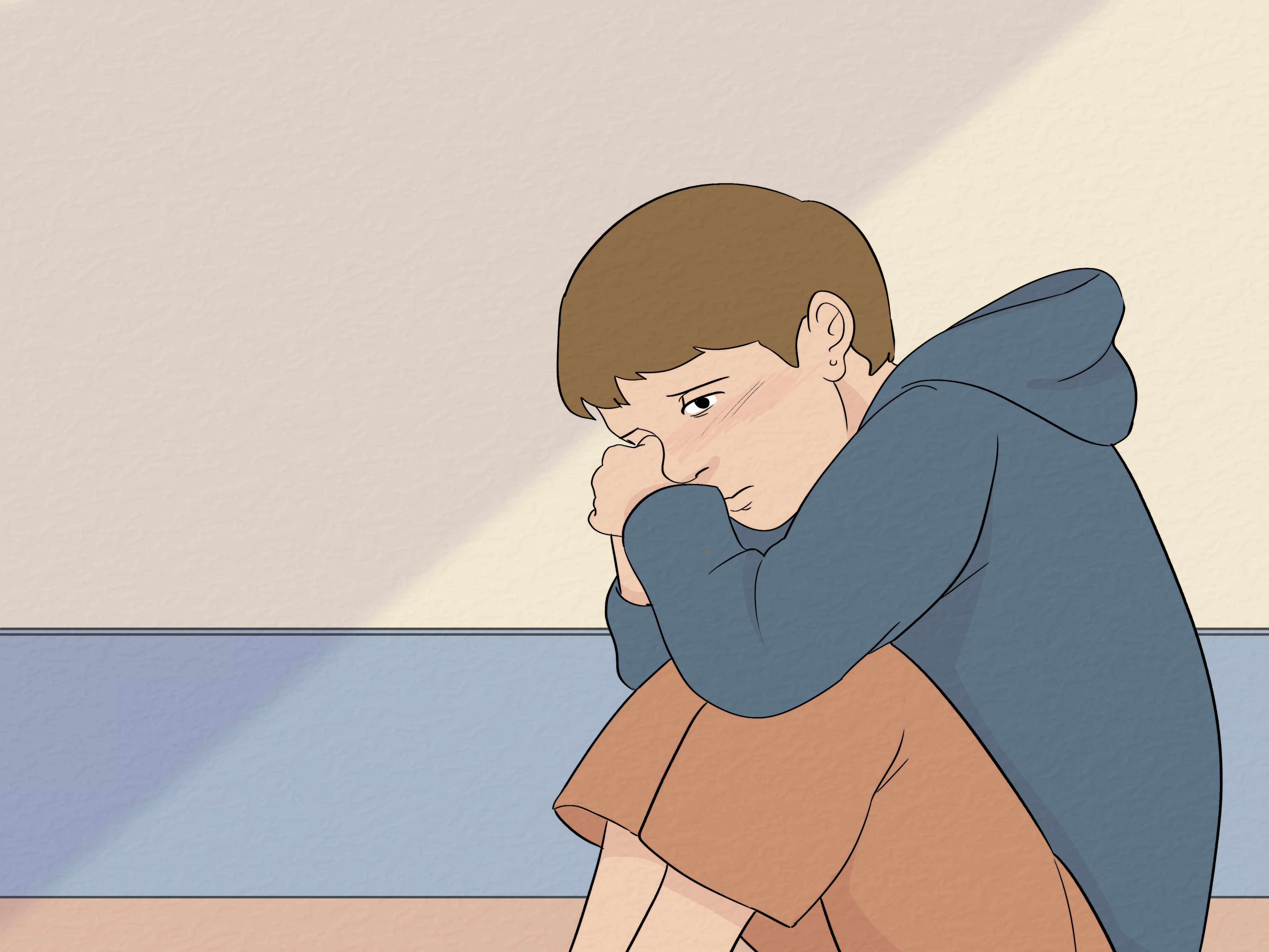

A stubborn child can turn an ordinary request into a courtroom drama. You say, “Please put on your shoes.” Your child requests evidence, challenges jurisdiction, calls a stuffed dinosaur as a witness, and announces that shoes are an outdated social construct.
Although these battles are exhausting, stubbornness is not automatically a character flaw. A strong-willed child may be independent, persistent, curious, sensitive to unfairness, or especially determined to control what happens next. Those qualities can become strengths. The goal of discipline is not to crush determination; it is to teach a child how to use it responsibly.
Effective discipline focuses on instruction, predictable limits, emotional regulation, and consequences connected to behavior. Pediatric and child-development authorities consistently recommend calm, age-appropriate strategies rather than yelling, humiliation, threats, or physical punishment. Children learn more effectively when parents combine warmth with firm, dependable boundaries.
What Does “Stubborn” Behavior Really Mean?
A child who refuses to cooperate may be seeking independence, avoiding an unpleasant task, struggling with a transition, feeling overwhelmed, or testing whether a rule is real. Toddlers have limited impulse control and language skills. School-age children may resist when instructions feel confusing or unfair. Teenagers naturally seek more autonomy and may push back against rules they once accepted.
Before choosing a consequence, ask what skill is missing. Does your child need help calming down, understanding the instruction, remembering a routine, tolerating frustration, or solving a problem? Treating misbehavior as information does not mean accepting it. It simply helps you respond to the cause instead of wrestling with the symptom.
Frequent, severe defiance that disrupts school, friendships, or family life may be different from ordinary stubbornness. Conditions such as attention-deficit/hyperactivity disorder, anxiety, learning difficulties, oppositional defiant disorder, or mood disorders can affect behavior. A pediatrician or qualified mental health professional can provide an appropriate evaluation.
How to Discipline a Stubborn Child Without Constant Power Struggles
1. Regulate Yourself Before Correcting Your Child
A stubborn child often becomes more resistant when an adult becomes louder, faster, and angrier. Before responding, pause, lower your shoulders, and slow your voice. Take a few breaths or step away briefly when everyone is safe.
Calmness does not make you weak. It helps you give clear instructions, choose reasonable consequences, and avoid saying something you will later regret. Your child also learns emotional regulation by watching you practice it. In other words, “Do as I say, not as I dramatically demonstrate” is not a particularly successful curriculum. Calm, confident, and consistent responses are especially valuable when children become explosive or argumentative.
2. Stop Calling the Child Stubborn
Describe the behavior instead of labeling the child. Say, “You are having trouble stopping the game,” rather than, “You are so stubborn.” Labels can make children believe resistance is part of their permanent identity.
Use neutral, specific language: “You said no three times,” “You threw the pencil,” or “You have not started your homework.” A behavior can be changed. A negative identity feels like something a child must defendor live up to with surprising dedication.
3. Look for the Trigger Behind the Defiance
Keep track of when stubborn behavior happens. Common triggers include hunger, fatigue, sensory overload, rushed mornings, difficult homework, sibling conflict, screen transitions, and unexpected changes.
Suppose your child argues every night when asked to shower. The problem may not be disrespect. The child may dislike leaving a favorite activity, fear getting water in their eyes, or feel overwhelmed by a multi-step bedtime routine. Once you identify the trigger, you can give a warning, adjust the routine, or teach the missing skill. Behavioral guidance often begins by identifying what happens immediately before and after a problem behavior.
4. Use Fewer Rules and Make Them Clear
A home with 47 constantly changing rules is not a home; it is an unusually disorganized legal system. Choose a few important expectations based on safety, respect, responsibility, and family functioning.
State rules positively whenever possible. “Use gentle hands” is clearer than “Stop being wild.” “Food stays at the table” is more useful than “Do not make another mess.” Children are more likely to follow rules they can understand, remember, and see adults consistently enforce.
5. Give Short, Specific Instructions
Avoid shouting several commands from another room: “Clean up, get dressed, brush your teeth, find your backpack, and why is there a spoon in your shoe?” Approach your child, get their attention, and give one clear direction at a time.
Say, “Put the blocks in the bin,” instead of, “Can you behave and clean this disaster?” For younger children or children with attention difficulties, wait for the first step to be completed before adding another. Instructions work best when they are statements rather than questionsunless refusing is genuinely an acceptable option.
6. Offer Two Acceptable Choices
Strong-willed children cooperate more readily when they have some appropriate control. Offer two options that both satisfy the requirement: “Would you like to brush your teeth before or after putting on pajamas?” or “Will you carry your backpack, or should I carry it?”
Do not offer a fake choice. Asking, “Are you ready to leave?” when everyone must leave invites a perfectly logical “No.” Instead say, “It is time to leave. Do you want to hop to the car or walk backward?” Choices should be limited, realistic, and acceptable to the parent.
7. Prepare Your Child for Transitions
Many battles happen when children must stop something enjoyable. Give advance notice: “Ten minutes until we leave,” followed by five-minute and two-minute reminders. Timers, visual schedules, songs, or predictable routines can make transitions less abrupt.
You can also explain what comes next: “When the timer rings, the tablet goes on the charger, and then we choose a bedtime story.” This reduces uncertainty and gives the child time to mentally shift gears instead of being dragged from Fun Island directly onto Pajama Duty Peninsula.
8. Acknowledge Feelings While Holding the Boundary
Validation does not mean agreement. You can understand a child’s disappointment without changing the rule: “You are angry because playtime is over. It is still time to leave.”
This approach separates feelings from actions. All feelings are acceptable; harmful behavior is not. Try, “You can be mad, but you may not hit,” or “It is okay to dislike the rule. It is not okay to call people names.” When children feel understood, they may become more able to hear the limit.
9. Use Logical Consequences, Not Random Punishments
A logical consequence is related to the behavior, respectful, and reasonable. If a child throws a toy, the toy is put away temporarily. If a teenager misses curfew, the next outing may require an earlier return time or additional check-ins. If homework is delayed because of gaming, gaming waits until the work is complete.
Avoid unrelated penalties such as canceling a birthday party because a child left socks on the floor. Extreme punishments encourage resentment and make follow-through difficult. Whenever possible, explain the consequence beforehand so it feels predictable rather than invented during an argument.
10. Follow Through Consistently
Children test rules partly to discover whether adults mean them. If whining earns extra screen time on Tuesday but loses screen time on Wednesday, persistence becomes a reasonable strategy. The child is essentially pulling the lever to see when snacks fall out.
Choose consequences you can enforce calmly and consistently. Avoid threats such as, “You will never watch television again,” unless you plan to move to a cabin without electricity. Predictable responses help children connect choices with outcomes and make family life feel safer.
11. Notice and Praise Cooperation
Parents naturally notice problems because problems are noisy. Cooperation often sneaks past wearing quiet shoes. Catch your child doing the behavior you want and describe it specifically: “You started getting dressed when I asked,” or “You were frustrated, but you used words instead of hitting.”
Specific praise teaches children which action should be repeated. It can also reduce the amount of attention gained through arguing or refusing. Praise effort, recovery, flexibility, and small improvementsnot just perfect behavior. Rewards or simple tracking charts may help with clearly defined goals, but they should support skill-building rather than become permanent bribes.
12. Avoid Arguing After the Decision Is Final
Some children treat every explanation as the opening statement in a debate. Give a brief reason once, then stop adding new material. Try: “The answer is no because it is bedtime. I know you disagree. We are not discussing it again tonight.”
Use a calm broken-record response when necessary: “Tablet time is finished.” Repeating the boundary without defending it prevents the conversation from becoming an endurance contest. Discuss the rule later, when everyone is calm, especially if your child has a reasonable concern.
13. Use Time-Out Selectively and Correctly
Time-out may be useful for a young child who engages in aggression or repeatedly breaks a clearly established rule, but it is not necessary for every complaint, whine, or emotional outburst. Redirection, planned ignoring, or a logical consequence may work better for minor behavior.
When time-out is used, explain the target behavior in advance, respond immediately, keep the process calm, and provide a clear path back to appropriate behavior. It should not involve fear, humiliation, isolation for long periods, or a lecture delivered at the approximate length of a documentary series.
14. Repair the Relationship After Conflict
Discipline should not leave a child wondering whether they are still loved. Once everyone is calm, reconnect. You might say, “That was a difficult moment. The rule still stands, and I love you. Let us talk about what could help next time.”
Parents should also apologize when they yell, insult, or impose an unfair consequence. An apology does not remove authority. It models accountability: “I should not have shouted. I will work on speaking calmly. You are still responsible for picking up the markers.” Stable, responsive relationships support children’s ability to manage stress and develop self-control.
15. Seek Professional Support When Defiance Takes Over
Contact your child’s pediatrician or a qualified mental health professional when defiance is severe, lasts for months, occurs across settings, or seriously affects school, relationships, safety, or daily family life. Seek prompt assistance for aggression, cruelty, threats, self-harm, major mood changes, running away, substance use, or destruction of property.
Parent management training, behavioral parent training, parent-child interaction therapy, individual therapy, and coordinated school support can help families develop more effective patterns. Getting guidance is not evidence that you failed. It is evidence that you are willing to learn a more suitable approach when the current one is not working.
Discipline Strategies by Age
Toddlers and Preschoolers
Use simple language, immediate consequences, redirection, routines, visual reminders, and two-option choices. Remember that young children have immature impulse control. They may understand a rule and still need an adult to help them follow it.
Elementary-Age Children
Explain expectations in advance, involve children in creating routines, praise responsible choices, and use logical consequences. Begin teaching problem-solving by asking, “What happened?” “Who was affected?” and “How can you fix it?”
Tweens and Teenagers
Allow greater input, privacy, and negotiation while keeping nonnegotiable boundaries around safety, respect, school responsibilities, and family values. Consequences should be proportionate and connected to privileges. Listening becomes especially important because rigid punishment may increase secrecy instead of responsibility.
Common Discipline Mistakes to Avoid
Physical punishment, shaming, frightening threats, name-calling, and humiliating a child may stop behavior in the moment without teaching the skills needed next time. The American Psychological Association and the American Academy of Pediatrics have warned that physical discipline carries risks and is not an effective long-term teaching strategy.
Other common mistakes include giving consequences while furious, changing rules from day to day, rewarding tantrums by giving in, expecting behavior beyond the child’s developmental ability, and turning every difference of opinion into disobedience. A child should not run the household, but they should be allowed to have preferences, ask respectful questions, and disagree appropriately.
Experience-Based Examples: What These Tips Look Like in Real Life
The following scenarios are realistic composites based on common parenting challenges. They are not presented as personal experiences or descriptions of specific families.
The Morning Shoe Battle
A six-year-old refuses to put on shoes every morning. The parent initially repeats the command from the kitchen, becomes frustrated, and eventually threatens to cancel every enjoyable activity until the child reaches college.
A more effective approach begins the night before. The child chooses between two acceptable pairs and places them beside the backpack. A visual checklist shows four steps: get dressed, eat breakfast, brush teeth, put on shoes. In the morning, the parent gives one instruction at a time and praises movement: “You checked the list without being reminded.”
If the child still delays, a logical consequence applies: the family leaves on schedule, and the child has less time for the optional playground stop before school. Within several days, the routine becomes less dramatic because the expectation and outcome are predictable.
The Homework Standoff
A nine-year-old argues whenever homework begins. Instead of assuming laziness, the parent notices that the conflict is worst on days involving long writing assignments. A conversation reveals that the child does not know how to organize ideas and feels embarrassed asking for help.
The parent divides the task into smaller steps: choose a topic, write three ideas, create the first sentence, and take a brief movement break. Screen time remains available after the agreed work period. The boundary has not disappeared, but the child now has structure for a task that previously felt impossible.
The Grocery Store Meltdown
A preschooler demands candy at checkout. The parent says no, the child screams, and the parent buys the candy to escape the audience of strangers who suddenly appear to be judging an Olympic parenting final.
Before the next shopping trip, the parent explains the rule: “We are buying the items on our list. You may choose apples or oranges for your snack.” When the child protests at checkout, the parent acknowledges the feeling“You really want that candy”and repeats the boundary without bargaining. The child remains upset, but the parent does not change the rule.
The first few trips may still be difficult. Consistency teaches that screaming does not change the answer, while an acceptable choice provides some control.
The Teen Curfew Conflict
A fourteen-year-old returns home 30 minutes late and argues that the curfew is unfair. Rather than confiscating the teen’s phone for three months, the parent waits until both are calm. The teen explains that a ride was delayed but admits they did not send an update.
The logical consequence is temporary: the next outing has an earlier curfew, and the teen must communicate immediately if plans change. The family also agrees to review the curfew after several successful outings. The consequence addresses reliability while allowing the teenager to rebuild trust.
The Parent Who Lost Their Temper
Even a well-planned strategy can collapse after a long day. A parent yells during a bedtime argument and later feels guilty. Instead of pretending nothing happened or abandoning the bedtime rule, the parent repairs the interaction: “I was frustrated, but yelling was not okay. I am sorry. Bedtime was still the rule, and tomorrow I will give you a ten-minute warning.”
This moment teaches two lessons simultaneously: adults are responsible for their behavior, and boundaries remain in place even after an adult makes a mistake. Children do not require flawless parents. They benefit from parents who can reflect, repair, and try again.
Conclusion: Firm Discipline Can Still Be Kind
Learning how to discipline a stubborn child is less about winning arguments and more about teaching cooperation, emotional regulation, responsibility, and problem-solving. The most useful strategies are usually not the most dramatic. They are the calm routines, clear instructions, limited choices, logical consequences, specific praise, and repeated opportunities to practice.
Your child may continue testing limitsthat is part of growing up. Progress may look like a shorter argument, faster recovery, one respectful sentence, or a child completing a task after only two reminders instead of twelve. Notice those small improvements. They are how larger skills are built.
Note: This educational article synthesizes guidance from the American Academy of Pediatrics, Centers for Disease Control and Prevention, American Psychological Association, American Academy of Child and Adolescent Psychiatry, National Institute of Mental Health, Child Mind Institute, KidsHealth, ZERO TO THREE, Mayo Clinic, Cleveland Clinic, and Harvard University’s Center on the Developing Child. It is not a substitute for personalized medical or mental health care.