
Your closet may look harmless, but behind those closed doors, several tiny wardrobe crimes could be underway. Sweaters may be slowly stretching into tunics. Leather boots may be collapsing like tired accordions. A damp swimsuit might be introducing mildew to every innocent T-shirt within smelling distance.
Proper clothes storage is not simply about making everything fit. The way you clean, fold, hang, compress, and organize garments affects their shape, color, texture, and usable life. Even expensive clothing can age quickly when it is packed into an overcrowded closet or abandoned in a humid basement.
The good news is that most clothing storage mistakes are easy to fix. You do not need a celebrity-size walk-in closet or a collection of matching containers worthy of a home makeover show. You need clean garments, suitable hangers, sensible airflow, and enough discipline to stop treating your closet like a textile-themed junk drawer.
Here are 10 ways you may be storing your clothes all wrongand the smarter habits that will help keep your wardrobe wearable.
1. You’re Storing Clothes Before Cleaning Them
The invisible leftovers become an insect buffet
A shirt can look clean while still holding traces of body oil, perspiration, perfume, food, or skin cells. Those residues may oxidize into yellow stains during storage. They can also attract clothes moth larvae and carpet beetles, especially when the garment contains wool, silk, fur, feathers, or another animal-based fiber.
Before putting seasonal clothing away, follow the care label and wash or dry-clean each item as needed. Pay extra attention to collars, cuffs, underarms, and waistbands. Do not spray perfume on stored garments to make them smell “fresh.” You are preserving clothing, not marinating it.
After cleaning, confirm that everything is completely dry. Even a small amount of trapped moisture can produce musty odors or encourage mold growth. Extension and pest-management guidance consistently recommends cleaning susceptible garments before placing them in sealed storage.
2. You’re Hanging Heavy Sweaters Like Regular Shirts
Gravity is not a knitwear specialist
Hanging a thick sweater by its shoulders places the garment’s full weight on two small areas. Over time, the knit can stretch vertically, the neckline may become distorted, and the hanger can create two bumps that make it appear as though your sweater has grown tiny horns.
Fold most sweaters and place them in a drawer, covered container, or on a shelf. Avoid creating a stack tall enough to require excavation equipment. Several smaller stacks make it easier to remove one sweater without causing an avalanche.
When closet space makes hanging unavoidable, fold the sweater lengthwise and drape it over the horizontal bar of a sturdy hanger. This distributes its weight more evenly. Heavy sweater dresses should generally be folded as well, while lightweight garments may be hung on wide, padded supports when appropriate.
3. You’re Using the Same Hanger for Everything
Your blazer and silk camisole have different support needs
A collection of identical hangers may look beautifully coordinated, but no single design is suitable for every garment. Thin wire hangers can create sharp shoulder points and may bend under heavier clothing. Oversized hangers can stretch small shirts, while slippery plastic hangers allow delicate tops to migrate mysteriously to the floor.
Use broad, structured hangers for coats, suits, and blazers. Choose padded hangers for delicate fabrics, nonslip velvet hangers for lightweight tops, and clamp or bar hangers for skirts and trousers. Fasten the top button of a shirt or jacket when doing so helps it remain properly positioned.
Do not overload a hanger with several heavy garments merely because you discovered that it is physically possible. Hangers should support clothing without pulling, bending, or creating pressure points. Selecting hangers by garment type helps preserve shape while making the closet easier to navigate.
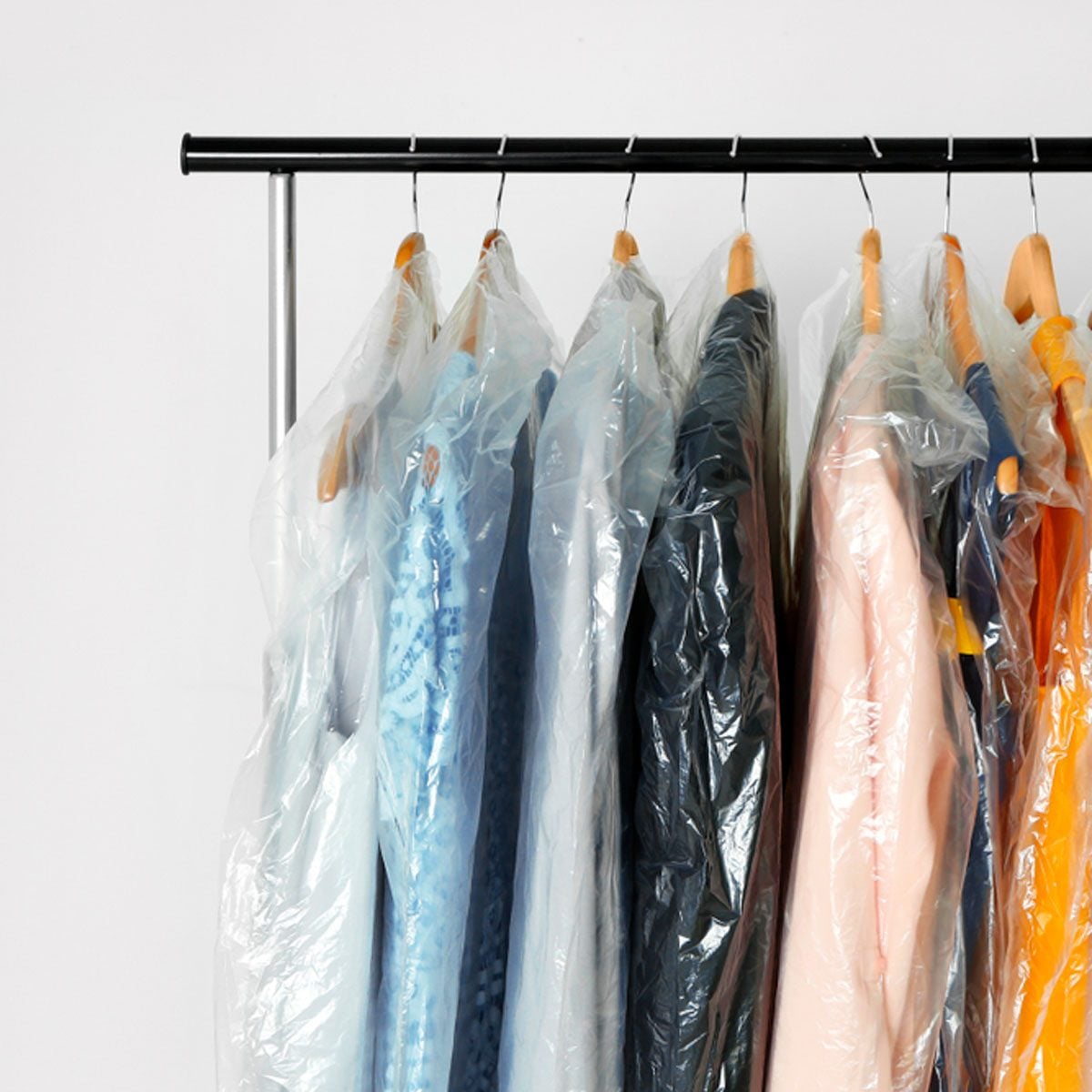
4. You’re Leaving Clothes in Dry-Cleaning Plastic
That flimsy bag was designed for transportation
The thin plastic covering supplied by a dry cleaner helps protect clothing on the trip home. It is not intended to become a permanent garment apartment. Plastic can restrict airflow, trap residual humidity, cling to embellishments, and eventually tear into annoying strips.
Remove the covering after bringing the garment home. Allow recently cleaned clothing to air out in a well-ventilated location before placing it in the closet. For long-term protection, use a clean, breathable fabric garment bag that is long and wide enough to avoid crushing the item.
Do not crowd multiple formal dresses or suits into one narrow bag. Each garment should retain its natural shape. Museum-style textile preservation also favors appropriate enclosures and stable storage conditions rather than cramped, poorly ventilated spaces.
5. You’re Cramming Your Closet Until Nothing Can Breathe
A full closet is not necessarily an organized closet
When every garment is packed tightly against the next one, fabrics rub together, sleeves become trapped, wrinkles deepen, and air circulation decreases. You also stop seeing what you own, which explains why people purchase another black shirt while six existing black shirts are hiding in the closet.
Leave enough space to slide hangers comfortably along the rod. Clothing should hang naturally rather than remain permanently squeezed. In drawers, avoid compressing garments so tightly that closing the drawer becomes a competitive sport.
Overpacked textile storage can hold moisture and make routine inspection difficult. The Smithsonian Museum Conservation Institute notes that increased air circulation and more space around textiles are beneficial, particularly in humid conditions.
Remove clothing that no longer fits, needs repair, or has not been worn in a meaningful amount of time. Seasonal garments can be stored elsewhere in labeled containers. Your everyday closet should primarily contain clothing that supports your current lifenot your imaginary career as a nightclub magician.
6. You’re Using Vacuum Bags for Every Garment
Space-saving pressure can become shape-destroying pressure
Vacuum storage bags are useful for compressible items such as basic puffer jackets, synthetic blankets, and durable casual clothing. However, they are not automatically safe for every piece in your wardrobe.
Long-term compression may flatten insulation, deepen wrinkles, deform structured shoulders, and damage sequins, beads, embroidery, or fragile trims. Leather, suede, vintage textiles, tailored garments, and delicate natural fibers generally deserve more supportive storage.
Use vacuum bags selectively and never force them beyond their intended capacity. Clean and dry the contents first, fold items carefully, and inspect the seal before storing the bag in a cool, dry location. Avoid vacuum-compressing delicate or embellished garments, which may not tolerate sustained pressure.
For valuable or sentimental clothing, a sturdy archival-quality box with acid-free tissue is often a gentler option. The Library of Congress uses supportive tissue and padded folds when housing certain textile objects, reducing stress on vulnerable creases.
7. You’re Storing Clothes in a Damp Basement or Hot Attic
The wrong location can defeat the right container
Attics, garages, sheds, and unfinished basements experience large changes in temperature and humidity. Heat can accelerate deterioration, while excess moisture encourages mildew and pest activity. A container may keep out dust without creating a magically stable climate inside.
Store clothing in a clean, dark, dry area with relatively stable conditions. An interior closet, under-bed space, or climate-controlled room is usually safer than an exterior storage area. Keep boxes away from plumbing, water heaters, windows with condensation, and concrete floors that may transmit moisture.
As a preservation benchmark, the Smithsonian recommends temperatures around 65 to 70 degrees Fahrenheit and relative humidity between 40 and 50 percent for antique textiles. Your everyday wardrobe does not require museum precision, but the principle is valuable: cool, dry, stable conditions are better than dramatic environmental swings.
If your climate is humid, use a hygrometer to monitor the space and address the source of moisture rather than attempting to perfume the problem into submission.
8. You’re Folding Delicate or Structured Clothes Carelessly
Every fold becomes a pressure point
Folding is not automatically safer than hanging. A sharply folded silk dress, embroidered blouse, or vintage T-shirt can develop permanent creases or damage along the fold lines. Decorative elements may also press into neighboring fabric and leave impressions.
Use acid-free tissue to soften folds in sentimental, delicate, or long-term stored garments. Place tissue inside sleeves, bodices, and other hollow areas when the item needs additional shape support. Use a container large enough to minimize the number of folds required.
Do not allow sequins, metal fasteners, zippers, or buttons to press directly against fragile fabric. Wrap or separate those areas with tissue. Avoid ordinary newspaper and colored wrapping paper, which may transfer ink, dyes, or acids.
Refold long-term stored garments periodically so the same fibers do not remain under continuous pressure. You do not need to conduct a monthly ceremonial refolding, but an annual inspection is a sensible habit.
9. You’re Treating Cedar and Mothballs as Magic Shields
Pest prevention begins with cleanliness, not fragrance
Cedar smells pleasantly like an expensive cabin, but its aroma is not a substitute for cleaning and inspection. Cedar products lose potency as their oils evaporate. They may help discourage some insects when refreshed, yet they will not solve an established infestation.
Mothballs are pesticides, not closet air fresheners. They should only be used according to the product label, typically inside tightly sealed containers where the vapor can reach the required concentration. Scattering them around an open closet exposes people and pets to fumes without necessarily controlling pests effectively.
The EPA warns consumers to follow pesticide labels and avoid illegal mothball products. Moth repellents should be stored and used carefully, particularly in homes with children or animals.
For routine prevention, clean clothes before storage, vacuum closet corners, remove lint and pet hair, inspect natural-fiber garments, and use sealed containers when necessary. If you discover larvae, webbing, shed skins, or irregular holes, isolate affected items and clean the storage area thoroughly.
10. You’re Organizing for Appearance Instead of Daily Use
A beautiful closet can still be deeply impractical
Color-coordinated clothing looks impressive, but organization should first help you find, wear, and return garments. If work shirts are scattered across five shelves because they happen to be different colors, your system is creating extra labor before breakfast.
Group clothing by function or type first: shirts, pants, dresses, jackets, activewear, and formalwear. Within those categories, organize by color if that helps you assemble outfits. Keep frequently worn pieces at eye level and place occasional or seasonal items higher up or in clearly labeled containers.
A reverse-hanger test can identify clothing you rarely use. Turn all hanger hooks in one direction, then return each worn garment with its hanger facing the opposite way. After a season, the untouched pieces become obvious candidates for tailoring, donation, resale, or separate sentimental storage.
Labels should be specific. “Winter Clothes” is less useful than “Men’s Wool SweatersMedium” or “Women’s Ski Layers.” Future you should not have to open seven identical bins while whispering increasingly creative complaints.
Additional Clothes Storage Mistakes Worth Fixing
The ten problems above cause most wardrobe trouble, but several smaller habits also deserve attention. Do not place shoes directly on top of clean garments. Stuff handbags and tall boots with acid-free tissue or suitable supports so they hold their shape. Store bras flat or nest their cups instead of folding one cup inside the other. Empty pockets before storage, since forgotten gum, pens, receipts, and coins rarely improve with age.
Avoid placing scented soap, candles, or strongly dyed sachets directly against fabric. Oils and dyes can transfer. If you use cedar or lavender, contain it in a breathable pouch and prevent direct contact with valuable garments.
Finally, inspect stored clothing at least once during each season. Look for moisture, odors, staining, pest evidence, collapsed boxes, or broken seals. Early intervention is much easier than discovering that a family of insects has spent six months enjoying your cashmere collection.
Conclusion: Store Smarter and Replace Less
Correct clothes storage protects more than appearances. It saves money, reduces textile waste, shortens morning routines, and helps you enjoy the clothing you already own. The best system begins with clean, dry garments and matches the storage method to the material and construction of each item.
Fold heavy knits, support tailored pieces, give garments breathing room, and reserve compression bags for clothing that can tolerate them. Keep storage spaces cool and dry, inspect them regularly, and treat pest-control products with the seriousness they deserve.
Your closet does not need to resemble a luxury boutique. It simply needs to stop quietly sabotaging your wardrobe.
A Real-World Closet Reset: What the Experience Usually Reveals
Consider a typical weekend closet reset. The owner begins confidently, carrying three empty storage bins and believing the project will take approximately 45 minutes. Ten minutes later, the bed is covered with clothing, one missing glove has resurfaced, and a jacket last worn in 2018 is demanding an emotional hearing.
The first discovery is usually overcrowding. Once the garments are removed from the rod, it becomes clear that many have remained crushed together for years. Several shirts are wrinkled despite being on hangers, and one sweater has developed dramatic shoulder bumps. The owner had blamed the fabric, but the real culprit was a narrow plastic hanger supporting a heavy knit.
The second discovery arrives through smell. A sealed container of seasonal clothing does not smell fresh; it smells faintly damp and strangely sweet. The garments were washed before storage, but they were packed on a humid afternoon before every layer was completely dry. Nothing appears visibly moldy, yet the entire load must be cleaned and dried again. This is the moment when “almost dry” is permanently removed from the household’s storage vocabulary.
Next comes the mysterious T-shirt stain. The shirt looked clean when it was stored, but a pale yellow mark has appeared around the collar. Body oils that were difficult to see months earlier became more noticeable during storage. The experience changes the sorting process: clothing that touched the skin is now washed even when it appears presentable.
The closet reset also exposes the weakness of vague labels. Three containers say “Clothes,” a description that is technically accurate and practically useless. After everything is sorted, the replacement labels read “Winter Base Layers,” “Formalwear Accessories,” and “Summer ClothesNot Needed Until May.” The next seasonal changeover will no longer resemble a game show in which every box is a surprise.
Then comes the emotional portion of the project. Some garments do not fit, have not been worn, or belong to a past version of the owner’s life. A few deserve to remain because they carry genuine meaning. Instead of occupying prime closet space, those sentimental pieces are cleaned, wrapped carefully, and placed in a separate labeled memory box. The distinction between wearable clothing and preserved memorabilia makes the everyday wardrobe significantly easier to manage.
By the end of the reset, the closet contains fewer garments but more usable options. Shirts slide along the rod without wrestling one another. Sweaters sit in short folded stacks. Jackets rest on hangers that support their shoulders. Shoes are visible instead of forming an unstable pile on the floor.
The greatest surprise is not how tidy the closet looks. It is how quickly getting dressed becomes. When every item can be seen and removed without disturbing five others, wardrobe decisions require less time and produce less frustration.
A successful clothes storage system rarely depends on expensive products. The biggest improvements usually come from cleaning garments thoroughly, creating breathing room, choosing appropriate supports, and labeling containers intelligently. The experience proves that organization is not about arranging more possessions in the same space. It is about making deliberate decisions regarding what deserves that space in the first place.
Note: This independently written article synthesizes garment-care, textile-preservation, pest-control, and closet-organization guidance from reputable U.S. resources, including the Smithsonian Institution, National Park Service, Library of Congress, U.S. Environmental Protection Agency, university extension programs, Consumer Reports, Good Housekeeping, Real Simple, Martha Stewart, and Better Homes & Gardens.