
Most sitcom actors have enough trouble keeping one character’s relationships, catc at that workload and apparently said, “That seems suspiciously manageable.”
Television comedy has a long history of asking the same actor to play multiple roles. Sometimes the characters are twins or cousins. Sometimes one is an alter ego created by science, magic, or a wig discovered near the writers’ room. Whatever the explanation, a successful dual performance requires more than changing clothes and standing on the other side of the set.
The best examples give each character a separate rhythm, posture, voice, and comic purpose. Viewers should be able to identify the character before the dialogue explains anything. That is difficult acting disguised as effortless fun.
From an actress portraying three nearly identical relatives to a nerd transforming into the smoothest man on Friday-night television, these five sitcoms demonstrate how one performer can create an entire miniature ensemble.
Why Sitcoms Use the Same Actor for Multiple Characters
Double casting is naturally funny because it creates instant contrast. A responsible character can meet a reckless lookalike. A confident twin can expose the insecurities of a nervous sibling. A familiar face can enter a scene with completely unfamiliar behavior, forcing the audience to perform a quick mental reboot.
These stories also offer writers a convenient route to mistaken identities, romantic confusion, secret substitutions, family revelations, and visual gags. In fantasy sitcoms, no explanation may be required beyond a spell. In family comedies, the second character is often introduced as a conveniently identical relative. Science-fiction-flavored sitcom episodes may use inventions, cloning, or personality-altering machines.
The technical challenge has changed over time. Earlier television productions commonly used body doubles, locked cameras, carefully timed performances, split screens, and editing tricks. Digital compositing later made interaction smoother, but the actor still had to create both halves of the conversation separately. A computer can combine two images; it cannot invent comic timing.
| Sitcom | Actor | Major Roles | Comic Device |
|---|---|---|---|
| The Patty Duke Show | Patty Duke | Patty Lane, Cathy Lane, Betsy Lane | Identical cousins |
| Bewitched | Elizabeth Montgomery | Samantha Stephens, Serena | Magical relatives |
| Family Matters | Jaleel White | Steve Urkel, Stefan Urquelle, Myrtle Urkel and others | Alter egos and relatives |
| Friends | Lisa Kudrow | Phoebe Buffay, Ursula Buffay | Estranged twin sisters |
| Arrested Development | Jeffrey Tambor | George Bluth Sr., Oscar Bluth | Identical twin brothers |
1. The Patty Duke Show: Patty Duke as Patty, Cathy, and Betsy Lane
Identical Faces With Opposite Personalities
The Patty Duke Show, which originally aired from 1963 to 1966, built its entire premise around Patty Duke’s ability to play two contrasting teenagers. Patty Lane was an energetic American teen interested in boys, music, school activities, and whatever adventure could create 25 minutes of manageable household chaos. Cathy Lane, Patty’s Scottish cousin, was calmer, more sophisticated, academically inclined, and noticeably formal.
The show’s opening theme famously described them as “identical cousins,” an idea that makes genetics quietly leave the room but works perfectly within sitcom logic. Their matching appearance created the visual hook. Duke’s characterization made the premise sustainable.
Patty moved with restless enthusiasm and reacted quickly. Cathy carried herself with greater restraint and spoke with a Scottish accent. Duke did not merely switch wardrobes; she adjusted her energy. When the two characters shared a scene, their differences remained clear even without obvious visual clues.
Why the Performance Was Historically Important
Dual roles were not new to movies, but building a weekly television comedy around one young performer playing both leads was ambitious. Production required precisely coordinated camera work, doubles, eyeline matching, and repeated performances. Duke had to remember not only her lines but also the timing and physical behavior she had created for the unseen character.
The series occasionally increased the difficulty by introducing Betsy Lane, another identical cousin also played by Duke. At that point, the Lane family tree began to resemble a photocopier with excellent hair.
The result established an early template for actors playing multiple roles in sitcoms. The comedy was not based only on how similar the cousins looked. It came from how differently Duke made them think, move, and react. lizabeth Montgomery as Samantha Stephens and Serena
The Responsible Witch and Her Rebellious Cousin
Elizabeth Montgomery’s primary role on Bewitched was Samantha Stephens, a powerful witch attempting to maintain a conventional suburban marriage with her mortal husband, Darrin. Samantha was warm, practical, and usually determined to solve problems with patience rather than supernatural fireworks.
Then there was Serena.
Also played by Montgomery, Serena was Samantha’s mischievous cousin. She was more adventurous, flirtatious, impulsive, and openly amused by mortal society. While Samantha often tried to prevent magical disasters, Serena treated the Stephens household as a convenient location in which to begin one.
Montgomery differentiated the characters through more than clothing and hairstyles. Samantha’s movements were composed, and her humor often came from controlled frustration. Serena occupied a scene with freer body language and a knowing sense of trouble. She appeared to be permanently waiting for someone to make the poor decision of underestimating her.
The Pandora Spocks Joke
In a playful extension of the illusion, Montgomery was sometimes credited for Serena under the pseudonym “Pandora Spocks.” The fake credit encouraged viewers to participate in the joke even though the resemblance was not exactly subtle. Serena looked remarkably like Samantha because, in a shocking casting coincidence, she was Samantha wearing more adventurous clothes.
The arrangement also made narrative sense inside the show’s magical universe. Bewitched regularly featured eccentric supernatural relatives, unexplained transformations, and spells that altered appearances. Seeing two versions of Montgomery in one room felt less like a special episode and more like another complicated Tuesday at Morning Glory Circle.
By playing Samantha and Serena as emotional opposites, Montgomery showed why dual roles work so well in comedy. The familiar face attracts attention, but the contrasting personality generates the laughs. rs: Jaleel White Built an Urkel Universe
From One-Time Guest to Sitcom Centerpiece
Steve Urkel was initially introduced as an awkward neighbor on Family Matters. His combination of suspenders, oversized glasses, nasal confidence, scientific enthusiasm, and catastrophic coordination quickly made him one of the defining sitcom characters of the 1990s.
Once Urkel became central to the series, Jaleel White’s assignment expanded. He did not simply play Steve for nine seasons. He portrayed alternate versions, transformations, and members of the increasingly populated Urkel family.
The most famous second role was Stefan Urquelle, Steve’s suave alter ego. Created through one of Steve’s experiments, Stefan had fashionable clothes, a deeper voice, relaxed posture, and enough charm to make Laura Winslow reconsider several years of romantic rejection.
White had to make Stefan believable without turning him into Steve with better tailoring. His speech slowed down. His body language opened up. His facial expressions became controlled. The frantic energy that defined Urkel disappeared.
Myrtle Urkel and the Expanding Family
White also played Myrtle Urkel, Steve’s Southern cousin, who developed an aggressive romantic interest in Eddie Winslow. Additional variations and relatives included characters such as Original Gangsta Dawg Urkel, along with transformation-based personalities that allowed White to experiment with martial-arts heroes, celebrities, and other comic identities.
Some of these appearances were broad even by the standards of a sitcom in which a teenager regularly constructed devices capable of rewriting human biology. Nevertheless, White approached them with commitment. Each role used a distinct voice, costume, physical style, and comic rhythm.
Family Matters offers one of television’s clearest examples of a performer’s success reshaping a series. White arrived as a guest character and eventually became so essential that the show could create new characters simply by asking, “What if another person looked exactly like Jaleel White?” a Kudrow as Phoebe and Ursula Buffay
A Network Scheduling Problem Became a Family Tree
Before playing Phoebe Buffay on Friends, Lisa Kudrow appeared on the NBC sitcom Mad About You as Ursula, an inattentive waitress whose customer-service philosophy seemed to be “You will receive food when destiny allows it.”
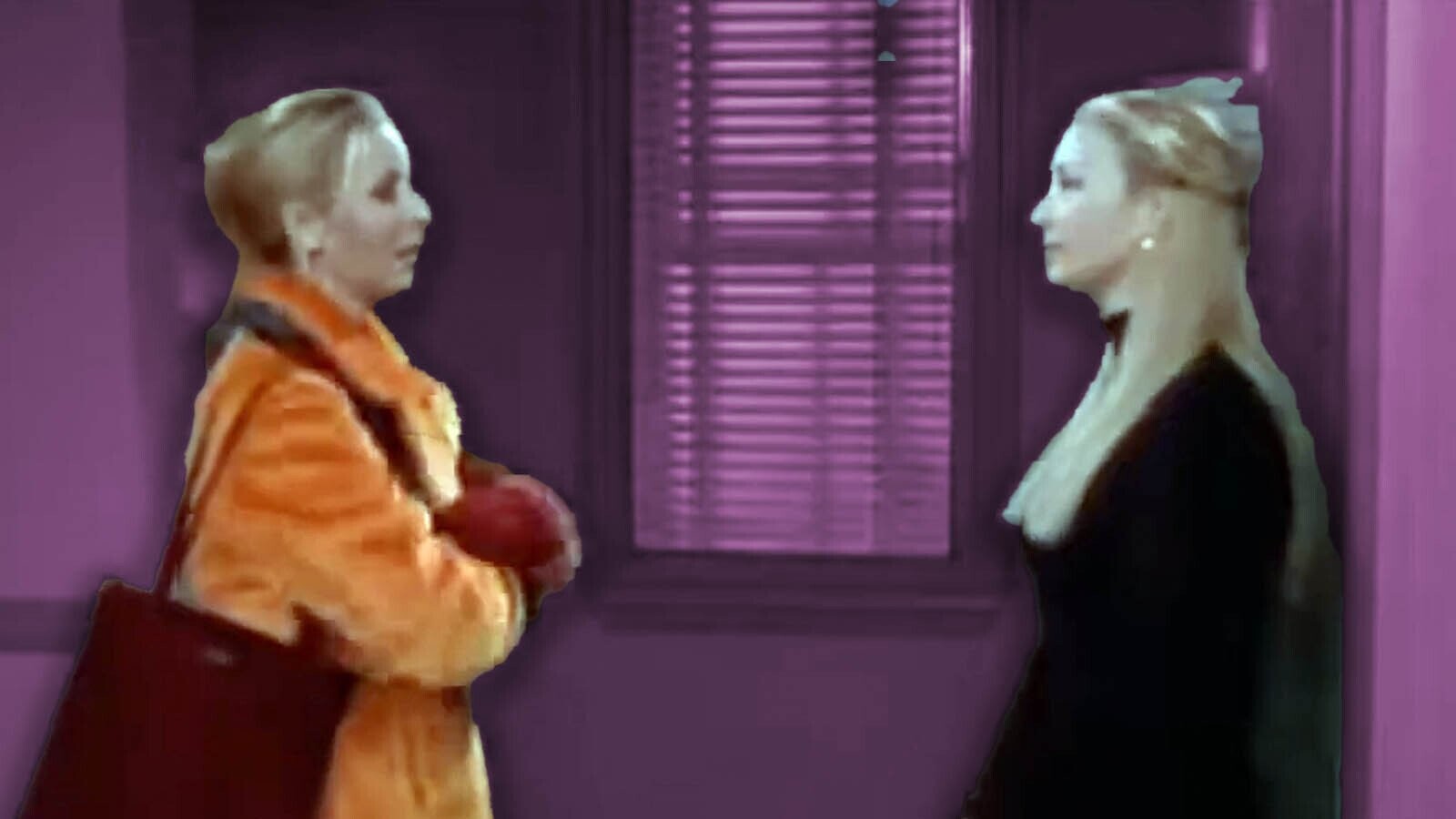
When Kudrow joined Friends, NBC had an unusual continuity problem. Viewers could potentially see her as Ursula on one program and then as Phoebe shortly afterward. Rather than pretend nobody would notice, the writers connected the two characters by making them estranged twin sisters.
It was an elegant solution that expanded Phoebe’s history. Ursula’s selfishness, dishonesty, and emotional distance contrasted with Phoebe’s eccentric but generally compassionate nature. Their shared appearance emphasized how differently two people from the same troubled background could develop.
Two Different Kinds of Strange
Phoebe was whimsical, intuitive, and occasionally alarming in ways she considered perfectly reasonable. Ursula was detached, opportunistic, and often uninterested in how her decisions affected anyone else. Kudrow gave Phoebe an animated curiosity, while Ursula spoke with flatter energy and a vague expression suggesting that the conversation had already exceeded her recommended daily allowance of concern.
Episodes involving both sisters used the dual role for more than visual novelty. Ursula’s presence revealed details about Phoebe’s childhood, relationships, birth family, and feelings of abandonment. The comedy therefore carried emotional weight.
The setup also became one of American television’s most memorable cross-series connections. A practical programming issue produced a recurring Friends character, a richer backstory, and several excellent jokes about the world’s least supportive sister. elopment: Jeffrey Tambor as George Sr. and Oscar Bluth
One Face, Two Different Varieties of Unreliable
On Arrested Development, Jeffrey Tambor played George Bluth Sr., the controlling patriarch whose questionable business practices placed him under investigation and repeatedly endangered the family company. George was defensive, manipulative, impatient, and always prepared to involve his children in a plan he had not explained properly.
Tambor also played George’s identical twin brother, Oscar. While George was tightly wound and domineering, Oscar was a long-haired, soft-spoken wanderer with a more relaxed lifestyle. He became involved with George’s wife, Lucille, and was strongly impliedand eventually understoodto be Buster’s biological father.
Visually, Oscar was distinguished by his flowing hair and casual appearance. Tambor also changed his physical presence. George’s movements were tense and purposeful. Oscar seemed to drift into scenes as though transported by a gentle breeze carrying the faint scent of a questionable herbal product.
A Character Inspired by a Wig
The origin of Oscar fit the spontaneous spirit of the series. During a cast reunion discussed by The New Yorker, Tambor recalled that the character emerged after he entered the writers’ room wearing a wig. The visual idea was apparently too useful to waste, and Oscar soon joined the Bluth family’s already crowded collection of secrets.
The dual performance became especially effective when mistaken identity entered the plot. George and Oscar could switch places, deceive relatives, or become trapped by the family’s inability to distinguish them. Because Arrested Development favored layered jokes and long-running callbacks, their resemblance powered storylines across multiple episodes rather than functioning as a single stunt.
Tambor’s performance illustrates a central rule of playing multiple sitcom roles: the characters may share a face, but they should not share a center of gravity. eat Sitcom Dual Performance?
Clear Physical Differences
Strong dual performances can often be understood with the sound turned off. The actor alters posture, walking speed, gestures, eye contact, and facial tension. Stefan Urquelle does not merely speak differently from Steve Urkel; he enters a room as though the room has been expecting him.
Separate Vocal Identities
Accents and pitch changes help, but rhythm matters just as much. Patty and Cathy Lane process conversations at different speeds. Samantha chooses her words carefully, while Serena appears to enjoy throwing words into a room and observing the damage.
A Reason for Both Characters to Exist
The second role must contribute something beyond resemblance. Ursula reveals Phoebe’s history. Oscar complicates the Bluth family’s relationships. Serena represents the magical freedom Samantha has limited in pursuit of suburban stability. Stefan embodies the confident person Steve believes he must become to earn affection.
Convincing Reactions
When one actor plays both sides of a scene, the performance depends on imaginary listening. Each character must react to dialogue that may have been filmed hours earlier. Successful scenes feel spontaneous even though their timing is carefully engineered.
Extended Viewing Experience: Why These Episodes Are So Rewatchable
Watching these sitcoms today reveals how quickly viewers accept an impossible premise when the performance is specific. Nobody spends an entire episode demanding a scientific explanation for Patty and Cathy being identical cousins. The distinction between them becomes emotionally credible, and that credibility is more important than genetics.
The most enjoyable part of revisiting double-role episodes is noticing the small acting decisions that may be overlooked during the first viewing. A performer changes the placement of a hand, the speed of a turn, or the length of a pause. Those details tell the audience which character has entered before a costume or accent confirms it.
The Patty Duke Show provides the clearest starting point because the double performance is the foundation of the series. Watching several episodes in sequence makes Duke’s control increasingly apparent. Patty’s energy feels spontaneous, while Cathy’s composure feels natural. Neither character appears to be an imitation of the other.
Bewitched offers a different experience. Samantha and Serena represent competing attitudes toward freedom and responsibility. Samantha wants stability but belongs to a family capable of turning every dinner party into a supernatural incident report. Serena enjoys the freedom Samantha suppresses. Their scenes are funny because Montgomery is effectively dramatizing an internal conflict with two wardrobes.
The Family Matters episodes featuring Stefan are especially interesting when viewed beyond the transformation gimmick. Steve believes confidence requires becoming a different person. Stefan initially receives the attention Steve wants, but the series repeatedly returns to the idea that admiration gained through self-erasure is incomplete. Beneath the laboratory equipment and enormous hair, the storyline explores identity and acceptance.
Phoebe and Ursula create the most emotionally uncomfortable viewing experience of the five examples. Their encounters are funny, but Ursula’s indifference frequently hurts Phoebe. Kudrow’s performance prevents those scenes from becoming weightless twin jokes. Phoebe’s disappointment remains visible even when she covers it with humor.
George and Oscar, meanwhile, reward close attention because Arrested Development builds jokes through repetition. A casual line about hair, fatherhood, prison, or mistaken identity may return several episodes later with a second meaning. Rewatching makes the dual performance even funnier because the audience recognizes the setup before the characters do.
These examples also create appreciation for the production process. Every conversation between matching characters requires planning. The actor must establish one performance, remember its pacing, change character, and create a response that appears immediate. Editors and visual-effects teams then build a seamless exchange.
The lasting pleasure comes from temporarily forgetting that technical work. When the illusion succeeds, viewers stop seeing one actor multiplied by editing. They see cousins, twins, rivals, transformations, and relatives with separate histories. The trick disappears, leaving only characterand, ideally, twice the comedy.
Conclusion
The same actor playing multiple roles can easily become a novelty, but the best sitcoms turn it into a storytelling advantage. Patty Duke used contrasting personalities to sustain an entire series. Elizabeth Montgomery transformed Samantha and Serena into opposite expressions of magical womanhood. Jaleel White expanded one breakout character into an Urkel population boom. Lisa Kudrow turned a scheduling complication into meaningful family history. Jeffrey Tambor used posture, voice, and one extremely productive wig to create two unmistakable Bluth brothers.
These performances succeed because the audience does not merely recognize the actor. It recognizes each character. That distinction is where clever television trickery becomes genuine actingand where one performer earns two places in sitcom history.
Note: This article was fact-checked using established series credits, official program descriptions, cast interviews, and archival entertainment reporting from sources including People, TIME, GQ, Vanity Fair, Vulture, Entertainment Weekly, The New Yorker, Netflix, Max, Rotten Tomatoes, IMDb, and official studio materials.