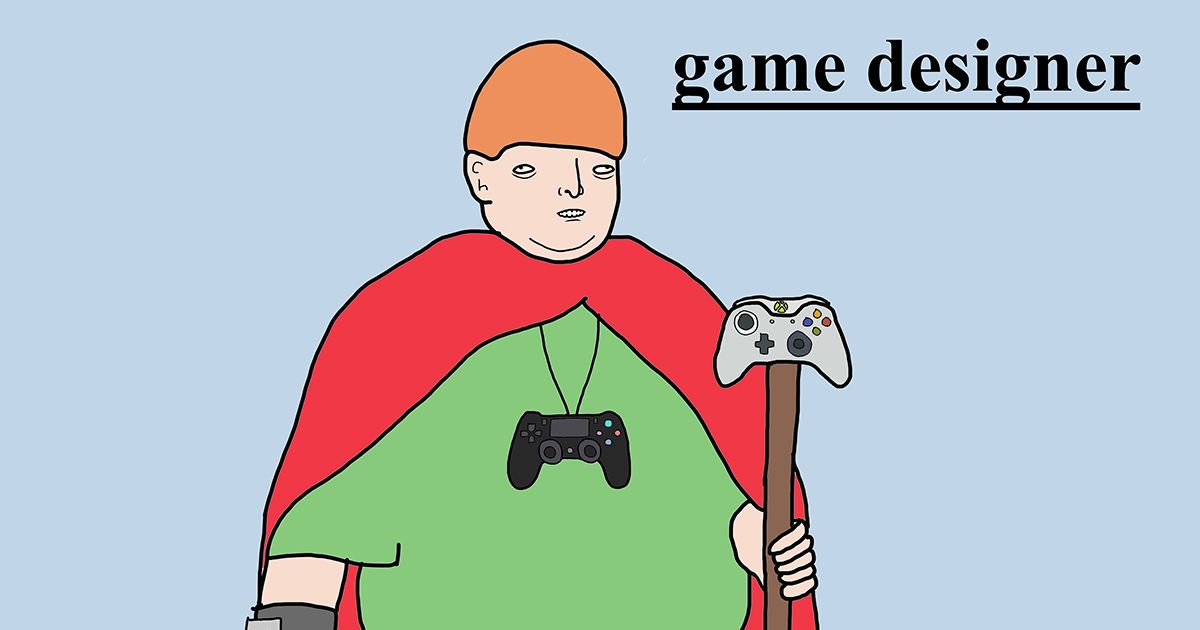

Creative jobs look suspiciously glamorous from the outside. A designer appears to spend the day choosing attractive colors. A photographer strolls around with an expensive camera. A writer gazes thoughtfully through a coffee-shop window until a perfect sentence lands in their lap. An animator simply makes adorable characters wave at people.
Then someone actually enters a creative profession and discovers the hidden ingredients: urgent deadlines, contradictory feedback, unpaid administrative work, technical problems, budget negotiations, late-night revisions, and the occasional client request to make something “more exciting, but also calmer.”
That gap between fantasy and reality is exactly what makes humorous illustrations about creative jobs so effective. The viral series associated with illustrator Chris (Simpsons Artist) and the former creative-industry network Hiive used strange, deliberately awkward imagery to show what working in creative fields can really feel like. Instead of polished career propaganda, the pictures offered wonderfully absurd visual honesty.
Why These Creative Job Illustrations Feel So Accurate
A conventional career guide explains duties. A brilliant illustration captures the emotional weather surrounding those duties.
It can show a designer buried beneath revisions, a filmmaker trying to control fifty moving parts, or a freelancer balancing creativity, accounting, marketing, and mild panic on one rapidly wobbling chair. The exaggeration is ridiculous, but the underlying experience is recognizable.
Humor works because creative professionals often deal with contradictions. They must be original while respecting brand guidelines. They must experiment without wasting time. They must care deeply about the work while remaining calm when someone asks them to replace the concept five minutes before the deadline.
The funniest illustrations do not insult creative careers. They celebrate them by acknowledging the complete job rather than the attractive portion visible in a finished portfolio.
The Portfolio Shows the Result, Not the Process
A creative portfolio is a carefully organized museum. Creative work itself is usually closer to an airport baggage system during a thunderstorm.
Audiences see the final logo, photograph, article, costume, animation, commercial, or movie scene. They rarely see the discarded drafts, research notes, rough sketches, corrupted files, location problems, budget compromises, licensing questions, or meetings devoted to deciding what the phrase “youthful but timeless” is supposed to mean.
This invisible labor explains why outsiders sometimes underestimate creative jobs. The final result may appear simple precisely because an experienced professional solved the complicated problems before the audience could notice them.
Graphic Designers Do More Than Make Things Pretty
The popular fantasy says graphic designers select fonts and move shapes around until everything looks stylish. The reality involves communication strategy, production requirements, accessibility, technical specifications, brand consistency, and repeated rounds of stakeholder feedback.
A logo may need to work on a billboard, business card, mobile screen, embroidered shirt, monochrome invoice, and social-media avatar. That elegant symbol probably survived dozens of rejected directions before becoming “obvious.”
Designers also face the legendary feedback paradox. A client may request something cleaner while simultaneously asking for six extra messages, three photographs, another call-to-action button, and a larger logo. The designer’s true superpower is not selecting colors. It is fitting twelve pounds of communication into a five-pound layout without visibly screaming.
Creative feedback can be emotionally difficult because the work is evaluated continuously, often by people with competing priorities. Research and professional commentary on design culture emphasize that scrutiny is a routine part of producing creative work for clients and employers.
Writers Spend Surprisingly Little Time Dramatically Typing
Writing is frequently represented as a magical act of inspiration. In professional settings, it is also research, interviewing, outlining, fact-checking, editing, formatting, search optimization, and adapting one message for several audiences.
The first draft is rarely the finished product. It is more like a mildly confused volunteer who has arrived early and needs detailed instructions.
Professional writers must make complex ideas understandable without flattening them, persuasive without becoming manipulative, and entertaining without losing accuracy. They may also receive comments such as “Can we make this shorter but include more detail?” This request has traveled through creative departments for generations and remains undefeated.
Photographers Are Also Producers, Editors, and Business Managers
A photographer’s work does not begin when the shutter clicks or end when the camera returns to its bag. It can involve finding clients, scouting locations, scheduling, lighting, directing subjects, maintaining equipment, selecting images, color correction, retouching, backups, delivery systems, invoicing, and licensing.
The U.S. Bureau of Labor Statistics notes that photographers may handle advertising, appointments, equipment, supplies, records, customer billing, and postproduction. In other words, owning a camera is only the opening scene.
Even a natural-looking portrait may require careful planning. The relaxed subject may be standing six inches away from a trash can while an assistant holds a reflector and the photographer quietly negotiates with a cloud.
Film and Animation Turn Creativity Into a Team Sport
Movies, television programs, advertisements, games, and animated productions are built by interconnected specialists. Writers, storyboard artists, performers, editors, sound designers, camera crews, set designers, producers, directors, visual-effects artists, and production staff all influence the final result.
The credits roll for several minutes because the work took several villages.
Creative decisions must also survive technical limits, budgets, schedules, and constant coordination. Editors may spend long periods working alone with footage, while production workers can experience intense schedules followed by gaps between projects. Animators and visual-effects artists may work nights or weekends when deadlines approach.
A humorous drawing can communicate this chaos faster than a production manual: one person attempting to steer a giant creature assembled from calendars, cables, coffee, money, and other people’s opinions.
Fashion and Interior Design Mix Art With Logistics
Fashion designers are imagined sketching dramatic clothing beside a window in Paris. Interior designers are imagined selecting throw pillows in naturally illuminated rooms where nobody owns a charging cable.
Both careers require substantial technical and commercial work. Fashion professionals consider materials, construction, fit, manufacturing, costs, market demand, and production schedules. Freelancers may work long days around client deadlines. Interior designers coordinate with architects, contractors, suppliers, safety requirements, measurements, budgets, and building schedules.
The creative vision matters, but so does whether the fabric arrives, the chair fits through the door, and the electrical outlet exists where the beautiful rendering confidently placed it.
Freelance Freedom Comes With an Administrative Sidekick
Freelancing offers real advantages. Creative professionals can gain control over their schedules, choose projects, work with varied clients, and build careers around specialized interests. Surveys have also found that self-employed Americans often report high job satisfaction.
However, “being your own boss” means becoming several bosses at once. The freelancer is the creative director, sales department, project manager, bookkeeper, customer-service representative, collections agent, IT technician, and person who remembers to buy printer paper.
Many artists and designers are unusually likely to work independently. Federal arts research has found that artists are substantially more likely than the wider workforce to be self-employed, while occupational data show particularly high self-employment among animators, set designers, and fine artists. Some artists maintain additional jobs because creative income alone can be difficult to predict.
Scope Creep: The Monster With Excellent Manners
Scope creep rarely announces itself by kicking down the studio door. It arrives politely.
“Could we try one tiny alternative?”
“Could you also prepare a vertical version?”
“The leadership team joined the project and has a few thoughts.”
Soon, the agreed assignment has developed extra deliverables, new decision-makers, and the structural complexity of a small airport. Freelance organizations consistently recommend defining deliverables, revision limits, deadlines, fees, and payment terms in writing so additional work can be priced rather than quietly absorbed.
Creative People Must Think About Taxes and Copyright Too
The less photogenic side of independent creativity includes invoices, expense records, estimated taxes, contracts, usage rights, and copyright registration.
In the United States, freelancers may need to manage estimated tax payments and self-employment taxes rather than relying on an employer’s payroll department. The IRS states that gig workers with at least $400 in net self-employment earnings generally have a federal filing obligation.
Creators also need to understand who owns the work, where it may be used, and whether a client is purchasing a limited license or a complete transfer of rights. U.S. copyright guidance covers illustrations, photographs, graphic designs, technical drawings, and many other forms of visual work.
Nothing makes an artist feel like a businessperson quite as quickly as finding their illustration on a product they have never seen before.
The Emotional Truth Behind Creative Careers
Creative professionals are often expected to produce fresh ideas on demand. Unfortunately, the brain does not always recognize that the concept presentation begins at 9:00 a.m. Thursday.
Creativity requires curiosity, attention, and psychological space. Professional creativity frequently happens in environments filled with meetings, notifications, shifting priorities, and deadline pressure. Knowledge-work research has repeatedly highlighted how administrative coordination and “work about work” consume time that could otherwise be spent on skilled tasks.
Burnout Is Not a Failure of Imagination
Burnout can appear as exhaustion, cynicism, reduced motivation, or the feeling that every new assignment is simply the previous assignment wearing a different hat.
Workplace research identifies unmanageable workloads, unclear communication, insufficient support, unfair treatment, and unreasonable time pressure as important burnout drivers. Broader U.S. worker surveys have also found widespread emotional exhaustion and other effects associated with chronic workplace stress.
The solution is not to demand that employees become more passionate. Many creative workers already care intensely. Sustainable creativity requires realistic schedules, clear responsibilities, useful feedback, adequate resources, and permission to recover.
Artificial Intelligence Adds Another Complicated Layer
Generative AI can accelerate brainstorming, transcription, research organization, rough visualization, repetitive editing, and production tasks. It can also raise difficult questions about originality, consent, attribution, copyright, entry-level opportunities, and how creative skill is valued.
The emerging reality is neither “AI replaces every artist tomorrow” nor “nothing will change.” Creative professionals are learning where automation genuinely helps, where human judgment remains essential, and how to protect the voice, context, empathy, and accountability that machines cannot independently supply. Current research suggests that freelancers may be especially exposed to technological disruption because they often have less bargaining power and fewer employment protections.
Why Laughing at Creative Work Can Be Healthy
Humorous illustrations give creative workers a shared language. One absurd drawing can say, “Yes, revisions are strange,” “Yes, deadlines can become unreasonable,” or “Yes, everyone has received feedback that appears to have been translated through three unrelated languages.”
This recognition reduces isolation. It reminds professionals that frustrating experiences are not necessarily signs of personal incompetence. Sometimes the process really is chaotic. Sometimes the brief really did change. Sometimes the file genuinely worked ten minutes ago.
Humor also helps clients and managers understand what they cannot see. A playful image can communicate the cost of vague feedback or unrealistic scheduling without turning the conversation into a forty-slide presentation titled Reasons Your Emergency Is Not Technically My Emergency.
What Clients and Creative Leaders Can Learn
Good creative work is not produced by squeezing unlimited ideas from people at maximum speed. It grows from a process that gives talent enough direction, time, and trust to solve the correct problem.
Start With a Clear Brief
Explain the audience, objective, required deliverables, limitations, approval process, and definition of success. “Make it viral” is not a strategy. It is a wish wearing office clothes.
Combine Feedback Before Sending It
Ten stakeholders should not send ten conflicting messages directly to the creator. Consolidated feedback prevents unnecessary revisions and makes decision-making visible.
Critique the Work, Not the Person
Useful feedback identifies the problem and supplies direction. It does not treat a designer, writer, or artist as a machine with a disappointing “generate better idea” button.
Respect the Invisible Labor
Research, planning, project management, file preparation, editing, meetings, and revision time are part of the work. They do not become free merely because they are absent from the final image.
Experiences From the Creative Trenches
The following composite experiences reflect situations commonly encountered across design, writing, illustration, photography, and production. They are not stories about one identifiable professional, but they may feel alarmingly familiar to anyone who has worked in a creative role.
The Five-Minute Change That Ate the Afternoon
A designer completes a campaign after several days of concept development. The typography is balanced, the images are licensed, and every format has been exported. At 3:40 p.m., a message arrives asking for a “five-minute change.”
The change involves replacing the main photograph.
The new photograph has a different shape, lighting style, and color palette. The text becomes unreadable. The crop fails in the mobile version. The file must be adjusted across twelve layouts. At 6:15 p.m., the requester cheerfully asks whether the five-minute change is ready.
This experience teaches an important lesson: creative time cannot always be estimated by counting visible mouse movements. A small request can disturb a carefully connected system.
The Writer Who Became a Meeting Archaeologist
A writer receives a brief for a friendly product page aimed at beginners. During the first review, the sales team asks for stronger urgency. The legal team requests softer claims. A product expert adds three paragraphs of technical terminology. An executive wants the page to sound “premium,” while another reviewer asks for a more casual voice.
The writer’s job gradually changes from composing sentences to excavating the original purpose from beneath layers of comments.
The final page is successful not because the writer followed every request literally, but because they identified the shared objective, resolved conflicts, and explained why certain suggestions could not coexist. Professional creativity frequently involves negotiation disguised as editing.
The Photographer and the Weather Department
A photographer schedules an outdoor shoot for the golden hour. The client, talent, makeup artist, assistant, equipment, permits, and transportation are ready. Then the sky develops artistic opinions.
Clouds erase the planned light. Wind attacks the wardrobe. A nearby construction crew begins operating machinery with the sound profile of an irritated dinosaur. The client still expects effortless photographs.
The photographer adapts the location, modifies the lighting, directs the subject, protects the equipment, and creates images that look peaceful. Viewers later comment on how “natural” everything appears.
That is the invisible achievement: not avoiding problems, but preventing the problems from appearing in the result.
The Freelancer Who Took a Day Off
A freelancer decides to take Friday off. To make this possible, they work late on Monday, Tuesday, Wednesday, and Thursday. On Friday morning, they send one invoice, answer two “quick” emails, fix a website problem, approve a print proof, and schedule social posts.
At lunchtime, they proudly announce that they have achieved work-life balance.
Independence can be deeply satisfying, but it requires boundaries that are treated as operating rules rather than optimistic suggestions. A freelancer who never protects recovery time eventually discovers that flexibility can bend in only one direction before it breaks.
The Illustrator and the Search for “More Wow”
An illustrator submits three thoughtful concepts. The client likes all of them but believes none has enough “wow.” No one can define wow, locate wow, or provide an example of previously approved wow.
The illustrator asks focused questions about audience, emotion, message, and context. Slowly, the mystery becomes clearer: the client does not need more visual spectacle. The central idea simply needs to be understood faster.
The illustrator simplifies the composition, strengthens the focal point, and removes several decorative details. The client responds, “Perfect. Now it has more wow.”
This is one of the strangest truths behind creative jobs: professionals are often given subjective language and expected to translate it into objective decisions. The ability to ask precise questions can be as valuable as drawing, writing, filming, or designing.
Conclusion: The Truth Is Messy, Funny, and Worth Showing
Brilliant illustrations about creative jobs succeed because they reveal the crowded backstage area behind polished work. They show that creativity is not an endless stream of inspiration. It is a professional practice combining imagination with communication, technical skill, revision, business management, and emotional resilience.
Creative careers can still be joyful. They offer opportunities to solve unusual problems, express ideas, collaborate with talented people, and make things that did not exist before. The joy simply shares office space with invoices, feedback documents, software updates, and deadlines that arrive faster than expected.
Perhaps that is the most honest message these illustrations deliver: creative professionals are not magical beings who effortlessly produce beauty. They are skilled workers who turn confusion into clarity, constraints into possibilities, and occasionally a completely baffling client comment into something surprisingly excellent.
Note: This article synthesizes occupational data, workforce research, professional guidance, and reporting from U.S. government agencies, arts organizations, labor resources, workplace researchers, and creative-industry publications, including the Bureau of Labor Statistics, National Endowment for the Arts, IRS, U.S. Copyright Office, APA, Gallup, Pew Research Center, Adobe, AIGA, Asana, Upwork, Brookings, Harvard Business Review, Fast Company, and Freelancers Union.