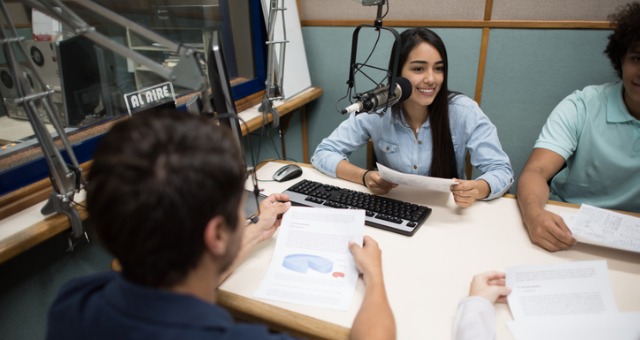

There was a time when student assignments came in only two flavors: the essay and the presentation. One was silent suffering in twelve-point font. The other was a slideshow with more bullet points than a Wild West movie. Then audio came along and quietly kicked open the classroom door.
Making radio, or creating any kind of student audio assignment, gives learners a different way to show what they know. It asks them to research, organize ideas, write for the ear, speak with purpose, and think about audience in a way that traditional assignments sometimes miss. In other words, it is not just a fun techy side quest. It is a real academic tool.
Whether the final product is a short podcast, a mini documentary, an interview show, an oral history, a science explainer, or a news-style segment, audio assignments can turn passive learners into active producers. Students are no longer just consuming information. They are shaping it, voicing it, editing it, and deciding how it should land with listeners. That process is where the magic happens.
Why Audio Assignments Work So Well
The best thing about audio is that it forces clarity. A student can sometimes hide weak thinking inside a long paragraph. A microphone is less forgiving. If the idea is fuzzy, the recording sounds fuzzy. If the structure wanders, the audience wanders too. Audio rewards clear reasoning, tight organization, and purposeful communication.
That is why making radio works across grade levels and subjects. In English, students can create literary analysis episodes, author interviews, or narrative retellings. In science, they can produce short explainers, field reports, or lab reflections. In social studies, they can make oral history pieces, debate-style episodes, or historical news reports. In world language classrooms, audio assignments create natural opportunities for speaking practice. Even in math, students can record problem-solving walkthroughs that explain not only the answer but the thinking behind it.
Audio also gives students a stronger sense of audience. An essay often feels like it was written for one person with a grading pen and a slightly disappointed expression. A podcast or radio segment feels different. It sounds public. It sounds shareable. That subtle shift matters. Students tend to care more when they know a real listener is waiting on the other side of the play button.
Then there is the confidence factor. Many students who feel boxed in by formal writing come alive when they speak. Others who are shy in class become surprisingly strong behind a microphone because they can rehearse, revise, and record in a lower-pressure environment. Audio can open doors for different kinds of learners without lowering academic expectations. That is the sweet spot.
What “Making Radio” Actually Means in the Classroom
Despite the title, students do not need to build a miniature public media station in the back of the room. “Making radio” is really about using sound as the main vehicle for learning. The format can be simple or sophisticated depending on your goals.
Common audio assignment formats
Interview episode: Students interview a peer, expert, family member, or community member and shape the conversation into a focused segment.
Audio essay: Students present a researched argument in a polished spoken format with narration and supporting clips.
News brief or explainer: Students summarize a topic, event, or concept for a general audience in clear, concise language.
Oral history project: Students gather first-person stories and connect them to larger themes in history, culture, or identity.
Roundtable discussion: Small groups discuss a text, issue, or problem with clear roles and structure.
Narrative audio story: Students combine voice, interview clips, ambient sound, and music to tell a story with emotional shape and momentum.
The format you choose should match the learning objective. If the goal is argumentation, an audio essay works well. If the goal is inquiry, interviews and oral histories shine. If the goal is synthesis, a short explainer or panel discussion may be the best fit. Good audio assignments begin with purpose, not with software.
How to Design a Strong Student Audio Assignment
The biggest mistake teachers make is assigning a podcast the way they would assign a worksheet: quickly, vaguely, and with optimism that borders on fantasy. Audio projects need structure. Students may know how to listen to podcasts, but that does not mean they know how to make one. That gap matters.
Start with the learning goal
Ask what students should demonstrate by the end of the assignment. Are they analyzing evidence, communicating to a public audience, synthesizing research, practicing speaking skills, or collaborating effectively? The answer shapes everything else: topic choice, length, workflow, rubric, and tool selection.
Choose the right level of complexity
Not every assignment needs to sound like a documentary made in a cave with dramatic piano music and one meaningful crow caw. For beginners, keep it simple. A three- to seven-minute audio essay, interview, or explainer is often plenty. More complex formats with field recordings, multiple voices, and layered sound design can come later.
Define the audience
Students communicate differently when they know who the work is for. Is the audience classmates, younger students, parents, the school community, or the general public? Once the audience is clear, decisions about tone, vocabulary, examples, and structure become much easier.
Build in scaffolding
A successful audio assignment usually includes checkpoints. Instead of assigning the whole project at once, break it into manageable stages: topic proposal, research notes, outline, script or interview plan, rough cut, peer feedback, final recording, and reflection. This helps students succeed and prevents the classic last-minute submission that sounds like someone recorded under a blanket while chewing ice.
A Practical Workflow for Making Radio
1. Find the story or question
Students need a focused topic, not a giant cloud of vague interest. “Climate change” is too broad. “How heat waves affect our town’s school sports schedule” is much better. Audio loves specificity because listeners cannot flip back three pages to figure out what is going on.
2. Research before recording
Good student audio starts with real information. Students should gather credible sources, identify key claims, verify facts, and decide what evidence belongs in the final piece. This is where audio assignments quietly strengthen academic habits. The project may sound modern, but the foundation is still strong research.
3. Plan the structure
Before students press record, they should map the episode. A simple structure works beautifully: introduction, main idea or story development, supporting evidence or interview clips, and a clear conclusion. If the piece includes interviews, students should also prepare purposeful questions and think about what each voice adds that narration alone cannot provide.
4. Write for the ear
Writing for audio is different from writing for print. Sentences should sound natural when spoken aloud. Transitions need to be obvious. Vocabulary should be precise but not needlessly complicated. Repetition can be useful in audio when it reinforces a key point, but rambling is still rambling no matter how nice the microphone is.
A strong audio script usually includes an opening hook, the purpose of the piece, main points, transitions, and closing remarks. Students should read the script aloud while drafting. If it sounds stiff, it probably is stiff. Audio writing should breathe.
5. Record in a simple, quiet setup
Here is the good news teachers love to hear: students do not need expensive studio equipment to begin. A phone, laptop microphone, or standard earbuds can often work just fine if the room is quiet and the speaker is close to the mic. The goal is clean sound, not cinematic thunder. Students should do a test recording first, listen back, and make adjustments before recording the full piece.
6. Edit with intention
Editing is where students discover that every “um,” chair squeak, and mystery hallway sneeze has consequences. But editing is also where thinking sharpens. Students begin to hear pacing, emphasis, clarity, and flow. They learn that a strong opening matters, that interview clips should serve a purpose, and that trimming is not cruelty. It is mercy.
7. Revise after feedback
Fresh ears are essential. After a while, students stop noticing rough transitions or confusing explanations because they know what they meant. Peer review helps them hear the assignment the way an audience will hear it. A short feedback form can ask: What was clear? What was memorable? Where did the listener get confused? What should be cut, moved, or clarified?
Accessibility, Ethics, and Copyright Matter
If audio is going to be part of strong teaching practice, it needs to be accessible. That means every student-created audio piece should include a transcript. A transcript supports deaf and hard-of-hearing users, helps multilingual learners, assists students who prefer reading, and makes audio easier to review and study. Accessibility is not an optional extra sprinkled on top like parsley. It is part of the assignment design.
Teachers should also think through privacy and publishing. Some students are thrilled to share their work publicly. Others are not. That is normal. Give students choices about whether their work stays inside the course, goes on a class site, or is shared more broadly.
Copyright is another place where good intentions can trip over bad decisions. Students should not grab random popular songs because “it sounded cool.” If the project uses music or sound effects, teach students to use original audio, school-approved media, or copyright-cleared libraries. It saves headaches and reinforces ethical media habits.
How to Grade Audio Fairly
Teachers sometimes worry that audio assignments are hard to assess. They are not, as long as the rubric focuses on learning goals instead of radio stardom. Students are not auditioning for a national broadcast network. They are demonstrating understanding.
Useful rubric categories
Content quality: accuracy, depth, relevance, and insight.
Organization: clear beginning, middle, and end; strong pacing and transitions.
Use of evidence: credible sources, strong examples, and appropriate attribution.
Audio delivery: clarity, expression, pacing, and listener engagement.
Technical quality: understandable recording, appropriate editing, and balanced sound.
Accessibility and professionalism: transcript included, ethical media use, and assignment requirements met.
A good rubric also protects students from over-focusing on flashy production tricks. A polished soundscape is nice, but if the content is thin, the assignment should not earn a standing ovation. The best audio work combines substance and craft, with the learning objective staying firmly in the driver’s seat.
Examples of Audio Assignments Across Subjects
In English, students might create a literary analysis podcast explaining how a novel builds tension, using short quotations and narrated interpretation.
In history, students can produce a radio news report from the perspective of a specific time period, blending research with point of view and historical context.
In science, a group might create a five-minute show explaining a local environmental issue and interview a teacher, coach, or community member connected to it.
In world languages, students can record travel guides, cultural interviews, or short debates, practicing fluency with a clear communicative purpose.
In teacher education or higher education courses, students can create public-facing explainers that translate academic ideas into language a general audience can understand. That move from expert-only writing to accessible communication is incredibly valuable.
Common Mistakes to Avoid
Mistake one: assigning a podcast with no models. Students need examples of what success sounds like.
Mistake two: making the project too long. Shorter assignments usually produce better learning and better audio.
Mistake three: confusing reading with performing. A student should not simply recite an essay into a microphone and call it a podcast.
Mistake four: skipping pre-production. Outlines, scripts, and interview plans save enormous amounts of time later.
Mistake five: forgetting transcripts, consent, or copyright. These are design issues, not afterthoughts.
Experiences From the Classroom: What Making Radio Feels Like
One of the most interesting things about using audio for student assignments is how quickly the classroom changes once recording begins. A room that normally runs on hand-raising and note-taking starts to sound different. Students huddle over outlines, test openings, argue over which quote should come first, and suddenly care a great deal about whether their transition sounds awkward. It is hard not to love that transformation.
Teachers often notice that students become more aware of audience during audio projects than during traditional writing tasks. When they know someone will actually hear the final product, they start asking better questions. Is this introduction interesting? Does this explanation make sense? Should we define this term? That kind of awareness is gold because it shifts the work from “I completed the assignment” to “I communicated something clearly.”
Another common experience is that students discover the difference between information and storytelling. At first, many of them want to pile facts into a script like they are loading groceries into a trunk. Then they listen back and realize it sounds flat. That is usually the turning point. They start cutting, rearranging, adding a stronger hook, or using an interview clip that brings the topic to life. In that moment, they are not just completing a school task. They are learning editorial judgment.
Audio projects also reveal strengths that do not always show up in essays. A student who struggles with formal writing may be excellent at interviewing. Another may be the group member who can hear pacing problems instantly and fix them. Someone else may be brilliant at structuring the episode so the listener never gets lost. Making radio gives more students a way to contribute meaningfully, which can make group work feel less like a hostage situation and more like an actual collaboration.
Of course, the process is not always smooth. There are awkward silences, background noise, files named things like “final_final_REALfinal2,” and the occasional recording ruined by a barking dog or an overenthusiastic air conditioner. But even those moments teach something. Students learn to plan, test, revise, solve problems, and adapt. They learn that polished communication rarely appears on the first try.
Perhaps the most powerful classroom experience comes at the end, when students hear their finished work. There is a special kind of pride in listening to your own thinking made audible. Students hear not just what they said, but how they shaped an idea for others. They hear where they were clear, where they were persuasive, where they were funny, and where they sounded more confident than they felt. That reflection matters.
For teachers, audio assignments often become memorable not because every project sounds professional, but because the work feels alive. The best student pieces carry curiosity, personality, and purpose. They sound like learners making meaning in real time. And that may be the biggest argument for making radio in school: it reminds everyone that learning is not only something to be written down. Sometimes it should be heard.
Final Thoughts
Making radio in the classroom is not about chasing trends or turning every student into a podcaster. It is about using audio as a serious, flexible, human form of academic expression. When designed well, student audio assignments strengthen research, writing, speaking, listening, collaboration, and digital literacy all at once. That is a pretty impressive workload for a humble sound file.
If you want to start, start small. Pick one clear learning goal. Choose a short format. Provide examples, checkpoints, and a simple rubric. Require transcripts. Keep the tools manageable. Then let students do what audio does best: turn thinking into voice, and voice into something worth hearing.