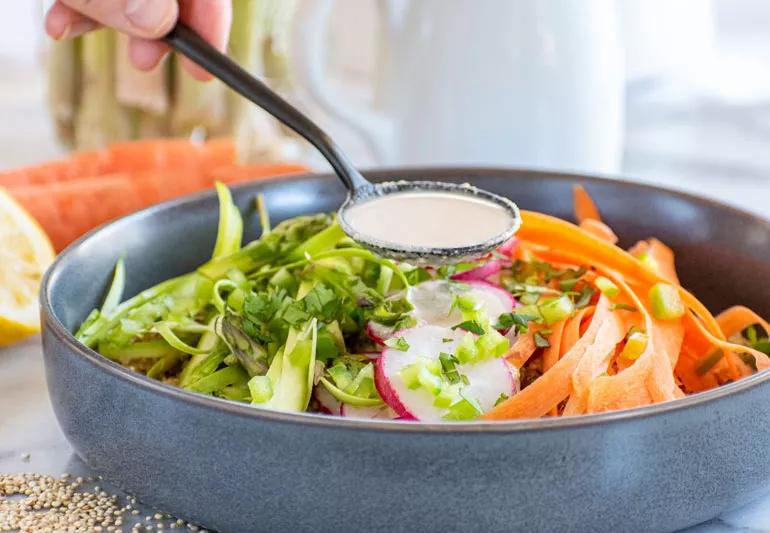

If spring had a lunchbox, it would absolutely contain this Spring Veggie and Grain Bowl. It is colorful, crunchy, lemony, satisfying, and just wholesome enough to make you feel like you have your life togethereven if your laundry is currently forming a small mountain range in the corner.
This recipe brings together tender whole grains, crisp spring vegetables, creamy avocado, fresh herbs, a bright lemon-tahini dressing, and enough texture to keep every bite interesting. It is not a sad desk salad. It is not a mystery container of leftovers whispering, “Good luck.” It is a balanced, meal-prep-friendly bowl that works for lunch, dinner, picnics, office meals, and those evenings when you want something healthy but refuse to chew through a plain pile of lettuce like a woodland creature.
The beauty of a spring veggie and grain bowl is flexibility. You can use farro, quinoa, brown rice, barley, wheat berries, or a blend of grains. You can roast asparagus, blanch peas, shave radishes, toss in baby spinach, add chickpeas, crumble feta, or top everything with a jammy egg. The structure is simple: grain base, spring vegetables, protein, dressing, crunch, herbs, and one final squeeze of lemon to wake everybody up.
Why This Spring Veggie and Grain Bowl Works
A great grain bowl is all about balance. The grains provide chew and staying power. The vegetables bring freshness, color, and seasonal flavor. The dressing ties everything together so the bowl tastes intentional, not like five refrigerator items accidentally met at a potluck.
Spring vegetables are especially good for bowls because they are naturally crisp, bright, and quick to prepare. Asparagus, snap peas, English peas, radishes, baby carrots, spinach, arugula, herbs, and tender greens do not need heavy sauces or long cooking times. In fact, the less you bully them, the better they taste. A quick roast, a short blanch, or a raw slice is usually enough.
Whole grains also make this bowl more satisfying than a standard salad. Farro has a chewy, nutty bite. Quinoa is quick-cooking and naturally gluten-free. Brown rice is mellow and familiar. Barley gives a soft, cozy texture. If you are new to grain bowls, farro is a fantastic place to start because it tastes hearty without feeling heavy.
Ingredients for the Best Spring Veggie and Grain Bowl
For the Bowl
- 1 cup dry farro, quinoa, brown rice, or barley
- 2 cups water or low-sodium vegetable broth, plus more if needed
- 1 bunch asparagus, trimmed and cut into 2-inch pieces
- 1 cup snap peas or snow peas, trimmed
- 1 cup fresh or frozen peas
- 4 radishes, thinly sliced
- 2 cups baby spinach, arugula, or mixed spring greens
- 1 avocado, sliced
- 1 cup chickpeas, cooked and drained
- 1/3 cup crumbled feta, goat cheese, or plant-based cheese, optional
- 1/4 cup toasted almonds, pumpkin seeds, or sunflower seeds
- 1/4 cup chopped fresh herbs such as parsley, dill, mint, basil, or chives
- 1 tablespoon olive oil
- 1/2 teaspoon kosher salt, plus more to taste
- 1/4 teaspoon black pepper
- 1 lemon, cut into wedges
For the Lemon-Tahini Dressing
- 1/4 cup tahini
- 3 tablespoons fresh lemon juice
- 1 tablespoon extra-virgin olive oil
- 1 teaspoon Dijon mustard
- 1 teaspoon honey or maple syrup
- 1 small garlic clove, finely grated
- 2 to 4 tablespoons warm water, as needed
- 1/2 teaspoon kosher salt
- Freshly ground black pepper, to taste
How to Make a Spring Veggie and Grain Bowl
Step 1: Cook the Grain Base
Rinse your grain if the package recommends it. Add farro, quinoa, brown rice, or barley to a medium saucepan with water or vegetable broth. Cook according to package directions until tender. Farro usually takes about 20 to 30 minutes, quinoa about 15 minutes, and brown rice closer to 35 to 45 minutes.
Drain any extra liquid, fluff the grains with a fork, and season with a pinch of salt, black pepper, and a small drizzle of olive oil. Let the grains cool slightly before assembling the bowls. Warm grains are lovely, but piping-hot grains can wilt delicate greens faster than your motivation after opening a crowded email inbox.
Step 2: Roast the Asparagus
Preheat the oven to 425°F. Place the asparagus on a sheet pan, drizzle with olive oil, and season with salt and pepper. Spread the pieces out so they roast instead of steam. Roast for 8 to 12 minutes, depending on thickness, until the asparagus is tender but still bright green.
The goal is crisp-tender asparagus with a little caramelized edge. If the stalks look tired and limp, they have gone too far. We want spring energy, not vegetable resignation.
Step 3: Blanch the Peas
Bring a small pot of salted water to a boil. Add snap peas and fresh or frozen peas. Cook for 1 to 2 minutes, then immediately transfer them to a bowl of ice water. Drain well.
This quick blanching method keeps the peas bright, sweet, and snappy. It also helps them taste fresh without being aggressively raw. Think of it as a spa treatment for vegetables.
Step 4: Make the Lemon-Tahini Dressing
In a small bowl, whisk together tahini, lemon juice, olive oil, Dijon mustard, honey or maple syrup, grated garlic, salt, and black pepper. Add warm water one tablespoon at a time until the dressing becomes smooth and pourable.
Tahini can seize up at first when lemon juice hits it. Do not panic. Keep whisking and add warm water slowly. It will relax. Apparently tahini and humans both need hydration and patience.
Step 5: Assemble the Bowl
Divide the cooked grains among four bowls. Add roasted asparagus, blanched peas, sliced radishes, greens, chickpeas, avocado, herbs, and toasted seeds or nuts. Drizzle generously with lemon-tahini dressing. Finish with a squeeze of fresh lemon and a final sprinkle of salt and pepper.
Serve immediately, or pack the dressing separately if making the bowls ahead. For meal prep, keep crunchy toppings and avocado separate until serving so everything stays fresh and lively.
Recipe Card: Spring Veggie and Grain Bowl
Prep Time
20 minutes
Cook Time
25 minutes
Total Time
45 minutes
Servings
4 bowls
Best For
Healthy lunch, light dinner, spring meal prep, vegetarian meals, work lunches, picnic bowls, and flexible weeknight cooking.
Flavor Variations and Smart Swaps
Make It Vegan
This spring veggie and grain bowl is easy to make vegan. Use maple syrup instead of honey in the dressing and skip the cheese or choose a dairy-free alternative. Chickpeas, lentils, edamame, or baked tofu all make excellent plant-based protein options.
Add More Protein
For extra protein, top each bowl with a jammy egg, grilled chicken, salmon, shrimp, tempeh, tofu, white beans, or lentils. A grain bowl should feel filling, not like an appetizer wearing a large hat.
Change the Grain
Farro gives the bowl a nutty chew, but quinoa works beautifully for a gluten-free version. Brown rice brings a classic comfort-food feel. Barley adds softness and a mild sweetness. You can also mix grains for more texture.
Switch the Dressing
Lemon-tahini dressing is creamy and bright, but this bowl also welcomes green goddess dressing, basil vinaigrette, yogurt-dill sauce, miso-ginger dressing, or a simple lemon-Dijon vinaigrette. The key is acidity. Spring vegetables love lemon, vinegar, and anything that gives them a little sparkle.
Use What Is in Season
Asparagus, peas, radishes, leafy greens, carrots, herbs, and spring onions are natural choices, but the bowl can shift as the market changes. In early spring, use baby spinach, roasted carrots, and herbs. In late spring, add strawberries, cucumber, zucchini, or tender green beans. Seasonal cooking should feel like a conversation, not a contract.
Meal Prep Tips for Busy Weeks
This recipe is especially useful for meal prep because each component can be prepared ahead. Cook the grains up to four days in advance and store them in an airtight container. Roast the asparagus and blanch the peas up to three days ahead. Wash and dry greens thoroughly, then store them with a paper towel to help manage moisture.
The dressing can be made five days in advance. It may thicken in the refrigerator, so whisk in a splash of warm water before using. Keep sliced radishes in a small container of cold water to maintain crunch. Add avocado right before serving unless you enjoy watching it turn into beige sadness.
For packed lunches, layer the bowl strategically. Put grains on the bottom, then chickpeas and roasted vegetables, then raw vegetables, greens, herbs, and crunchy toppings. Keep dressing in a separate container. When ready to eat, drizzle, toss, and enjoy. This prevents the dreaded soggy lunch situation, which has ruined many promising Tuesdays.
Nutrition Benefits of a Spring Veggie and Grain Bowl
A veggie and grain bowl can be a balanced meal because it combines complex carbohydrates, fiber, healthy fats, plant-based protein, and a wide variety of micronutrients. Whole grains contain more of the original grain kernel than refined grains, which helps provide fiber, minerals, and B vitamins. Vegetables add volume, color, hydration, and natural flavor.
Chickpeas contribute plant protein and fiber, making the bowl more satisfying. Avocado and tahini add creamy richness from unsaturated fats. Fresh herbs do more than decorate the top like tiny green confetti; they add fragrance, flavor, and freshness without requiring extra salt or heavy sauces.
Because the recipe is customizable, it can fit many eating styles. Need gluten-free? Use quinoa or brown rice. Want dairy-free? Skip the cheese. Want higher protein? Add tofu, egg, chicken, fish, or lentils. Want more crunch? Add toasted nuts, seeds, crispy chickpeas, or even crushed whole-grain crackers.
Common Mistakes to Avoid
Overcooking the Vegetables
Spring vegetables are delicate. Roast asparagus only until tender, and blanch peas briefly. Mushy peas may have a place in British comfort food, but they do not belong in this fresh spring bowl unless invited very specifically.
Skipping the Dressing
Without dressing, a grain bowl can taste like responsible homework. The lemon-tahini sauce brings creaminess, acidity, and richness. It makes the vegetables taste brighter and the grains taste more complete.
Forgetting Texture
The best bowls include soft, crisp, creamy, chewy, and crunchy elements. That is why this recipe uses grains, roasted asparagus, raw radishes, avocado, chickpeas, and toasted seeds. Texture keeps healthy eating exciting.
Using Wet Greens
Dry your greens well before adding them. Wet greens dilute the dressing and make the bowl taste flat. A salad spinner is useful here, but a clean kitchen towel works too.
Serving Ideas
Serve this spring veggie and grain bowl as a complete vegetarian meal, or pair it with grilled salmon, lemon chicken, turkey meatballs, or marinated tofu. It also works beautifully as a side dish for brunch, Easter lunch, Mother’s Day, or a casual spring dinner party.
For a build-your-own bowl night, place the grains, vegetables, proteins, toppings, and dressings in separate bowls and let everyone assemble their own. This is especially helpful for families, picky eaters, or guests who believe cilantro tastes like soap and wish to discuss it at length.
Experience Notes: What I Learned Making Spring Veggie and Grain Bowls
The first thing you learn when making a spring veggie and grain bowl is that the bowl is only as good as its contrast. I have made versions where everything was soft, warm, and beige, and while they were technically edible, they had the personality of a waiting room. The winning version always includes something crisp, something creamy, something bright, and something nutty.
Farro became my favorite base after a few rounds of testing because it holds its shape well and does not turn mushy when stored. Quinoa is faster, and brown rice is reliable, but farro has that chewy restaurant-quality bite that makes the bowl feel more special. If you cook it in vegetable broth instead of water, it tastes seasoned from the inside out. That small change makes a big difference.
I also learned that spring vegetables reward restraint. Asparagus does not need a dramatic makeover. Snap peas do not need a 14-step transformation arc. Radishes do not need to be hidden. When vegetables are fresh, a little olive oil, salt, lemon, and heat can do more than a complicated sauce parade. The trick is not to cook the freshness out of them.
The dressing is where the bowl becomes craveable. Lemon-tahini dressing is forgiving, but it has one funny habit: it gets thick before it gets smooth. The first time I made it, I thought I had ruined it. Then I added warm water, kept whisking, and suddenly it became silky and glossy. Now I always make extra because it turns leftovers into something I actually want to eat. It is excellent on roasted carrots, grilled chicken, cucumber slices, and, frankly, a spoon if nobody is looking.
Meal prep taught me another lesson: store ingredients separately when possible. A fully assembled bowl can be delicious the next day, but it is better when the crunchy things stay crunchy and the dressing waits until the last minute. Radishes keep their snap in cold water. Herbs stay fresher when wrapped in a slightly damp towel. Avocado is best added fresh unless you are emotionally prepared for browning.
Finally, this recipe is a great reminder that healthy food does not have to be serious. You can build a nourishing bowl and still make it fun. Add extra lemon. Toss in feta. Use two herbs instead of one. Roast the chickpeas until crispy. Put everything in your biggest bowl because tiny bowls are not emotionally supportive. A spring veggie and grain bowl should feel generous, colorful, and alivethe kind of meal that makes you look at your lunch and think, “Okay, maybe I am the kind of person who has fresh herbs now.”
Conclusion
This Spring Veggie and Grain Bowl is fresh, flexible, and deeply satisfying without being fussy. It celebrates the best parts of spring cooking: crisp vegetables, bright herbs, lemony dressing, and simple ingredients that do not need much help to taste wonderful. Whether you make it for lunch, dinner, meal prep, or a sunny weekend picnic, it is the kind of recipe that proves healthy eating can be colorful, flavorful, and genuinely enjoyable.
Use the recipe as a blueprint. Start with a whole grain, add seasonal vegetables, include a protein, bring in a creamy or zippy dressing, and finish with crunch. Once you understand the formula, you can create endless variations based on what is in your fridge, what looks good at the farmers market, or what your future self will be grateful to find waiting in the refrigerator.