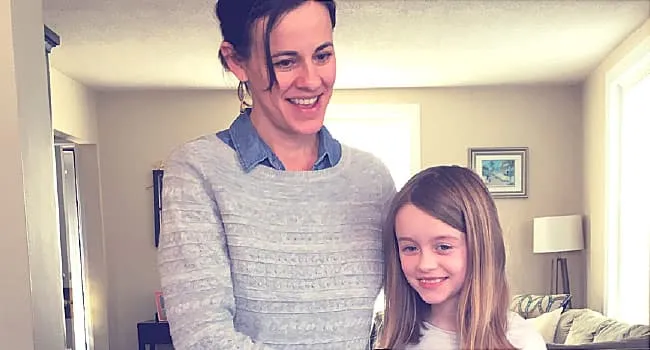

Most 9-year-olds track homework assignments, soccer scores, or the rapidly changing location of a favorite stuffed animal. Ellie McGinn helped track something far more complicated: an ultra-rare neurological disease that researchers barely understood.
Ellie was diagnosed in early childhood with leukoencephalopathy with brainstem and spinal cord involvement and lactate elevation, mercifully shortened to LBSL. The full name sounds as though a spelling bee wandered into a neurology conference and refused to leave. Behind that intimidating label, however, is a serious genetic disorder that can interfere with balance, coordination, walking, speech, sensation, and other neurological functions.
At age 9, Ellie participated in remote medical assessments using wearable movement sensors and video visits. The technology allowed researchers to collect information about her balance and mobility without requiring constant trips from her Virginia home to specialists in Baltimore. Her measurements became part of a larger effort to understand how LBSL progresses, identify meaningful clinical-trial measurements, and ultimately develop treatments.
Ellie’s contribution illustrates an important truth about rare disease research: progress does not always begin with a miracle drug. Sometimes it begins with a child standing still while two small sensors record how much she sways.
Meet Ellie McGinn, the Child Behind the Data
The first signs were easy to dismiss
Ellie’s symptoms appeared when she was a toddler. Her parents, Beth and Mike McGinn, noticed leg spasms, poor balance, falls, pain in her feet, and hand tremors. Those symptoms did not immediately form an obvious diagnostic pattern. Like many families dealing with rare diseases, the McGinns moved from appointment to appointment while specialists tried to solve a medical puzzle with most of the pieces still face down.
After roughly a year of searching, Ellie received an LBSL diagnosis at age 3. The family initially heard an alarming prognosis: her motor abilities might steadily decline, there was no established curative treatment, and little could be offered beyond supportive care. Later research has shown that LBSL can vary substantially among patients, but at the time, the McGinns were confronting a disorder with very few documented cases and almost no practical roadmap.
“Nothing can be done” became a research assignment
Beth and Mike did not accept that the available medical knowledge represented the final chapter. They searched scientific papers, contacted specialists, and eventually connected with clinicians and researchers at Kennedy Krieger Institute in Baltimore.
Ellie received supportive care intended to help manage her symptoms and preserve function. Her family also established the organization now known as Cure LBSL, creating a way to raise research funding, connect scattered families, recruit patients for studies, and give researchers access to the biological samples and clinical information needed to investigate the disorder.
Ellie was not simply waiting for science to arrive. She and her family were helping build the road science would need to travel.
What Is LBSL?
A disease of the brain’s communication network
LBSL is a progressive genetic disorder affecting the brain and spinal cord. It belongs to a broader group of conditions involving white matter, the tissue containing nerve fibers that carry messages throughout the central nervous system. White matter is a little like the insulated wiring in a building: when it is damaged, messages may travel slowly, inaccurately, or not at all.
Common features can include difficulty with balance, an unsteady walking pattern known as ataxia, muscle stiffness or spasticity, weakness, tremors, impaired position or vibration sense, speech changes, and reduced fine-motor coordination. Symptoms usually emerge during childhood or adolescence, although adult-onset cases have also been documented. Severity and progression differ considerably, even among people with the same diagnosis.
The DARS2 connection
LBSL is generally caused by disease-associated variants in both copies of the DARS2 gene. This gene provides instructions for producing mitochondrial aspartyl-tRNA synthetase, an enzyme involved in assembling proteins inside mitochondria.
Mitochondria are often described as cellular power plants. That description is not perfect, but it beats calling them “microscopic bean-shaped energy-management facilities,” which would make biology textbooks unnecessarily exhausting. When DARS2 variants reduce the enzyme’s normal activity, mitochondrial protein production can be disrupted. Researchers are still investigating why the resulting damage concentrates in particular regions of the brain and spinal cord.
How doctors diagnose LBSL
Diagnosis typically combines neurological symptoms, characteristic patterns on brain and spinal-cord MRI scans, magnetic resonance spectroscopy findings, and genetic testing that identifies relevant DARS2 variants. The word “lactate” appears in the disease’s name because elevated lactate may be detected through spectroscopy or other testing, although it is not elevated in every patient.
There is currently no curative treatment approved for LBSL. Care focuses on individual needs and may include physical and occupational therapy, rehabilitation, mobility support, speech therapy, educational assistance, seizure treatment, and monitoring for changes in function.
How a 9-Year-Old Helped Track an Ultra-Rare Disease
Wearable sensors turned movement into measurable evidence
When a disease affects only a small, geographically scattered population, traditional research becomes difficult. Asking every participant to travel frequently to one hospital is expensive, tiring, and sometimes physically unrealistic. A patient may also move differently after a long car ride, a disrupted night of sleep, and several hours in a clinic than during an ordinary day at home.
Remote assessments offered another approach. Ellie could wear movement sensors while completing structured activities as researchers observed through a video connection. Depending on the protocol, sensors such as accelerometers and gyroscopes can record acceleration, body position, walking characteristics, balance, and sway. Instead of relying only on a clinician’s visual impression, researchers receive numerical measurements that can be compared across visits.
Digital health technologies are increasingly used in pediatric and rare neurological research because they can capture motor function beyond the clinic. Reviews of these tools have found that remote movement monitoring is feasible across numerous disorders, although devices and measurement methods still require careful validation.
Why balance and sway matter
A small amount of body movement while standing is normal. The nervous system constantly makes tiny corrections to keep a person upright. In neurological disease, the pattern or amount of sway may change because sensory information, muscle control, or coordination has been disrupted.
By asking patients to stand in standardized positionssometimes with feet apart, feet together, eyes open, or eyes closedresearchers can examine how the nervous system maintains stability. Repeating the test over time may reveal whether a patient is stable, declining, or improving.
Recent Kennedy Krieger research has connected wearable-sensor sway measurements with practical daily functioning in people with LBSL. Patients reporting greater difficulty with everyday tasks also tended to show poorer performance during standing tests. This connection is especially valuable because a laboratory number becomes more meaningful when it reflects something patients notice in real life.
Remote monitoring reduces more than mileage
Virtual visits can spare families repeated travel, missed school, missed work, lodging expenses, and the physical strain of navigating an unfamiliar medical center. They may also enable participation by people who live hundreds or thousands of miles from the research team.
The benefit is scientific as well as practical. A larger, more geographically diverse group improves researchers’ ability to describe the disease accurately. More frequent measurements can reveal subtle changes that occasional hospital visits may miss. Remote data are not automatically betterdevices can malfunction, home environments vary, and not every family has equal digital accessbut thoughtful protocols can make rare disease studies more inclusive and informative.
Why Natural History Data Must Come Before a Clinical Trial
Before researchers can prove that a treatment works, they must understand what happens without it. That baseline description is called the natural history of a disease.
For a common condition, decades of patient records may already show the usual progression. With LBSL, researchers have far fewer patients and much less long-term information. One person may develop childhood balance problems, another may remain relatively stable for years, and another may have an early, severe form. Without understanding that variability, a clinical trial could mistake ordinary fluctuation for a treatment effector overlook a genuine improvement.
The LBSL natural history program has used medical records, imaging, quality-of-life information, walking and balance assessments, and recurring virtual visits with wearable technology. The goal is to identify which changes occur consistently and which measurements matter most to patients.
Building an outcome measure regulators can trust
A clinical trial needs predefined outcomes. Researchers cannot simply administer an experimental therapy and conclude that participants “seem perkier.” They need validated measurements showing whether walking, balance, neurological function, or quality of life changed by a meaningful amount.
Ellie’s sensor sessions helped lay the groundwork for those measurements. As data accumulated from additional patients, researchers could evaluate whether the same tests were reliable, sensitive to change, practical at home, and connected to everyday abilities.
This is how an apparently simple activitystanding, walking, turning, or balancing during a video visitcan influence the design of a future clinical trial.
From Ellie’s Movements to Cells, Mice, and Gene Therapy
Researchers can study patient-derived neurons
Clinical measurements show what LBSL does to a person. Laboratory models help reveal how it happens.
Researchers have converted blood cells donated by patients into induced pluripotent stem cells, which can then be developed into neurons. Earlier work using cells derived from Ellie found differences in growth and electrical activity compared with healthy control cells. Scientists have also developed three-dimensional cultures, sometimes informally called “mini-brains,” to explore how LBSL-related cellular changes emerge in a more complex model.
These models do not reproduce an entire human brain, and findings from a single patient cannot establish universal conclusions. They do, however, give researchers a platform for testing biological theories and potential therapies before considering human studies.
AAV9 gene replacement has produced encouraging preclinical results
One major research strategy uses an engineered adeno-associated virus known as AAV9 to carry a functional copy of DARS2 into cells. AAVs are commonly investigated as delivery vehicles because they can transport genetic instructions without functioning like disease-causing viruses.
According to Kennedy Krieger’s April 2026 research report, an experimental AAV9-DARS2 vector improved the viability and function of neurons grown from LBSL patient cells. It also prevented the onset of an LBSL-like phenotype in relevant portions of the brains of genetically engineered mice lacking normal Dars2 activity. Researchers are now comparing clinical-vector designs and doses in animals to identify a candidate suitable for further safety and manufacturing work.
These are meaningful milestones, but they are not proof of a human cure. A therapy that helps cells or mice may encounter challenges involving dosage, delivery, immune responses, durability, side effects, or manufacturing. Human clinical testing can begin only after extensive preclinical and regulatory preparation.
Other approaches remain part of the research toolbox
Scientists have also explored antisense oligonucleotides, or ASOsshort pieces of synthetic genetic material designed to alter how RNA is processed. Earlier laboratory findings suggested that an ASO strategy might help certain patient cells produce more functional DARS2 protein. Researchers continue studying biomarkers, disease mechanisms, brain lactate, patient-derived cells, rehabilitation strategies, and the relationship between specific genetic variants and clinical severity.
Rare disease research rarely advances through one heroic experiment. It behaves more like a relay race in which the baton is passed among patients, clinicians, laboratory scientists, engineers, regulators, donors, and advocacy groups. Occasionally, the baton is a blood sample. Occasionally, it is a spreadsheet full of balance data.
Ellie’s Influence Went Beyond Wearing Sensors
By age 9, Ellie had already participated in medical education, helped future doctors understand mitochondrial disease, supported advocacy connected with the 21st Century Cures Act, and served as a public face for children whose conditions were easily overlooked. NORD recognized her with a Rare Impact Award in 2017.
Her family also helped transform an isolated diagnosis into an international community. Connecting patients is essential in ultra-rare disorders because researchers may need nearly every eligible participant to construct a useful natural history study. Families contribute medical records, blood samples, survey responses, wearable data, fundraising, policy testimony, and observations about symptoms that formal examinations may fail to capture.
The wider stakes are enormous. More than 30 million Americans live with rare diseases, and fewer than 5% of the more than 10,000 known rare diseases have an approved treatment. Small patient populations make drug development difficult, but they also make each patient’s information unusually valuable.
Experience-Based Lessons From the Search for an LBSL Cure
The following lessons reflect recurring experiences described by rare-disease families, advocates, and clinical research teams. They are not a substitute for individualized medical advice.
Record ordinary days, not only medical emergencies
Families often become the most detailed historians of a child’s condition. A specialist may observe a patient for 30 minutes every six months; a caregiver sees how that patient climbs stairs after breakfast, holds a pencil after a tiring school day, recovers from an infection, or walks across the living room when nobody is saying, “Please walk normally.”
A practical symptom journal can record falls, fatigue, tremors, pain, seizures, illness, sleep disruption, medication changes, mobility-aid use, and recovery time after activity. Short videos may help clinicians compare function over time, provided the medical team recommends and securely accepts them. The objective is not to turn family life into a nonstop clinical trial. It is to preserve useful patterns that memory may blur.
Prepare for appointments as a team
Rare disease appointments can feel like speed dating, except everyone discusses MRI scans and nobody gets dinner. Families may have a limited window with specialists, so preparation helps.
Before a visit, caregivers can identify the three most important changes, organize recent test results, update the medication list, and write down questions in order of urgency. Older children can participate by describing what feels easier, harder, painful, embarrassing, or exhausting. A measurement may say balance has declined, but the child may explain that the real problem is carrying a lunch tray without spilling it. Both forms of information matter.
View mobility tools as freedom tools
Walkers, braces, helmets, wheelchairs, communication devices, and school accommodations are sometimes treated as symbols of decline. Many families discover the opposite: the right tool preserves independence, reduces falls, saves energy, and allows a child to participate more fully.
Using assistance today does not mean surrendering hope for tomorrow’s therapy. It means protecting the person who may one day benefit from that therapy. A mobility device is not a pessimistic forecast; it is transportation.
Protect childhood from becoming a full-time research position
Participation in research can be empowering, especially when a child understands that the information may help others. Still, a child is more than a source of data. Scheduling should preserve time for school, friendships, hobbies, rest, mischief, and the occasional dessert-related negotiation.
Research teams can help by reducing unnecessary travel, coordinating procedures, explaining activities in age-appropriate language, and inviting children to express discomfort or decline optional tasks. Remote monitoring is valuable partly because it can fit research around life instead of forcing life to orbit the clinic.
Make room for siblings and caregivers
A rare diagnosis affects an entire household. Siblings may feel protective, frightened, overlooked, guilty for being healthy, or tired of strangers asking about the patient before asking about them. Caregivers may become case managers, fundraisers, insurance negotiators, transportation coordinators, and amateur interpreters of scientific papersoften before breakfast.
Families benefit from practical support, respite care, counseling, sibling-inclusive conversations, and communities that understand the unusual workload. Asking for assistance is not evidence that a family is failing. It is evidence that one household was never meant to operate as a hospital, research foundation, and insurance appeals department simultaneously.
Practice disciplined hope
Rare disease communities need hope, but durable hope is different from hype. Laboratory progress can be exciting without being described as an imminent cure. A successful mouse experiment is a milestone, not a treatment appointment. A planned clinical vector is not yet an approved therapy.
Disciplined hope celebrates each advance while respecting the remaining uncertainty. It asks what has been demonstrated, what still needs testing, what risks remain, and what timeline is realistic. This approach protects families from exaggerated promises while preserving the motivation required for years of research.
Ellie’s story offers that kind of hope. The cure has not arrived, but the scientific landscape is dramatically different from the one her family encountered after diagnosis. Researchers now have natural history data, wearable outcome measurements, patient-derived neurons, animal models, biomarker studies, gene-therapy candidates, regulatory engagement, and an organized international patient community. None of those pieces guarantees success. Together, however, they form something the family once lacked: a credible path forward.
Conclusion: Small Measurements Can Move Medicine
The headline about a 9-year-old tracking her rare disease sounds almost impossibly large for one child. In reality, Ellie’s contribution was powerful because it was specific. She wore sensors. She completed movement tests. She donated biological samples. She spoke with students and policymakers. Her family found other patients, funded scientists, and kept asking what could be done next.
That information helped doctors move from scattered case descriptions toward measurable disease patterns. Years later, wearable balance data are being evaluated as clinically meaningful trial outcomes, while laboratory teams test gene-delivery strategies in patient cells and animal models.
Medicine often celebrates the day a treatment is approved. It should also remember the quieter days that made approval possible: the virtual appointments, repeated walking tests, blood donations, data reviews, failed experiments, grant applications, and children who patiently stand on a marked spot while researchers measure a fraction of an inch of movement.
For LBSL, there is still no approved cure. Yet thanks to Ellie, other patients, their families, and an expanding research network, doctors are no longer beginning with “nothing can be done.” They are beginning with evidenceand inching forward from there.