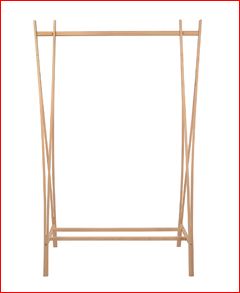

The Tra-Ra Clothes Rail Beech is what happens when a humble garment rack g home wearing an Italian suit. Created by Japanese-born designer Tomoko Azumi for Zilio A&C, this freestanding clothes rail combines slender beech components, a distinctive angular silhouette, and a surprisingly high load capacity.
Unlike a bulky wardrobe, Tra-Ra does not hide clothing behind doors. It turns shirts, jackets, dresses, and accessories into part of the room’s visual composition. That approach makes it especially appealing in minimalist bedrooms, guest rooms, studio apartments, entryways, dressing areas, and boutique-style interiors where storage should look intentional rather than apologetic.
Its appearance may be delicate, but the design is not merely decorative. The manufacturer rates the rail to support up to 140 kilograms, or approximately 308 pounds. It arrives flat-packed, requires relatively little assembly, and can be taken apart when moving or reorganizing a space. In other words, it looks light because it is lightnot because it is waiting to collapse under your third winter coat. t Is the Tra-Ra Clothes Rail?
Tra-Ra is a freestanding wooden wardrobe and hanger rail developed from the design principles of Tomoko Azumi’s earlier Tra coat stand. The original Tra, introduced in 2008, used the natural flexibility of beech to create a compact, accordion-like structure. Tra-Ra followed in 2011 as a wider version designed to hold garments on conventional hangers.
The result is a piece of open storage that sits somewhere between furniture and sculpture. Two curved and angled side structures support a horizontal hanging rail, while the lower framework creates a useful area for shoes, boxes, folded textiles, or bags. It provides the basic functions of a closet without becoming a large visual block in the room.
Key Product Specifications
| Designer | Tomoko Azumi |
|---|---|
| Manufacturer | Zilio A&C |
| Design year | 2011 |
| Material | Beech wood |
| Width | 103 centimeters, or about 40.6 inches |
| Depth | 48 centimeters, or about 18.9 inches |
| Height | 162 centimeters, or about 63.8 inches |
| Maximum stated load | 140 kilograms, or approximately 308 pounds |
| Assembly | Delivered disassembled or flat-packed |
| Common finishes | Natural oiled beech and selected stained finishes |
Retailers consistently list dimensions of 103 by 48 by 162 centimeters. Some also report a weight of roughly 2.5 kilograms, emphasizing just how portable the structure is compared with traditional wardrobes. Finish selections vary by market and may include natural, black, gray, yellow, or wenge-toned stained beech. Beech Wood Works So Well
Beech is a hardwood commonly associated with furniture, seating, turned components, and bentwood designs. It has a relatively fine, even appearance that suits modern interiors without introducing an aggressive grain pattern. Natural beech typically has a pale, warm tone that can brighten a room and coordinate easily with white walls, neutral textiles, oak flooring, or darker accent pieces.
The more important quality in Tra-Ra is flexibility. Instead of treating movement in the wood as a flaw, the design uses beech’s bending characteristics to help stabilize the structure. The slender pieces work together through tension and bracing, creating strength without requiring thick posts or a heavy steel base.
This is one reason the rail looks so visually light. Many garment racks rely on large rectangular frames or industrial metal tubing. Tra-Ra uses curves and diagonals, leaving more negative space around the clothing. The room still feels open even after the rail is loaded with garmentsassuming, of course, that the garments are not an avalanche of laundry with hangers buried somewhere inside.
A Minimalist Design That Still Has Personality
Minimalism can occasionally become so serious that a room looks afraid to own a coffee mug. Tra-Ra avoids that problem. Its construction is simple, but its stance gives it character. The angled supports resemble an easel, a folding screen, or a piece of carefully balanced architectural framing.
The design also makes the engineering easy to understand. There is no decorative shell hiding the structure. Each component appears to have a job, and the way the parts intersect becomes the decoration. This honesty makes the clothes rail compatible with Scandinavian, Japanese-inspired, contemporary, modern rustic, and understated industrial interiors.
The natural beech version has the softest visual effect. It works well in rooms that use cream, beige, light gray, muted green, linen, wool, or unfinished-looking natural materials. A black or dark stained version creates stronger contrast and may feel more appropriate in a dramatic hallway, fashion studio, or retail setting.
How Much Clothing Can It Hold?
The 140-kilogram manufacturer rating sounds enormous for a rack this slender. In practical use, however, capacity is determined by more than structural strength. Available rail width, hanger thickness, garment volume, and weight distribution all matter.
A realistic everyday arrangement might include 15 to 25 garments, depending on what they are. Lightweight shirts require little room, while winter coats behave as though each one has booked a private suite. Slim hangers increase usable space, but extremely narrow wire hangers may look out of place against the carefully finished wood.
The most attractive setup usually leaves some breathing room between items. Open storage looks best when the clothing is edited rather than compressed. A short capsule wardrobe, a coordinated weekly outfit selection, or frequently worn garments can turn Tra-Ra into a useful display. Packing it shoulder-to-shoulder with every item you have owned since college may be technically possible, but it misses much of the design’s charm.
Using the Lower Section
The lower framework can accommodate shoes, low storage boxes, folded blankets, baskets, or lightweight luggage. This area is especially helpful because it keeps accessories off the floor and visually connects them to the hanging garments.
Matching boxes can make the rail look more organized, while woven baskets introduce texture. In an entryway, the lower area can hold everyday shoes and a small tray or box for scarves. In a bedroom, it may be used for folded jeans, sweaters, or bags that would otherwise form a mysterious pile on the nearest chair.
Where the Tra-Ra Beech Clothes Rail Works Best
Small Bedrooms and Studio Apartments
In a small room, a closed wardrobe can dominate an entire wall. Tra-Ra provides useful hanging space while allowing light and sightlines to pass around it. Its depth of approximately 18.9 inches is relatively modest, although users still need clearance for hanger ends and the natural bulk of clothing.
It can serve as the primary wardrobe for someone with a compact clothing collection or as overflow storage for seasonal pieces. Renters may particularly appreciate that it does not need to be attached to the wall and can move with them.
Guest Rooms
A guest room does not always need a full closet. A freestanding clothes rail gives visitors a clear place to hang jackets, dresses, or shirts without requiring them to investigate drawers filled with old charging cables and holiday decorations.
Because Tra-Ra remains attractive when partially empty, it avoids the institutional appearance of a basic hotel garment rack. Add a few wooden hangers, a luggage stool, and a basket of towels, and the room immediately feels more considered.
Entryways
Tra-Ra can function as an open hall wardrobe for coats, hats, bags, and scarves. Its wide rail is more useful for families than a small coat tree, although wet outerwear should be handled carefully. Allow soaked coats to dry appropriately and avoid letting moisture remain against the wood finish.
An entryway installation works best when the floor is level and there is enough room to walk around the structure without catching a sleeve or shoulder on the hanging garments.
Dressing Rooms and Boutiques
The rail’s clean silhouette makes it suitable for displaying curated outfits, new purchases, or retail merchandise. In a dressing room, it can hold the next day’s clothing or a rotating seasonal selection. In a boutique, several rails could define merchandise zones without creating solid walls.
Because the structure is lightweight and can be disassembled, it is also practical for temporary displays, photo shoots, showrooms, pop-up stores, or event styling.
Bathrooms and Towel Storage
Product descriptions sometimes suggest using Tra-Ra as a towel rail. Visually, this can work beautifully in a large, well-ventilated bathroom. Rolled or hanging towels soften the angular frame and make the room feel spa-like.
However, beech is still wood. Constant splashing, poor ventilation, and major humidity swings may affect wood or its finish over time. A bathroom installation should therefore be positioned away from showers, tubs, and standing water. Dry towels before leaving them against the frame for long periods.
Assembly and Moving
One of Tra-Ra’s most practical characteristics is its flat-pack construction. The rail is delivered in a streamlined package and can be assembled with limited effort. This helps reduce shipping volume and makes it easier to carry through narrow doors, stairways, or elevators. mbly should be completed on a clean, soft surface so the wood is not scratched. Before tightening everything, check that the frame is evenly positioned and that all components are seated correctly. Once assembled, place the rail on a level floor and load it gradually, distributing garments along the bar rather than placing every heavy coat at one end.
Its relatively low weight makes room changes easy, but moving it while fully loaded is not wise. Remove clothes, shoes, and boxes first. The rail may be strong, but dragging furniture sideways while it is carrying a miniature department store is not part of the design brief.
Cleaning and Caring for Natural Beech
Product care guidance commonly recommends cleaning the Tra-Ra rail with a dry cloth. Regular dusting is particularly important because open wardrobes naturally collect airborne fibers from garments. Use a soft microfiber or lint-free cloth and follow the direction of the wood.
For minor marks, consult the manufacturer or retailer instructions for the specific finish before applying soap, oil, wax, or commercial furniture polish. Natural oiled beech and stained beech may require different treatment. Avoid spraying cleaners directly onto the rail, soaking the wood, or using abrasive pads.
General wood-furniture care also favors limited moisture, prompt drying, and protection from prolonged direct sunlight or strong heat sources. Do not position the rail immediately beside a radiator, heating vent, or frequently opened shower. antages and Potential Drawbacks
Reasons to Choose Tra-Ra
- Distinctive design: It delivers functional storage without looking generic.
- Strong yet lightweight construction: The stated load rating is unusually high relative to its slender form.
- Compact depth: It is easier to integrate into smaller rooms than many enclosed wardrobes.
- Versatility: It can serve as a wardrobe, entryway rack, display rail, guest-room hanger, or towel stand.
- Portable format: Flat-pack construction makes transportation and storage more convenient.
- Natural material: Beech adds warmth to contemporary interiors.
Points to Consider Before Buying
- Everything remains visible: Open storage rewards organization and publicly reports clutter.
- No built-in privacy: There are no doors to protect clothing from dust, sunlight, pets, or curious children.
- Limited shelf space: Additional baskets or boxes may be required for folded items.
- Designer pricing: It generally costs more than a basic metal garment rack.
- Availability varies: Certain colors and finishes may be unavailable in some markets.
- Wood requires sensible care: Excessive moisture and unsuitable cleaners should be avoided.
Is the Tra-Ra Clothes Rail Beech Worth It?
Tra-Ra is not intended to be the cheapest possible way to hang a shirt. Hardware stores and mass-market retailers offer simpler racks at lower prices. Its value comes from combining substantial capacity, portability, thoughtful construction, and a recognizable designer silhouette.
It is most worthwhile for people who treat furniture as part of the visual identity of a room. The rail can replace a purely utilitarian storage product while contributing warmth, rhythm, and craftsmanship. It is also a strong choice for renters or frequent movers who want quality furniture without installing a permanent closet system.
People who prefer to hide every garment behind a door may be happier with a conventional wardrobe. The same is true for anyone who owns a very large clothing collection or needs extensive drawer storage. Tra-Ra works best as edited open storagenot as witness protection for 94 mismatched T-shirts.
Living With the Tra-Ra Clothes Rail: A Practical Experience
The first noticeable difference when using a Tra-Ra clothes rail is how little visual weight it adds to a room. A conventional wardrobe announces itself as a large rectangle, often becoming the dominant object on the wall. Tra-Ra behaves more like a line drawing. Even when positioned near a bed or doorway, its open frame allows the wall color and surrounding space to remain visible.
Assembly is likely to feel simpler than the unusual shape initially suggests. The components are slender and manageable, so one person can organize the parts without wrestling with full-size cabinet panels. Working slowly is still important. Laying everything on a rug or blanket protects the beech, and loosely connecting the frame before final tightening makes alignment easier.
Once assembled, the rail feels surprisingly stable for something that can be moved without recruiting a neighbor and promising pizza. The tension in the angled frame becomes more understandable when garments are added. Weight is carried across the structure rather than concentrated in a thick central post.
For daily use, the most satisfying approach is to treat the rail as a working wardrobe rather than long-term storage. Hanging a week’s worth of outfits, favorite jackets, or current seasonal clothing keeps decisions easy in the morning. Shirts and dresses remain visible, which reduces the chance of forgetting an item simply because it disappeared into the back of a closet.
The openness also encourages better habits. Empty hangers stand out. Overcrowding is obvious. A coat tossed carelessly across the rail looks careless rather than becoming somebody else’s problem behind a closed door. Users may find themselves editing their clothing more frequently because every item contributes to the room’s appearance.
Wooden or slim flocked hangers tend to create the neatest presentation. Mixing bright plastic hangers, bent wire hangers, and a mysterious clip hanger from 2009 can undermine the calm design surprisingly quickly. Matching hangers are not mandatory, but they make the entire setup feel more deliberate.
The lower area becomes more useful over time. A pair of tidy boxes can hold scarves, belts, or less photogenic necessities. Shoes can sit underneath, although a removable mat may help protect the floor and keep dirt away from the wood. In a guest room, one box can contain spare linens while the remaining space accommodates a visitor’s suitcase.
Dust is the main everyday compromise. Clothing stored in the open naturally receives more exposure than clothing inside a closed cabinet. Frequently worn garments are unlikely to suffer much, but special-occasion pieces should remain in breathable garment bags or another protected location. A quick weekly pass with a microfiber cloth keeps the frame clean and prevents fibers from collecting around the joints.
Placement also changes the experience. Against a pale wall, natural beech looks gentle and almost architectural. Near a window, the form can cast attractive shadows, although prolonged direct sunlight should be avoided to reduce uneven fading. In an entryway, the rail feels welcoming, but enough walking clearance is essential once coat sleeves and bags extend beyond the frame.
After living with this style of open rail, its greatest benefit is not simply garment capacity. It creates a small ritual around choosing, arranging, and maintaining clothing. Instead of functioning as a box where possessions disappear, Tra-Ra turns storage into part of daily life. That will delight organized minimalists and gently challenge everyone else. The rail will not judge your laundry habits aloud, but its elegant silence can be remarkably persuasive.
Conclusion
The Tra-Ra Clothes Rail Beech succeeds because it treats ordinary storage as a serious design opportunity. Tomoko Azumi’s lightweight frame uses the natural properties of beech to achieve a form that is strong, portable, recognizable, and unusually versatile.
Its open format is ideal for curated wardrobes, guest rooms, entryways, dressing spaces, and interiors where furniture should contribute more than basic utility. Buyers should consider the realities of exposed clothing, routine dusting, limited folded storage, and variable retailer availability. For the right room, however, Tra-Ra is a graceful alternative to bulky cabinets and anonymous metal racks.
Note: Product prices, finish options, stock status, warranties, packaging, and delivery terms may change by retailer and region. Confirm current specifications and care instructions before purchasing.