
Breathing is one of those background jobs the body handles without sending calendar invitations. When fluid begins collecting inside the lungs, however, every breath can suddenly feel like hard labor. This condition is called pulmonary edema, and it can develop gradually or appear with alarming speed.
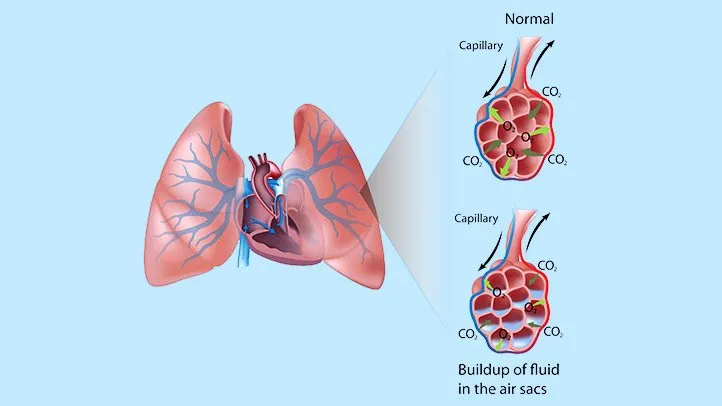
Pulmonary edema occurs when excess fluid enters the lung tissue and the tiny air sacs called alveoli. Those air sacs normally fill with air so oxygen can pass into the bloodstream. When they fill with fluid instead, oxygen exchange becomes difficult, producing shortness of breath, coughing, low oxygen levels, and sometimes a frightening sensation of suffocation. Sudden pulmonary edema is a medical emergency and can become fatal without prompt treatment.
Understanding the symptoms, diagnostic process, underlying causes, and prevention strategies can help people recognize trouble early. It is particularly important for anyone living with heart failure, kidney disease, uncontrolled high blood pressure, significant lung disease, or a history of high-altitude illness.
What Is Pulmonary Edema?
Pulmonary edema is an abnormal accumulation of fluid within the lungs. The fluid may first collect in the tissue between the blood vessels and air sacs, known as the interstitial space. If the condition progresses, fluid can spill directly into the alveoli.
Imagine trying to use a sponge while it is already waterlogged. It can still hold something, but it is no longer particularly enthusiastic about the assignment. Fluid-filled alveoli have the same basic problem: They cannot exchange oxygen and carbon dioxide efficiently.
Cardiogenic Pulmonary Edema
Cardiogenic pulmonary edema is caused by increased pressure related to a heart problem. It most commonly occurs when the left side of the heart cannot pump blood effectively. Blood backs up into the vessels supplying the lungs, pressure rises, and fluid is pushed through the vessel walls into surrounding lung tissue.
Heart conditions associated with cardiogenic pulmonary edema include:
- Congestive heart failure
- Heart attack or coronary artery disease
- Severely elevated blood pressure
- Heart valve disorders, especially mitral or aortic valve disease
- Cardiomyopathy, or disease of the heart muscle
- Abnormal heart rhythms
- Sudden worsening of chronic heart disease
Heart failure is a major contributor because it can cause blood and fluid to back up into the lungs. People may notice worsening breathlessness when lying flat, sudden nighttime breathing difficulty, persistent coughing, or pink-tinged mucus.
Noncardiogenic Pulmonary Edema
Noncardiogenic pulmonary edema occurs without elevated pressure caused primarily by left-sided heart failure. Instead, inflammation or injury makes the lung’s small blood vessels unusually permeable. Fluid then leaks into the lungs even when heart pressure is not the main problem.
Possible causes include:
- Acute respiratory distress syndrome, or ARDS
- Sepsis and severe infections
- Smoke inhalation or exposure to toxic gases
- Near-drowning
- Serious chest injury
- Aspiration of vomit or stomach contents
- Severe allergic or medication reactions
- Blood transfusion reactions
- Major brain injury or seizures
- High-altitude exposure
ARDS is a particularly serious example in which inflammation damages the protective barrier around the alveoli. Fluid enters the air sacs, oxygen levels fall, and organs may not receive enough oxygen to function properly.
Pulmonary Edema Symptoms
Symptoms depend on whether pulmonary edema develops suddenly or gradually. Acute symptoms tend to be dramatic. Chronic symptoms may initially be blamed on age, poor fitness, allergies, or an allegedly judgmental flight of stairs.
Symptoms of Acute Pulmonary Edema
Acute pulmonary edema may develop within minutes or hours. Warning signs include:
- Sudden, severe shortness of breath
- A feeling of choking, drowning, or suffocating
- Breathing that becomes worse when lying down
- Rapid, shallow, or labored breathing
- Wheezing, gasping, or bubbling breath sounds
- A cough producing frothy mucus
- Pink or blood-tinged sputum
- Cold, clammy, pale, or bluish skin
- Heavy sweating
- Chest pain or pressure
- A rapid or irregular heartbeat
- Restlessness, confusion, anxiety, or a sense of doom
- Dizziness, weakness, or fainting
Call 911 immediately when severe breathing difficulty begins suddenly, especially when accompanied by chest pain, blue or gray lips, confusion, fainting, frothy sputum, or a sensation of suffocation. Do not attempt to drive yourself to the hospital.
Symptoms of Chronic Pulmonary Edema
Chronic pulmonary edema usually develops more gradually and is often associated with ongoing heart failure. Symptoms may include:
- Shortness of breath during routine activity
- Needing more pillows to sleep comfortably
- Breathlessness that becomes worse when lying flat
- Waking at night gasping for air
- Persistent coughing or wheezing
- Unusual fatigue
- Reduced exercise tolerance
- Swelling in the feet, ankles, legs, or abdomen
- Rapid weight gain caused by fluid retention
- Difficulty concentrating
A gain of several pounds over a short period can represent retained fluid rather than an unexpectedly productive relationship with the refrigerator. People with heart failure may be instructed to weigh themselves daily because a sudden increase can provide an early warning of worsening congestion.
High-Altitude Pulmonary Edema Symptoms
High-altitude pulmonary edema, commonly called HAPE, can occur after rapid ascent to elevations where oxygen levels are lower. Early symptoms may include unusual breathlessness during activity, reduced stamina, a dry cough, and weakness. As the condition worsens, breathlessness may occur at rest, the cough may become wet, and the person may develop confusion, bluish skin, chest tightness, or difficulty walking normally.
HAPE can progress rapidly and may be fatal. Immediate descent and emergency medical treatment are essential; waiting to see whether the mountain becomes more cooperative is not a safe plan.
How Pulmonary Edema Is Diagnosed
Doctors must confirm that fluid is present in the lungs, determine how severely breathing is affected, and identify the cause. Because pulmonary edema can resemble pneumonia, asthma, pulmonary embolism, or other emergencies, testing may begin while oxygen and supportive treatment are already being provided.
Medical History and Physical Examination
A healthcare professional may ask when symptoms started, whether they become worse when lying down, and whether the patient has heart, kidney, or lung disease. Recent infections, medication changes, toxic exposure, blood transfusions, altitude travel, and chest injuries may also be relevant.
During the examination, the clinician may:
- Measure oxygen saturation, pulse, breathing rate, and blood pressure
- Listen for crackling, bubbling, or wheezing sounds in the lungs
- Check for abnormal heart sounds
- Look for swollen legs or prominent neck veins
- Assess skin color, temperature, alertness, and circulation
Chest X-Ray
A chest X-ray can show patterns of fluid accumulation, enlarged heart size, vascular congestion, or another explanation for the symptoms. It is commonly used to support the diagnosis, although findings must be interpreted alongside the examination and other tests.
Blood Oxygen and Arterial Blood Gas Testing
A pulse oximeter provides a quick estimate of oxygen saturation. An arterial blood gas test can more precisely measure oxygen, carbon dioxide, and blood acidity. These results help clinicians determine how seriously gas exchange has been impaired.
Electrocardiogram and Echocardiogram
An electrocardiogram, or ECG, records the heart’s electrical activity and may reveal a heart attack, abnormal rhythm, or evidence of strain.
An echocardiogram uses sound waves to evaluate how the heart pumps, whether its chambers are enlarged, and whether valves are narrowed or leaking. It can help distinguish a heart-related problem from a noncardiogenic cause.
Blood Tests
Blood tests may assess kidney function, electrolytes, blood cell counts, infection, and markers of heart injury. BNP or NT-proBNP testing may support a diagnosis of heart failure, although results are interpreted in context because kidney disease, obesity, age, and other factors can affect the values.
Additional Testing
Depending on the suspected cause, doctors may use lung ultrasound, CT imaging, cardiac catheterization, coronary angiography, or other specialized testing. Diagnosis is based on the clinical picture and commonly supported by chest imaging, cardiac evaluation, and laboratory findings.
How Pulmonary Edema Is Treated
Treatment has two immediate goals: improve oxygen delivery and correct the cause of fluid accumulation. Acute pulmonary edema is generally treated in an emergency department or hospital.
Possible treatments include:
- Supplemental oxygen: Oxygen may be given through nasal tubing, a mask, or another respiratory device.
- Positive-pressure ventilation: CPAP or BiPAP may help keep the air sacs open and reduce the work of breathing.
- Mechanical ventilation: A breathing tube and ventilator may be required when respiratory failure is severe.
- Diuretics: These medications help the kidneys remove excess sodium and water when fluid overload is present.
- Vasodilators: Certain medications reduce pressure in the heart and blood vessels when clinically appropriate.
- Blood pressure management: Severe hypertension or dangerously low blood pressure requires careful treatment.
- Treatment of the trigger: This may involve managing a heart attack, arrhythmia, infection, valve disorder, kidney failure, toxin exposure, or other underlying problem.
Medication choice depends heavily on blood pressure, heart function, kidney function, and the cause of the edema. Diuretics should never be borrowed from another person or adjusted without medical instructions. The lungs are not an appropriate venue for freestyle pharmacology.
Can Pulmonary Edema Be Prevented?
Not every episode is preventable. Accidents, severe infections, transfusion reactions, and sudden medical events can occur despite appropriate precautions. However, many heart-related episodes can be made less likely through good management of the underlying disease.
Control Cardiovascular Risk Factors
High blood pressure, coronary artery disease, diabetes, elevated cholesterol, and smoking can damage the heart over time. Prevention measures include:
- Checking blood pressure regularly
- Taking prescribed medications consistently
- Managing blood sugar and cholesterol
- Avoiding tobacco and secondhand smoke
- Maintaining a weight appropriate for individual health needs
- Following a clinician-approved exercise plan
- Attending routine medical appointments
Monitor Heart Failure Carefully
People with heart failure should follow their personalized care plan. That may include daily weight checks, sodium limits, medication schedules, fluid guidance, and monitoring for swelling or breathing changes.
Contact the healthcare team promptly when there is unexplained weight gain, increasing ankle swelling, new breathlessness, more difficulty sleeping flat, or a sudden decline in activity tolerance. Early adjustment of treatment may prevent a full emergency.
Be Thoughtful About Sodium
Sodium encourages the body to retain water. For people prone to fluid overload, highly salted foods can worsen congestion. Restaurant meals, canned soups, deli meats, packaged snacks, frozen dinners, sauces, and condiments can contain surprisingly large amounts.
A low-sodium plan should be individualized. People should not dramatically restrict sodium or fluids unless instructed to do so, particularly when they have kidney disease, low blood pressure, or complex medication needs.
Prevent High-Altitude Pulmonary Edema
Gradual ascent is one of the most important ways to reduce altitude illness risk. Travelers should avoid rapid climbs, allow time for acclimatization, limit intense exertion during the first days at elevation, and avoid alcohol or sedating drugs that interfere with breathing.
Anyone with a previous episode of HAPE should consult a clinician experienced in altitude medicine before returning to high elevations. Preventive medication may be appropriate for selected high-risk travelers, but it should be prescribed rather than obtained through a friend who once watched a mountaineering documentary.
Experiences and Practical Lessons: Composite Scenarios
The following scenarios are fictional composites created for education. They do not describe specific patients and should not be used for self-diagnosis.
Experience One: The Nighttime Wake-Up Call
Daniel, a 68-year-old man with heart failure, notices that he has needed three pillows instead of one during the past week. His shoes feel tighter by evening, and his morning weight has risen four pounds in three days. He assumes he has been less active and decides to mention it at his next appointment.
That night, he wakes suddenly, gasping for air. Sitting on the side of the bed provides slight relief, but he remains breathless and begins coughing up pink, foamy mucus. His wife calls 911 rather than attempting to drive him.
The practical lesson is that pulmonary edema may provide warning signs before the crisis: increasing orthopnea, rapid weight gain, ankle swelling, nighttime breathlessness, and declining stamina. Reporting those changes early may allow a clinician to adjust treatment before severe fluid accumulation develops.
Experience Two: Mistaking Breathlessness for Poor Fitness
Maria, age 54, has uncontrolled high blood pressure but no known heart failure. Over several months, she becomes winded while carrying groceries and starts pausing halfway up the stairs. She blames her fitness level. Eventually, she develops a persistent nighttime cough and realizes she cannot lie flat without feeling short of breath.
Her medical evaluation identifies heart dysfunction and chronic lung congestion. Her experience illustrates why progressive breathlessness deserves attention, especially when it appears with hypertension, swelling, fatigue, chest discomfort, or difficulty sleeping flat. Not every case of shortness of breath is pulmonary edema, but assuming that every symptom is “just getting older” can delay diagnosis.
Experience Three: Trouble at Altitude
Evan flies from sea level to a mountain resort and begins strenuous hiking the following morning. He develops a headache and reduced stamina, followed by a dry cough. By evening, he is unusually breathless while resting and cannot walk in a straight line without assistance.
His companions initially suggest sleeping it off. One member of the group recognizes possible HAPE, arranges emergency help, and begins descending with him. The lesson is simple but crucial: Severe altitude symptoms are not a test of toughness. Descent and medical care are treatment priorities, and delay can be deadly.
Experience Four: Recovery After Hospitalization
After treatment for cardiogenic pulmonary edema, Linda feels better and assumes the problem has been permanently “drained away.” During discharge education, she learns that pulmonary edema is usually a complication rather than an isolated disease. Her long-term risk depends on controlling the condition that caused it.
She begins recording her weight, blood pressure, symptoms, and medication use each morning. She checks labels for sodium, keeps follow-up appointments, and calls her care team when her swelling returns instead of waiting for severe breathlessness. These steps do not guarantee that pulmonary edema will never recur, but they create an early-warning system.
The shared lesson across these experiences is that prevention often looks ordinary: noticing small changes, taking medication correctly, keeping appointments, asking questions, and responding quickly when breathing changes. Those actions may seem less dramatic than emergency equipment, but they are often what keeps the emergency equipment in storage.
Conclusion
Pulmonary edema occurs when fluid interferes with the lungs’ ability to exchange oxygen. It may result from heart failure and other cardiac problems or from noncardiac conditions such as ARDS, sepsis, toxic exposure, aspiration, neurological injury, or high altitude.
Sudden severe shortness of breath, frothy or pink sputum, blue lips, confusion, chest pain, fainting, or a suffocating sensation requires emergency help. Chronic breathlessness, nighttime coughing, rapid weight gain, swelling, and difficulty lying flat also deserve timely medical evaluation.
Diagnosis may involve oxygen measurements, a physical examination, chest imaging, blood tests, an ECG, and an echocardiogram. Treatment focuses on supporting breathing, removing excess fluid when appropriate, stabilizing circulation, and correcting the underlying cause. Prevention centers on controlling heart and kidney disease, managing blood pressure, monitoring heart failure symptoms, using medications correctly, limiting sodium when advised, and ascending gradually at high altitude.
Medical sourcing note: This educational article synthesizes guidance from major U.S. medical resources, including MedlinePlus, Mayo Clinic, Cleveland Clinic, the American Heart Association, the Merck and MSD Manuals, and publications available through the National Library of Medicine. It is not a substitute for individualized diagnosis or treatment. Call 911 for sudden or severe breathing difficulty.