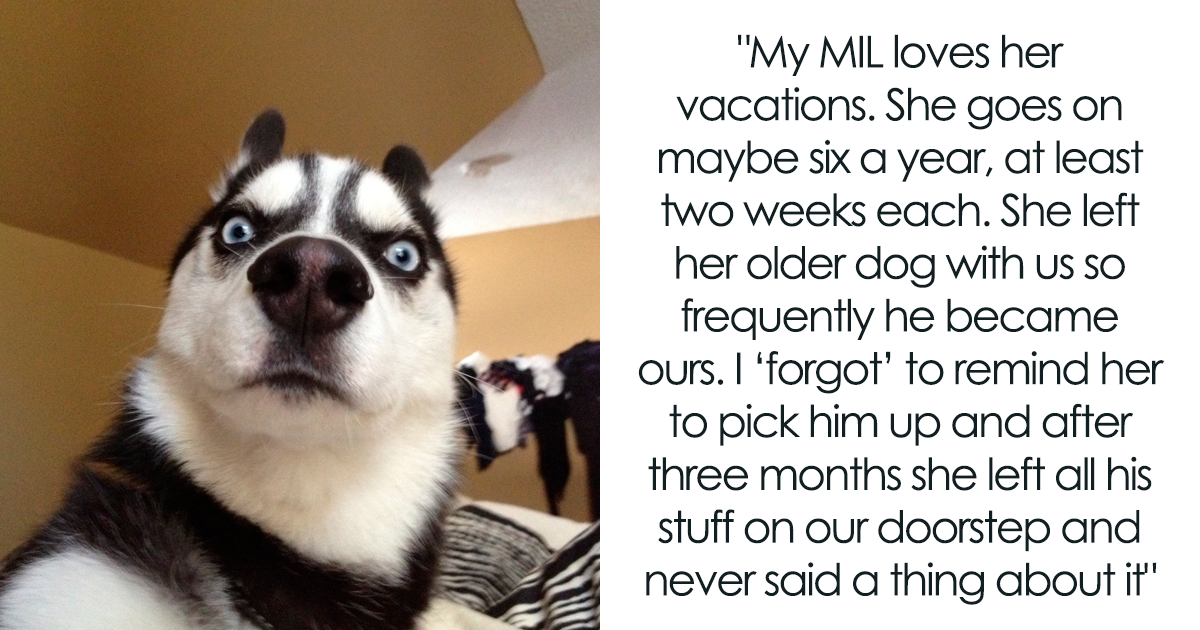

Family drama is rarely tidy. Add a badly behaved dog, a vacation-loving mother-in-law, frightened children, and one exhausted household, and suddenly the living room feels less like a home and more like the season finale of a reality show nobody agreed to film.
The viral-style story behind the headline, “I Dropped My MIL’s Dog Off As A Stray At A Shelter, And I Don’t Feel Bad,” hits a nerve because it sits at the messy intersection of pet responsibility, family boundaries, child safety, and moral judgment. On the surface, it sounds shocking: someone takes a relative’s dog to a shelter and does not feel guilty. But dig deeper, and the situation becomes more complicated than a simple “hero” or “villain” label.
What happens when a family member repeatedly dumps pet care onto someone else? What if the dog is aggressive, destructive, or unsafe around kids? Is taking a dog to a shelter cruelor can it be the most responsible option when everyone else refuses to act? The answer depends on details, honesty, local laws, and whether the animal is being protected rather than treated like an inconvenient suitcase with paws.
This article explores the situation through a practical, real-world lens: what responsible pet ownership means, why shelters are not punishment centers, how dog behavior issues should be handled, and what families can learn before resentment turns into a full-blown household tornado.
The Story: When “Can You Watch My Dog?” Becomes a Lifestyle
In many family conflicts, the first problem is not the dog. It is the pattern. A mother-in-law may ask a son or daughter-in-law to watch her pet “just this once,” and then “just this once” somehow becomes every vacation, every long weekend, every emergency, and possibly every Tuesday with nice weather.
In the story behind this topic, the mother-in-law reportedly enjoyed traveling and frequently left her dog with family. Her previous dog may have been manageable, even loved by the household. But the new dog, described as a young husky-type puppy, brought chaos: chewing, biting, frightening children, and causing serious stress. The family felt pushed beyond their limit.
That detail matters. A safe, trained, calm dog staying temporarily is one thing. An energetic, poorly managed, potentially aggressive dog in a home with children is another. It is the difference between hosting a polite houseguest and hosting a furry demolition crew with teeth.
The breaking point came when the dog’s behavior became dangerous. The family chose to bring the animal to a shelter, allegedly presenting the dog as a stray rather than handling the situation as a formal owner surrender. That choice is where the debate explodes: some readers see it as protecting the children; others see it as dishonest and legally risky. Both reactions have a point.
Pet Ownership Is Not a Part-Time Hobby
Owning a dog is not just about cute photos, matching bandanas, and saying “who’s a good baby?” in a voice that would embarrass you in court. Dogs need food, exercise, veterinary care, training, mental stimulation, safe housing, and consistent supervision. When someone adopts or buys a dog, they accept a living responsibilitynot a decorative throw pillow that barks.
Responsible pet ownership also means planning for travel. That may include hiring a professional pet sitter, boarding the dog at a reputable facility, arranging care with a willing friend, or choosing vacations that account for the animal’s needs. What it should not include is repeatedly dropping the dog on relatives who are overwhelmed, unprepared, or clearly saying no.
This is especially true with high-energy breeds. Huskies, shepherds, working breeds, terriers, and other active dogs often need structured exercise, training, and enrichment. Without it, they may chew, escape, jump, mouth, bark, dig, or create a household atmosphere best described as “indoor weather event.”
A young dog with poor boundaries is not necessarily “bad.” Often, the dog is undertrained, overstimulated, scared, bored, or placed in the wrong environment. But regardless of the cause, the humans are still responsible for preventing harm.
When a Dog Becomes Unsafe Around Children
Any dog can bite. That includes beloved family pets, adorable puppies, and dogs that look like they belong in a calendar titled “Fluffy Angels of Autumn.” Children are especially vulnerable because they may not read warning signs, may move unpredictably, and are closer to a dog’s face level.
Warning signs can include stiff posture, growling, snarling, snapping, guarding food or toys, hard staring, repeated mouthing, lunging, or trying to escape interaction. A dog that bites a child, breaks skin, or repeatedly scares children should not be brushed off as “just playing.” That phrase has excused far too many preventable problems.
In a home with kids, safety comes first. That does not mean the dog deserves cruelty or panic. It means adults must separate the dog from children, stop unsupervised contact, contact the owner immediately, and seek professional help from a veterinarian, certified trainer, or behavior specialist when appropriate.
If the owner refuses to respond, minimizes the danger, or continues forcing the dog onto others, the temporary caregivers may have to make urgent decisions. However, urgent does not mean careless. The safest path is transparent documentation: call animal control, contact a shelter, explain the dog’s behavior honestly, and identify the owner whenever possible.
Was Taking the Dog to a Shelter Wrong?
The shelter decision itself is not automatically wrong. Animal shelters exist, in part, to protect homeless, abandoned, surrendered, and unsafe animals. A reputable shelter can scan for a microchip, evaluate behavior, provide care, contact owners when possible, and help determine next steps.
The problem is the “as a stray” part. If someone knows who owns the dog, presenting the animal as a stray can create ethical and legal complications. It may delay contact with the real owner, confuse shelter records, and place workers in a difficult position. Shelters rely on accurate information to make safe decisions for the animal and the public.
A better approach would be: “This is my mother-in-law’s dog. She left the dog with us without proper arrangements. The dog has bitten or threatened children, and we cannot safely keep it. We need help.” That statement gives shelter staff the truth they need. It may not make Thanksgiving dinner less awkward, but at least the paperwork is not wearing a fake mustache.
Many shelters have owner-surrender or emergency intake processes. Some require appointments. Some may refer families to animal control, breed-specific rescues, behavior support, or rehoming programs. Procedures vary by city and state, but honesty is always the safer foundation.
The Mother-in-Law’s Role: Vacation Is Not a Pet-Care Plan
The mother-in-law in this type of story is not simply “a person who needed help.” She represents a common family boundary problem: someone treats relatives as automatic labor. Free babysitting, free dog sitting, free transportation, free emotional storage unitsame script, different prop.
When a pet owner repeatedly leaves a dog with family, especially without clear consent, the owner shifts the burden of care onto people who did not choose that responsibility. That becomes more serious when the dog has behavioral issues. If a dog is biting, destroying property, or injuring people, the owner cannot wave it away with “he’s just energetic.” Energy is zoomies. Repeated biting is a red flag wearing tap shoes.
Accountability matters. A responsible owner should listen when caregivers report danger. They should arrange training, veterinary checks, secure containment, or alternative care. If they cannot safely keep the dog, they should pursue responsible rehomingnot outsource the problem until someone else snaps.
Why Shelters Need Full Honesty About Dog Behavior
When a shelter receives a dog, staff need accurate information. Has the dog bitten anyone? Was the bite severe? Was the dog guarding food? Was a child involved? Does the dog escape crates, attack other animals, or panic when alone?
These details are not shared to “get the dog in trouble.” They are shared to protect the dog and everyone around it. A dog with known bite history may need behavior evaluation, a specific type of adopter, a home without children, medical assessment, or rescue placement. Hiding information can set the dog up to fail again.
Imagine a shelter adopting the dog to a family with toddlers because nobody mentioned prior child-directed aggression. That is unfair to the new family, dangerous for the children, and devastating for the dog if another incident happens. Truth is not cruelty. Truth is a safety plan.
Rehoming vs. Surrendering vs. Abandoning
These words often get tossed around as if they mean the same thing, but they do not.
Rehoming
Rehoming means finding a new suitable home for a pet. Responsible rehoming includes screening adopters, sharing medical and behavior history, transferring records, and making sure the new home can handle the dog’s needs. It is not handing a husky to the first person who says, “I like wolves.”
Surrendering
Surrendering means formally giving a pet to a shelter or rescue. This should be done honestly, with the owner identified when possible, and with complete information about health and behavior. Some shelters may have waiting lists, fees, or appointment requirements.
Abandoning
Abandoning means leaving an animal without proper care or falsely dumping responsibility in a way that puts the animal at risk. In many places, abandonment can be treated as a form of animal neglect or cruelty. Even when someone is overwhelmed, abandonment is not the answer.
The best solution depends on urgency. If a dog is actively dangerous, animal control or emergency shelter intake may be necessary. If the situation is stressful but not immediately unsafe, planned rehoming or training support may be better.
What Should the Family Have Done First?
In a perfect world, the family would have set firm boundaries before the crisis. Of course, in a perfect world, dishes would wash themselves and relatives would respect the word “no” the first time. Since we live on Earth, boundaries often arrive late and sweaty.
A safer sequence might have looked like this:
- Tell the mother-in-law in writing that the dog cannot stay again without consent.
- Document dangerous behavior, especially bites, injuries, and property damage.
- Separate the dog from children immediately.
- Contact the owner and demand pickup or professional boarding.
- Call local animal control or a shelter for guidance if the owner refuses.
- Provide full behavior history if surrender becomes necessary.
Written communication may sound dramatic, but it helps when family members later develop a sudden case of selective memory. “You never told me!” is much less convincing when the text message is sitting right there, glowing like a tiny courtroom exhibit.
The Husband’s Role: Partner First, Peacekeeper Second
In many in-law conflicts, the spouse connected to the difficult relative plays a major role. If the husband knows his mother is creating an unsafe situation, he cannot simply shrug and hope everyone becomes reasonable by magic. Hope is not a dog gate.
A united couple should decide together what is allowed in their home. If one partner is managing the danger, the mess, the childcare, and the emotional fallout while the other avoids confronting mom, resentment will grow faster than a puppy left alone with a couch cushion.
The husband should be the primary communicator with his mother. That does not mean he must be cruel. It means he must be clear: “We cannot watch this dog. The dog is not safe around the kids. You need to arrange boarding or training. If you leave the dog here again, we will contact animal control or a shelter.”
Why Commenters Often Side With the Overwhelmed Caregiver
Online readers often support the person who finally takes action because they recognize the exhaustion behind the decision. Many people have dealt with relatives who ignore boundaries until someone else becomes the “bad guy” for enforcing them.
There is also a strong child-safety instinct. When a dog bites or threatens children, most people stop debating etiquette and start asking why the dog was there in the first place. A child’s safety is not a family negotiation chip.
Still, support does not make every detail right. A person can be justified in refusing to keep a dangerous dog and still make a questionable choice by misrepresenting the dog as a stray. Real life is annoying that way: sometimes the person with the strongest reason still needs a better method.
What This Story Teaches About Boundaries
Boundaries are not punishments. They are instructions for how people can stay in your life without turning it into a circus with unpaid admission. In this story, the real boundary should have been established long before the shelter trip.
A strong boundary might sound like:
“We are not available to watch your dog. Please arrange boarding or another caregiver. If you leave the dog at our home without permission, we will contact animal control or the appropriate shelter service.”
This kind of message is calm, specific, and enforceable. It does not debate whether the dog is “sweet deep down.” It focuses on what the household can safely accept.
What This Story Teaches About Dogs
The dog in this situation is not the villain. A dog does not choose an irresponsible owner, inconsistent training, or chaotic placement. Dogs react to their environment, genetics, training history, health, stress, and handling.
A young, high-energy dog placed in a busy home with children may become overstimulated. A dog without bite inhibition may use teeth during play or conflict. A dog in pain may snap. A dog with no structure may invent its own hobbies, such as “taste the furniture” and “launch grandma’s reputation into the sun.”
That does not excuse dangerous behavior. It explains why the solution should include professional assessment, not just blame. A dog with serious behavior concerns needs structure, safety, and honest evaluation. Some dogs can improve dramatically with the right training and environment. Others may require strict management or specialized placement.
How to Handle a Similar Situation Without Making It Worse
If a relative leaves an unsafe dog with you, the first step is immediate separation. Put physical barriers between the dog and children. Use crates, closed rooms, baby gates, or leashes if safe to do so. Do not let kids “help train” a dog that has already shown aggression.
Next, contact the owner. Be direct. Avoid long emotional speeches. “The dog bit our child. You need to pick the dog up today.” If the owner refuses or is unreachable, call local animal control or a shelter and ask what legal options exist in your area.
If medical care is needed, get it. Dog bites can require cleaning, documentation, and professional evaluation. If the bite is serious, local reporting rules may apply. Do not hide a bite because the owner is family. Family drama is uncomfortable; untreated injuries and repeat bites are worse.
Finally, do not agree to future care unless the problem is fully addressed. “Never again” is a complete pet-care policy.
The Bigger Issue: America Loves Pets, But Responsibility Is Uneven
Pets are deeply woven into American homes. Millions of households own dogs, and shelters across the country work constantly to reunite, rehome, treat, and protect animals. But high pet ownership also means many families underestimate the cost, time, and training required.
Some people adopt dogs because they love the idea of a dog. Then the real dog arriveswith teeth, needs, vet bills, mud, separation anxiety, and a passionate interest in socksand reality starts chewing through the fantasy.
That is why responsible adoption matters. Before getting a dog, people should ask whether they have time for training, money for care, patience for adjustment, and a plan for travel. A pet should not become someone else’s emergency because the owner wanted companionship only between vacations.
Experiences Related to “I Dropped My MIL’s Dog Off As A Stray At A Shelter, And I Don’t Feel Bad”
Stories like this feel dramatic because they echo situations many families quietly experience. A relative gets a pet without thinking through the work. At first, everyone tries to be nice. Someone watches the dog for a weekend. Someone cleans up the accidents. Someone says, “It’s okay,” even when it is very much not okay. Then months pass, the owner keeps taking advantage, and the helpful family member becomes the unofficial pet manager.
One common experience is the “temporary pet” that never really leaves. A family agrees to watch a dog during a trip, only to discover the owner is always planning the next trip. The dog’s food runs out, vet records are missing, and the owner responds to concerns with cheerful denial. The caregiver becomes responsible for feeding, walking, cleaning, and damage control, while the actual owner posts vacation photos captioned “self-care.” Lovely for them. Less lovely for the person scrubbing the rug.
Another familiar situation involves mismatched expectations. The owner says, “He’s friendly!” but the caregiver quickly learns that “friendly” means the dog jumps on guests, steals food, mouths hands, barks at children, and treats closed doors as personal insults. The owner may be used to the behavior and no longer sees it as serious. For a household with small kids, elderly relatives, cats, or limited space, that same behavior can feel unsafe or unmanageable.
Many people also struggle with guilt. They may know they cannot safely keep the dog, but they worry that calling a shelter makes them heartless. In reality, asking for help can be the responsible choice when the alternative is escalating danger, neglect, or secret resentment. The key is to be honest. A shelter or rescue can only help properly when it knows the truth: who owns the dog, what happened, whether bites occurred, and what the dog needs.
There are also experiences where firm boundaries save relationships. A daughter-in-law might tell her mother-in-law, “We love you, but we cannot watch the dog anymore.” At first, the relative may react badly. There may be tears, accusations, and a dramatic claim that “nobody helps family anymore.” But over time, clear limits can force the owner to make adult arrangements: boarding, training, daycare, a pet sitter, or rehoming through proper channels.
Some families learn to create written pet-care rules. They require vaccination records, emergency contacts, food instructions, pickup dates, and agreement that aggressive behavior ends the arrangement immediately. That may sound formal, but it prevents confusion. A dog is a living animal, not a casserole dish. Caring for one should come with more information than “Good luck, he likes cheese.”
The strongest lesson from experiences like this is that compassion must include everyone: the dog, the children, the caregivers, and even the overwhelmed owner. Compassion for the dog means not abandoning it carelessly. Compassion for the children means not exposing them to repeat bites. Compassion for caregivers means respecting their home. Compassion for the owner means telling the truth before the crisis becomes worse.
So, is it understandable that someone in this situation might not feel bad? Yes. Exhaustion can burn guilt right out of a person. But the best takeaway is not “drop the dog off and move on.” The better lesson is: act sooner, tell the truth, protect the vulnerable, and stop pretending that family obligation means unlimited tolerance for unsafe chaos.
Conclusion
The headline “I Dropped My MIL’s Dog Off As A Stray At A Shelter, And I Don’t Feel Bad” sounds harsh, but the deeper issue is not simply whether one frustrated daughter-in-law made a controversial decision. It is about what happens when pet owners ignore responsibility, relatives fail to set boundaries, and a dog with serious behavior problems ends up in the wrong home.
Children should not be placed at risk to protect an adult’s feelings. Dogs should not be passed around without structure, training, or honesty. Shelters should not be treated as dumping grounds, but they can be essential safety nets when a pet is truly in crisis. The best solution is not secrecy; it is transparency, documentation, and responsible action.
In the end, the dog deserved better. The children deserved safety. The caregivers deserved respect. And the mother-in-law deserved a very firm reminder that pet ownership does not come with a free subscription to other people’s labor.