
“`
Note: This guide is for making a safe, non-explosive, non-launching foam-dart game prop. It does not use fire, pressure, metal fragments, chemicals, springs, fireworks, batteries, or any mechanism that shoots darts at people. Think of it as a dramatic foam-dart “scatter pod” for backyard Nerf-style gamesnot a real device, not a weapon, and absolutely not something to bring to school, public places, airports, or anywhere that toy props could cause alarm.
Introduction: The Safest “Boom” Is a Foam-Dart Spill
A Nerf battle already has enough chaos: darts under the couch, siblings negotiating “temporary alliances,” and at least one person dramatically yelling, “I’m hit!” before sprinting away perfectly fine. So when people search for how to make a Nerf grenade, what they usually want is not danger. They want a fun game accessory that scatters foam darts, creates a little surprise, and adds strategy to a backyard battle.
The safest version is not a launcher. It is not a pressure-powered gadget. It is not something that explodes, pops, snaps, burns, or fires anything. The best homemade Nerf grenade is a soft, lightweight container that opens when it lands and gently spills foam darts onto the floor or grass. That gives you the “grenade” effect for gameplay without turning craft time into a visit from Captain Bad Idea.
In this guide, you will learn how to build a simple Nerf-style foam dart scatter pod using household craft materials such as a paper cup, cardboard tube, tissue paper, painter’s tape, and official foam darts. You will also learn how to set rules for safe play, how to test the design, and how to make the prop look cool without making it look realistic or threatening.
What Is a Nerf Grenade, Really?
In safe backyard Nerf games, a “Nerf grenade” should mean one thing: a soft game prop that marks an area or scatters foam darts. It should not be designed to injure, scare strangers, or imitate a real explosive. A good homemade Nerf grenade is closer to a party favor than a military gadget. If it cannot safely land on a pillow without drama, it needs a redesign.
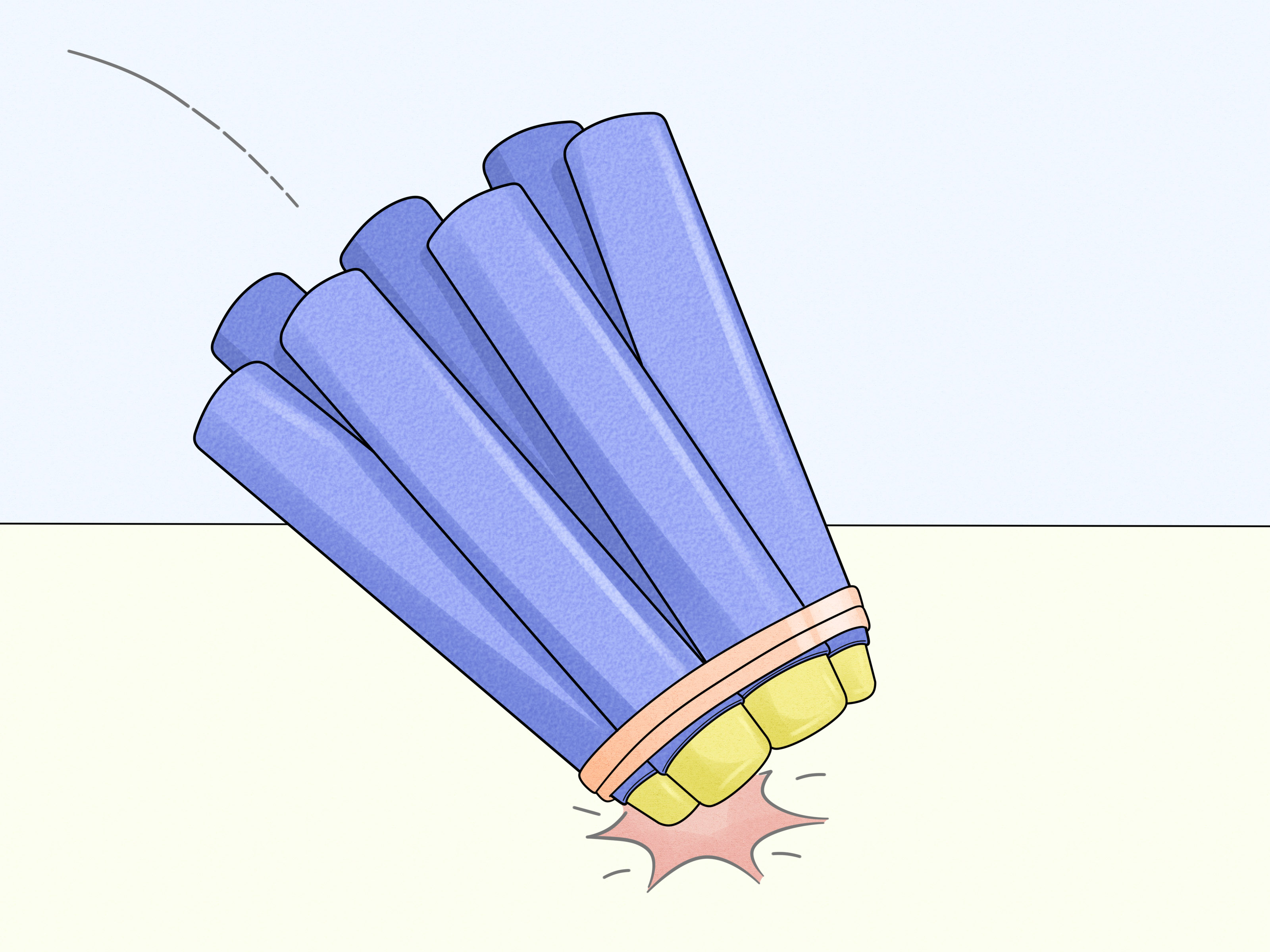
The version below is best described as a foam dart scatter pod. When tossed gently at the ground, it opens and releases a handful of foam darts. Players can decide before the match what that means. Maybe anyone within a three-foot radius is “tagged.” Maybe the darts must physically touch a player’s shoes. Maybe it simply creates a distraction while you retreat behind the patio furniture like a tactical genius in socks.
Safety First: Rules Before Craft Supplies
Before you make a DIY Nerf grenade, set boundaries. The safest Nerf game is the one where everyone knows the rules before the foam starts flying. Homemade props should be soft, clearly toy-like, brightly colored, and easy to inspect. Do not use hard plastic shells, metal parts, rocks, glass, magnets, batteries, fireworks, party poppers, compressed air, rubber-band launchers, or anything that creates a blast or projectile force.
Basic Safe Play Rules
- Wear eye protection during Nerf-style games.
- Do not aim at faces, eyes, pets, or bystanders.
- Use only soft foam darts designed for toy blasters.
- Do not modify foam darts, tips, or blasters.
- Keep homemade props away from children under 3 because small parts can be choking hazards.
- Use the prop only in private play areas with adult supervision.
- Do not bring toy weapons or grenade-shaped props into public spaces.
That last point matters. Even a silly cardboard tube with neon tape can be misunderstood outside a game setting. Keep it at home, in the yard, or in a clearly organized Nerf event where everyone knows what it is.
Materials You Need
This build uses lightweight craft supplies. The goal is to make something soft enough to toss gently, bright enough to look like a toy, and simple enough to fall apart safely if stepped on.
| Material | Purpose | Safety Note |
|---|---|---|
| 1 paper cup or empty cardboard toilet paper tube | Main body | Use paper or thin cardboard only |
| 6 to 10 official foam darts | Scatter effect | Do not alter dart tips |
| Tissue paper or napkin | Loose top cover | Should tear or slip open easily |
| Painter’s tape or masking tape | Temporary closure | Avoid strong duct tape |
| Bright markers or stickers | Decoration | Use toy-like colors |
| Soft ribbon or paper streamer | Visibility tail | Keep it short to avoid tangling |
| Scissors | Cutting paper | Adult help for younger kids |
How to Make a Nerf Grenade: Safe Foam-Dart Scatter Pod
Step 1: Choose the Body
Start with a small paper cup or a cardboard toilet paper tube. A paper cup is easier because it already has a closed bottom. A cardboard tube works too, but you will need to fold one end shut with paper and tape. Do not use metal cans, thick plastic containers, glass jars, or anything heavy. If it would hurt after being gently tossed onto your foot, it does not belong in this project.
Step 2: Make It Look Like a Toy
Decorate the body with bright colors. Orange, blue, yellow, green, and purple are great choices. Write “FOAM DART GAME PROP” or “NERF-STYLE TOY” on the side. This may sound less dramatic than mysterious black tape, but safety beats realism every time. The goal is for every adult in the room to know instantly that this is a harmless craft item, not something suspicious.
Step 3: Add a Soft Visibility Tail
Tape a short piece of paper streamer or soft ribbon to the bottom. This makes the prop easier to see in grass and gives it a funny comet-like look when tossed gently. Keep the streamer shortabout 6 to 8 inches is plenty. Long strings can tangle around furniture, wrists, or younger kids’ hands, and nobody needs a Nerf game turning into a craft-supply rodeo.
Step 4: Load the Foam Darts Loosely
Place 6 to 10 foam darts inside the cup or tube. Do not pack them tightly. Do not add weight. Do not add coins, beads, pebbles, marbles, screws, or any “extra impact” material. The only thing inside should be soft foam darts. If the darts do not fall out easily when the container tips over, remove a few. A good scatter pod releases darts because gravity exists, not because you engineered a mini catapult.
Step 5: Cover the Opening With Tissue Paper
Place a single layer of tissue paper or napkin over the opening. Secure it with two small pieces of painter’s tape. The cover should be loose enough to tear or slip off when the pod lands on the ground. If you have to yank it open, it is too secure. The safest design is intentionally weak. In this project, flimsy is not a flaw; flimsy is the feature.
Step 6: Add a Pull Tab for Manual Use
If you want a version that players open by hand instead of tossing, add a small folded paper tab to the tissue cover. The player can place the pod on the ground, pull the tab, and let the darts spill out. This is the best version for indoor play, younger players, or anyone who has a lamp collection that deserves to survive the afternoon.
Step 7: Test It on a Pillow
Before using the prop in a game, test it by dropping it from waist height onto a pillow or soft rug. It should open easily and spill darts without bouncing hard, cracking, or sending pieces across the room. If it does not open, loosen the tape. If it lands too hard, switch to thinner paper or reduce the number of darts.
Step 8: Set the Game Effect
Decide what the Nerf grenade does before the match begins. This prevents the classic playground legal debate: “That didn’t count!” “Yes it did!” “No, because the dart touched the chair first!” A simple rule works best. For example, when the pod opens, anyone within three big steps is tagged. Or, for a more precise game, a player is tagged only if a foam dart lands touching their shoe or gear.
Indoor Version: The No-Throw Tabletop Pod
If you are playing indoors, use a no-throw version. Instead of tossing the pod, place it behind cover, pull the paper tab, and scatter the darts onto the floor. This works well for hallway games, cardboard fort battles, and rainy-day Nerf events. It also keeps parents from developing that special facial expression that means, “I heard something hit the wall, and I am choosing calm for now.”
To make the tabletop version, use a paper cup with the open side facing up. Add foam darts, cover loosely with tissue, and attach a pull tab. During the game, a player must place the pod on the floor and pull the tab while staying in bounds. The result is a harmless dart spill that creates a game effect without throwing anything.
Outdoor Version: The Grass-Friendly Scatter Pod
For backyard play, the paper cup version works well. Grass softens the landing, and bright decorations make the pod easier to find. Use fewer darts if the cup feels heavy. Avoid wet grass because paper gets soggy and foam darts become tiny sponges with opinions. After the game, collect every dart so lawn mowers, pets, and younger siblings do not discover them later.
How to Make It More Fun Without Making It Unsafe
The best upgrades are visual, not mechanical. Add team colors. Draw cartoon warning labels like “DARTS OF DOOM” or “CONFETTI BUT FOAM.” Use stickers, washi tape, or comic-book-style sound effects such as “PLOP!” and “FOOF!” You can also make different pod types for different game modes.
Fun Game Variations
- Medic pod: When opened, it revives one teammate standing nearby.
- Ammo pod: Players can collect the scattered darts as bonus ammo.
- Freeze pod: Anyone within the agreed radius must freeze for five seconds.
- Objective pod: Teams score points by safely placing it in a target zone.
- Decoy pod: It does nothing except distract opponents, which is honestly very Nerf.
These rules add variety without adding force. A safe Nerf accessory should improve the game through imagination, not impact.
Common Mistakes to Avoid
The biggest mistake is trying to make the pod “more powerful.” Do not. More powerful is not the goal. More fun is the goal. A homemade Nerf grenade should not launch darts, spray pieces, pop loudly, or surprise people who are not playing. Keep it soft, obvious, and low-energy.
Another mistake is using too much tape. If the tissue cover is wrapped like a shipping box crossing the ocean, it will not open properly. Use tiny strips. The pod should fail gracefully. In other words, you are building a container that is supposed to lose an argument with gravity.
Finally, avoid realistic colors and shapes. Black, gray, military green, and metal-looking decorations can create unnecessary confusion. Bright toy colors are safer and more fun. A neon orange foam-dart pod with a smiley face may not look intimidating, but it will make everyone laugh, and laughter is a valid tactical advantage.
How Adults Can Supervise the Project
Adults should inspect every homemade game prop before play. Check that there are no hard parts, sharp edges, loose staples, hidden weights, or small detachable pieces that younger children could swallow. Younger kids should not cut materials without help. Older kids can handle most of the build, but they still need reminders about safe aiming, eye protection, and keeping the game in appropriate places.
It also helps to create a “prop check” rule before every match. Place all homemade items on a table. Everyone agrees they are soft, safe, and allowed. Anything questionable stays out of the game. This keeps the mood light and prevents one player from showing up with a mystery invention that looks like it came from a garage laboratory run by raccoons.
Experience Notes: What Actually Works in a Real Nerf Game
After trying different safe Nerf-style grenade ideas, the simplest designs usually win. The paper cup scatter pod works better than complicated builds because it is predictable. It opens when it lands, it spills darts, and it is easy to reset. You do not need hinges, springs, magnets, or secret mechanisms. In fact, the more complicated the build becomes, the more likely it is to jam, break, or become unsafe.
One useful lesson is that fewer darts often create a better effect. Ten darts may look impressive, but a packed cup can land with too much weight and fail to open cleanly. Six foam darts are usually enough for a visible scatter without making the pod bulky. If you are playing indoors, even four darts can be plenty. The goal is not to carpet the room in foam; the goal is to create a small moment of surprise.
Another experience-based tip is to test the pod in the same place where you plan to play. A design that works perfectly on carpet may behave differently on grass, tile, or a driveway. Carpet grips the paper and helps the tissue tear. Grass cushions the fall but may stop the pod from opening if it lands sideways. Hard floors make the pod bounce, so indoor games should use the pull-tab version instead of the toss version.
Players also enjoy the prop more when the rules are simple. The best rule I have seen is the “three-step radius” rule: if the pod opens and you are within three big steps, you are tagged. It avoids arguments over whether one foam dart brushed someone’s shoelace at a suspicious angle. For younger kids, use an even simpler rule: if you see the pod open near you, freeze for five seconds. That keeps the game moving and prevents courtroom-level debate in the hallway.
Decoration matters more than expected. Bright colors help players find the pod quickly, especially outdoors. A streamer tail makes it easier to track and adds comedy value. Labels such as “SOFT FOAM ONLY” or “GAME PROP” are helpful when adults are supervising. The funniest version I have seen had “Emergency Sock Distraction Device” written on the side. It had nothing to do with socks, but everyone remembered the rule.
The final lesson is that homemade Nerf accessories should feel disposable. If the scatter pod gets crushed, wet, or bent, recycle it and make another one. Do not reinforce it with hard materials just to make it last forever. A flimsy paper pod is safer than a rugged one. In Nerf crafting, durability is nice, but softness is king. The best Nerf grenade is the one that adds laughter, strategy, and foam-dart chaos while keeping everyone’s eyes, furniture, pets, and friendships intact.
Conclusion: Build the Fun, Skip the Boom
Learning how to make a Nerf grenade should really mean learning how to make a safe foam-dart game prop. With a paper cup, tissue cover, painter’s tape, and a handful of foam darts, you can create a fun scatter pod that adds excitement to backyard battles without using dangerous materials or launching mechanisms.
Keep the design soft. Keep the colors bright. Keep the rules clear. Most importantly, keep safety at the center of the game. The best Nerf accessories are the ones that make people laugh, run, strategize, and immediately ask, “Can we play one more round?” If your homemade prop does that without causing damage or worry, congratulations: you have achieved peak foam engineering.