
The holidays have a remarkable ability to turn perfectly reasonable adults into woodland decorators. Suddenly, every mantel needs pine branches, every table needs a miniature forest, and every empty wall appears to be quietly requesting a pair of majestic antlers.
Real antlers certainly create a rustic look, but they are not the only way to bring reindeer-inspired charm into your home. Animal-friendly antlers made from carved wood, recycled paper, felt, clay, wire, or reclaimed materials can produce the same cozy lodge atmosphere without using animal parts. They are also easier to customize, store, repair, and explain when a curious child asks whether Rudolph donated them personally.
This guide explores the best cruelty-free antler decorations, how to choose sustainable materials, ways to style them, pet-safety considerations, and several approachable DIY projects. Whether your holiday style is Scandinavian minimalism, traditional farmhouse, glamorous winter lodge, or “I found this ribbon in a drawer and now it is décor,” there is an animal-friendly option for you.
What Are Animal-Friendly Antlers?
Animal-friendly antlers are decorative pieces designed to resemble deer, elk, moose, or reindeer antlers without requiring newly obtained animal parts. Depending on the product, they may be carved from wood, molded from paper pulp, sewn from felt, sculpted from clay, formed from metal, or assembled from reclaimed branches and cardboard.
The term can occasionally be used for naturally shed antlers because deer-family animals drop and regrow their antlers. However, “naturally shed” does not automatically mean environmentally harmless. Collecting sheds may be prohibited in national parks and other protected areas. In vulnerable winter habitats, people searching for antlers can also disturb deer, elk, and moose when the animals are conserving limited energy.
For shoppers who want the simplest ethical choice, a clearly labeled faux antler made without animal-derived materials removes much of that uncertainty.
Antlers Are Different From Horns
Antlers are usually branched structures that are shed and regrown. Horns generally have a permanent bony core covered by keratin and continue growing over time. Reindeer and caribou are especially festive exceptions within the deer family because both males and females can grow antlers. In other words, Santa’s transportation department may be more inclusive than holiday cartoons suggest.
Why Choose Faux Antlers for Holiday Decorating?
They Avoid Questions About Animal Sourcing
A decorative product may be advertised as salvaged, vintage, humane, or naturally shed, but those words do not always reveal where it came from or whether collecting it complied with local rules. A wooden or recycled-paper reproduction provides a more transparent option because the material can be identified and evaluated directly.
They Can Be Reused for Many Seasons
Durable holiday décor generally creates less waste than disposable decorations that are replaced every December. Well-made faux antlers can return year after year and move between rooms as your decorating style changes. One season they may hang over the mantel; the next they may support a wreath or anchor a dining-table centerpiece.
They Are Easier to Customize
Real antlers come in nature’s preferred colors, which are tasteful but not particularly interested in your design plan. Faux antlers can be painted matte white, charcoal, brass, soft green, candy-cane red, or any other shade that complements your holiday palette.
You can also add removable decorations such as velvet ribbon, bells, dried citrus, paper stars, greenery, or battery-powered micro lights. The result can be rustic, modern, playful, or elegant without looking like a hunting lodge opened a gift shop in your living room.
They Are Often Lighter and Easier to Mount
Paper, felt, and hollow molded designs are usually lighter than substantial natural specimens. That makes them practical for apartments, temporary displays, rental homes, lightweight shelving, and walls where drilling large anchors is not an attractive holiday activity.
The Best Materials for Animal-Friendly Antlers
Carved Wood
Carved wooden antlers offer warmth, texture, and a handcrafted appearance. Basswood, sometimes called lime wood in European products, is especially popular for carving because it is soft, lightweight, and workable. The grain is usually subtle, allowing the silhouette and carved details to stand out.
When buying new wooden décor, look for credible information about the wood source. Certification labels such as FSC can indicate that the material comes from certified forests, recycled sources, controlled wood, or an approved mixture, depending on the specific label.
Choose unfinished wood for a Scandinavian or minimalist room. For a richer lodge look, use a medium brown stain. Whitewashed wood works beautifully with eucalyptus, linen ribbon, and pale ornaments.
Recycled Paper and Papier-Mâché
Paper antlers are lightweight, affordable, and surprisingly convincing once painted. They can be made from recycled cardboard, newspaper, paper bags, or molded paper pulp. A layered finish creates natural-looking ridges without copying every anatomical detail.
Paper also offers an excellent way to reuse shipping boxes that arrive during holiday shopping season. Your delivery packaging can become décor instead of spending the entire month glaring at you from the recycling bin.
Keep paper antlers away from open flames, wet greenery, humid outdoor conditions, and curious pets. A protective water-based sealer may improve durability, but the finished piece should still be treated as indoor décor.
Felt and Fabric
Soft antlers made from felt, fleece, or sturdy fabric are ideal for nurseries, children’s rooms, tree ornaments, fabric wreaths, and lightweight wall hangings. They can be sewn and lightly stuffed for a dimensional appearance or cut flat for garlands and gift toppers.
Felt antlers do not need to imitate real bone. Try forest green, cranberry, blush, navy, or a cheerful plaid. Holiday decorating becomes much more relaxed once you accept that no actual reindeer has to approve the color scheme.
Air-Dry Clay
Air-dry clay works well for miniature antler ornaments, place-card holders, napkin-ring embellishments, and small wall pieces. Roll the clay into tapered branches, join them carefully, smooth the connections with damp fingers, and allow the shape to dry completely before painting.
Clay antlers can be fragile, especially at narrow tips. Make the branches slightly thicker than realistic antlers and store each item in tissue paper after the holidays.
Wire, Rattan, and Woven Fiber
Wire creates a clean, modern outline and can be wrapped with jute, yarn, paper cord, fabric strips, or flexible greenery. Rattan and woven-fiber versions suit bohemian, coastal, and natural interiors. Their open construction keeps them visually light, even when displayed above a small mantel or console.
Reclaimed Branches
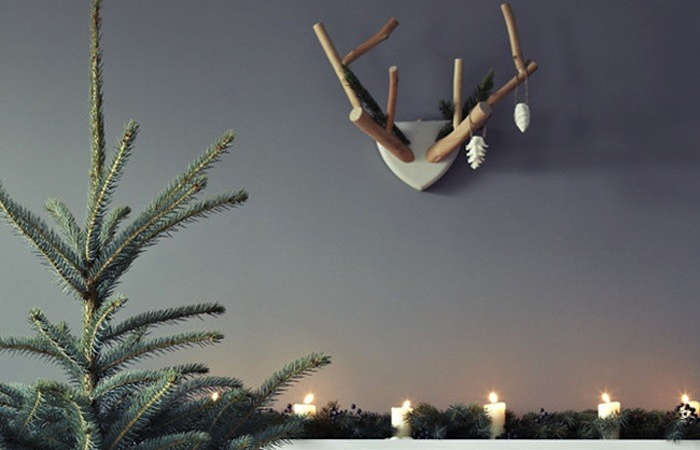
Fallen branches can be arranged into an antler-inspired silhouette without pretending to be a perfect replica. Use only material you are legally permitted to collect, and avoid breaking live branches or removing natural objects from protected areas.
Clean and dry reclaimed wood before bringing it indoors. Inspect it for insects, loose bark, mold, and sharp ends. Sand rough areas and secure every connection before placing the decoration above furniture or busy walkways.
How to Shop for Ethical Faux Antler Décor
Product descriptions can be filled with attractive but vague language. “Natural,” “eco-conscious,” and “artisan-inspired” may sound reassuring without explaining anything measurable. Before buying, look for practical details.
- Confirm that the product contains no real antler, bone, horn, hide, or feathers.
- Check whether wooden items identify the wood species or certification.
- Favor durable construction over decorations designed for one season.
- Look for recycled, reclaimed, or responsibly sourced materials.
- Choose low-odor, water-based finishes when that information is available.
- Examine mounting hardware, weight limits, sharp points, and small detachable pieces.
- Consider whether replacement parts or simple repairs are possible.
Secondhand faux antlers are another smart option. Thrift stores, estate sales, neighborhood exchanges, and resale platforms frequently offer seasonal decorations. Reusing an existing item may require less new material than purchasing something newly manufactured, even when the new product has a fashionable green leaf printed on its packaging.
DIY Animal-Friendly Antlers
Simple Cardboard Antlers
For an easy family project, draw one antler on a piece of corrugated cardboard and cut it out. Trace that shape to create a matching partner. Layer additional cardboard where strength is needed, then cover the surfaces with torn kraft paper and diluted white craft glue.
After the antlers dry, paint them in warm white, brown, gold, or another holiday color. Mount them on a recycled cardboard plaque or attach them to a wreath form. Adults should handle sharp cutting tools, and craft supplies should be stored away from children and pets when not in use.
Rolled-Paper Sculptural Antlers
Roll scrap paper into narrow tubes, bend them into gentle curves, and connect shorter tubes to form the points. Secure the structure with masking tape, then cover it with strips of paper and glue. This technique creates an organic shape and is forgiving enough for beginners.
Do not chase perfect symmetry. Real antlers are not manufactured by a committee, and their irregularity is part of their appeal.
Soft Felt Antler Ornaments
Draw a compact antler template without extremely thin tips. Cut two matching felt pieces, sew around the edge, and add a small amount of stuffing before closing the seam. Attach a ribbon loop and decorate with embroidery, beads, or tiny fabric leaves.
Skip loose beads and bells when ornaments will be accessible to toddlers or pets. Embroidered details provide color without introducing as many detachable parts.
Minimalist Wire Antlers
Shape sturdy craft wire into a continuous antler outline using pliers. Wrap the frame with yarn or paper cord, securing the ends with an appropriate adhesive. Mount the finished shape inside an embroidery hoop or hang it directly with a removable hook rated for its weight.
Cover cut wire ends completely. An elegant silhouette loses some of its charm when it behaves like a tiny festive fishhook.
How to Style Faux Antlers for the Holidays
Create a Woodland Mantel
Place wooden or paper antlers above the mantel and surround them with evergreen branches, pinecones, wood bead garland, flameless candles, and a few matte ornaments. Leave open space around the antlers so they remain the focal point rather than becoming lost in a decorative snowstorm.
Build a Dining-Table Centerpiece
Lay lightweight faux antlers along the center of the table with greenery, dried orange slices, pomegranates, ribbon, and battery-powered lights. Keep the arrangement low enough for guests to see one another. Holiday dinner is already full of conversational obstacles; the centerpiece does not need to become another one.
Decorate a Wreath
Attach miniature antlers to a grapevine, metal, or reusable artificial wreath. Add greenery primarily to one side for a modern asymmetrical design. Velvet ribbon creates a refined finish, while plaid and burlap lean more rustic.
Use Antlers as Gift Decorations
Flat felt or cardboard antlers can replace disposable bows. Tie one beneath reusable fabric ribbon and add the recipient’s name. After the gift is opened, the antler can become an ornament or package tag for another year.
Try a Reindeer Gallery Wall
Combine one sculptural antler piece with framed winter landscapes, paper snowflakes, botanical prints, and a small mirror. Repeating a restrained palette keeps the arrangement sophisticated instead of resembling the evidence wall from a holiday detective movie.
Pet-Safe Holiday Antler Decorating
Animal-friendly materials do not automatically make a decoration safe for household animals. Dogs and cats may chew paper, swallow ribbon, pull down greenery, or treat hanging ornaments as a personal fitness challenge.
- Mount antler décor securely and keep it away from climbing routes.
- Avoid dangling string, tinsel, wire, bells, and small ornaments within reach.
- Use flameless candles near paper, fabric, wood, and curious tails.
- Do not allow pets to chew decorative wooden antlers.
- Inspect decorations regularly for loose pieces or exposed wire.
- Place adhesives, paints, sealers, and craft scraps in closed storage.
Decorative faux antlers should not be confused with antler chews sold for dogs. Hard natural antlers can damage teeth and may create choking or intestinal hazards if pieces break off or are swallowed. Ask your veterinarian to recommend an appropriate chew based on your dog’s size, chewing habits, dental health, and age.
Can Pets Wear Reindeer Antlers?
A soft reindeer headband may be suitable for a brief, supervised photo only when the pet appears comfortable. The accessory must not block vision, restrict breathing, interfere with movement, create excessive heat, or include pieces the animal can chew off.
Introduce the accessory gradually and remove it at the first sign of distress, including freezing, hiding, pawing at the head, flattened ears, repeated lip licking, panting, growling, or attempts to escape. Some pets enjoy attention and costumes. Others would prefer to celebrate by sleeping under the dining table and monitoring the turkey situation. Both choices are valid.
A Practical Holiday Decorating Experience
From an Empty Mantel to an Animal-Friendly Display
A realistic faux-antler decorating project often begins with a familiar problem: the mantel looks bare, but the storage closet already contains enough holiday decorations to open a seasonal department store. Buying another large plastic object feels unnecessary, and real antlers do not fit the goal of an animal-friendly home.
The most useful first step is not shopping. It is collecting materials already available. A typical household might find a flattened shipping box, leftover kraft paper, masking tape, white glue, a small amount of wall paint, ribbon from last year, and a wreath that has survived several holiday seasons with only moderate emotional damage.
Cardboard antlers can be sketched freehand, but looking at photographs of deer or reindeer helps establish the basic branching pattern. The first drawing may look less like an antler and more like a tree struck by lightning. That is normal. Widening the base and simplifying the points usually produces a stronger, cleaner design.
After two matching shapes are cut, narrow cardboard strips can be attached along the edges to create depth. Crumpled paper fills hollow areas, while kraft paper and glue smooth the surface. This stage is messy in a satisfying elementary-school-art-class way. Protecting the table beforehand is highly recommended unless dried glue is part of the permanent interior design plan.
Once dry, a warm off-white paint gives the antlers a plaster-like appearance. A small amount of diluted brown paint brushed into the creases adds dimension, while a dry brush of the original white softens the contrast. The goal is not biological accuracy. It is a believable texture that looks intentional from normal viewing distance.
Mounting the antlers on an old wooden plaque or a second piece of layered cardboard makes installation easier. Before hanging anything, the attachment points should be tested gently. A decoration positioned over a mantel needs to remain on the wall rather than making a dramatic entrance during dessert.
For styling, a reused green garland can be arranged loosely across the mantel, followed by a few pinecones, wooden ornaments, and battery-powered lights. A burgundy velvet ribbon tied near the antler base supplies holiday color without overwhelming the neutral materials. The finished display feels seasonal, but it can also remain through winter after the brighter Christmas accents are removed.
The most noticeable benefit is flexibility. Because the antlers are light, they can be repositioned without complicated hardware. Because they are painted, small scratches can be repaired in minutes. Because they are made from ordinary materials, there is no anxiety when one branch eventually bends during storage. It can simply be reinforced, repainted, and returned to duty.
There is also a conversational benefit. Guests often assume a convincing faux piece is carved wood or ceramic. When they learn that it began as a shipping box, the display becomes more than decoration. It demonstrates that animal-friendly holiday style does not require an expensive purchase or a compromise in appearance.
After the season, the antlers should be dusted, wrapped in plain tissue paper, and stored in a rigid container. Ribbon and greenery can be removed and packed separately. Labeling the box prevents the traditional November ritual of opening six mystery containers before finding the item you wanted.
This kind of project is rarely flawless. The antlers may not match exactly, the paint may reveal a wrinkle, and one point may lean in an adventurous direction. Those imperfections are part of the charm. Handmade holiday décor records a process, not just a purchase, and it becomes easier to appreciate with each return appearance.
Conclusion: Celebrate the Look, Not the Animal Part
Animal-friendly antlers make it possible to enjoy woodland holiday décor without relying on real antlers, uncertain sourcing, or wildlife disturbance. Carved certified wood, recycled paper, felt, clay, woven fiber, wire, and reclaimed materials can all create festive focal points suited to different budgets and decorating styles.
The best choice is durable, reusable, securely constructed, and appropriate for the people and pets sharing the home. Shop with specific material questions, favor responsible or recycled sources, and remember that a convincing rustic display does not require taking anything from wildlife.
With a little creativity, your mantel can look as though it belongs in a snowy forest lodge while remaining firmly committed to kindness. The deer keep their dignity, your home gets its holiday magic, and nobody has to explain an actual skull to Grandma.