
A tree stump has a special talent for making a yard look unfinished. One day, you are proud of yourself for removing a problem tree. The next day, that leftover stump is sitting there like a wooden coffee table nobody ordered. Worse, some stumps do not simply sit quietly. They send up shoots, attract insects, grow mushrooms, trip ankles, and make lawn mowing feel like an obstacle course designed by a mischievous squirrel.
Learning how to kill a tree stump is not just about making dead wood disappear. It is about stopping regrowth, protecting nearby plants, avoiding unsafe shortcuts, and choosing a method that fits your time, budget, and tolerance for sweat. Some stumps can be handled naturally over months. Others need a targeted herbicide treatment. Big stumps near sidewalks, fences, pipes, or foundations may deserve professional grinding. The right method depends on the species, stump size, location, and whether the tree is still trying to live its best life through root suckers.
This guide explains the safest and most practical ways to kill a tree stump, including cut-stump herbicide treatment, stump grinding, natural decomposition, digging, smothering, and repeated sprout removal. It also covers what not to do, because the internet is full of stump-removal advice that sounds exciting right up until the fire department arrives.
Why Tree Stumps Keep Coming Back
A freshly cut stump is not always dead. Many trees store energy in their roots, and that stored energy can push out new shoots around the stump or from the root system. This is common with species such as maple, willow, poplar, aspen, honeylocust, tree-of-heaven, and some fruit trees. Even when the trunk is gone, the roots may still have enough fuel to stage a comeback.
The living tissue that matters most is the cambium layer, the thin growing zone just inside the bark. If you want to stop a stump from resprouting, you usually need to target that outer ring soon after the tree is cut. Treating only the center of the stump may feel satisfying, but it is often about as effective as yelling at weeds from the porch.
The Best Ways To Kill a Tree Stump
There is no single best stump-killing method for every yard. A small ornamental stump in a flower bed is different from a 30-inch oak stump near a driveway. Below are the most reliable options, ranked by speed, effort, and practicality.
1. Cut-Stump Herbicide Treatment
Cut-stump treatment is one of the most effective ways to kill a live tree stump and prevent new sprouts. The basic idea is simple: cut the stump low and fresh, then apply a labeled systemic herbicide to the living outer ring of the stump. The herbicide moves into the remaining plant tissue and roots, helping stop regrowth.
Common active ingredients used for woody stump control include glyphosate and triclopyr. Some products are labeled for cut-stump use, while others are not. This detail matters. The pesticide label is not a decorative sticker; it is the legal instruction manual. Always choose a product specifically labeled for the site and application method, and follow the label exactly for protective gear, dilution, timing, and environmental precautions.
For best results, treat the stump soon after cutting, while the surface is fresh. If the stump was cut weeks or months ago, make a new cut to expose fresh wood before treatment. Focus on the cambium and sapwood near the bark, especially on larger stumps. The middle heartwood is usually less important because it is no longer actively transporting materials.
This method works well when the stump is still alive, when you want to prevent suckers, or when the tree species is known for stubborn regrowth. It is especially useful in tight spaces where grinding is difficult. However, avoid herbicide use near water, edible gardens, desirable tree roots, or sensitive plants unless the label clearly allows it and you can apply it precisely.
2. Stump Grinding
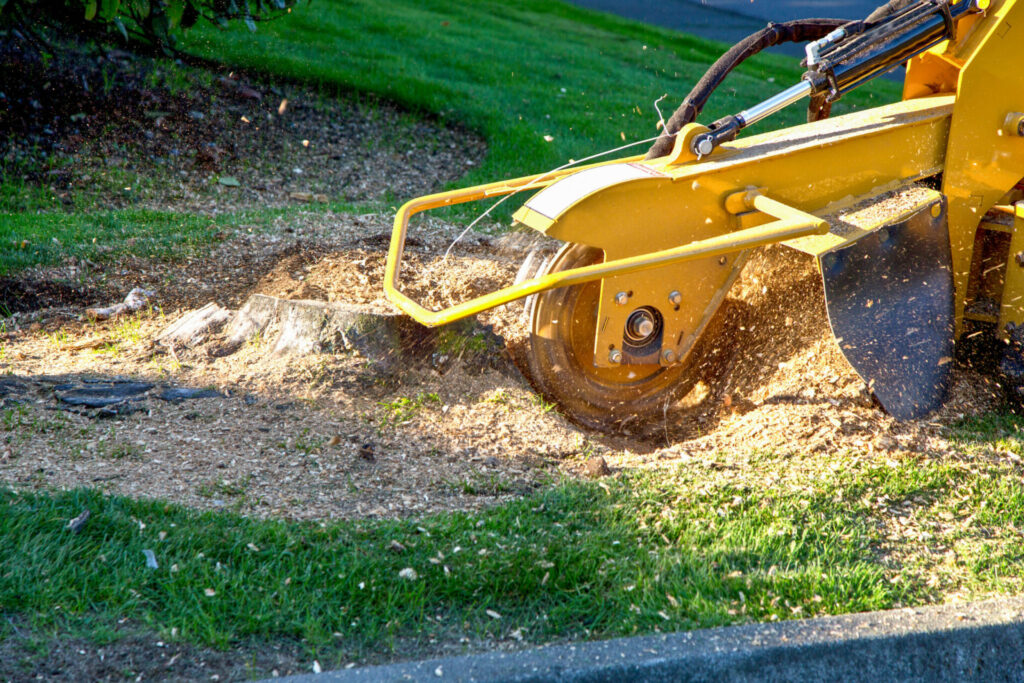
Stump grinding is the fast, clean, practical choice when you want the stump gone physically, not just biologically dead. A stump grinder uses a rotating cutting wheel to chip the stump below the soil surface. After grinding, the hole can be filled with soil and the area can be replanted or reseeded.
Grinding is often the best option for large stumps in lawns, front yards, and high-traffic areas. It removes the tripping hazard and gives the yard a finished look. It also avoids waiting years for decay. The downside is cost. Renting a grinder can be expensive and physically demanding, while hiring a professional costs more but is usually safer and faster.
Before grinding, check for rocks, metal, irrigation lines, landscape lighting, underground utilities, and nearby structures. If the stump is close to a fence, foundation, sidewalk, or buried line, hiring an experienced professional is usually the smarter move. A stump grinder is not a toy. It is a machine with teeth and opinions.
3. Natural Decomposition
If you are patient, you can let nature kill and break down a stump. Natural decomposition is slow, but it is low-cost and environmentally friendly when done properly. The goal is to help fungi and microorganisms do their work faster.
Start by cutting the stump as close to the ground as safely possible. Drill holes across the top and sides to increase surface area. Keep the stump moist but not waterlogged. Cover it with compost, soil, or coarse mulch to hold moisture and encourage microbial activity. Adding a small amount of nitrogen fertilizer can help speed the breakdown process because wood is high in carbon and decay organisms need nitrogen to work efficiently.
This method works best for small to medium stumps that are not actively resprouting. If shoots appear, cut them off immediately. Each sprout is a tiny solar panel feeding the roots. Remove those leafy freeloaders again and again until the root system runs out of energy.
4. Digging Out the Stump
Digging works for small stumps, young trees, shrubs, and shallow-rooted species. It is not glamorous, but it can be effective. Cut the stump low enough to work around it, dig out the soil around the roots, expose the major roots, cut them with loppers or a saw, and pry the stump loose.
This is a good method when you want to avoid herbicides and do not mind hard labor. It is also useful when the stump is in a garden bed where grinding equipment cannot fit. The catch is obvious: roots are stronger than they look, and soil has a way of becoming heavier every minute. For large stumps, digging can turn into a weekend-long character-building exercise.
5. Smothering the Stump
Smothering can help weaken a small stump by blocking light and limiting new shoot growth. Cut the stump low, remove all sprouts, then cover the area with heavy cardboard, black plastic, a tarp, or thick mulch. Secure the covering so sunlight cannot reach the stump or root shoots.
This is not the fastest way to kill a tree stump, and it works better on small stumps than large ones. It may take months or longer. Smothering is most useful when paired with repeated sprout removal and natural decay. Think of it as putting the stump on a strict no-sunlight diet.
Step-by-Step: How To Kill a Tree Stump With Cut-Stump Treatment
For homeowners dealing with a living stump that keeps sprouting, cut-stump treatment is often the most reliable approach. Here is a safe, practical overview.
Step 1: Identify the Tree and Check the Area
Before treating anything, identify the tree species if possible. Some species, such as tree-of-heaven, can respond poorly to simple cut-stump treatment because their root systems may send up new suckers. In those cases, professional advice or a different treatment strategy may be needed.
Also check the stump’s surroundings. Are there desirable trees nearby? Is the stump close to a vegetable garden, pond, well, storm drain, or play area? Are roots connected to nearby plants of the same species? These details affect whether herbicide is appropriate.
Step 2: Make a Fresh Cut
Use a chainsaw or handsaw to cut the stump close to the ground, keeping the surface as level as possible. A fresh cut exposes the living tissue and helps the treatment work. If the stump is old, dry, or weathered, slice off a thin layer before applying anything.
Step 3: Apply the Product Only Where Needed
Use a labeled herbicide product and apply it according to directions. In general, cut-stump treatment targets the outer living ring just inside the bark. A small paintbrush, sponge applicator, or low-volume sprayer can help limit drift and waste. Do not soak the soil. Do not overapply. More herbicide does not mean more success; it usually just means more risk to nearby plants and the environment.
Step 4: Monitor for Sprouts
Even after treatment, check the stump and surrounding area for new growth. Cut off sprouts as soon as they appear. If regrowth continues, review the product label and consider contacting a local Extension office, certified arborist, or licensed pesticide applicator.
How Long Does It Take To Kill a Tree Stump?
The timeline depends on the method. Cut-stump herbicide treatment may stop regrowth within weeks, but the wood will still remain until it decays or is removed. Grinding removes the visible stump immediately. Natural decomposition can take many months to several years, depending on stump size, species, moisture, temperature, and soil biology.
Softwoods and smaller stumps break down faster than dense hardwoods. A small pine stump may soften noticeably within a year under good decay conditions. A large oak stump can hang around so long you may feel obligated to give it a name.
What Not To Use on a Tree Stump
Some stump-killing ideas are popular because they sound easy. Unfortunately, easy and wise are not always on speaking terms.
Do Not Use Gasoline, Diesel, or Motor Oil
Pouring petroleum products on a stump is unsafe, polluting, and unnecessary. It can contaminate soil, harm nearby plants, create fire hazards, and make future planting difficult. It is also a terrible way to impress your neighbors, unless your goal is to become the subject of a neighborhood meeting.
Do Not Burn a Stump Without Local Approval
Burning may seem old-fashioned and dramatic, but it can be dangerous and may violate local fire rules. Roots can smolder underground, smoke can annoy neighbors, and dry conditions can turn a small burn into a serious problem. Many residential areas prohibit open burning. Check local regulations before considering fire, and when in doubt, choose another method.
Be Careful With Salt
Rock salt and heavy salt treatments can damage soil and nearby plants. Epsom salt is often promoted online as a natural stump killer, but results are inconsistent and slow. In garden soil, adding unnecessary salts or minerals can create imbalances. If your real goal is fast, reliable stump death, choose a proven method instead of turning the stump into a science fair project.
Do Not Ignore Safety Gear
Use eye protection, gloves, long sleeves, sturdy footwear, and hearing protection when cutting or grinding. When using any herbicide, wear the personal protective equipment required by the label. Keep children and pets away from the work area until tools are stored, surfaces are dry, and the site is safe.
Special Cases: Trees That Fight Back
Some trees are famous for root suckers and stubborn regrowth. Tree-of-heaven, honeylocust, black locust, willow, poplar, aspen, and some invasive shrubs can keep sending up shoots even after the stump is cut. For these species, simple cutting may make the problem worse by stimulating the root system.
If you are dealing with a known invasive or aggressive suckering tree, research the species before cutting. Some control programs recommend treating the standing tree first, waiting for the herbicide to move into the roots, and then cutting later. Others recommend immediate cut-stump treatment. The right approach depends on species, season, location, and label directions.
Can You Replant After Killing a Stump?
Yes, but timing matters. If the stump was ground out, remove excess wood chips from the hole and mix in good soil before planting. Fresh wood chips can temporarily tie up nitrogen as they decompose, which may slow new plant growth. If herbicide was used, follow the product label for replanting restrictions. Some active ingredients persist longer than others and may affect sensitive plants.
For best results, wait until the old stump area has settled. Add soil as needed because ground often sinks after roots decay. If planting a new tree, do not place it directly in the old stump hole unless the site has been properly cleared and amended. Give the new tree room, good soil, and a fresh start. No tree wants to begin life in the basement apartment of its predecessor.
Experience Notes: What Actually Works in the Yard
After seeing many homeowners wrestle with tree stumps, one lesson stands out: the stump is rarely the whole problem. The real problem is usually timing. People cut down a tree, admire the open space, and tell themselves they will “deal with the stump later.” Later becomes next month. Next month becomes next spring. By then, the stump has dried, hardened, sprouted, grown mushrooms, and possibly become a decorative pedestal for a flowerpot no one remembers buying.
The best experiences usually happen when the stump plan is made before the tree is cut. If the tree is alive and likely to resprout, cut-stump treatment works best when the surface is fresh. Waiting too long means you may need to recut the stump, which is not impossible, but it adds another chore to a list that already includes mowing, weeding, and pretending the garage will be organized someday.
For small stumps, digging can be surprisingly satisfying. There is a certain primitive joy in exposing roots, cutting them cleanly, and rocking the stump loose. It feels like winning a wrestling match against a wooden octopus. But digging has limits. Once the stump is large enough that you start negotiating with it out loud, grinding becomes more attractive. A professional stump grinder can finish in less time than it takes most homeowners to find the sharp shovel.
Natural decay is best for people who are patient and realistic. It works, but it is not magic. The homeowners who get decent results usually drill holes, keep the stump moist, cover it with compost or mulch, and keep attacking new sprouts. The homeowners who get frustrated usually sprinkle something on top once, walk away, and expect the stump to vanish like a magician’s assistant. Wood decomposes on biology time, not weekend-project time.
Another hard-earned lesson: do not underestimate sprouts. A few leafy shoots may look harmless, even cute. They are not. Leaves feed the root system. If you let sprouts grow all summer, the stump gets stronger. Cut them early and often. This repeated removal can eventually exhaust the roots, especially on smaller stumps, but it requires consistency. Think of it as canceling the stump’s meal delivery service.
The worst experiences almost always involve shortcuts. Burning a stump in a dry yard, pouring fuel on it, using too much herbicide, or salting the soil into oblivion can create bigger problems than the original stump. A dead patch of soil, injured shrubs, smoke, fines, or a damaged irrigation line will make you miss the simple days when all you had was an ugly stump.
The smartest approach is boring in the best possible way: identify the tree, choose the right method, follow safety rules, and be patient where patience is required. Boring gets the stump killed. Boring keeps the dog, the lawn, and the neighbor’s hydrangeas safe. Boring is underrated.
Final Thoughts: The Smart Way To Kill a Tree Stump
The best way to kill a tree stump depends on what you need most: speed, low cost, low effort, or minimal chemical use. If you need the stump gone now, grind it. If the stump is alive and sprouting, use a properly labeled cut-stump herbicide treatment or get professional help. If you have time and prefer a natural method, drill, mulch, moisten, and let decay organisms do their slow but steady work.
Whatever method you choose, skip unsafe shortcuts. No gasoline. No random chemical cocktails. No backyard bonfire unless local rules clearly allow it and conditions are safe. A stump may be stubborn, but it is not worth turning your yard into a cautionary tale.
Kill the stump cleanly, protect the surrounding landscape, and reclaim that patch of yard. Then you can finally stop mowing around the wooden ankle-breaker and start planning something better: grass, flowers, a new tree, or maybe just a chair where you can sit and admire your victory.