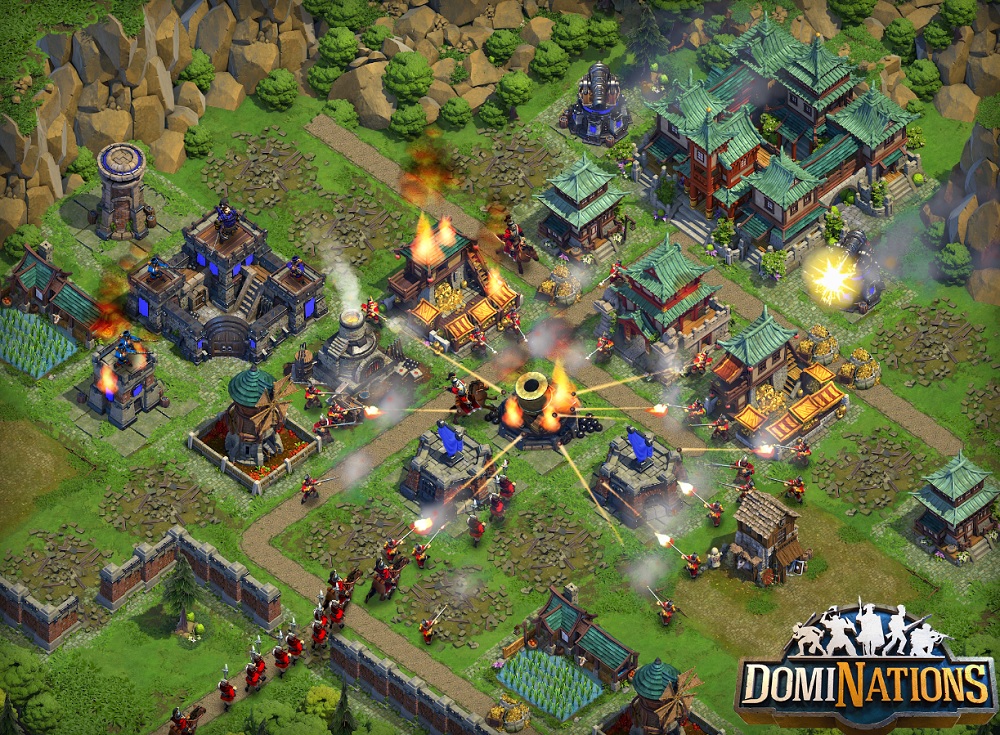
There is nothing quite like the shared triumph of cracking a complex code or bypassing an impossible obstacle with your friends. Group puzzle solving has evolved from simple tabletop sessions into a thriving digital experience, where coordination and quick thinking define your success. Whether you are navigating high-stakes team based objective matches or exploring immersive environments, the best co-op games rely on more than just quick reflexes; they demand a unified strategy and a cohesive team mindset.
In this guide, we dive into how to elevate your collaborative gameplay. You will learn how to optimize your communication, leverage each player’s unique strengths, and master the technical setup required for seamless remote sessions. We also explore the best titles available today for various skill levels and group sizes, helping you turn every gaming session into a synchronized, rewarding challenge. Get ready to transform how your team approaches digital teamwork and master the art of the perfect, collaborative puzzle solution.

1. Master Strategies for Effective Group Puzzle Solving
Successfully navigating complex challenges requires more than just gaming skill; it demands a cohesive unit working toward a unified goal. Whether you are tackling intricate team based objective matches or casual brain-teasers, the ability to synthesize information collectively is what separates success from frustration.
1.1 The Cognitive and Social Benefits of Collaborative Gaming
Group puzzle solving is a unique cognitive workout that engages multiple areas of the brain simultaneously. Beyond mere entertainment, these experiences act as a laboratory for developing essential interpersonal and analytical skills.
1.1.1 Enhancing verbal communication and active listening skills
Cooperative games force players to articulate abstract concepts clearly and concisely. When a teammate cannot see your screen or perspective, your verbal descriptions must be precise to bridge the gap. This necessity fosters active listening, as team members must filter out background noise and focus on critical instructions, eventually refining the group’s ability to communicate efficiently under pressure.
1.1.2 Developing spatial awareness and collective logic
Many puzzles require players to piece together fragments of information held by different team members. This develops high-level spatial awareness, as you must mentally visualize the environment from another person’s viewpoint. By merging individual observations into a shared logical framework, groups learn how to solve problems that would be insurmountable for a single player acting in isolation.
1.2 Establishing Team Dynamics and Communication Protocols
Even the most talented players can struggle if they lack a structured approach to collaboration. Developing a set of team protocols ensures that every session remains organized and goal-oriented.
1.2.1 Assigning roles based on individual problem-solving strengths
Recognize that different players excel at different tasks. Some individuals naturally thrive at pattern recognition, while others are better at managing time or maintaining a macro-level overview of the board. Assigning roles—such as a dedicated information relay or a primary puzzle-solver—reduces cognitive load and prevents overlapping efforts.
1.2.2 Managing high-pressure environments to avoid communication burnout
When a timer is ticking or a challenge escalates, voices often rise, leading to information overload. Establish a “quiet command” rule where, during critical moments, only the person executing the move speaks. This simple protocol prevents panic and allows the team to maintain focus when the stakes are highest.
1.2.3 Utilizing non-verbal cues and shorthand in time-sensitive puzzles
In fast-paced scenarios, full sentences are often luxuries you cannot afford. Develop a shorthand vocabulary for common environmental elements or puzzle states. Learning to use pings, status indicators, or simple in-game emotes can communicate intent faster than voice chat, allowing the team to react with split-second precision.
1.3 Selecting the Right Tools for Seamless Interaction
The foundation of effective group puzzle solving lies in the infrastructure of your communication. Without the right setup, technical friction can quickly derail even the most well-planned strategy.
1.3.1 Choosing the best voice chat platforms for low-latency coordination
When playing co-op online games, latency is your primary enemy. Utilize communication platforms that offer high-bitrate, low-latency audio. Prioritize services that allow for individual volume balancing so that you can hear the game audio clearly while still maintaining crisp contact with your teammates.
1.3.2 Configuring accessibility settings for inclusive gameplay
Inclusive gaming ensures everyone can contribute effectively. Take time to configure colorblind modes, button remapping, and subtitle scaling to ensure that no team member is hindered by visual or hardware limitations. Customizing these settings creates a level playing field, allowing the group to focus entirely on the puzzle at hand.
2. The Definitive Guide to Top-Rated Cooperative Puzzle Games
2.1 Curated Selections for Diverse Group Sizes and Skill Levels
2.1.1 Duo-focused titles for synchronized storytelling and platforming
For pairs looking to test their synergy, games like It Takes Two serve as the gold standard for synchronized storytelling. These experiences rely on asymmetrical gameplay where each player possesses unique abilities that must be used in tandem to progress. Success in these environments is not just about raw reflexes; it is about shared timing and constant verbal feedback.
2.1.2 High-octane party games for chaotic group communication
When the group size increases, the dynamic shifts from quiet coordination to chaotic fun. Titles such as Keep Talking and Nobody Explodes exemplify how group puzzle solving thrives under pressure. In this setup, one player acts as the “defuser” while the others serve as “experts” with the manual. This creates a high-pressure environment where clear, concise communication is the only thing preventing a digital disaster.
2.1.3 Atmospheric and meditative titles for relaxed collaborative logic
Not every puzzle requires a ticking clock. Atmospheric games offer a more zen-like approach to cooperative problem solving. These titles allow groups to slow down and analyze complex patterns together without the threat of failure. Whether you are solving logic-heavy riddles or arranging complex structures, these games foster a sense of shared accomplishment and collective discovery.
2.2 Navigating Technical Considerations for Remote Play
2.2.1 Evaluating cross-platform compatibility across PC and consoles
Before committing to a title, verify cross-platform support. Many modern co-op games allow players on PC to join console users, but it is not a universal standard. Checking the developer’s website for cross-play confirmation prevents unnecessary frustration when organizing your game night.
2.2.2 Balancing session length with player commitment levels
Group puzzle solving can be mentally draining. It is essential to select games that fit the group’s attention span. If your team only has an hour, look for titles that feature bite-sized levels or distinct “chapters” that allow for easy save points. You can find more advice on organizing these sessions in our guide on mastering team based objective matches.
2.2.3 Troubleshooting common connectivity issues during complex sessions
Remote play relies heavily on stable networking. If you encounter lag during real-time puzzles, ensure all players are using wired Ethernet connections rather than Wi-Fi. Additionally, closing background applications that consume high bandwidth can significantly improve your synchronization.
2.3 Essential Tips for Overcoming Difficulty Spikes
2.3.1 Identifying when to take a break to reset team perspective
Difficulty spikes often lead to group fatigue. If a puzzle remains unsolved after multiple attempts, morale will drop. Recognize the signs of frustration and suggest a mandatory five-minute break. This allows players to step back, clear their heads, and often return with the fresh perspective needed to spot a solution they previously missed.
2.3.2 Utilizing walkthroughs and hints without spoiling the experience
There is no shame in using a hint system when a puzzle feels truly unfair. To avoid ruining the experience, agree as a group to use hints only after a specific time limit or a set number of failed attempts. This maintains the integrity of the challenge while ensuring the team keeps moving forward.
2.3.3 Implementing role rotation to keep all group members engaged
In games with distinct roles, some players may find themselves stuck with tasks they find less engaging. Combat this by rotating roles between levels or sessions. This keeps everyone’s brain sharp, builds empathy for different task requirements, and prevents burnout among team members who might feel trapped in a repetitive, high-stress position.
At the end of the day, group puzzle solving is about more than just beating a level; it is about building shared memories and strengthening the bonds between teammates. Whether you are navigating high-pressure, time-sensitive obstacles or enjoying a laid-back evening of logic-based cooperation, the success of your session ultimately rests on clear communication, patience, and the ability to adapt to one another’s strengths. By focusing on these collaborative dynamics, you transform a simple game into a rewarding experience that sharpens your collective problem-solving skills.
As you explore new titles, remember that the best experiences often come from games that prioritize player interaction and mutual dependence. If you are looking to refine your approach before your next session, checking out our guide on mastering team based objective matches can provide the tactical foundation needed for even the toughest co-op challenges. So, gather your friends, set up your voice comms, and dive into your next great gaming adventure. The puzzles are waiting, but the real victory is found in the way you and your team overcome them together.