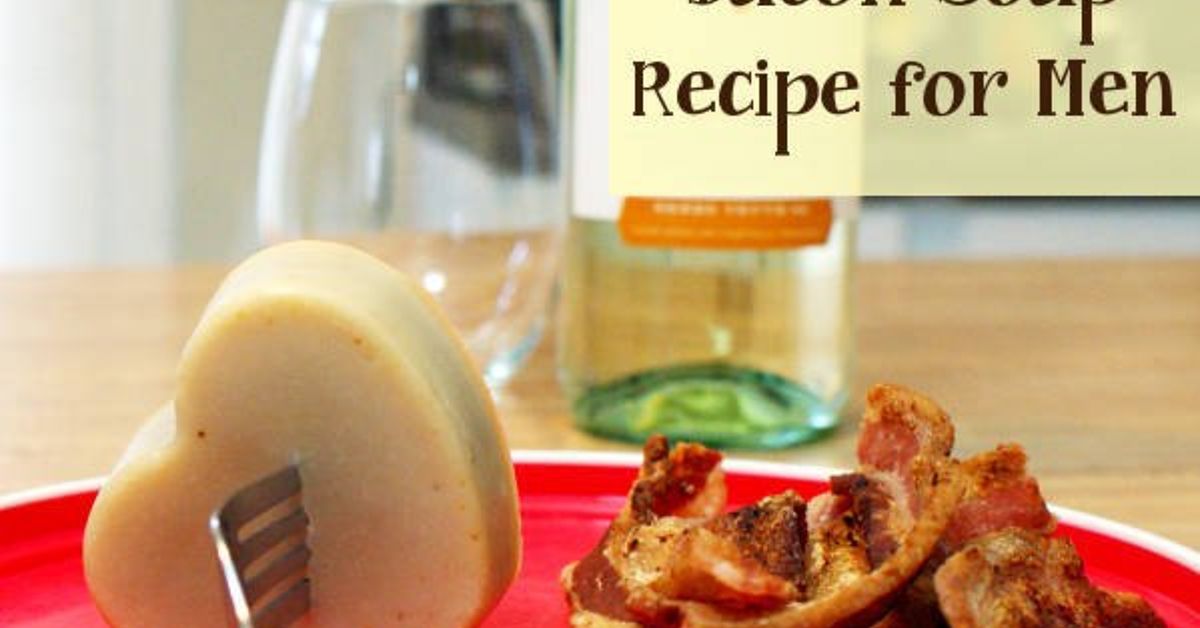

Most people look at leftover bacon grease and see a future clogged drain, a smoky trash can, or one more mysterious jar taking up valuable refrigerator real estate. A soapmaker sees raw material.
DIY bacon soap transforms carefully purified bacon fat into a firm, old-fashioned bar through the same basic chemistry used to make other cold-process soaps. Despite the name, the finished bar should not look like breakfast, smell like a diner, or contain crispy bacon decorations. Please resist that last idea. Bacon bits belong on potatoes, not in a wet shower product.
This project is best suited to adults who already understand basic cold-process soapmaking. Sodium hydroxide, commonly called lye, is corrosive before it reacts with fat. The process requires accurate weighing, protective equipment, ventilation, dedicated tools, and enough patience to let the finished bars cure properly.
What Is Bacon Soap?
Bacon soap is a handmade soap in which cleaned bacon grease replaces some or all of the lard or hard fat in a traditional recipe. Bacon grease contains triglycerides that can react with sodium hydroxide through a process called saponification. That reaction produces soap molecules and naturally occurring glycerin. Properly formulated traditional soap should not contain active lye after the reaction is complete.
The idea may sound like internet comedy, but animal fats have a long history in soapmaking. Before neatly packaged vegetable oils arrived on every supermarket shelf, households commonly made cleaning bars from available fats and alkaline solutions derived from wood ashes.
The modern version is more precise. Instead of estimating ingredients with a wooden spoon and heroic optimism, today’s maker uses a digital scale, purified sodium hydroxide, distilled water, and a dependable lye calculator.
Why Bacon Grease Can Work in Soap
When properly cleaned, bacon fat behaves similarly to lard in a soap formula. It can contribute hardness, a stable creamy lather, and a smooth texture. A bar made entirely from purified pork fat may produce less dramatic bubbling than a formula containing coconut oil, so many makers blend the reclaimed fat with a small amount of coconut or castor oil.
A practical beginner blend might contain:
- 75% purified bacon fat
- 20% coconut oil
- 5% castor oil
Those percentages describe only the oil portion of the recipe. The required sodium hydroxide and distilled water must be calculated separately after the final purified fats have been weighed. Hard oils generally help create a firmer bar, while carefully chosen liquid or specialty oils can adjust lather and conditioning qualities.
Why You Should Not Copy a Random Lye Amount
Every fat has a specific saponification value, which represents how much alkali is required to turn a measured quantity of that fat into soap. Oil choices, batch size, lye purity, and the selected superfat percentage all affect the calculation.
Bacon grease can also retain water, salt, food particles, and cooking residues. Therefore, never calculate the recipe from the original jar of drippings. Purify the fat first, dry it completely, weigh the usable result, and enter that weight into a reputable soapmaking calculator using lard as the closest standard oil category.
Essential Bacon Soap Safety
Sodium hydroxide can cause severe chemical burns, especially to the eyes and skin. Mixing it with water also releases substantial heat. Work in a ventilated area while wearing splash-resistant goggles, chemical-resistant gloves, long sleeves, long pants, and closed-toe shoes. Children, pets, food, ringing phones, and curious visitors should remain outside the workspace.
- Always add lye slowly to water. Never pour water onto dry lye.
- Do not lean over the container or breathe the initial vapor.
- Never use aluminum tools or containers with sodium hydroxide.
- Use equipment dedicated exclusively to soapmaking.
- Measure every ingredient by weight, not by cups or spoons.
- Keep running water accessible for immediate flushing after accidental contact.
- Label stored lye clearly and keep it secured away from children and animals.
For anyone uncomfortable handling lye, a premade melt-and-pour base is the safer craft option. However, bacon grease cannot simply be stirred into a melt-and-pour base in a meaningful quantity. Excess free fat can make the bar soft, oily, unstable, and unpleasant to use.
Tools and Ingredients
Dedicated Equipment
- Accurate digital scale that measures grams
- Stainless-steel saucepan for grease purification
- Heat-safe lye container made from appropriate plastic or stainless steel
- Stainless-steel or heavy-duty plastic soap bowl
- Silicone spatula
- Immersion blender
- Fine mesh strainer, coffee filter, or clean filtering cloth
- Silicone loaf mold or individual bar molds
- Protective goggles and chemical-resistant gloves
- Long-sleeved clothing and closed-toe shoes
Ingredients
- Collected bacon grease from pork bacon only
- Water for repeated grease purification
- Distilled water for the soap formula
- 100% sodium hydroxide intended for soapmaking
- Coconut oil and castor oil, if using a blended formula
- Optional soap-safe fragrance oil
- Optional soap-approved colorant
Do not use a mixed “drippings jar” containing beef, chicken, butter, sausage fat, and unidentified cooking oils. Each fat requires a different lye calculation. Mystery grease belongs in a detective novel, not a precision formula.
Step 1: Collect and Store the Bacon Grease
Strain freshly produced bacon grease through a fine metal strainer while it is still liquid but no longer dangerously hot. This removes obvious crumbs before storage. Transfer it to a covered container and refrigerate or freeze it until enough has accumulated for purification.
Avoid using badly scorched grease or fat that already smells rancid. Purification can remove water, salt, and food debris, but it cannot reliably reverse advanced oxidation. Starting with better grease generally produces a better-smelling finished bar.
Step 2: Purify the Bacon Fat
Raw bacon drippings are not ready to enter a soap pot. They may contain salt, sugar, smoke flavoring, protein, crumbs, and moisture. These contaminants can produce odor, discoloration, spoilage, overheating, or unpredictable results.
- Place the collected grease in a stainless-steel saucepan.
- Add approximately twice as much water as grease, leaving ample empty space in the pan.
- Heat the mixture gently until it reaches a slow simmer.
- Maintain a gentle simmer for about 10 to 15 minutes. Do not leave the pan unattended.
- Carefully transfer the mixture to a heat-safe container.
- Refrigerate it until the fat hardens into a solid layer on top.
- Lift off the fat and discard the dirty water underneath.
- Scrape dark residue from the bottom of the hardened fat.
- Repeat the water-rendering process at least two or three more times.
- Melt the final fat gently and pass it through a very fine filter.
Repeated water rendering removes progressively more residue and reduces the bacon odor. Established soapmaking guidance recommends repeating the cycle several times; particularly smoky grease may require additional washes before it becomes pale and relatively neutral.
Dry the Purified Fat Completely
After the final wash, melt the fat over very low heat so trapped water can separate or evaporate. Avoid frying it. Allow it to settle, then pour the clear fat away from any watery sediment at the bottom.
Moisture remaining in the fat can distort the recipe’s liquid ratio and may cause sputtering during reheating. Once dry, the purified fat should be strained, cooled, covered, and weighed.
Step 3: Build the Recipe With a Lye Calculator
Enter the exact weight of the purified bacon fat into a reputable cold-process lye calculator under “lard.” Add the weights of coconut oil, castor oil, or other oils in the planned formula. Select sodium hydroxide for bar soap and choose a moderate superfat level, commonly around 5% for a general-purpose bar.
The calculator should provide the required weights of sodium hydroxide and liquid. Write the numbers down and check them twice. A reliable calculator is not an optional convenience; it is the part of the project that prevents the soapmaking equivalent of improvising airplane parts during takeoff.
Do not increase or reduce the lye because the batter “looks wrong.” Visual judgment cannot replace the calculated formula.
Step 4: Prepare the Workspace
Cover the work surface with disposable paper or another protective material. Set out every ingredient before opening the lye container. Confirm that the mold is ready and that the immersion blender works.
Weigh the distilled water into the lye-safe container. In a separate dry container, weigh the sodium hydroxide. Put on all protective equipment before combining them.
Step 5: Make the Lye Solution
Slowly sprinkle the sodium hydroxide into the distilled water while stirring carefully. Never reverse this order. The solution will become very hot and may release a brief cloud of vapor.
Continue stirring until the liquid is clear, then place it in a secure, ventilated location to cool. Make sure nobody can knock it over, mistake it for a beverage, or decide it looks like a fascinating science experiment.
Step 6: Melt and Combine the Oils
Gently melt the purified bacon fat and coconut oil. Remove the container from direct heat and add the castor oil. Stir until the mixture is uniform.
Many cold-process makers combine the oil mixture and lye solution when both have cooled into a manageable soapmaking range. Exact temperatures vary by formula and method, but extremely hot ingredients can accelerate the batter, while very cool ingredients may allow hard fats to solidify prematurely.
Step 7: Blend to Trace
Pour the cooled lye solution slowly into the melted oils. Keep your goggles and gloves on. Insert the immersion blender fully to minimize splashing.
Alternate short bursts of blending with manual stirring. Stop at light trace, when the mixture is fully emulsified and thin trails briefly remain on the surface. Over-blending can turn a cooperative batter into bacon-scented wallpaper paste before it reaches the mold.
Step 8: Add Color or Fragrance Carefully
A well-purified batch may have only a faint savory background, but a soap-safe fragrance can make the final bars more appealing. Clean scents such as cedar, citrus, coffee, oatmeal, vanilla, or smoky maple can complement the project’s rustic personality.
Use only fragrance oils or essential oils specifically approved by the supplier for cold-process soap and stay within the supplier’s documented usage limit. Candle fragrance, food flavoring, perfume, and random kitchen extracts are not substitutes.
For color, consider cocoa powder, activated charcoal, clay, or a soap-approved pigment. Do not add cooked bacon, meat, milk-based sauce, maple syrup, or other perishable breakfast ingredients.
Step 9: Mold, Unmold, and Cure
Pour the batter into the prepared mold and tap it gently against the counter to release trapped air. Keep the mold protected from children and pets while the reaction continues.
Depending on the formula and room temperature, the loaf may be firm enough to unmold after one to three days. Cut it into bars while it is firm but not brittle.
Arrange the bars with space between them in a cool, dry area with good airflow. Cold-process soap is typically cured for four to six weeks. During this period, excess water evaporates, producing bars that are harder, milder, and longer-lasting.
Common DIY Bacon Soap Problems
The Finished Soap Smells Like Old Grease
The fat was probably insufficiently purified, scorched during rendering, or already oxidized. Use fresher grease, perform more water-rendering cycles, and store both the raw and cleaned fat cold.
The Soap Has Brown Specks
Tiny food particles passed through the filter. Melt and filter the purified fat more carefully before calculating the formula. Food residue is not a charming rustic feature; it is contamination wearing a tiny disguise.
The Batter Thickens Immediately
The oils may have been too cool, the formula may contain a high percentage of hard fat, or the chosen fragrance may accelerate trace. Work at a slightly warmer temperature, blend less aggressively, and test unfamiliar fragrances in a small batch.
The Bars Are Soft After Unmolding
They may simply need more time in the mold. Excess water, inaccurate weighing, an unusually high superfat, or an incorrect lye calculation can also cause softness. Do not attempt to repair the problem by adding dry lye to finished batter.
The Soap Develops Orange Spots
Orange spotting can be associated with aging or oxidizing oils. Old bacon grease, excessive free fat, damp storage, and poor airflow may increase the risk. Use fresh materials and store cured bars in a dry location.
Using and Gifting Bacon Soap
Once fully cured and evaluated, bacon soap can be used like another traditional bar. Depending on the exact formulation, it may work as a hand soap, utility bar, or novelty gift. Test a small area first, especially when fragrance or colorants are included.
Wrap gifted bars only after curing. A simple paper band can explain that the soap was made with reclaimed, purified bacon fat. This is useful information for vegetarians, vegans, people with religious dietary practices, and anyone who reasonably expects their soap not to have a former career beside scrambled eggs.
A Note About Selling Handmade Soap
In the United States, the way a product is formulated and marketed affects how it is regulated. A product composed mainly of alkali salts of fatty acids and promoted only for cleansing may qualify as traditional soap. Claims that it moisturizes, deodorizes, treats acne, kills germs, or changes the body can place it under cosmetic or drug rules. Makers are responsible for product safety, truthful claims, and applicable labeling requirements.
Anyone planning to sell bacon soap should study current federal, state, and local requirements, maintain complete batch records, use appropriate product testing, disclose ingredients accurately, and obtain suitable business insurance.
Hands-On Experiences From Making DIY Bacon Soap
The first lesson from a bacon soap project usually arrives before the lye container is even opened: cleaning the grease takes longer than making the actual soap. One jar of amber-colored drippings may look reasonably clean in the refrigerator, but the first water wash often produces a murky layer filled with salt, browned proteins, and particles that somehow escaped the original strainer. It is both fascinating and mildly horrifying.
Patience improves the result. After the first wash, the hardened fat may still smell strongly like a breakfast restaurant at 8 a.m. After the third or fourth cycle, it normally becomes lighter and much less assertive. The goal is not necessarily to create a laboratory-white fat with no aroma whatsoever. The goal is to remove enough residue and odor that the finished soap smells clean rather than edible.
Another practical discovery is that purified bacon fat can behave differently from a container of commercially rendered lard. Homemade material may retain small variations in moisture and composition, especially when it comes from different bacon brands. That makes accurate recordkeeping important. Each batch should have notes describing the original grease, number of purification cycles, final weight, oil percentages, fragrance amount, mixing temperatures, trace speed, unmolding time, and cured performance.
The first test batch should be small. A compact batch costs less, produces fewer disappointing bars if something goes wrong, and lets the maker observe whether the remaining bacon odor returns during curing. It also reveals how the chosen fragrance behaves. A scent that seems delightfully smoky in the bottle can become overpowering in soap, while a bright citrus fragrance may fade more quickly than expected.
The texture of the batter is another memorable part of the experience. A bacon-fat-heavy recipe may reach trace faster than an olive-oil-rich formula, particularly when the ingredients are cool. New makers sometimes continue blending because they expect a dramatic pudding consistency. By then, the batter may be too thick for a smooth pour. Stopping at a stable light trace usually creates a cleaner loaf and fewer trapped air pockets.
Waiting through the cure is difficult because the bars begin looking like soap within days. Cutting them gives the immediate satisfaction of revealing smooth interiors, but the bars are still losing water and developing better hardness. Weighing one sample bar weekly can make the cure visible: as water evaporates, its weight gradually decreases.
The final surprise is that a successful bar does not feel greasy. The original fat has been chemically transformed. A balanced bacon soap can feel firm, smooth, and pleasantly ordinary, which is an amusing outcome for such an unconventional ingredient. Most people who receive a bar are initially skeptical, then curious, and finally eager to tell someone else that their soap used to be bacon grease.
The project also changes how a household sees kitchen waste. A jar that once seemed destined for disposal becomes a useful material, provided it is handled responsibly. Not every batch will be perfect, and not every breakfast should become personal care chemistry. Still, the process demonstrates how careful measurement, purification, and patience can turn an awkward leftover into a functional handmade product.
Conclusion
DIY bacon soap is equal parts recycling experiment, chemistry lesson, and conversation starter. Its success depends on thoroughly purifying the grease, calculating sodium hydroxide from the final oil weights, following strict lye safety practices, and allowing a complete cure.
Start with a small batch, keep detailed records, and treat the recipe as precision soapmaking rather than novelty cooking. Done correctly, the result is not a slippery strip of breakfast. It is a firm handmade bar with a surprisingly respectable second life.
Note: This educational guide synthesizes information from U.S. public-health agencies, chemistry educators, regulatory guidance, and established soapmaking resources. Because reclaimed fats vary, calculate every batch independently and seek hands-on instruction from an experienced cold-process soapmaker before working with sodium hydroxide.