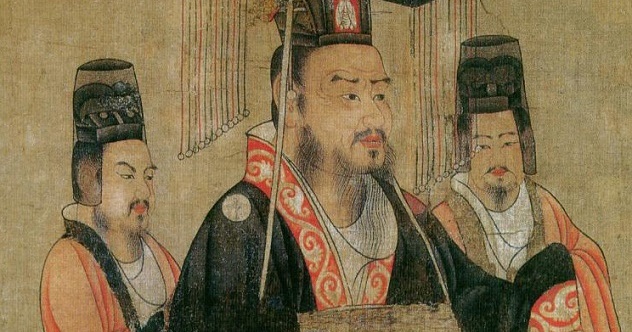

The Han Dynasty did not disappear because one villain woke up and pressed an ancient Chinese “destroy empire” button. Its fall was a slow-motion institutional breakdown involving child emperors, palace factions, exhausted farmers, ambitious generals, religious rebels, burned capitals, and enough political betrayal to keep historical dramatists employed for centuries.
Founded in 206 BCE, the Han became one of ancient China’s most influential dynasties. It strengthened centralized government, expanded trade along routes later called the Silk Road, promoted Confucian learning, and shaped a cultural identity so durable that the majority ethnic group in China still bears the Han name. Yet the Eastern Han government, restored in 25 CE after Wang Mang’s brief Xin Dynasty, gradually lost control of its court, provinces, armies, and tax base.
The formal end came in 220 CE, but by then the emperor had possessed little independent power for decades. These 10 fateful events explain how a celebrated imperial system fractured into the age of the Three Kingdoms.
Why Did the Han Dynasty Fall?
The fall of the Han Dynasty resulted from several connected pressures rather than a single fatal mistake. Wealthy families accumulated land, displaced small farmers struggled with debt and taxation, and natural disasters intensified social distress. At court, imperial relatives and palace eunuchs fought for influence while regional commanders gained increasingly independent military power.
Once the central government began depending on provincial armies to solve national emergencies, it created a dangerous arrangement: the people best equipped to rescue the dynasty were also the people most capable of replacing it. That is rarely an ideal employee-retention strategy.
The decisive phase began in the second century CE and accelerated after the Yellow Turban Rebellion of 184. From that point forward, imperial authority increasingly became a ceremonial prize controlled by whichever warlord possessed the emperor, the capital, or the largest army.
1. Child Emperors Turned the Palace Into a Factional Battlefield
The throne remained powerful, but the person sitting on it often was not
After the reign of Emperor Zhang, the Eastern Han repeatedly placed very young rulers on the throne. A child emperor naturally required adult advisers, and those advisers usually came from two groups: the empress dowager’s relatives and the eunuchs serving inside the palace.
Powerful consort clans initially governed as regents. When an emperor reached adulthood, he often relied on trusted eunuchs to remove those relatives. The successful eunuchs then received titles, wealth, and influence. When that emperor died, another dowager family might rise, beginning the cycle again.
This was not simply palace gossip involving fancy robes and dramatic door-slamming. Appointments, tax policy, military commands, access to the ruler, and legal judgments could all depend on factional loyalties. Competent officials risked removal if they threatened the wrong group, while personal connections became increasingly valuable.
The bureaucracy still functioned, but the court’s legitimacy weakened. Officials began looking to prominent families and regional patrons for protection rather than trusting the imperial center. The throne remained sacred; practical government, however, was becoming a group project in which everyone wanted control of the presentation and nobody wanted responsibility for the final grade.
2. The Partisan Prohibitions Silenced the Government’s Critics
Purging reformers protected corruption instead of the dynasty
In 166 CE, Confucian officials and students criticized influential eunuchs for corruption and abuse of power. Their opponents branded them “partisans,” implying that they represented a dangerous political faction rather than principled public servants.
Emperor Huan ordered arrests, dismissals, and restrictions. A second and harsher suppression followed under Emperor Ling in 169. Numerous scholars and officials were imprisoned, executed, dismissed, or prevented from holding office. Their relatives and associates could also suffer punishment.
These events, commonly called the Disasters of the Partisan Prohibitions, weakened the Han in two ways. First, they removed experienced administrators precisely when the state needed honest and capable leadership. Second, they convinced educated elites that moral service to the dynasty might be rewarded with chains.
Many prominent families withdrew from central politics or built stronger local networks. That shift mattered later, when warlords needed advisers, administrators, money, and recruits. By persecuting its critics, the Han court unintentionally helped create a pool of talented people willing to serve alternative centers of power.
3. The Yellow Turban Rebellion Exploded in 184 CE
A religious movement became an empire-wide uprising
The Yellow Turban Rebellion was the great alarm bell of the late Han period. Led by Zhang Jue and his brothers, the movement grew from the teachings and healing practices associated with the Way of Great Peace. Its followers promised renewal under a new cosmic order and used yellow headcloths as a symbol.
The rebellion gained support among people suffering from disease, hunger, debt, land loss, official corruption, and economic insecurity. Plans for a coordinated uprising were discovered before the intended date, but rebellion still spread rapidly across several regions in 184.
Han forces defeated the main Yellow Turban armies within the year, and Zhang Jue died during the conflict. Yet military victory concealed political disaster. Smaller rebel groups remained active, local communities had been devastated, and the government had demonstrated that it could not preserve order without mobilizing powerful regional commanders and private forces.
Men who later dominated the Three Kingdoms eraincluding Cao Cao, Liu Bei, and several other military leadersgained experience, prestige, or opportunities during the suppression campaigns. The court put out the fire, but it handed flamethrowers to the neighbors while doing so.
The rebellion also damaged the Han claim to possess the Mandate of Heaven. In traditional Chinese political thought, widespread disorder, famine, rebellion, and governmental failure could indicate that a ruling house had lost moral legitimacy. The Yellow Turbans were defeated as an army, but their uprising permanently changed the political landscape.
4. Provincial Governors Received Greater Military Power
An emergency reform created future warlord states
After the Yellow Turban crisis, the imperial government needed officials capable of reacting quickly to rebellion. In 188 CE, Emperor Ling’s administration strengthened the office of provincial governor, allowing selected officials to exercise broader civil and military authority.
On paper, the decision made sense. Communications were slow, rebel groups could move rapidly, and officials in Luoyang could not personally direct every campaign across a vast empire. Strong governors could recruit troops, collect resources, and defend their territories without waiting for detailed instructions.
In practice, these governors obtained the foundations of independent states. They controlled soldiers, taxes, appointments, fortified cities, and local relationships. Some offices also became effectively hereditary or remained within the same political networks.
As authority in Luoyang collapsed, provincial leaders stopped behaving like temporary emergency managers and began acting like rulers. Yi Province in the southwest, Jing Province in the central Yangtze region, and other territories developed their own political identities. The Han court had decentralized power to survive an immediate crisis, but it lacked the strength to take that power back.
5. Emperor Ling’s Death Triggered the Palace Massacre of 189
A succession dispute destroyed what remained of court stability
When Emperor Ling died in 189, his young son Liu Bian became Emperor Shao. The new emperor’s uncle, General-in-Chief He Jin, attempted to eliminate the powerful eunuch faction. He Jin’s ally Yuan Shao urged decisive action, while He Jin summoned outside military commanders toward the capital to pressure the court.
This plan was spectacularly unsafe. Inviting heavily armed provincial generals into a tense succession dispute is roughly equivalent to repairing a cracked window with a battering ram.
The eunuchs struck first and assassinated He Jin inside the palace. Yuan Shao and other officers retaliated by leading troops into the imperial compound and massacring eunuchs in enormous numbers. Some victims may have had little connection to the political struggle, but violence had replaced investigation.
During the chaos, the young emperor and his brother fled the palace. The central government’s most powerful internal factions had effectively destroyed one another, the capital was in disorder, and an approaching frontier commander named Dong Zhuo found an extraordinary opportunity waiting for him.
6. Dong Zhuo Seized the Emperor and Destroyed Luoyang
The imperial court became a possession of the strongest general
Dong Zhuo entered the capital with experienced troops and rapidly took control. He removed Emperor Shao, installed the younger Liu Xie as Emperor Xian, and killed or intimidated opponents. By controlling the emperor, Dong Zhuo could issue commands under the appearance of legitimate Han authority.
His rule was widely condemned as brutal and arbitrary. Opposition leaders formed a coalition against him in 190. Facing military pressure, Dong Zhuo forced the court and population to move west from Luoyang to Chang’an. Luoyang was looted and burned, while imperial tombs and public buildings suffered destruction.
The ruin of the capital carried enormous symbolic weight. Luoyang had been the center of Eastern Han government, ritual, scholarship, and elite society. Its destruction announced that the dynasty could no longer protect even its own political heart.
Dong Zhuo’s seizure of Emperor Xian also established a dangerous precedent. The emperor was no longer treated primarily as an active sovereign. He had become a portable source of legitimacya human imperial seal to be acquired, relocated, and used by military strongmen.
7. The Anti-Dong Zhuo Coalition Collapsed Into Warlord Rivalry
The supposed rescuers of the Han began fighting one another
The coalition assembled against Dong Zhuo included influential commanders such as Yuan Shao, Yuan Shu, and Cao Cao. Although the alliance possessed impressive names and substantial forces, its members did not share a coherent strategy. Each leader worried that another might gain too much territory, prestige, or access to the emperor.
Dong Zhuo withdrew westward, but the coalition failed to restore unified government. Its members soon pursued separate ambitions. Dong Zhuo was assassinated in 192 by Lü Bu with the involvement of court official Wang Yun, yet his death did not restore order. His former subordinates seized Chang’an, and Emperor Xian remained trapped among competing armed factions.
Across the empire, commanders fought for provinces, supply routes, cities, and alliances. Yuan Shao dominated much of the northeast. Yuan Shu built power farther south. Liu Biao controlled Jing Province, while Liu Zhang inherited authority in Yi Province. Sun Ce and later Sun Quan established a durable southern base.
The Han Dynasty still existed legally, but political unity had vanished. Warlords continued using Han titles because those titles remained useful. Few, however, obeyed the court when obedience conflicted with survival or expansion.
8. Cao Cao Took Custody of Emperor Xian in 196
Imperial legitimacy became Cao Cao’s most valuable weapon
After escaping the violence around Chang’an, Emperor Xian endured a difficult journey east. In 196, Cao Cao welcomed the emperor into his territory and established the imperial court at Xu, commonly called Xuchang.
This move transformed Cao Cao from one regional commander among many into the leading minister of the Han government. He could present his campaigns as imperial operations and portray enemies as rebels resisting lawful commands. Rivals understood perfectly well that Cao Cao controlled the court, but the symbolism of the Han throne still mattered.
Cao Cao combined this political advantage with administrative skill. He reorganized territory, recruited talented officials, established agricultural colonies to support armies, and restored a degree of order in parts of northern China.
His greatest northern rival was Yuan Shao. At the Battle of Guandu in 200, Cao Cao defeated Yuan Shao’s larger force, partly by attacking its supplies. Over the following years, he eliminated or absorbed the remaining Yuan power and unified most of northern China.
For civilians in areas brought under stable administration, Cao Cao’s rise could mean greater security. For Emperor Xian, it meant exchanging one set of captors for a far more competent one.
9. The Battle of Red Cliffs Prevented Reunification in 208
Cao Cao conquered the north but failed to capture the south
After consolidating northern China, Cao Cao advanced into the Yangtze region in 208. Liu Bei, recently forced from Jing Province, allied with the southern ruler Sun Quan. Their commanders included celebrated figures such as Zhou Yu, while later tradition greatly expanded the role later tradition greatly expanded the role of strategist Zhuge Liang.
At Red Cliffs, also called Chibi, the southern alliance defeated Cao Cao’s forces. Disease, unfamiliar southern conditions, strained supply lines, naval disadvantages, and fire attacks all contributed to the outcome. Popular literature later decorated the campaign with brilliant schemes, supernatural timing, and enough dramatic speeches to make every officer sound as though he had rehearsed all week.
Historically, the central consequence is clear: Cao Cao failed to reunify the former Han Empire. He withdrew north, Sun Quan retained the lower Yangtze, and Liu Bei eventually established a territorial base in the southwest.
The battle did not formally end the Han Dynasty, but it made a three-way political division increasingly likely. The future states of Cao Wei, Shu Han, and Eastern Wu now prch4turn622739search8turn622739search12
10. Cao Pi Forced Emperor Xian to Abdicate in 220
The legal dynasty finally caught up with political reality
Cao Cao never formally replaced the Han emperor. He accumulated extraordinary titles and ruled the north in practice, but he died in 220 while still claiming to serve the dynasty.
His son Cao Pi showed less interest in preserving the arrangement. Later that year, Emperor Xian surrendered the throne to him through a carefully staged abdication. Cao Pi founded the state of Wei and became its emperor.
Abdication rituals presented the transfer as voluntary and morally justified. The outgoing ruler supposedly recognized that Heaven’s mandate had passed to a worthier house. Few observers could have mistaken the unequal balance of power behind the ceremony.
Liu Bei responded by declaring himself emperor of Shu Han in 221, claiming continuation of the Han line. Sun Quan later proclaimed the state of Wu. China had entered the Three Kingdoms period, although the territorial division had already existed for years.
The Han Dynasty therefore ended twice: politically, when its government lost control to regional armies; and legally, when Emperor Xian abdicated. The second ending supplied a date for textbooks. The first explains what actually happened. After 220, China entered a prolonged period of division and would not achieve lasting reunificatiarch0turn458282search0turn781896search8
What Truly Brought Down the Han Dynasty?
It is tempting to blame the fall of the Han Dynasty entirely on corrupt eunuchs, greedy landowners, religious rebels, incompetent emperors, or ruthless warlords. Each group contributed to the crisis, but no single explanation is sufficient.
The deeper problem was the breakdown of relationships that held the empire together. The court could no longer supervise provincial officials. The tax system could not reliably support government and defense. Small farmers lost land and security. Educated elites distrusted palace politics. Military commanders possessed troops loyal to individuals rather than institutions.
Rebellion then accelerated decentralization. Decentralization encouraged warlord competition. Warlord competition made the emperor dependent on armed protectors. Each attempt to solve one emergency created conditions for the next.
The Han legacy nevertheless survived its political fall. Later dynasties inherited its administrative ideals, cultural institutions, historical vocabulary, and model of imperial unity. Even the rival founders of the Three Kingdoms claimed legitimacy through Han offices, ancestry, or traditions. The empire had collapsed, but its prestige remained powerful enough for its successors to argue over who represented it.
Experience Notes: A Better Way to Explore the Fall of the Han Dynasty
Reading the fall of the Han as a list of battles can make the period feel like an endless parade of generals arriving, fighting, retreating, and acquiring increasingly impressive job titles. A more rewarding experience begins by following three things at the same time: the emperor, the provincial map, and the movement of food.
First, track Emperor Xian’s location. When he became emperor in 189, he was in Luoyang under Dong Zhuo’s control. He was then taken to Chang’an, trapped by Dong Zhuo’s former followers, and eventually received by Cao Cao at Xu. Watching the emperor move from one protector to another makes the collapse of central authority visible. The throne did not vanish, but its freedom of movement did.
Second, use a map to mark the regional bases of Yuan Shao, Cao Cao, Sun Quan, Liu Biao, Liu Zhang, and Liu Bei. The confusing collection of personal names immediately becomes easier to understand. Northern plains favored large cavalry-supported armies and agricultural resources. The Yangtze and its waterways helped southern forces resist northern conquest. Mountainous Sichuan offered Liu Bei a defensible base for Shu Han.
Third, pay attention to grain. Ancient armies required enormous quantities of food, transport animals, workers, and secure supply routes. Cao Cao’s attack on Yuan Shao’s supply depot during the Guandu campaign mattered as much as battlefield courage. His agricultural colonies were not glamorous, but they helped him maintain troops. Historical novels naturally prefer duels and secret strategies; sacks of millet rarely receive heroic theme music.
Museum collections provide another useful perspective. Han tomb objects, pottery models, bronze vessels, and images of houses reveal the wealth and confidence of the empire before its collapse. They also remind readers that the people living through these events did not know they were standing inside a neatly labeled historical transition. A farmer in 184 experienced taxes, hunger, rumors, and marching soldiersnot “the opening chapter of the Three Kingdoms period.”
It is equally helpful to compare historical records with the later novel Romance of the Three Kingdoms. The novel preserves famous personalities and moral themes, but it reshapes chronology, invents conversations, exaggerates schemes, and transforms commanders into heroes or villains. Reading both history and literature reveals how later generations wanted the Han’s fall to mean something: loyalty tested by chaos, virtue challenged by ambition, and political unity remembered as an ideal.
The most striking experience is realizing how long the dynasty’s ending lasted. The Yellow Turban Rebellion occurred in 184, Dong Zhuo captured the court in 189, Cao Cao gained the emperor in 196, Red Cliffs was fought in 208, and formal abdication came in 220. For more than three decades, people lived under a government that remained legitimate in name while fragmenting in practice.
That slow collapse is what makes the period feel surprisingly modern. Institutions rarely fail in a single cinematic instant. They weaken when emergency powers become permanent, public trust disappears, local leaders stop obeying the center, and political actors preserve legal appearances while ignoring their original purpose. The Han Dynasty’s final decades offer spectacular battles, but their most valuable lesson is quieter: an empire can retain its symbols long after losing the systems that made those symbols meaningful.
Conclusion
The fall of the Han Dynasty was not an unavoidable accident or the work of one exceptionally unpleasant official. It emerged from court factionalism, social inequality, administrative purges, mass rebellion, military decentralization, and the rise of regional commanders who gradually replaced imperial government.
The Yellow Turban Rebellion exposed the dynasty’s weakness. The palace violence of 189 shattered the court. Dong Zhuo demonstrated that an army could possess the emperor, Cao Cao turned imperial legitimacy into a political weapon, and Red Cliffs ensured that no single power would immediately reunify China. Cao Pi’s accession in 220 merely placed an official seal on a transformation already decades old.
Yet the Han did not disappear from history. Its institutions influenced later governments, its name remained central to Chinese identity, and its dramatic collapse inspired chronicles, theater, art, games, films, and one of the world’s best-known historical novels. Few failed governments have enjoyed such a successful afterlife.
{

  "meta_title": "10 Fateful Events in the Fall of the Han Dynasty",

  "meta_description": "Explore 10 decisive events that shattered Han rule, empowered warlords, and opened China's dramatic Three Kingdoms era.",

  "sapo": "How did one of ancient China's greatest empires collapse into rebellion, palace murder, burned capitals, and warlord rule? The fall of the Han Dynasty was not a single disaster but a chain reaction spanning decades. Child emperors became trapped between palace factions, reformers were purged, struggling farmers joined the Yellow Turbans, and provincial commanders gained armies the central government could no longer control. From Dong Zhuo's seizure of Emperor Xian to Cao Cao's rise, the Battle of Red Cliffs, and Cao Pi's final takeover in 220 CE, these 10 fateful events reveal how imperial authority disappeared long before the dynasty officially ended.",

  "keywords": [

    "fall of the Han Dynasty",

    "Eastern Han Dynasty",

    "Yellow Turban Rebellion",

    "Three Kingdoms period",

    "Battle of Red Cliffs",

    "Cao Cao",

    "Emperor Xian"

  ]

}/pre>