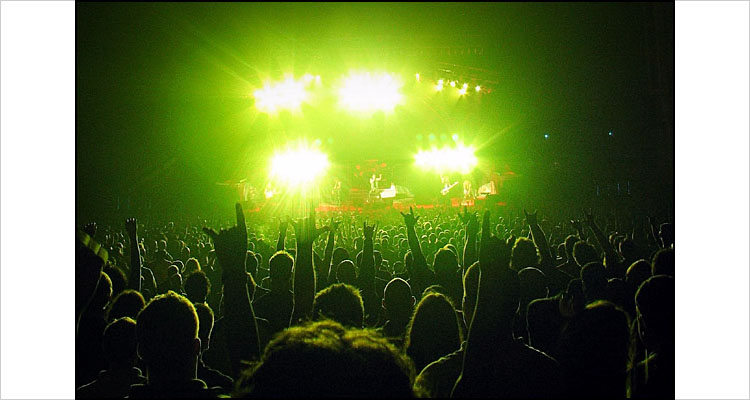

There are big life moments, and then there are tiny, sneaky life moments that somehow punch above their weight class. This is one of those. The concert ticket may have been bought three months ago. The group chat may have been active enough to qualify as a municipal emergency. You may have spent an hour debating whether the line for merch was worth it. But then it happens: the house lights drop, the chatter mutates into a roar, and for one suspended heartbeat the whole room seems to inhale at the exact same time.
That sliver of time before the band walks onstage is pure electricity. Nothing has happened yet, and somehow everything has happened already. The show has not started, but the night has officially become a night. It is no longer a Tuesday. It is no longer “I have work tomorrow.” It is now “I was there when the place exploded before the first note.”
And that is why this moment deserves its own standing ovation. It is hopeful, ridiculous, communal, dramatic, and just a little bit feral. In other words, it is perfect.
Why This Tiny Concert Moment Feels So Huge
The magic starts with anticipation. Human beings are weirdly good at loving things before they happen. We build castles out of expectation. We daydream in surround sound. We attach meaning to countdowns, first pitches, curtain rises, and yes, that delicious blackout right before a live set begins. A concert gives anticipation a stage, a soundtrack, and several thousand accomplices.
Anticipation Is Half the Party
The moment the lights go out, your brain gets the memo: something important is about to begin. That matters. Anticipation sharpens attention. It makes ordinary details feel cinematic. The same stage you ignored for the last twenty minutes suddenly becomes sacred architecture. That unattended microphone stand? Beloved. That drum kit in silhouette? Museum-worthy. Even the roadie slipping offstage becomes part of the mythology.
This is also why the moment feels bigger than logic says it should. You are not just waiting for music. You are waiting for payoff. For the first chord. For the first scream. For the first glimpse of a singer who, until now, has existed mainly in headphones, playlists, posters, TikToks, and your personal emotional support rotation.
The Crowd Becomes One Giant Nervous System
Before the lights go out, a concert crowd is mostly a bunch of separate people negotiating space, snacks, and bathroom timing. After the lights go out, the crowd becomes one giant organism. The room syncs up. Strangers who would never make eye contact in a grocery store suddenly grin at each other like they survived a war together. Someone grabs your shoulder. Someone shrieks. Someone starts chanting the artist’s name three beats too early. It is chaos, but friendly chaos.
That collective surge is part of the thrill. It is not just “I am excited.” It is “we are excited,” which is louder, warmer, and much harder to ignore. Even if you came alone, you do not feel alone in that moment. You feel absorbed into a temporary republic of people who all agree on one essential truth: tonight, this band matters.
What Actually Changes When the Lights Go Out
The blackout is more than a cue. It is a transformation device. One second the venue is a building. The next, it is a world.
The Room Gets Reset
Light is practical. Darkness is dramatic. When the venue drops the house lights, it clears the visual clutter. Exit signs remain, sure, but everything else recedes. The bar line vanishes into the background. The person in front of you who has spent twenty minutes explaining deep-cut setlist predictions goes from “slightly annoying” to “mysterious silhouette.” Your senses stop wandering and start aiming.
This is why great live shows feel theatrical even when they are messy. The darkness creates focus. Suddenly every flicker onstage matters. A soft glow behind the drum riser can make a room gasp. A single synth pad can turn an arena into a pressure cooker. A recorded intro, a silhouette, a burst of smoke, a logo appearing on the screen like it was sent from the heavens by a very stylish deitythese are not just production tricks. They are emotional architecture.
Silence Somehow Gets Louder
The weirdest part is that the loudest moment is sometimes the one before the music starts. There is a crackle in the air. You hear cheers, stomps, whistles, the metallic thud of expectation bouncing off concrete and steel. It is not silence in the literal sense. It is silence in the storytelling sense: the pause before impact.
Every great show understands tension and release. Hold the room for one extra second and the audience starts vibrating. Hold it for two, and you have achieved controlled hysteria. This is one reason iconic entrances work so well. The audience is already halfway into the experience before the first lyric lands.
Why Concert Fans Love This Moment So Much
Because it contains everything fans love about live music in one compact package: ritual, suspense, identity, and possibility.
It Feels Like a Ritual, Not Just Entertainment
Concertgoing is full of rituals. You check the set times. You debate parking like generals planning a campaign. You queue for drinks. You scan the stage. You notice the guitar tech. You whisper, “I think they’re about to start.” Then the lights go out and the ritual becomes official. That blackout is the bell ringing before the match, the curtain rising before the play, the deep breath before the dive.
Rituals matter because they make experiences feel bigger than transactions. You did not simply buy a seat. You entered a sequence. You showed up, waited, watched, and crossed into the moment along with everyone else. It is one reason live music still feels irreplaceable in an on-demand world. You can stream the songs whenever you want. You cannot stream the exact feeling of 12,000 people losing their minds because the stage just went dark.
It Confirms You Belong Here
That in-between moment also carries a quiet emotional message: these are your people for the next two hours. The blackout removes small differences and amplifies the shared reason everyone came. Suddenly the fan in the vintage tour shirt, the teenager on a first big show, the middle-aged couple who hired a sitter, and the friend who swore they only knew “a few songs” all become citizens of the same temporary country.
That is one reason the moment feels so good. It is not only about the band. It is about belonging to something larger than your own daily routine. For a few seconds, you are part of a crowd that is not annoyed, divided, rushed, or scrolling. It is simply ready.
The Different Flavors of Pre-Show Magic
Not all blackout moments are created equal. They all rule, but they rule differently.
The Tiny Club Version
In a small club, the moment is intimate and a little dangerous in the best way. You are close enough to see pedalboards, setlists taped to the stage, and that one cable that absolutely looks like a lawsuit. When the lights drop in a room like that, the cheer feels personal. The band is right there. No giant screen. No twenty-foot fireball. Just human beings about to make a lot of noise in the same room as you. It is gloriously direct.
The Arena Version
The arena blackout is full-scale opera for people wearing sneakers. The size of the response is part of the thrill. One light cue can trigger a roar that feels geological. Video screens wake up. Wristbands blink. Bass-heavy intro music starts thumping like a heartbeat from the center of the earth. You are not just attending a performance anymore. You are entering a machine built for awe.
The Festival Version
At a festival, the blackout moment often arrives after a long day, sunburn, dust, expensive lemonade, and at least one bad decision involving portable restrooms. Yet somehow that only makes it sweeter. Night falls, the field tightens, the headliner intro starts, and the whole crowd leans forward together like a wheat field in the wind. Exhaustion evaporates. Everyone suddenly remembers why they came.
The Legacy Act Version
When the artist has decades of history behind them, the blackout carries nostalgia with the excitement. The crowd is not just waiting for a show. It is waiting for an old song to become present tense again. The lights drop and you can practically hear memories clicking into place. First cars. College bedrooms. Breakups. Weddings. Summer drives. The whole emotional filing cabinet pops open at once.
How to Enjoy the Moment Without Accidentally Becoming “That Person”
There is a noble way to savor this pre-show miracle, and then there is the chaotic goblin method. Let us aim noble.
Get There Early Enough to Settle In
The blackout moment is best when you are already in place, hydrated, and not elbowing through Row K with nachos balanced like a dare. Arriving early lets the suspense build naturally. You get to watch the room fill up, clock the stage setup, and feel the temperature rise. Also, it reduces the chance that you will miss the exact second the lights drop because you were still debating whether the hoodie was overpriced. It was. You bought it anyway. Respect.
Put the Phone Down for the First Thirty Seconds
Yes, record a clip if you want. It is your night. But there is strong evidence that living a moment and documenting a moment are not the exact same activity. The first blast of crowd noise after the blackout deserves your actual face, not just your camera lens. Watch it happen once with your own eyes. Your future self will thank you.
Have a Simple Plan With Your Group
Concerts are wonderful places to feel connected and surprisingly bad places to rely on perfect cell service. Pick a meetup point before the show. Decide what happens if someone vanishes on a snack quest and returns spiritually changed. This is not romantic advice. This is logistics. Logistics are sexy when they prevent panic.
Protect Your Hearing Like an Adult Who Wants to Enjoy Music at Age Forty
Nothing kills the post-show glow faster than ears ringing like a haunted wind chime. Good earplugs do not ruin live music; they help preserve it. If you are close to speakers, move back when you can. If the volume feels punishing, treat that as useful information, not a personality test. The goal is to leave the venue with memories, not audio damage.
Do Not Block Everyone’s View With Your Personal Cinema Rig
Your phone should not become a lighthouse for the entire section. A quick clip? Fine. Holding it overhead for six consecutive songs like you are filming a prestige documentary? Straight to concert jail. The blackout moment is communal. Try not to turn it into a backlit infomercial for your case manufacturer.
Why the Moment Stays With Us
Maybe because it is pure possibility. Before the band steps onstage, the show still exists in its ideal form. The setlist could be anything. The opener could be explosive. The artist could play your favorite deep cut. The encore could heal your tax anxiety. For a few glorious seconds, the future is not fixed. It is glowing behind the curtain.
And maybe that is why people keep chasing live music, even when tickets are expensive, parking is absurd, and beverages cost roughly the GDP of a small island. Concerts give us access to a rare feeling: shared anticipation with nowhere else to be. In ordinary life, waiting is usually annoying. At a concert, waiting is the appetizer, and sometimes it is so good you almost want to applaud before the band even walks out.
Almost.
Actually, no. Go ahead. Applaud. The lights just went out. Something wonderful is about to happen.
Extra Experiences: 500 More Words on the Best Kind of Musical Suspense
Here is the thing about that blackout moment: it never looks exactly the same twice, but it always feels instantly familiar. At one show, you are seventeen rows back in an arena and the lights disappear so suddenly that the whole place erupts before your brain catches up. At another, you are in a sweaty club where the room only gets slightly darker, yet the change is enough to make everyone surge toward the stage like sunflowers pivoting toward light. Different scale, same goosebumps.
Sometimes the best part is the sound of the crowd realizing it all at once. It begins as scattered cheering, then multiplies until the room turns into one giant human thunderstorm. You hear laughter, shrieking, name chanting, and that unmistakable roar people make when joy hits them too fast for words. Nobody trained for it. Nobody rehearsed it. It just happens because a darkened room full of hopeful people has its own weather system.
Then there are the micro-details. The last tech walking offstage at a speed that says, “No, really, this is happening.” The stage screen flickering from idle graphics to something deliberate. The sudden appearance of smoke, because live music remains deeply committed to the idea that every major entrance should feel at least a little supernatural. The bass note in the intro tape that lands in your chest before the song properly begins. That bass note is not asking for permission. It has arrived to rearrange your internal furniture.
One of the funniest versions of this experience happens when the crowd becomes convinced the band is coming out at least four separate times before the band actually does. A light changes. Everyone screams. False alarm. A road case moves. Everyone screams. False alarm. A silhouette appears near the wings. Absolute bedlam. Still false alarm. By the time the real entrance happens, the audience is so wound up it could probably levitate a compact sedan.
And yet, even with all that chaos, the moment can feel strangely intimate. You glance at a stranger during the blackout and both of you have the same expression: wide eyes, open grin, total surrender. It is one of the few public moments where being visibly delighted feels completely normal. Nobody is too cool when the room goes dark and the first notes are coming. Cool is canceled. Awe has entered the building.
There is also a beautiful difference between hearing a song and hearing a song begin. Streaming gives you instant access. Live music gives you a runway. That runway matters. When the intro starts after the blackout, the song does not just play; it arrives. It has weight, ceremony, and a little swagger. The audience does not merely recognize it. The audience greets it like an old friend who just walked through the door wearing stage lights.
Years later, people may forget the exact order of the setlist or what they ate before the show or whether they overpaid for parking. But they remember the feeling of the lights dropping. They remember the inhale before the explosion. They remember the impossible split second when nothing had started and the whole night was already unforgettable. That is why this moment belongs on any list of awesome things. It is tiny, temporary, and over almost immediately. Which, of course, is exactly what makes it so good.
Conclusion
The moment after the lights go out and before the band comes onstage is one of live music’s smallest masterpieces. It turns waiting into theater, strangers into teammates, and a regular night into an event with a pulse. It is suspense with a backbeat, community with amplifiers, and joy before the official first note. The concert may be the main course, but this little blackout miracle is the aroma drifting out of the kitchen that makes the whole thing unforgettable.