
A dead watch battery has a special talent: it always quits when you are running late, trying to look put together, or pretending you absolutely meant to wear that watch today. The good news is that changing a watch battery is often a manageable DIY job. The less-good news is that watches are tiny metal puzzles that do not forgive impatience, greasy fingers, or “I’m sure this is close enough” battery choices.
If you want to change a watch battery successfully, the trick is not brute force. It is knowing which kind of watch back you are dealing with, which battery your model actually uses, and when to stop and hand the job to a pro. Some watches pop open with a case knife. Some need a special opener. Some use tiny screws. Some have a coin-slot hatch that makes you feel like a genius. And some watches, especially luxury, solar, or water-resistant models, really should not be opened on your kitchen table next to yesterday’s mail.
This guide walks through five practical ways to change a watch battery, plus the tools, mistakes, and real-world lessons that make the difference between “nice, it works” and “why is there a spring on the floor?” If your goal is to save money, learn a useful skill, and keep your watch ticking without turning it into a paperweight, you are in the right place.
Before You Open the Watch: Know What You’re Working With
Before you even think about removing the back, identify three things: the watch type, the case-back style, and the battery code. This is the part most people skip because it is not exciting. It is also the part that prevents regret.
Step 1: Confirm the watch actually uses a disposable battery
Most quartz watches do, but not all of them. Some solar-powered watches use rechargeable cells rather than a standard disposable watch battery. If your watch is a solar or light-powered model, opening it like a typical quartz fashion watch may be the wrong move entirely.
Step 2: Identify the case-back style
Most watches fall into one of these categories: snap-on back, screw-back case, coin-slot hatch, or screw-fastened back plate. Each style opens differently. Using the wrong method is how people scratch cases, bend covers, or launch a gasket into another dimension.
Step 3: Find the correct battery number
Never guess. Watch batteries are not interchangeable just because they are both small and silver. Common codes include SR621SW, SR626SW, SR920SW, CR2016, CR2025, and CR2032, but the correct one depends on the exact model. The old battery, case-back markings, or the manufacturer’s manual usually tells the story.
Basic tools that help
- Microfiber cloth or soft pad
- Plastic tweezers or non-marring tweezers
- Small flat case knife or thin prying tool
- Precision screwdrivers
- Rubber ball or case-back wrench for screw-backs
- Magnifying glass or good lighting
- Small tray for screws and springs
- Gloves or clean hands
One more thing: if the watch is valuable, sentimental, heavily water-resistant, or obviously more complicated than “battery goes here,” there is zero shame in taking it to a jeweler or authorized service center. Heroics are optional.
Way 1: Change a Battery on a Snap-On Case Back
This is one of the most common battery replacement methods on everyday quartz watches. A snap-on back usually has a small lip or notch where you can pry the back off.
Best for
Basic analog quartz watches, many fashion watches, and simple everyday models.
How to do it
- Place the watch face-down on a soft cloth.
- Look for the small notch on the case back.
- Insert a case knife or thin flat tool into that notch.
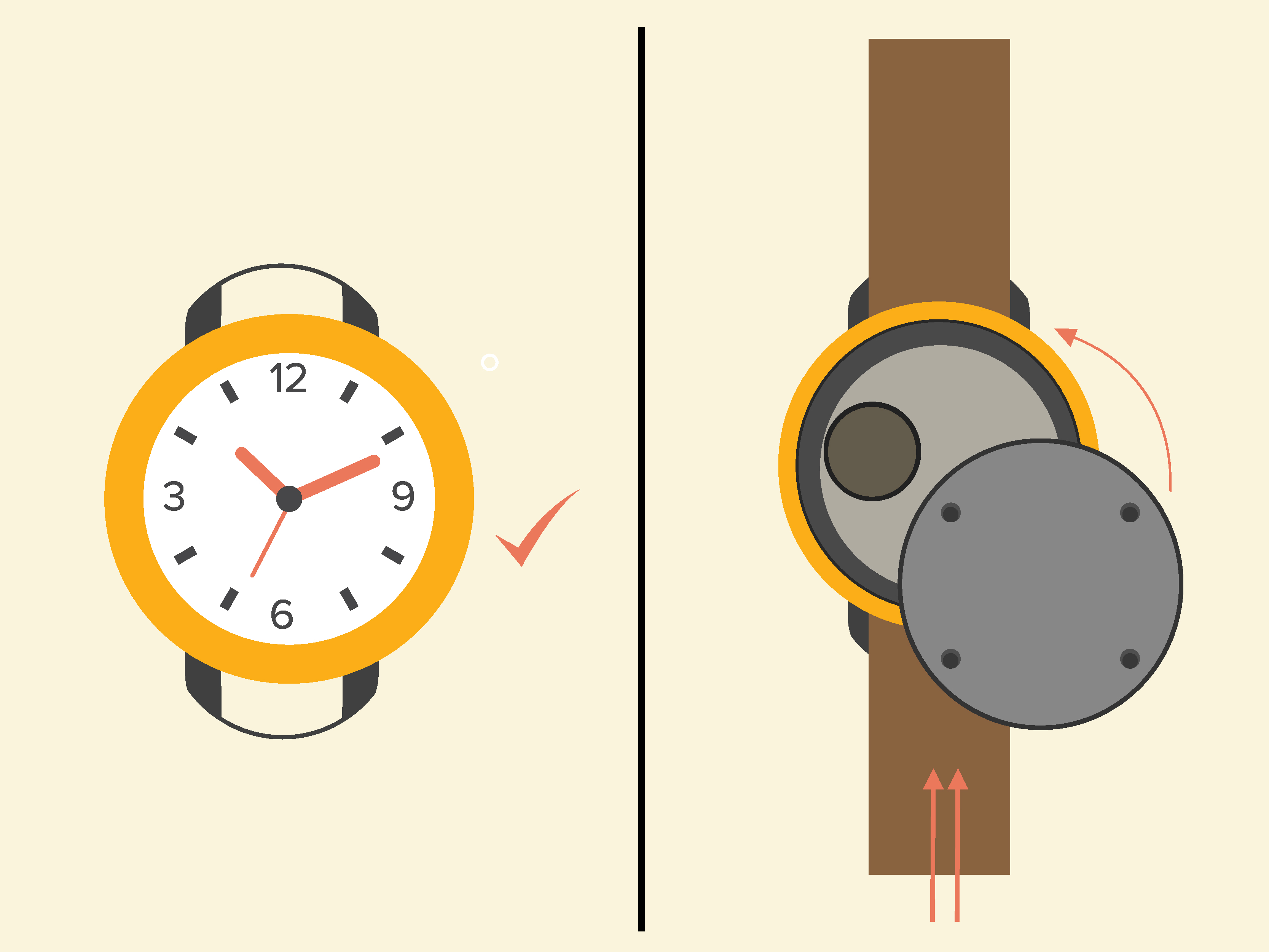
- Twist gently until the back pops loose.
- Take a photo of the movement before touching anything.
- Remove the battery carefully with tweezers.
- Install the new battery in the exact same orientation.
- Check that the gasket is seated properly.
- Press the back on evenly using firm, controlled pressure.
Why this method works
Snap backs are designed for quick servicing, but “quick” should not mean “reckless.” The secret is using the notch rather than attacking a random edge. Once the back is off, the battery usually lifts out easily unless a tiny retaining clip is holding it in place.
Common mistakes
- Prying from the wrong spot and scratching the case
- Installing the battery upside down
- Touching the movement with bare, oily fingers
- Forgetting the gasket before snapping the case shut
If the back will not snap on again with moderate pressure, do not sit on it, hammer it, or invent a new engineering discipline. It may be misaligned, or the battery may be the wrong thickness.
Way 2: Change a Battery on a Screw-Back Case
A screw-back case twists off rather than popping off. These are common on sport watches and water-resistant models because they help create a tighter seal.
Best for
Dive-style watches, sport watches, and sturdier quartz watches with a threaded back.
How to do it
- Set the watch on a grippy, soft surface.
- Use a rubber case-opening ball or a proper case-back wrench.
- Turn counterclockwise to loosen the back.
- Lift off the back and set it somewhere safe.
- Inspect the gasket for cracks, dryness, or stretching.
- Remove and replace the battery with tweezers.
- Thread the back on carefully by hand first.
- Tighten it evenly without cross-threading.
Why this method works
Screw-backs are secure and durable, but they are less forgiving than snap-ons. If the case back goes on crooked, you can damage the threads or ruin the seal. Think of it like closing a jar lid: if it feels wrong, it probably is.
When to stop and call a pro
If the watch is rated for swimming, diving, or other serious water exposure, DIY battery replacement gets riskier. Even if the watch starts running again, that does not mean the water resistance is still trustworthy. A shop can inspect the gasket, reseal the case, and pressure-test the watch.
Way 3: Change a Battery Through a Coin-Slot Hatch
This is the easiest, cleanest, and most satisfying method of the bunch. Some watches have a small battery hatch on the back with a coin slot. In those cases, the designer practically sent you a thank-you note in advance.
Best for
Certain simple quartz watches, clip-on watches, and older or utility-focused designs.
How to do it
- Turn the watch over and locate the coin slot.
- Insert a coin that fits snugly.
- Rotate the hatch in the indicated direction.
- Remove the old battery.
- Install the new one with the same polarity.
- Close the hatch until it is secure.
Why people love this method
It requires fewer tools, less nerve, and a much smaller chance of turning your watch into a tiny metal crime scene. It is a great option for people who are comfortable with simple maintenance but not ready to pry open a full case.
What to watch out for
Use a coin that fits well. One that is too small can slip and scratch the hatch. One that is too thick or awkward can make the whole thing feel like you are trying to start a lawn mower with pocket change.
Way 4: Change a Battery on a Screw-Fastened Back Plate
Some watches use a back plate held on by several tiny screws. These screws are easy to strip, easy to lose, and extremely talented at rolling off the table.
Best for
Digital watches, multi-function watches, and some square or chunky case designs.
How to do it
- Use the correct precision screwdriver size.
- Remove the screws one at a time and keep them together.
- Lift off the back plate gently.
- Check whether there is a plastic inner cover or battery clip.
- Remove the old battery carefully.
- Install the exact replacement battery.
- Reassemble everything in the same order.
- Tighten the screws gradually in a crisscross pattern.
Why this method needs patience
These watches often have more layers inside than a simple analog model. You may see a retaining strap, contact spring, or insulating plate. This is why taking a quick photo before removing parts is not optional; it is your future self sending you a rescue helicopter.
Pro tip
Do not overtighten the screws. Tiny screws do not respond well to “one last heroic twist.” Snug is enough.
Way 5: Have a Professional Change the Battery
Yes, this absolutely counts as a valid way to change a watch battery. In fact, for many watches, it is the smartest option.
Best for
- Luxury watches
- High water-resistance models
- Watches with very tight or specialty backs
- Solar or rechargeable-cell watches
- Chronographs and complicated multi-function watches
- Any watch you would cry over
Why professional service makes sense
A watch technician can confirm the correct battery, replace seals, inspect corrosion, reset functions if needed, and test water resistance. That matters because a battery swap is not always just a battery swap. Sometimes the real issue is corrosion, a damaged contact, or a failing gasket. A pro can spot that in minutes.
Professional replacement is also a good idea when the manufacturer recommends authorized service. That advice is especially common for water-resistant and performance-oriented watches, where the seal matters just as much as the battery.
How to Choose the Right Watch Battery
This deserves its own section because it is where many DIY jobs go wrong. The correct replacement is the exact battery specified for the movement or model. Not “the one that looks right.” Not “the one the internet said was close.” The exact one.
For example, some common watch batteries are silver oxide types such as SR621SW, SR626SW, and SR920W/SR920SW, while other watches may use lithium coin cells such as CR2016, CR2025, or CR2032. Analog and digital watches can use very different cells, and even watches from the same brand may use different batteries across models.
Good ways to verify battery size
- Read the code printed on the old battery
- Check the model’s instruction manual
- Look up the movement or caliber number
- Ask the brand or an authorized service center
Also pay attention to whether a battery has a clip, strap, or contact spring sitting over it. If the old battery came out from under a retainer, the new one needs to go back under that retainer the same way.
Signs the Battery Is Dying, Not the Whole Watch
Sometimes a dead battery is obvious. Sometimes the watch behaves like it is being dramatic on purpose.
- The watch has stopped completely
- The second hand jumps every two seconds on some quartz models
- The digital display is faint or fading
- Backlight or alarm functions weaken first
- The watch starts and stops randomly
That said, a battery is not always the culprit. If you see corrosion, moisture under the crystal, or the watch still will not run after a correct battery swap, there may be internal damage. At that point, no amount of motivational speaking will fix the movement.
Mistakes That Ruin a Simple Watch Battery Change
The battery replacement itself is often easy. The mistakes are what make it expensive.
- Using the wrong battery: Similar size does not mean correct fit or correct performance.
- Losing the gasket: There goes your seal.
- Touching the movement too much: Oils, static, and bent contacts are not helpful.
- Forcing the back: If it resists, stop and reassess.
- Ignoring corrosion: A new battery will not solve a rusty contact problem.
- Leaving batteries around children: Button batteries are serious hazards and must be stored and disposed of safely.
Experience and Lessons From Real-World Watch Battery Swaps
If you change enough watch batteries, you start to realize the job is less about technical difficulty and more about tiny decisions. The first lesson most people learn is that opening the watch is not the real challenge. Closing it back up properly is. A snap-back case can look perfectly aligned and still refuse to seat because the gasket is twisted or the battery is just a hair taller than the original. That is the moment when calm beats force every single time.
Another common experience is discovering that watches are much dirtier inside than people expect. Dust, lint, dried gasket residue, and skin oils can collect around the case back and seal area. That does not mean the watch is doomed; it just means a careful battery change usually includes a quick, gentle cleanup around the opening. The inside of the watch is not the place for rough handling, but the sealing surfaces should not be ignored either.
People also tend to underestimate how often the “dead battery” turns out to be “dead battery plus one more issue.” A watch that sat in a drawer for years may have battery leakage or corrosion. A sport watch may have a flattened gasket from age. A fashion watch may start running after the new battery goes in, only to fog up later because the seal was not reset well. That is why experienced DIYers learn to think beyond the battery itself. The battery gets the glory, but the gasket quietly decides whether the watch survives your next rainy day.
There is also a big difference between a cheap practice watch and a watch you actually care about. On a bargain watch, changing the battery can be a fun little confidence-building project. On a sentimental gift from a parent or a graduation watch you wore for years, your hands somehow become much less steady. In those cases, paying for professional service is not laziness; it is good judgment dressed as maturity.
One of the most useful habits is taking a photo before removing anything. It sounds basic, and it is. It is also incredibly effective. Battery clips, plastic spacers, rubber rings, and contact springs all seem easy to remember until they are sitting in front of you like parts from a very tiny spaceship. A photo turns guesswork into a checklist.
Over time, people who get good at battery swaps stop treating every watch the same. They learn that an inexpensive analog quartz watch with a snap back is a friendly beginner project. A screw-back sport watch is doable with the right tools. A water-resistant chronograph with multiple pushers and a reputation for expensive mistakes is a lovely opportunity for a jeweler to earn their keep. Experience teaches restraint, and restraint saves watches.
Perhaps the biggest lesson of all is this: watch battery replacement is a small job that rewards patience. The successful swaps rarely look dramatic. They look like soft lighting, organized tools, steady hands, the correct battery, and five extra minutes spent checking the gasket before the back goes on. Not thrilling, perhaps, but deeply satisfying. And honestly, making a watch tick again with nothing more than careful work and a tiny silver cell feels weirdly heroic for such a small repair.
Conclusion
If you want to know how to change a watch battery the right way, the answer depends on the case-back style and the watch itself. A snap-on back, screw-back case, coin-slot hatch, or screw-fastened plate each calls for a different approach. The battery must match exactly, the polarity must be correct, and the gasket must be treated like it matters, because it does. For simple quartz watches, DIY replacement can save time and money. For water-resistant, solar, high-end, or sentimental watches, professional service is often the smarter move.
In other words, changing a watch battery is not difficult because it is mysterious. It is difficult because it is small, precise, and easy to underestimate. Respect the process, use the right tools, and your watch has an excellent chance of getting back to work without any drama. Unless, of course, you drop the tiny screw. Then the drama is immediate.