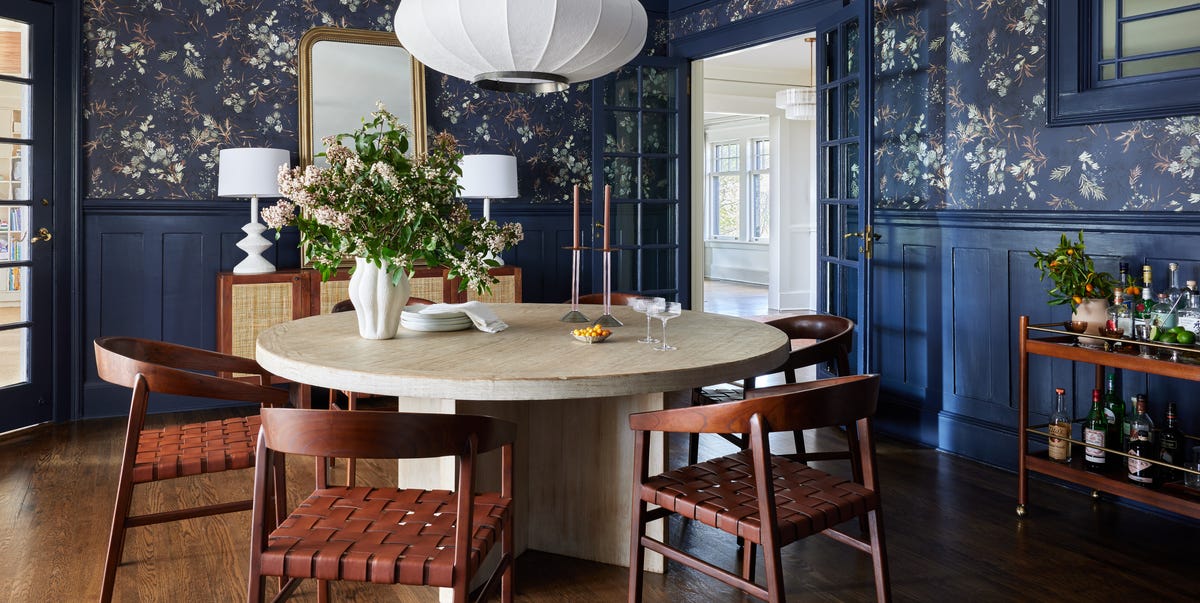

Some houses enter the room before their owners do. A 1907 Tudor-style home in Montclair, New Jersey is exactly that kind of place: arched doorways, deep woodwork, glass-paneled doors, sloped attic ceilings, a moody dining room, and enough architectural personality to make a plain white box blush. But what makes this home especially interesting is not simply that it is old. Plenty of old houses have charm. Some also have plumbing that sounds like a haunted trombone. The magic here is how designer Samantha Stathis-Lynch of Samantha Ware Designs helped transform a historic Tudor into a family-friendly home that feels current without sanding off its soul.
The project is a case study in what many homeowners want today: a house with history, but not a museum. A home with original architecture, but not one where every chair looks like it needs a velvet rope in front of it. This New Jersey Tudor renovation shows how old and new can live together beautifully when the design respects the past, solves modern problems, and adds just enough color, pattern, and surprise to keep every room awake.
Why a 1907 Tudor Still Feels So Magnetic
Tudor Revival architecture became popular in the United States in the late 19th and early 20th centuries, inspired by English medieval and early Renaissance buildings. The style is known for steep rooflines, asymmetry, decorative timbering, masonry, arched openings, tall windows, prominent chimneys, and rooms that feel wrapped in craftsmanship. In places like Montclair, where historic homes are part of the neighborhood identity, Tudors have a particular romance. They look as though they might contain a library, a secret staircase, and at least one person who says, “Let us retire to the drawing room.”
The 1907 New Jersey Tudor at the center of this story had many of the right ingredients already in place. Its original woodwork, arched doorway, glass-paneled doors, picture rail, paneled dining room, attic nooks, built-in shelving, and fireplace details gave the house depth that cannot be ordered overnight with two-day shipping. But like many historic homes that have lived through multiple decorating decades, it also carried some outdated finishes, older paint colors, and design choices from the early 2000s. In other words, the bones were excellent; the outfit needed tailoring.
The Design Challenge: Refresh Without Erasing
The homeowners, a couple with two young boys, did not want a complete gut renovation. That decision matters. In historic home design, restraint can be more powerful than demolition. Instead of forcing the house into a modern template, the renovation leaned into the existing architecture. The goal was not to make the Tudor look brand-new. The goal was to make it feel alive again.
This approach follows one of the smartest rules in historic renovation: identify the character-defining features before changing anything. In this home, those features included the wood trim, arched transitions, glass-paneled doors, paneled walls, fireplaces, shutters, sloped ceilings, and quirky room shapes. Rather than treating these details as obstacles, the designer used them as anchors. The result is a warm, layered interior where vintage pieces, modern furniture, handmade tile, bold wallpaper, and saturated paint colors all share the same address without fighting over the mailbox.
A Cohesive Palette Ties the Home Together
One of the most successful parts of the renovation is the color story. The home moves through shades of blue and green, from a deep blue dining room to a soft green-gray primary bedroom, an olive kitchen island, calming green bathroom trim, and a dramatic emerald attic living room. This repeating palette acts like a quiet guide. Each room has its own personality, but the colors create continuity.
That is especially important in an older house with distinct rooms. Unlike open-plan homes, where everything is visible at once, a Tudor often unfolds in chapters. You move from the kitchen to the dining room, from the sunroom to the powder room, from the bedroom to the office, and each space can tell a slightly different story. The trick is making those stories belong to the same book. Here, the greens and blues do that job beautifully.
The Kitchen: Old Bones, Fresh Energy
The kitchen is one of the clearest examples of old-meets-new design. Rather than replacing every cabinet, the team preserved quality cabinetry and refreshed it with a custom taupe paint. This choice saved usable materials and avoided the sterile look that can happen when a historic home gets a kitchen that feels airlifted from a showroom with no forwarding address.
Handmade Zellige tile replaced the outdated backsplash, adding texture and subtle irregularity. Zellige works especially well in historic interiors because it does not look too perfect. Its slight variations in surface and tone give a room a human, crafted quality. A patterned window shade and red runner rug brought in warmth and personality, while the olive green island added a confident focal point.
The Fireplace Moment
Perhaps the most charming kitchen detail is the functional fireplace. Once covered in dull gray tile, it was reimagined with a brick surround that feels much more at home in a Tudor. Warm wood bar stools connect visually to the brick tones, while vintage artwork and wall sconces with patterned shades complete the scene. The kitchen becomes more than a place to cook; it becomes a place to linger. If a room can say, “Make soup and stay awhile,” this one has a full vocabulary.
The Sunroom: Casual, Bright, and Family-Friendly
The sunroom brings a lighter note to the house. With a wood-paneled ceiling, old-fashioned shutters, a vintage Persian rug, oak coffee table, and large custom sectional, the room balances historic texture with everyday comfort. It is the kind of space that understands real life: morning coffee, kids flopping onto cushions, casual conversation, and possibly one missing sock under the sofa.
Because the sunroom was part of an earlier addition and can get chilly in colder months, the design wisely treats it as a seasonal gathering space rather than pretending it is something else. This is another lesson in renovating older homes: design for how the house actually behaves. Every historic home has quirks. The best interiors do not deny them; they negotiate with them politely.
The Dining Room: Moody in the Best Way
The dining room may be the boldest space in the home. Located near the center of the house with less natural light, it could have been painted a pale color in an attempt to brighten it. Instead, the design embraces the mood. The original paneling and trim, including an old-fashioned picture rail, are painted a rich dark blue. Floral wallpaper adds pattern and movement, while the glass-paneled doors preserve a visual connection to nearby rooms.
This is a smart design move because dark rooms often become better when you stop apologizing for them. A low-light dining room can feel intimate, dramatic, and cocoon-like. Add a round dining table, an airy paper lantern fixture, a wicker buffet, and a Louis Philippe mirror, and suddenly the room feels formal without being fussy. It is elegant, but not the kind of elegant that makes guests afraid to use the napkins.
The Powder Room: Small Space, Big Personality
The powder room under the stairs is tiny, quirky, and full of character. In many homes, a small powder room becomes an afterthought. Here, it becomes a jewel box. Moody wallpaper, a corner sink, and an off-center round mirror make the compact room feel intentional rather than awkward.
Small rooms are often the best place to take design risks. Wallpaper that might feel overwhelming in a large living room can feel delightful in a powder room. A bold color that would dominate a bedroom can become charming in a tucked-away space. This Tudor understands the assignment: if you have a tiny room under the stairs, do not pretend it is a ballroom. Make it magical.
The Primary Bedroom: A Marriage of Traditional and Funky
The primary bedroom softens the home’s mood with subtle color and cheerful pattern. The walls are painted in a soothing gray with blue-green undertones, creating a calm backdrop. A mid-century modern bed, green striped bedding, vintage dresser, and custom drapery bring together the couple’s different tastes: one more traditional, the other more funky and mid-century.
This is where the old-and-new mix becomes personal. A historic home should not force its owners to dress like the architecture. The best interiors allow people to live honestly inside beautiful old rooms. The bedroom feels peaceful but not bland, collected but not cluttered. It respects the Tudor without becoming a costume party.
The Bathroom: Color Continuity With a Twist
The primary bathroom continues the green and blue palette in a fresh way. Green trim and molding connect to the bedroom’s tones, while a pale blue shade adds softness. Painting trim in color is a classic move in older homes, where moldings and window frames deserve attention. In newer spaces, white trim often fades into the background. In a Tudor, trim is part of the architecture’s conversation, and it deserves more than a polite nod.
The Attic Living Room: Where Quirks Become Features
The attic living room may be the home’s most joyful surprise. Painted in a deep emerald green, including the sloped ceiling, the space becomes cozy and immersive. A contemporary sofa, traditional coffee table, vintage leather armchair, built-ins, nooks, and antique books create the perfect winter retreat for game nights and movie marathons.
Attics in old houses can be tricky. Sloped ceilings, odd corners, and built-in shelves sometimes scare people into making the space beige and invisible. This renovation does the opposite. It treats every nook as an asset. The result is a room that feels playful, layered, and deeply connected to the house’s age. It is not trying to be a sleek media room; it is a Tudor attic with snacks, games, and excellent lighting. That is a much better plot.
What Makes the Old-and-New Mix Work?
1. The Original Architecture Leads
The renovation succeeds because the design does not overpower the house. The woodwork, arches, glass doors, paneling, fireplaces, and built-ins remain central. New finishes support them rather than compete with them.
2. Color Creates Connection
The recurring blues and greens keep the home from feeling random. Even when rooms vary in mood, the palette creates a visual thread from one space to the next.
3. Vintage Pieces Add Credibility
Vintage rugs, antique books, older furniture, and traditional mirrors help the home feel collected over time. In a historic Tudor, brand-new everything can feel too shiny, like wearing sneakers with a tuxedo and insisting it is “disruptive.” A few older pieces give the rooms depth.
4. Modern Furniture Keeps It Livable
The custom sectional, mid-century bed, contemporary sofa, and practical family spaces prevent the design from feeling stuck in 1907. This is a home for a young family, not a stage set for period drama.
5. Pattern Adds Personality
Wallpaper, patterned shades, striped bedding, floral prints, and colorful rugs add movement and humor. Pattern is especially helpful in old houses because it echoes the craftsmanship and layered materials already present in the architecture.
Design Lessons for Anyone Updating a Historic Tudor
You do not need a 1907 Montclair Tudor to borrow ideas from this renovation. The same principles work in many older homes, from Colonial Revivals to Craftsman bungalows to prewar apartments with stubborn radiators and dramatic baseboards.
Start With What Is Worth Saving
Before planning changes, look for the home’s strongest original elements. That might be a fireplace, staircase, window trim, built-in cabinet, arched doorway, old flooring, or vintage tile. These details give a house identity. Once they are gone, replacing them can be expensive and rarely feels the same.
Use Paint Strategically
Paint is one of the most powerful tools in a renovation. In this New Jersey Tudor, paint transforms cabinets, trim, paneling, ceilings, and entire rooms. Deep colors create intimacy; muted colors calm the eye; repeated hues connect spaces. Paint can modernize without demolishing.
Respect the Room’s Natural Mood
Not every room needs to be bright white. A darker dining room can become dramatic. A tiny powder room can become bold. An attic can become cozy. Work with the room’s light, shape, and function instead of forcing every space into the same design formula.
Mix Materials, Not Just Eras
The best old-and-new interiors combine texture as well as time periods. Brick, marble, wood, handmade tile, wallpaper, leather, linen, wool, and painted trim all create richness. A room with varied materials feels warmer and more lived-in than one built from flat surfaces alone.
Why This Home Feels So Current
Today’s best interiors are moving away from the overly perfect, all-neutral look that dominated for years. Homeowners want character, warmth, color, vintage finds, handmade finishes, and rooms that feel personal. This 1907 New Jersey Tudor fits that shift perfectly. It is not trendy in the disposable sense. It is current because it feels authentic.
That authenticity comes from contrast. The kitchen is fresh, but the fireplace feels old-world. The dining room is formal, but the wallpaper gives it energy. The bedroom is restful, but the mid-century furniture keeps it from feeling predictable. The attic is dramatic, but it is also practical for family movie nights. Every room balances memory and momentum.
Added Experience: Living With an Old-and-New Tudor Mindset
Anyone who has spent time in an older home knows that charm is not a surface finish; it is a relationship. A historic house has habits. Doors may not close with the icy precision of new construction. Floors may creak in certain spots, often when you are trying to sneak downstairs for a midnight snack. Rooms may be shaped around fireplaces, staircases, or windows placed long before anyone cared where a sectional sofa would go. But those quirks are often the reason people fall in love with old homes in the first place.
The experience of updating a Tudor like this 1907 New Jersey home is less about control and more about conversation. The house says, “Here is my paneling, my arches, my small powder room, my attic corners, my moody dining room.” The designer’s job is not to silence that voice. It is to answer it with care. That might mean choosing a handmade tile instead of a glossy, factory-perfect surface. It might mean painting the dining room dark blue because the room already wants to be dramatic. It might mean keeping old glass-paneled doors even if a fully open layout would be easier to photograph for social media.
In real life, the old-and-new mix also makes a house more forgiving. A vintage rug can handle a little wear. A dark dining room can host imperfect dinner parties without looking offended. A family sectional in a historic sunroom says comfort matters, too. The secret is not to make every item precious. It is to create a home where beautiful things and daily life can sit on the same sofa.
For homeowners considering a similar renovation, the most useful experience is to move slowly at the beginning. Live with the light. Notice which rooms feel cold, which rooms attract people, which corners collect clutter, and which original details make you smile for no practical reason. Those observations are design gold. They help separate what needs to change from what simply needs better styling, lighting, or color.
Another lesson is that old homes reward confidence. Many people are afraid of bold paint, patterned wallpaper, or mixing furniture styles because they worry the result will feel chaotic. But in a Tudor, those choices often make sense. The architecture already has depth and drama. A timid design can actually feel flatter than a brave one. The key is to repeat colors, balance large patterns with quieter pieces, and let original features remain the stars.
Finally, living with an old-and-new approach teaches patience. Historic homes rarely become “finished” in one dramatic weekend. They evolve. A vintage chair appears. A better lamp replaces a temporary one. A hallway gets the wallpaper it secretly deserved all along. That slow layering is part of the beauty. A home like this 1907 New Jersey Tudor does not feel special because it was made perfect. It feels special because it was allowed to keep its past while making room for a modern family’s future. That is the real mix of old and new: not a formula, but a friendship between time periods.
Conclusion
This 1907 New Jersey Tudor proves that historic homes do not need to be frozen in time to be respected. With thoughtful color, preserved architecture, vintage accents, modern comfort, and a willingness to embrace quirks, an old house can become fresh without losing its charm. The renovation works because it treats the home’s original details as assets, not inconveniences. From the olive kitchen island and brick fireplace to the moody blue dining room, playful powder room, calming bedroom, and emerald attic retreat, every space shows how old and new can create something richer together than either could alone.
For anyone dreaming of updating a Tudor-style home, the lesson is simple: do not erase the story. Edit it, brighten it, layer it, and give it better lighting. A house built in 1907 has already survived trends, owners, paint colors, and probably a few questionable backsplashes. With the right design approach, it can keep standing beautifully while feeling completely ready for modern life.
Note: This article was written in original American English for web publication, based on real Tudor Revival design principles, historic-home renovation guidance, and publicly available information about the 1907 Montclair, New Jersey Tudor project.