
Buying a light bulb should be simple. Yet the lighting aisle often feels liulb shapes, base codes, dimmer compatibility, and mysterious promises involving “daylight.” One package says soft white, another says bright white, and a third appears ready to illuminate an airport runway.
The good news is that choosing the best light bulbs becomes much easier once you match the bulb to the job. For most homes, a quality LED bulb is the sensible starting point because LEDs use substantially less electricity and generally last much longer than traditional incandescent bulbs. The winning bulb, however, is not necessarily the brightest or most expensive one. It is the bulb with the right light output, color, shape, control features, and safety rating for the fixture in which it will live. >
Our Top Light Bulb Choices by Household Need
Rather than naming one bulb as the undisputed champion of every socket, it is more useful to choose a category winner for each application. A bathroom vanity, reading lamp, porch fixture, and dining room chandelier have very different responsibilities.
Best Overall: Dimmable A19 LED Bulbs
For table lamps, floor lamps, open ceiling fixtures, and many wall sconces, a dimmable A19 LED with an E26 medium base is the most versatile choice. Look for approximately 800 lumens when replacing a traditional 60-watt incandescent bulb. A color temperature of 2700K or 3000K suits most living spaces, while a color rendering index of at least 90 helps furnishings, food, artwork, and skin tones look more natural.
Buying a dimmable model provides flexibility even when the lamp currently uses a basic on-off switch. Just remember that “dimmable” is not a magical peace treaty between every bulb and every wall control. The bulb and dimmer still need to be compatible.
Best for Bedrooms and Living Rooms: Warm White LEDs
Warm white bulbs in the 2700K to 3000K range create a relaxed atmosphere that works well with wood furniture, warm paint colors, textiles, and evening activities. Lower Kelvin numbers produce a warmer, more yellow-toned appearance, while higher numbers look cooler and whiter. a bedside lamp, 450 to 800 lumens is usually plenty, depending on the shade and whether the lamp is used for reading. In a larger living room, several lower-output light sources often create a more comfortable result than one extremely bright ceiling bulb. Your family room should feel inviting, not as though someone is about to perform dental work.
Best for Kitchens and Work Areas: Bright, High-CRI LEDs
Kitchens benefit from clear task lighting. Choose bulbs around 3000K to 4000K, depending on whether you prefer a warm residential look or a crisper workspace. High color rendering is especially valuable over countertops because it makes ingredients and food colors easier to distinguish.
Brightness should be distributed across ceiling fixtures, pendants, range lighting, and under-cabinet lights. A single 1600-lumen bulb in the middle of the ceiling may be technically bright while still leaving your cutting board in shadow. Layered lighting solves that problem without turning the room into a supermarket aisle.
Best for Bathroom Vanities: High-CRI Bright White Bulbs
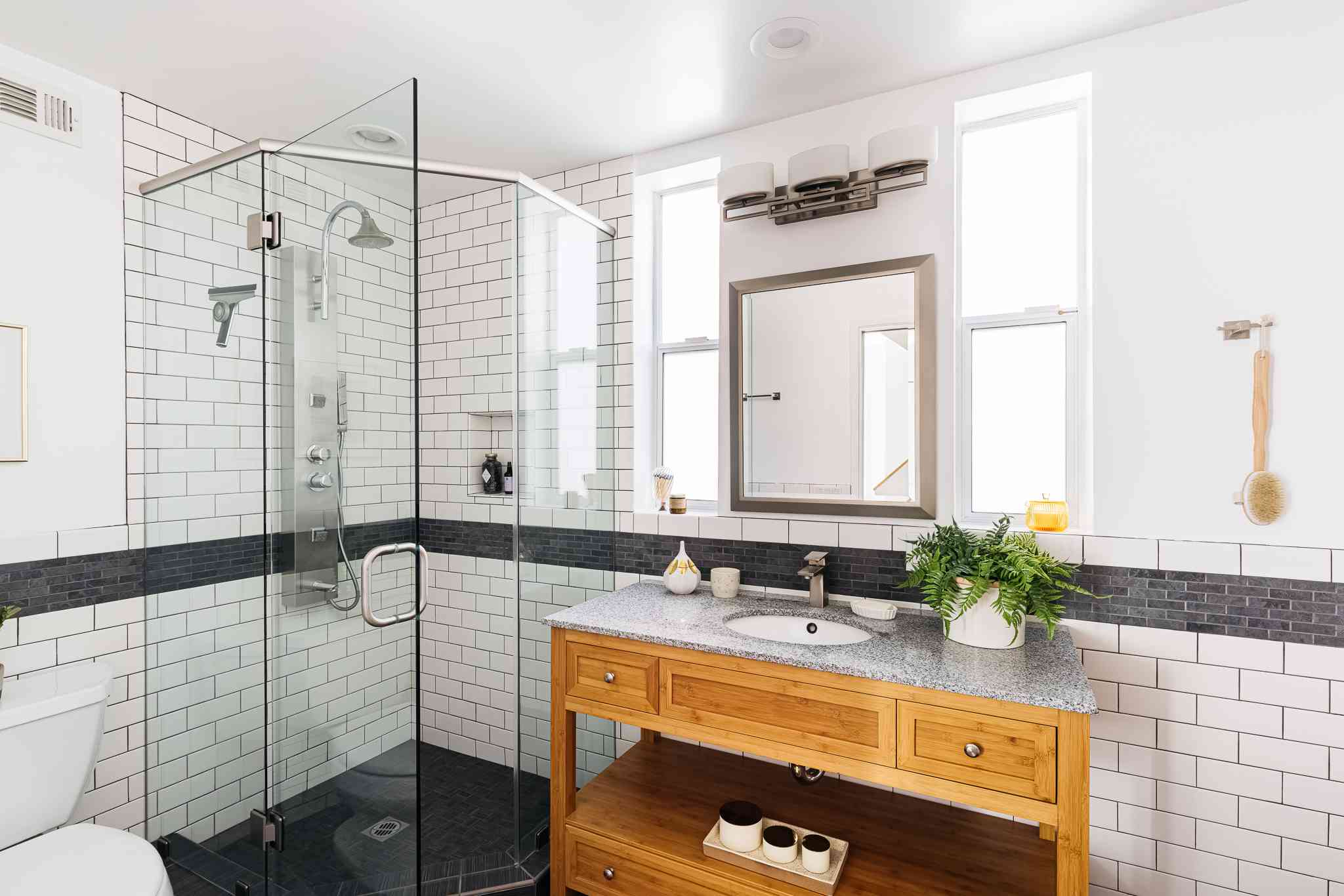
Bathroom vanity lighting should make faces look accurate rather than strangely gray, orange, or green. Look for a CRI of 90 or higher and a color temperature between approximately 3000K and 4000K. Bulbs positioned on both sides of a mirror typically create fewer shadows than a single fixture directly overhead.
Also verify that the bulb and fixture are suitable for the location. A bathroom can qualify as a damp environment because of condensation, while areas directly exposed to water require products marked for wet locations. UL guidance distinguishes dry, damp, and wet locations, so packaging labels matter more than optimistic guessing. est for Reading and Home Offices: Neutral or Tunable White LEDs
For reading, studying, sewing, or detailed paperwork, consider a focused lamp using a neutral white bulb between 3500K and 5000K. The exact temperature is a matter of preference, but brighter, cooler light can make a workspace feel more alert and visually crisp during the day.
A tunable-white smart bulb is especially useful in a home office. It can provide cooler light during working hours and shift toward warmer light in the evening. This prevents the desk lamp from making your home feel like an office building long after the spreadsheets have been closed.
Best for Chandeliers and Decorative Fixtures: LED Filament Bulbs
Clear LED filament bulbs provide the exposed-filament appearance associated with vintage incandescent lighting while using far less energy. Candle-shaped B10 or B11 bulbs commonly suit chandeliers and sconces, although the base may be E12 candelabra rather than the larger E26 medium size.
Choose a warm color temperature around 2200K to 2700K when atmosphere is more important than task lighting. Check the bulb dimensions before buying. Decorative fixtures often have narrow shades, glass covers, or clips that do not appreciate an unexpectedly plump bulb.
Best for Recessed Cans: BR30 or Retrofit LED Downlights
BR30 flood bulbs spread light across a wider area and are commonly used in recessed cans. They work well in kitchens, hallways, family rooms, and finished basements. For a cleaner appearance and better air sealing, compatible LED retrofit downlights can replace the bulb and trim as a single unit.
Before purchasing, confirm the can diameter, socket type, ceiling compatibility, wet- or damp-location rating, and whether the existing housing is insulation-contact rated. Recessed fixtures are not the place for “close enough.”
Best for Outdoor Fixtures: Wet-Rated LED Bulbs
Covered porch fixtures may require damp-location bulbs, while exposed security lights and landscape fixtures generally need wet-location products. For wall lanterns, 2700K to 3000K provides an inviting glow. Security and driveway lights may benefit from brighter output and a broader beam.
Motion-sensing bulbs can add convenience, but they should be paired only with fixtures and switches that support them. In cold climates, LEDs are typically a practical outdoor choice because they reach full brightness quickly and avoid the sluggish warm-up associated with some older fluorescent products.
Best for Smart Homes: Tunable Smart LED Bulbs
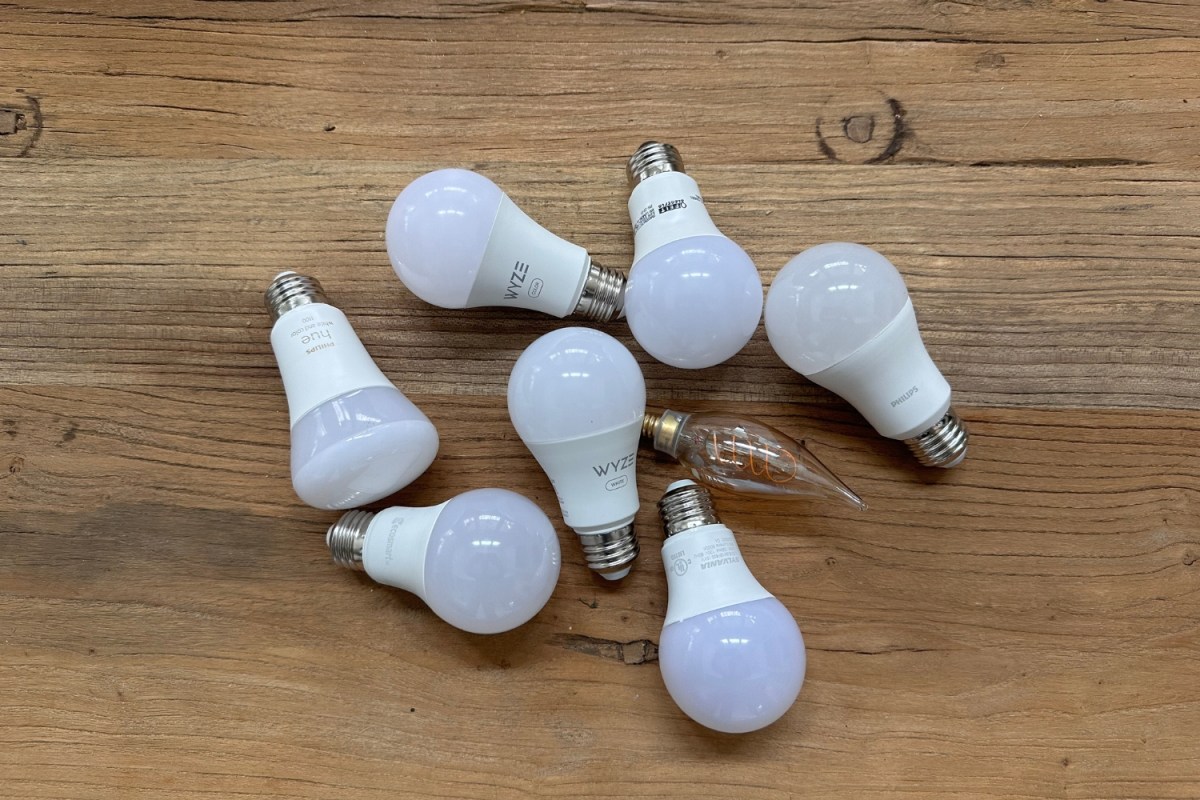
Smart bulbs can offer app control, schedules, remote operation, adjustable brightness, tunable white light, and, in some models, millions of colors. Some connect directly through Wi-Fi or Bluetooth, while others use a hub. Decide which ecosystem you want before filling the house with bulbs that communicate as effectively as feuding relatives.
Smart bulbs are most useful in lamps and fixtures whose physical switches remain on. Turning off the wall switch cuts power to the bulb and disables remote control. Smart lighting systems can also create scenes for dining, movie watching, working, or waking up. n>
How to Choose the Best Light Bulbs
Shop by Lumens, Not Old-Fashioned Wattage
Watts measure electricity use; lumens measure the light produced. Because LED bulbs can create the same brightness while using much less electricity, wattage is no longer the best way to compare bulbs.
As a general replacement guide, approximately 450 lumens corresponds to an old 40-watt incandescent, 800 lumens to a 60-watt bulb, 1,100 lumens to a 75-watt bulb, and 1,600 lumens to a 100-watt bulb. These are practical reference points rather than sacred lighting commandments. Lamp shades, fixture height, wall colors, and room size all affect perceived brightness. nderstand Color Temperature
Color temperature is measured in Kelvin, abbreviated K. Counterintuitively, lower numbers look warmer, and higher numbers look cooler.
- 2200K to 2700K: Amber to soft warm white for decorative fixtures, bedrooms, and intimate spaces.
- 3000K: Warm but cleaner-looking light for kitchens, bathrooms, and contemporary interiors.
- 3500K to 4000K: Neutral to cool white for task lighting, offices, garages, and utility spaces.
- 5000K to 6500K: Daylight-like light for workshops and specialized tasks, though it may feel harsh in relaxing rooms.
Matching color temperatures within the same room creates a coordinated appearance. Mixing a 2700K lamp with a 5000K ceiling bulb can make the room look as though two different times of day are arguing with each other.
Look Beyond CRI Marketing
The color rendering index, or CRI, describes how faithfully a light source renders colors compared with a reference source. Higher scores generally indicate more natural-looking colors, and a CRI of 90 or above is a good target for kitchens, bathrooms, closets, art displays, and workspaces.
CRI is useful but not perfect. NIST notes that traditional CRI evaluates color fidelity while overlooking some other aspects of perceived color quality. Treat it as an important comparison tool rather than the final word on whether a bulb will make your navy socks distinguishable from your black ones. atch the Base and Bulb Shape
The common E26 medium screw base fits many American household lamps, but chandeliers frequently use E12 candelabra bases. Other fixtures may require GU10 twist-lock bulbs, GU24 pin bases, bi-pin capsules, or specialized bases.
Shape matters too. A19 bulbs are standard household bulbs; BR and PAR bulbs direct light from recessed or track fixtures; G bulbs are globe-shaped; T bulbs are tubular; and B bulbs resemble candle flames. Take the old bulb to the store or photograph its printed code before shopping. Memory becomes remarkably unreliable when confronted by forty nearly identical boxes.
Check Fixture Ratings and Maximum Wattage
Never exceed the fixture’s maximum wattage. Although an LED advertised as a “100-watt equivalent” may consume only around 14 to 17 watts, shoppers should still read the actual wattage and all fixture restrictions.
LED electronics are sensitive to excess heat. If a bulb will operate inside a fully enclosed globe or flush-mount fixture, choose a model specifically labeled for enclosed fixtures. For ceiling fans, garage-door openers, ovens, refrigerators, or other demanding applications, select a bulb designed for that use rather than assuming any LED will survive the assignment.
Verify Dimmer Compatibility
A non-dimmable LED should not be placed on a dimmer. Even dimmable LEDs can flicker, buzz, glow when switched off, or abruptly shut down if paired with an incompatible control.
For the smoothest operation, use an LED-rated dimmer and check the manufacturer’s bulb compatibility list. If flicker occurs only near the bottom of the range, adjusting the dimmer’s low-end trim may help. Persistent buzzing or flashing often means the bulb and dimmer are simply not a happy couple. ead the Lighting Facts Label
The Lighting Facts label allows shoppers to compare brightness, estimated yearly energy cost, expected life, light appearance, wattage, and mercury information. The Federal Trade Commission requires the package to emphasize lumens because brightness is more useful to buyers than the energy consumption measurement alone. ed life is usually expressed in hours or years based on assumed daily use. It is a laboratory-based estimate, not a personal guarantee from the bulb that it will never misbehave. Heat, frequent switching, voltage irregularities, poor fixtures, and incompatible controls can shorten real-world life.
LED, Incandescent, Halogen, or CFL?
LED Bulbs
LEDs are the best general-purpose choice for most households. They are efficient, widely available, long-lasting, and offered in numerous shapes, brightness levels, and colors. Current models can mimic warm incandescent light, provide daylight-style task lighting, or change colors on command.
Incandescent and Halogen Bulbs
Traditional incandescent and halogen bulbs offer excellent color rendering and smooth dimming, but they convert much more electricity into heat and have shorter rated lives than LEDs. Their availability is also more limited because federal efficiency requirements have reshaped the general-service bulb market. Specialty incandescent products may still be sold for certain applications.
Compact Fluorescent Bulbs
CFLs use less energy than old incandescent bulbs, but LEDs have largely replaced them in household shopping. CFLs may warm up slowly, perform inconsistently with dimmers, and contain a small amount of mercury.
Do not casually throw intact CFLs into the trash where local recycling options exist. If one breaks, the EPA recommends airing out the room, keeping people and pets away during initial cleanup, collecting fragments carefully, and checking local disposal rules. Avoid immediately vacuuming the powder because that can spread mercury-containing material. n>
Common Light Bulb Buying Mistakes
- Buying the highest lumen number available: Excessive brightness creates glare and can make comfortable rooms feel clinical.
- Ignoring color temperature: A bulb can be energy-efficient and still make a room look unpleasant.
- Mixing different whites in one fixture: Even small Kelvin differences become obvious when bulbs sit side by side.
- Installing ordinary LEDs in enclosed fixtures: Trapped heat can shorten bulb life.
- Assuming every LED is dimmable: Packaging must state that the bulb supports dimming.
- Choosing appearance over output: Smoked or amber decorative bulbs may look beautiful while producing surprisingly little usable light.
- Leaving smart bulbs on physical dimmers: Many smart bulbs expect constant full power and should be dimmed through their app or compatible controls.
Practical Lighting Experiences: What Homeowners Notice After the Upgrade
The most successful whole-home lighting upgrades rarely happen in one dramatic shopping trip. A more reliable approach is to replace bulbs room by room, test the result after dark, and adjust before buying another twelve-pack. Lighting that looks perfect under a store’s high ceiling may behave very differently inside a shaded lamp beside a dark blue wall.
One of the first lessons homeowners tend to learn is that matching the old wattage equivalent does not always recreate the old experience. An 800-lumen LED may technically replace a 60-watt incandescent, but the direction of the light, opacity of the bulb, fixture design, and shade material can change how bright it feels. A clear filament bulb may cast attractive patterns but produce more glare. A frosted bulb usually softens the output and distributes it more evenly.
Color temperature often creates a bigger visual change than brightness. Replacing a 2700K bulb with a 5000K model can make beige walls look gray, wood finishes appear flatter, and a peaceful bedroom feel like a break room. On the other hand, replacing a dim warm bulb over a kitchen counter with a high-CRI 3500K LED can make chopping vegetables noticeably easier without making the entire house look cold.
Another recurring experience involves dimmers. A homeowner may install expensive dimmable LEDs and still hear buzzing or see flickering. The problem is frequently the older wall dimmer rather than defective bulbs. Swapping in an LED-compatible dimmer and adjusting its low-end setting can transform an annoying installation into smooth, quiet lighting. Keeping all bulbs on the circuit to the same brand and model also reduces inconsistent behavior.
Enclosed fixtures provide another useful reality check. Bulbs installed in sealed glass globes may fail much earlier than identical bulbs in open lamps because heat accumulates around the LED driver. Choosing enclosed-fixture-rated bulbs, staying within actual wattage limits, and avoiding excessive brightness can improve longevity. The cheapest bulb is not a bargain when replacing it requires a ladder, a screwdriver, and several newly invented words.
Smart bulbs deliver their best experience in rooms where automation solves a genuine inconvenience. Bedroom lamps can brighten gradually in the morning, porch lights can follow a schedule, and living room lamps can turn off together at bedtime. They are less useful in fixtures controlled by family members who instinctively flip the wall switch off. In those areas, smart switches may provide a better experience than smart bulbs.
Homeowners also discover that layered lighting matters more than any single bulb. A living room feels better when ambient ceiling light is supported by a reading lamp and a small accent light. A kitchen works better when ceiling fixtures are supplemented by under-cabinet illumination. The best light bulb is therefore not merely the most efficient product in the aisle; it is the bulb that fills a specific role within a larger lighting plan.
Finally, buying one test bulb before committing to a full package is often the smartest move. Install it, observe the room during the day and at night, try the dimmer, check for hum, and see how skin tones and furnishings look. Once the bulb passes that audition, purchase matching units from the same product line. Light bulbs may be small, but they are powerful enough to make a carefully decorated room look either polished or vaguely haunted.
Final Verdict
For most home lighting needs, the best starting point is a dimmable, high-CRI LED bulb from an established manufacturer. Select brightness by lumens, choose color temperature according to the room, and confirm the base, shape, fixture rating, and dimmer compatibility before buying.
Use warm white LEDs in bedrooms and living rooms, brighter neutral bulbs in kitchens and work areas, high-CRI bulbs around mirrors and food-preparation surfaces, wet-rated bulbs outdoors, and enclosed-fixture-rated bulbs wherever heat cannot escape easily. Smart bulbs are worth considering when schedules, remote control, or tunable colors solve a real problem rather than merely giving your phone one more app to update.
There is no universal bulb for every socket, but there is a correct bulb for nearly every task. Read the package, resist the temptation to judge brightness by watts, and remember that good lighting should help a room perform its job without constantly reminding everyone that the lights are on.