Whether you are balancing the books in a bustling city building strategy game or navigating the complexities of a global supply chain, resource management simulations offer a uniquely satisfying blend of logic and long-term planning. At their core, these titles challenge you to do more with less, turning abstract data points into tangible growth. Mastery in this genre requires more than just quick reflexes; it demands an analytical mindset capable of anticipating bottlenecks, calculating economic market simulation risks, and refining logistical network planning to ensure your empire thrives under pressure. If you are looking to sharpen your decision-making skills while optimizing your base defense building planning, you are in the right place. In this guide, we will break down the fundamental mechanics that define the best titles in the genre and provide you with actionable strategies to transform your approach to efficiency, ensuring every choice you make contributes to your ultimate success.

1. Optimizing Strategic Decision-Making Through Resource Management Simulations

1.1 Foundations of Effective Resource Management Simulations
1.1.1 Defining the Core Mechanic of System Dynamics
Resource management simulations are built upon the backbone of system dynamics, where every action creates a ripple effect across a digital ecosystem. At the heart of these games is the concept of constrained scarcity. Whether you are engaging in city building strategy or managing a sprawling corporate empire, the core loop involves identifying finite inputs—such as labor, capital, or raw materials—and directing them toward competing priorities. Success in these environments requires players to view their domain not as a series of isolated tasks, but as an interconnected web where the health of one sector inevitably impacts the viability of another.
1.1.2 The Role of Variables in Modeling Market Fluctuations
An authentic economic market simulation functions by balancing numerous variables that mirror real-world volatility. Developers design these systems to respond to player behavior, introducing dynamic shifts in supply and demand that force constant recalibration. If you flood a market with a specific product, prices drop, forcing you to pivot your strategy. Understanding how these variables influence your long-term success is vital. It teaches participants to look past surface-level mechanics and anticipate how logistical network planning affects the broader bottom line when the simulated economy shifts unexpectedly.
1.1.3 How Feedback Loops Accelerate Strategic Learning
The most powerful aspect of these simulations is the immediate feedback loop. When a player makes an inefficient allocation choice, the game provides prompt, measurable consequences. This allows for rapid iteration and “trial-by-fire” learning that is difficult to replicate in traditional academic or corporate settings. By experiencing the failure of a poorly planned defense building strategy or an overextended supply chain, players develop an intuitive grasp of cause-and-effect. This cognitive shortcut accelerates the ability to recognize patterns in complex datasets, moving the user from reactive decision-making to proactive, predictive planning.
1.2 The Strategic Value of Simulation-Based Training
1.2.1 Bridging the Gap Between Economic Theory and Execution
Theory often falls apart in the face of unpredictable variables, which is why simulations are essential for professional development. While economic textbooks explain the mechanics of markets, simulations demonstrate the friction of implementation. By putting these theories into practice, participants learn how to weigh risk against reward in real-time. For those interested in deeper mechanics, understanding the fundamentals of how these systems function can often be explored in historical sports match recreations, which highlight the precise data modeling required to keep a simulation feeling responsive and realistic.
1.2.2 Developing Cognitive Agility for Executive Leadership
Executive leadership is rarely about finding the single “correct” answer; it is about navigating ambiguity. Resource management games force leaders to sharpen their cognitive agility by demanding they manage competing priorities under pressure. As a player, you must constantly pivot between tactical micro-management and high-level structural planning. This constant shifting builds the mental flexibility needed to navigate real-world organizational changes, helping managers become more comfortable with the high-stakes trade-offs that define C-suite decision-making.
1.2.3 Measuring ROI in Professional Development Programs
Measuring the return on investment for simulation training requires a focus on behavioral change rather than just in-game metrics. Organizations look for improvements in communication, negotiation, and analytical thinking among team members. When a simulation is used correctly, the ROI is found in the team’s improved ability to synthesize disparate pieces of information into a cohesive, long-term strategic plan.
1.3 Selecting the Ideal Simulation Environment
1.3.1 Matching Complexity Tiers to Participant Experience Levels
Not every simulation is suited for every learner. Beginners should start with environments that offer guided tutorials and visual aids to help explain the relationships between resources and outcomes. Conversely, seasoned strategists require environments that allow for deep-dive granular control, where they can manipulate micro-variables to test radical theories. Matching the simulation to the user’s experience level prevents frustration and ensures that the focus remains on developing high-level strategic competency rather than fighting a restrictive user interface.
1.3.2 Assessing Analytical Reporting and Debriefing Capabilities
A simulation is only as good as its debriefing process. To derive maximum value, the software must provide robust analytical reporting. After a session, participants should be able to review heat maps, flow charts, and resource allocation logs to identify exactly where their strategy succeeded or broke down. These reporting tools transform an entertainment experience into a diagnostic tool, allowing for a thorough post-mortem of every decision made.
1.3.3 Evaluating Integration Potential for Corporate and Academic Curricula
When integrating these tools into professional or academic environments, compatibility is key. The ideal simulation offers flexible parameters that allow instructors to inject custom scenarios—such as supply chain disruptions or sudden shifts in market trends—into the standard gameplay. By aligning the simulation’s sandbox with real-world industry challenges, trainers can create highly relevant exercises that resonate with students and employees alike, effectively turning complex digital models into powerful pedagogical assets.
2. Advanced Methodologies for Mastering Resource Management Simulations
2.1 Tactical Pillars for Resource Allocation Success
2.1.1 Balancing Quarterly Liquidity Targets with Long-Term Growth
Mastering resource management simulations requires a delicate balance between immediate survival and future expansion. Many beginners fall into the trap of hoarding capital, which stifles progress, or over-investing, which leaves them vulnerable to sudden market shifts. To succeed, you must treat your liquidity as a buffer for volatility rather than a static goal. By setting strict threshold percentages for emergency reserves, you ensure that your managerial sports strategies or business operations can absorb unexpected costs without halting long-term R&D initiatives.
2.1.2 Identifying and Optimizing Operational Bottlenecks
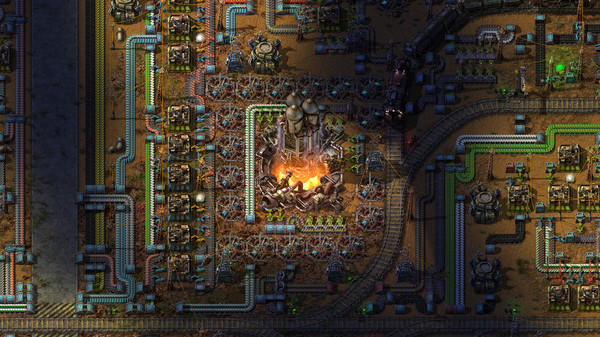
In any complex system, throughput is defined by your most constrained resource. Whether you are dealing with a city building strategy or a factory line, identifying where materials or labor pool up is critical. Conduct regular audits of your supply chain to see where assets are idling. Often, adding a single unit of capacity—such as an extra storage facility or an additional processing node—can resolve a cascading delay that previously hampered your entire production cycle.
2.1.3 Prioritizing Capital Expenditure Between R&D and Market Expansion
Capital allocation is essentially a choice between efficiency and reach. Investing in R&D lowers the unit cost of your output, creating a higher margin over time, while market expansion increases your volume and footprint. The most effective approach is to cycle these priorities. Use R&D to stabilize your margins during periods of steady demand, then pivot to aggressive expansion once your production efficiency reaches a target threshold. This prevents over-extension when your underlying systems are still costly to operate.
2.2 Executing Competitive Strategies and Risk Mitigation
2.2.1 Techniques for Reverse-Engineering Competitor Moves
In competitive economic market simulation games, you can often deduce the strategies of AI or human opponents by observing their output levels and price changes. If a competitor suddenly stops exporting a specific resource, it indicates they are likely funneling those assets into a new tech tree or a massive infrastructure project. By monitoring these subtle shifts, you can preemptively adjust your own supply chains to fill the market gaps they leave behind, turning their internal focus into your external profit.
2.2.2 Scaling Operations While Maintaining Service Quality
Rapid growth is the most common cause of failure in management simulations. As your network expands, the complexity of your logistical network planning increases exponentially. To scale successfully, prioritize modular designs that allow you to replicate high-performance zones. By standardizing your layout, you reduce the cognitive load required to troubleshoot issues, ensuring that quality control remains high even as your total output volume reaches peak capacity.
2.2.3 Navigating Artificial Market Downturns and Supply Chain Crises
Market simulations often throw synthetic crises your way, such as sudden resource shortages or artificial price inflation. The key to navigating these is maintaining a diversified asset portfolio. Never rely on a single extraction source or a lone trade partner. Building redundant systems—even if they are slightly less efficient during normal operations—acts as an insurance policy that allows you to maintain consistent uptime during industry-wide disruptions.
2.3 Maximizing the Learning Experience and Team Dynamics
2.3.1 Utilizing Failure as a Catalyst for Professional Growth
In simulation environments, failure is an invaluable data point. Instead of reloading a previous save, analyze the specific point where your resource management failed. Was it a lack of liquidity? A breakdown in logistical planning? By treating every collapse as a case study, you refine your intuition for identifying risks before they manifest in a live scenario, effectively turning mistakes into high-level strategic intelligence.
2.3.2 Improving Negotiation Skills in Cross-Functional Team Scenarios
Effective management isn’t just about numbers; it is about coordinating limited assets across departments. When playing in team-based simulations, negotiation is a core mechanic. Success often depends on your ability to convince partners that ceding a short-term resource advantage will yield a higher collective outcome. Mastering this trade-off is the hallmark of leadership, as it forces participants to look beyond their own departmental metrics to the health of the entire organization.
2.3.3 Preparing for the Future of AI-Driven Adaptive Simulations
As simulations become increasingly AI-driven, the static strategies of the past will become obsolete. Adaptive algorithms now learn from your playstyle and adjust difficulty in real-time. To stay ahead, you must move away from “optimal” static builds and toward flexible, reactive frameworks. Future-proofing your skills means learning to identify the intent behind the simulation’s changes and developing a mental model that prioritizes rapid pivots and system-wide resiliency over rigid, scripted success.
Mastering resource management simulations is about more than just keeping your virtual economy in the green; it is a profound exercise in foresight, balance, and adaptability. By engaging with these complex systems—whether you are perfecting a city building strategy, managing a volatile economic market simulation, or streamlining intricate logistical network planning—you are training your mind to identify patterns and predict outcomes under pressure. These games provide a unique, low-stakes sandbox to test high-stakes theories, allowing you to refine your decision-making skills in a way that translates directly to real-world executive functions.
As you continue to explore the nuances of resource allocation and defense building planning, remember that every failure is simply a data point in your strategic evolution. Embrace the iterative nature of these simulations to sharpen your analytical edge. If you are looking to further refine your decision-making capabilities, check out our guide on mastering managerial sports strategies to see how these core principles apply across different gaming genres. Ultimately, the true value of these digital environments lies in your ability to synthesize information and execute a plan with confidence, transforming you into a more effective leader in every scenario you face.