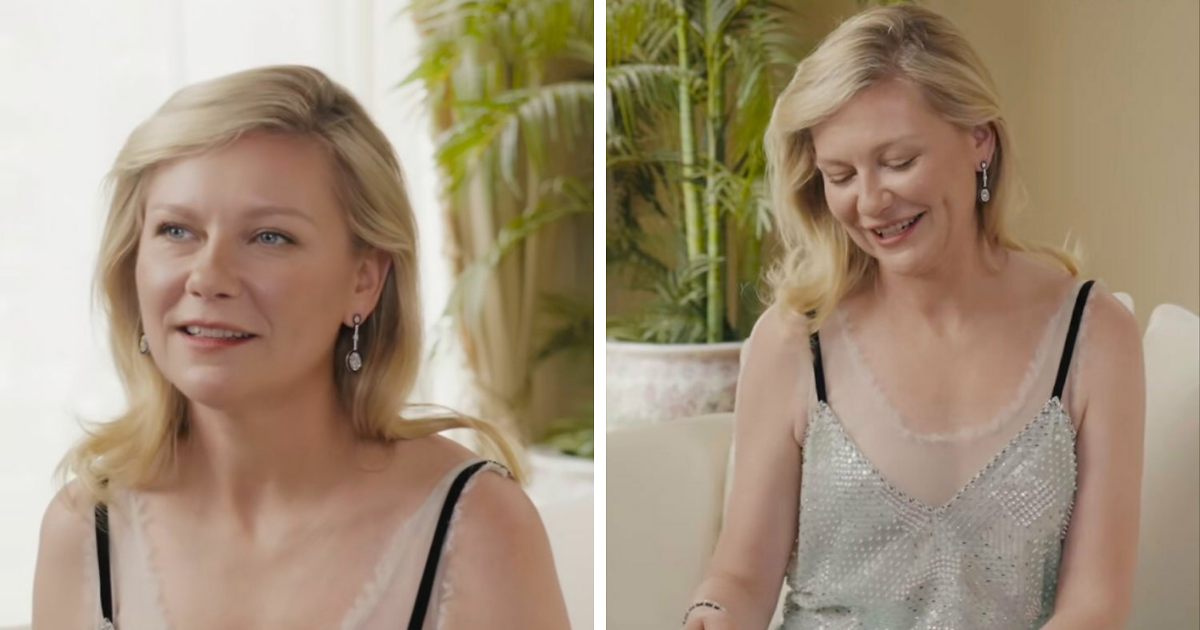

For more than three decades, Kirsten Dunst has been one of those rare Hollywood names people recognize instantly. She has been a child star, a teen-movie icon, a superhero-era romantic lead, an indie-film favorite, a Cannes-winning dramatic actress, and an Oscar nominee. And yet, after all that, there is apparently one thing many fans, interviewers, and even colleagues still have not mastered: how to say her first name.
Yes, the actress whose face helped define everything from Interview with the Vampire to Bring It On, Spider-Man, Marie Antoinette, Melancholia, The Power of the Dog, and Roofman has revealed that the common pronunciation of “Kirsten” is not quite right. The correct pronunciation is closer to “Keer-sten”, not “Kur-sten,” “Ker-sten,” or the very popular accidental cousin, “Kristen.”
It is the kind of celebrity trivia that sounds small until you realize it touches a surprisingly big cultural nerve. Names matter. Pronunciation matters. And when someone has been famous since childhood, it becomes oddly funnyand a little revealingthat the world can know her filmography, her red-carpet looks, her Spider-Man scream, and her Sofia Coppola collaborations, but still fumble the very first word in her name.
The Correct Way to Say Kirsten Dunst’s Name
The real pronunciation of Kirsten Dunst’s first name is Keer-sten. Think of the first syllable as sounding like “keer,” rhyming loosely with “near,” rather than “kur” or “ker.” The second syllable is simple: “sten.” Put together, it becomes Keer-sten Dunst.
Dunst has said that people frequently get it wrong, and she does not blame them. That response feels very on-brand for her: relaxed, slightly amused, and not eager to turn a tiny awkwardness into a dramatic courtroom scene. Still, the reveal surprised many fans because “Kirsten Dunst” has been a household name since the 1990s. Apparently, it has also been a household mispronunciation.
The confusion is understandable. In American English, “Kirsten” often gets flattened into “Kur-sten” or mistaken for “Kristen,” a more common spelling and pronunciation. Add international accents, fast interviews, red carpets, press tours, and the human tendency to confidently guess names after seeing them once, and you have a perfect recipe for decades of polite chaos.
Why Everyone Suddenly Cares About the Pronunciation
The renewed attention around Kirsten Dunst’s name pronunciation came during a fresh wave of publicity connected to her recent work and media appearances. While promoting projects and speaking in interviews, Dunst casually clarified that many people have been saying her name incorrectly for years.
Fans reacted the way the internet usually reacts to name-pronunciation revelations: with shock, jokes, confessions, and immediate self-audits. Some people admitted they had been saying it wrong since Jumanji. Others insisted they had always known. A few probably said “Keer-sten” out loud three times at their desks just to make sure their mouths were cooperating.
That is the charm of this story. It is not scandalous. It is not messy. No one is throwing a latte, leaking a text thread, or issuing a 14-slide Notes app statement. It is just a beloved actress gently saying, “Actually, that is not how you say my name,” and the internet collectively realizing it may owe her a pronunciation apology basket.
Who Is Kirsten Dunst? A Quick Career Refresher
Kirsten Dunst was born on April 30, 1982, in Point Pleasant, New Jersey. She began working as a child actor and became widely recognized for her performance as Claudia in Interview with the Vampire, where she acted opposite Tom Cruise and Brad Pitt. That role earned major attention because Dunst brought unusual emotional control and confidence to a character who could have easily become theatrical in the wrong hands.
From there, she moved through the 1990s and early 2000s with impressive range. She appeared in Little Women, Jumanji, The Virgin Suicides, Bring It On, and Spider-Man. Each role added another layer to her public image. She could be eerie, funny, romantic, wounded, bright, sarcastic, or quietly devastating. In other words, she was never just “the girl from one movie.” She was building one of the most durable screen careers of her generation.
Her later work deepened that reputation. In Lars von Trier’s Melancholia, Dunst played Justine, a woman whose depression becomes inseparable from the film’s apocalyptic atmosphere. The performance won her the Best Actress Award at the Cannes Film Festival in 2011. Years later, The Power of the Dog brought her an Academy Award nomination, reminding viewers that she had grown from a child performer into one of the industry’s most quietly powerful dramatic actors.
Why Mispronouncing a Name Feels Personal
Names are not just labels. They are miniature biographies. They carry family history, language, culture, geography, and identity. When people mispronounce a name once, it is usually no big deal. When it happens repeatedly over years, especially in professional spaces, it can start to feel like a tiny sign that no one is listening closely.
That is why Dunst’s comment landed with more weight than a simple celebrity fun fact. Many people know exactly what it feels like to have a name that teachers, coworkers, classmates, baristas, hosts, and official forms never quite get right. Some correct people every time. Some choose their battles. Some develop a “close enough” version for public use. Others, like Dunst, eventually shrug and let the world stumble through it.
The funny part is that celebrity culture trains audiences to feel familiar with people they have never met. Fans may know Dunst’s biggest roles, her collaborations with Sofia Coppola, her marriage to actor Jesse Plemons, and her long career arc. But familiarity is not the same as accuracy. The pronunciation reveal is a playful reminder that even famous people can be misread in plain sight.
The “Kirsten” vs. “Kristen” Problem
One reason people mispronounce Kirsten Dunst’s name is that the spelling sits close to several more familiar names. “Kristen,” “Kirstin,” “Kiersten,” and “Kirsten” all look related, but they do not always sound the same. English, being the chaotic raccoon of languages, does not help. It borrows from everywhere, changes rules without warning, and then acts surprised when everyone is confused.
In Dunst’s case, the key is that the first syllable leans toward “keer.” This makes the pronunciation feel closer to “Kiersten” than to “Kristen.” Once you hear it, it makes sense. But if you grew up hearing entertainment hosts say “Kur-sten Dunst,” your brain may need a quick software update.
The lesson is simple: when someone tells you how to say their name, believe them. You do not need a linguistic debate, a family tree, or a dramatic pause over the vowels. Just adjust. It is one of the easiest ways to show basic respect, and it costs exactly zero dollars, which is still Hollywood’s best bargain.
How Dunst Handles the Mistake
What makes the story especially likable is Dunst’s attitude. She has not framed the mispronunciation as a feud with the English-speaking world. She has joked that people get it wrong and suggested she has mostly given up correcting everyone. That casual response matches the public persona fans have admired for years: smart, dry, grounded, and allergic to unnecessary fuss.
There is also a practical side. Dunst has worked on international sets with cast and crew members from different countries. Accents and language patterns naturally affect pronunciation. When a production includes people from the United States, Britain, Sweden, Hungary, and beyond, one name can travel through several sound systems before lunch.
Still, the correction matters. A person can be gracious about a mistake and still deserve to have it fixed. Dunst may laugh it off, but now that the correct pronunciation is public, fans have no excuse. Consider this the official retirement party for “Kur-sten.” It had a good run. Please enjoy the snacks on your way out.
Why This Story Went Viral
The internet loves small revelations about familiar celebrities because they create a strange little thrill: the feeling that we have discovered a hidden detail in something we thought we already knew. It is the entertainment-news version of finding out your favorite restaurant has a secret menu, except the secret menu is phonetics.
Kirsten Dunst’s name pronunciation also went viral because she occupies a special place in pop culture. She is nostalgic without being frozen in the past. Millennials remember her from Bring It On and Spider-Man. Film lovers associate her with The Virgin Suicides, Marie Antoinette, and Melancholia. Awards audiences remember Fargo and The Power of the Dog. Newer viewers may connect her to Civil War or Roofman.
That cross-generational appeal means a pronunciation correction can travel fast. Everyone has a Dunst era. Some met her as Claudia. Some met her as Torrance Shipman. Some met her as Mary Jane Watson. Some met her as a haunted adult woman in prestige drama. And now everyone gets to meet her again as Keer-sten.
The Bigger Conversation: Celebrity Names We Say Wrong
Dunst is far from alone. Hollywood is full of names that audiences confidently mispronounce. Sometimes the correction involves a first name. Sometimes it is a last name. Sometimes the celebrity gives up and lets the public version live because correcting millions of people sounds exhausting. Imagine having to fix someone’s pronunciation every time you order coffee, except the coffee shop is the entire internet.
These moments often spark bigger conversations about identity and respect. A name can reflect heritage, family language, or personal preference. It may not follow the pattern outsiders expect. For public figures, a mispronounced name can become part of their brand by accident. For everyday people, it can become a daily annoyance that is too small to complain about but too constant to ignore.
The good news is that audiences are more aware of this now. Social media gives celebrities and non-celebrities alike a direct way to correct the record. A short video or interview clip can do what years of press junkets did not: make people stop, listen, and repeat the name correctly.
How to Remember the Right Pronunciation
Here is the easiest memory trick: Kirsten Dunst begins like “keer,” not “kur.” Say “Keer-sten.” Then add “Dunst.” Keep it clean, quick, and confident.
Another trick is to think of it as three simple beats: Keer-sten Dunst. The rhythm is crisp. It does not need extra drama. Do not turn it into “Kristen,” do not bury the first vowel, and do not panic. If you can pronounce “Worcestershire” after one brave YouTube tutorial, you can handle this.
For writers, editors, podcasters, and entertainment hosts, the correction is especially useful. Pronunciation is part of accuracy. If an article, video, or podcast covers Dunst’s career, saying her name correctly is as important as getting her film titles right. You would not call Melancholia “Melancholita” and hope no one noticed. Names deserve the same care.
Why the Reveal Makes Fans Like Her Even More
The best celebrity moments are often the ones that feel human. Dunst’s pronunciation reveal works because it is relatable. She is not presenting herself as a distant star demanding perfection. She is a person who has heard her own name mangled for decades and reached the wonderfully human stage of “Well, here we are.”
That mix of honesty and humor is part of why Dunst has maintained such a loyal fan base. She has never seemed desperate to chase every trend or explain herself constantly. Her career choices often feel thoughtful, sometimes risky, and usually interesting. She can move from blockbuster fame to art-house melancholy to dark comedy without seeming like she is trying to prove a point in neon lights.
In a media environment where celebrity news can feel loud and overproduced, a simple pronunciation correction feels refreshingly normal. It gives fans a tiny new way to appreciate someone whose work they already know. It also lets everyone participate in the easiest fan assignment ever: say the name right.
Experiences Related to Mispronounced Names and Public Identity
Anyone who has ever had their name mispronounced knows there are stages. First comes optimism. You hear someone begin your name and think, “This could go well.” Then comes the stumble. Maybe they pause in the middle. Maybe they add a letter that does not exist. Maybe they confidently say an entirely different name with the energy of a game-show contestant. Finally, you decide whether to correct them, smile politely, or answer to your new temporary identity.
That everyday experience is what makes Kirsten Dunst’s story so easy to connect with. Most people are not movie stars, but many have lived through the same tiny social calculation. Is this person worth correcting? Will correcting them make the moment awkward? Will they remember next time? Does it matter if this is a one-time interaction? These questions flash through the mind in seconds, usually while the other person is still smiling with no idea they have just phonetically stepped on a rake.
In schools, workplaces, interviews, and social events, names become the first test of attention. When someone gets your name right, it creates instant ease. When they get it wrong after being corrected several times, it can feel careless. The mistake may not be malicious, but repetition gives it weight. That is why learning someone’s preferred pronunciation is not just etiquette; it is a small form of recognition.
For public figures, the issue becomes more complicated. A celebrity’s name gets repeated by journalists, fans, hosts, critics, and social media users thousands of times. Once the wrong pronunciation spreads, it becomes sticky. People repeat what they have heard. Then others repeat them. Before long, the incorrect version feels “normal,” even if it was never right. Dunst’s correction shows how easily public familiarity can drift away from personal accuracy.
There is also a funny emotional layer to discovering you have been saying a famous name wrong. Fans can feel oddly guilty, as if Dunst has been sitting somewhere for 30 years keeping a polite spreadsheet of offenders. She probably has not. But the reaction proves that people do care. Once they know better, many want to do better. That is a good thing, even if the learning curve comes with a little embarrassment and a lot of people whispering “Keer-sten, Keer-sten, Keer-sten” like they are preparing for a spelling bee.
The broader takeaway is useful beyond celebrity culture. If you are not sure how to pronounce a name, ask. If someone corrects you, thank them and repeat it correctly. Do not make the correction about your own embarrassment. Do not say, “Oh, I’ll never get that.” That turns someone else’s name into your personal obstacle course. Instead, treat it like any other detail worth learning.
Kirsten Dunst’s pronunciation reveal is lighthearted, but it points to something meaningful. A name is one of the first gifts a person carries into the world. Getting it right is a simple courtesy. And in Dunst’s case, it also gives fans a chance to update a pop-culture habit that has been wrong for a surprisingly long time. So the next time her name comes upwhether you are talking about Spider-Man, Bring It On, Melancholia, or her latest rolesay it with confidence: Keer-sten Dunst. See? Growth. Cinema. Phonetics. We really can have it all.
Conclusion
Kirsten Dunst revealing the real pronunciation of her name is the kind of entertainment story that feels small at first and then becomes unexpectedly memorable. The correct pronunciation is Keer-sten Dunst, and yes, many people have been saying it wrong for years. But the story is not just about one actress and one vowel sound. It is about how names carry identity, how public familiarity can still miss personal details, and how easy it is to show respect once we know better.
Dunst’s relaxed reaction makes the moment even more charming. After decades in Hollywood, she has earned the right to be known accuratelynot just for her performances, awards, and iconic roles, but for her actual name. The correction is simple, the internet reaction is funny, and the lesson is useful: listen closely, pronounce carefully, and never underestimate the power of one tiny syllable.
Note: This article is written in original wording for web publication and is based on publicly reported information about Kirsten Dunst, her career, and her recent name-pronunciation clarification.