
Note: Streaming availability below is written for viewers in the United States and may shift without warning, because streaming services treat licensing the way comic-book villains treat city infrastructure: recklessly.
If you want to watch the Spider-Man movies in order, the good news is that the list is not impossible. The slightly less good news is that Spider-Man has spent the last two decades swinging through multiple franchises, multiple Peters, one Miles Morales, several timelines, and one movie that basically says, “What if continuity was more of a suggestion?” So yes, there is an order. Actually, there are a few.
The simplest and best approach for most viewers is release order. It lets each reboot introduce itself naturally, keeps the emotional reveals from landing out of sequence, and makes the big multiverse payoff in Spider-Man: No Way Home feel like the cinematic equivalent of a standing ovation. If you only care about Tom Holland’s Peter Parker, there is a shorter MCU-friendly path too. And if you are here for Miles Morales and gorgeous animation that makes your eyeballs file a thank-you note, the Spider-Verse movies deserve their own lane.
Below, you’ll find the cleanest way to watch the Spider-Man movies in order, where to stream them right now, and which optional Marvel movies are worth adding if you want the full story instead of the “I skipped homework and somehow still passed the test” version.
The Best Way to Watch the Spider-Man Movies in Order
For most people, the best Spider-Man watch order is:
- Spider-Man (2002)
- Spider-Man 2 (2004)
- Spider-Man 3 (2007)
- The Amazing Spider-Man (2012)
- The Amazing Spider-Man 2 (2014)
- Spider-Man: Homecoming (2017)
- Spider-Man: Into the Spider-Verse (2018)
- Spider-Man: Far From Home (2019)
- Spider-Man: No Way Home (2021)
- Spider-Man: Across the Spider-Verse (2023)
That order works because it respects how audiences first met each version of Spider-Man. You start with Tobey Maguire’s earnest, iconic Peter Parker, move into Andrew Garfield’s sharper and more restless reboot, then land in Tom Holland’s MCU era, where Spider-Man becomes both a neighborhood hero and a kid who somehow keeps getting dragged into universe-sized problems. The two animated Spider-Verse films fit beautifully by release date because they expand the Spider-Man idea without stepping on the live-action emotional arcs.
Could you sort them by timeline logic? Sort of. Should you? Only if you enjoy spreadsheets more than dramatic reveals. Release order is smoother, smarter, and much more fun.
Where to Stream the Spider-Man Movies Right Now
Here is the practical part: where you can actually stream the Spider-Man movies in the U.S. at the time of writing.
| # | Movie | Best Watch Context | Current U.S. Streaming Options |
|---|---|---|---|
| 1 | Spider-Man (2002) | Start of the Raimi trilogy and still one of the most influential superhero movies ever made | Disney+, Max, fuboTV, YouTube TV |
| 2 | Spider-Man 2 (2004) | The gold-standard superhero sequel for a lot of fans | Disney+, Max, fuboTV, YouTube TV |
| 3 | Spider-Man 3 (2007) | Messy, memeable, and still essential if you want the full trilogy arc | Disney+, Max, fuboTV, YouTube TV |
| 4 | The Amazing Spider-Man (2012) | Fresh reboot with a new Peter, new tone, and more skateboarding energy than anyone requested | Disney+, Max, fuboTV, YouTube TV |
| 5 | The Amazing Spider-Man 2 (2014) | Important if you want the emotional setup that pays off later in multiverse storytelling | Disney+, Max, fuboTV, YouTube TV |
| 6 | Spider-Man: Homecoming (2017) | Tom Holland’s first solo movie and the true beginning of the MCU trilogy | Disney+, Paramount+, fuboTV, YouTube TV |
| 7 | Spider-Man: Into the Spider-Verse (2018) | Start of Miles Morales’ animated saga | Netflix |
| 8 | Spider-Man: Far From Home (2019) | Best watched after the major MCU events surrounding Peter’s world | Disney+, fuboTV, YouTube TV |
| 9 | Spider-Man: No Way Home (2021) | The multiverse payoff movie; absolutely better after the earlier live-action films | Starz, Philo |
| 10 | Spider-Man: Across the Spider-Verse (2023) | Second Miles Morales movie and a stylish cliffhanger chapter | Disney+, fuboTV |
If you do not subscribe to those services, most of these titles are also widely available to rent or buy digitally. That is often the easiest backup plan when streaming rights start hopping around the internet like they were bitten by a radioactive kangaroo.
Optional but Recommended: The MCU Bridge Movies
If you want Tom Holland’s Spider-Man story in full context, add these three Marvel movies to your watch order:
- Captain America: Civil War (2016)
- Avengers: Infinity War (2018)
- Avengers: Endgame (2019)
This matters because Spider-Man: Homecoming picks up after Peter’s MCU introduction, Far From Home directly lives in the emotional aftermath of Endgame, and No Way Home feels much richer when you understand how much Peter has already gained, lost, and inherited. If you skip those films, you will still follow the plot, but some of Peter’s emotional weight will feel like it came from a backpack you never saw him pack.
At the time of writing, Civil War, Infinity War, and Endgame are all available on Disney+ in the U.S., which makes the Tom Holland route relatively easy to stream without opening nineteen tabs and negotiating with your wallet.
Spider-Man Movies in Chronological Story Order
If you really want a story-based order instead of release order, here is the cleanest version for the core films and essential MCU crossovers:
- Spider-Man (2002)
- Spider-Man 2 (2004)
- Spider-Man 3 (2007)
- The Amazing Spider-Man (2012)
- The Amazing Spider-Man 2 (2014)
- Captain America: Civil War (2016)
- Spider-Man: Homecoming (2017)
- Avengers: Infinity War (2018)
- Avengers: Endgame (2019)
- Spider-Man: Far From Home (2019)
- Spider-Man: No Way Home (2021)
- Spider-Man: Into the Spider-Verse (2018)
- Spider-Man: Across the Spider-Verse (2023)
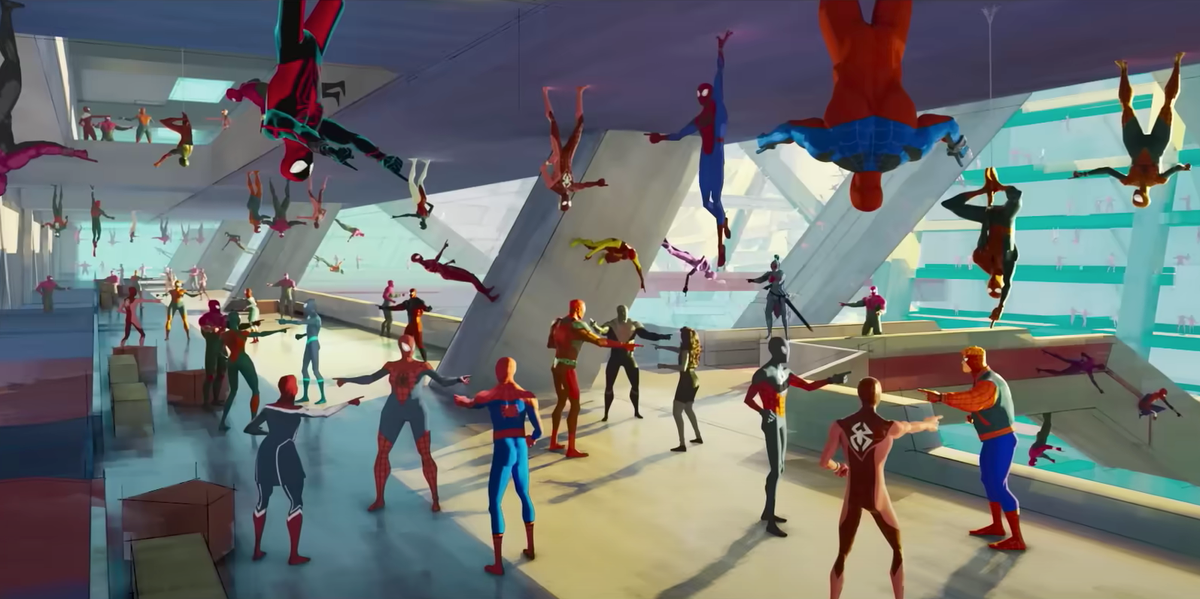
Notice the oddity: the Spider-Verse movies are best treated as a parallel branch. They matter enormously to the larger Spider-Man movie conversation, but they do not slot neatly into Peter Parker’s live-action continuity. That is not a flaw. That is the franchise proudly saying, “We contain multitudes, and also at least one pig in a spider costume.”
The Best Spider-Man Watch Order for Different Viewers
If You Are Brand-New to Spider-Man
Choose release order. It gives you the full evolution of Spider-Man on screen, from the earnest superhero storytelling of the early 2000s to the slick MCU era and then the wildly inventive Spider-Verse animation boom.
If You Only Want the Tom Holland Movies
Watch Captain America: Civil War, Spider-Man: Homecoming, Avengers: Infinity War, Avengers: Endgame, Spider-Man: Far From Home, and Spider-Man: No Way Home. This is the fastest route to the current live-action Spider-Man storyline.
If You Only Want the Classic Peter Parker Experience
Watch the Raimi trilogy first: Spider-Man, Spider-Man 2, and Spider-Man 3. Those movies built the modern blockbuster blueprint for superhero films and still carry a sincere, comic-book-heart quality that many fans adore.
If You Want the Best Movies First
Start with Spider-Man 2, Spider-Man: Into the Spider-Verse, Spider-Man: No Way Home, and Spider-Man: Across the Spider-Verse. This is not the best order for story purity, but it is a very efficient way to remember why Spider-Man remains one of the most durable movie heroes ever created.
Should You Include Venom, Morbius, and the Other Sony Side Trips?
You can, but you do not need to. For a guide specifically about how to watch and stream the Spider-Man movies in order, the cleanest core list is the ten movies above, plus the three optional MCU crossover films for Tom Holland’s arc. The Sony side stories may connect loosely to the broader comic-book sandbox, but they are not required homework for understanding the main Spider-Man movie journey.
In other words, if your goal is to follow Spider-Man rather than the entire neighborhood, keep your list focused. The character is already juggling school, villains, grief, rent, identity, and occasional interdimensional chaos. Your queue does not need extra drama.
Why Release Order Still Wins
There is a reason most fans and entertainment guides come back to release order. Spider-Man movies are not just a sequence of events. They are a sequence of interpretations. Each era reflects what superhero cinema looked like at that moment. The Raimi films are emotional, theatrical, and proudly earnest. The Webb movies are moodier, more romantic, and more modern in their visual approach. The Holland films blend teen comedy, blockbuster spectacle, and MCU crossover momentum. Meanwhile, the Spider-Verse movies feel like the medium itself got bitten and developed superpowers.
Watching them as they were released lets you see how the character changed without losing what made him work in the first place. You notice the shifts in costume design, humor, action choreography, villain writing, and emotional tone. You also see that, no matter how many times Hollywood restarts the clock, Spider-Man always comes back to the same core truth: a kid trying to do the right thing even when it costs him something.
That is the thread that holds all of these movies together. Not the timelines. Not the rights deals. Not the multiverse. The heart.
Extended Viewing Experience: What It Feels Like to Watch the Spider-Man Movies in Order
Watching the Spider-Man movies in order is more than a checklist exercise. It is a weirdly emotional movie marathon because you are not just following one hero. You are watching the culture keep reinventing the same hero for different generations. That gives the full experience a surprisingly human feeling. The Raimi era opens with sincerity so large and unapologetic that it almost feels rebellious now. The first film makes Spider-Man seem mythic, but also awkward, broke, and painfully young. Then Spider-Man 2 arrives and hits like an adult realization wrapped in a superhero suit: power is exciting, responsibility is exhausting, and being needed is not the same thing as being happy.
By the time you get to Spider-Man 3, the franchise gets messier, but in marathon mode that mess becomes part of the fun. It is the cinematic version of opening an old yearbook and seeing hairstyles that should never return, except now one of them is attached to Peter Parker doing finger guns. The movie becomes less a flaw in the lineup and more a reminder that long-running franchises do not stay polished. They get strange. They get ambitious. They occasionally fall down stairs in formalwear. That is part of the charm.
The Andrew Garfield movies feel different right away. They are cooler on the surface, faster in their rhythm, and more restless in their emotions. In order, that contrast is fascinating. You are not just watching a reboot; you are watching Hollywood ask a new question about Spider-Man. What if Peter felt more visibly wounded? What if the romance became more electric? What if the hero looked less like an Everyman and more like the smartest kid in school who still forgets to sleep? Even viewers who do not rank these movies at the top usually find something richer in them when they are watched as part of the larger progression.
Then the Tom Holland era changes the energy again. Suddenly Spider-Man is folded into a living cinematic universe, which makes his world feel bigger but also more precarious. He is funny, eager, and painfully young in a way that works beautifully after the earlier series. In order, you can feel the franchise shifting from isolated heroism to shared-universe pressure. Peter is not just dealing with a villain now; he is dealing with legacy, expectation, and the awkward reality of being a teenager in a world full of gods, billionaires, and aliens. It is a miracle he still has time for homework.
The real emotional jolt comes when No Way Home arrives after you have watched the earlier live-action movies first. Then it stops being a clever crossover and becomes something warmer and stranger: a conversation between generations of Spider-Man storytelling. It rewards memory. It rewards patience. It rewards anyone who sat through every reboot announcement and said, “All right, fine, I’ll believe in this again.”
And then the Spider-Verse movies show up and remind you that Spider-Man is not limited to one face, one tone, one style, or even one animation rule. Watching those films after the live-action run feels like opening a window in a room you did not realize needed air. The experience becomes less about continuity and more about possibility. That is why a full Spider-Man marathon works so well. You begin with one friendly neighborhood hero and end with a whole web of them, each reflecting a different idea of courage, identity, and sacrifice. Not bad for a franchise built around a guy who spends a lot of time getting hit by trains.
Conclusion
If you want the cleanest answer, watch the Spider-Man movies in release order and add Captain America: Civil War, Avengers: Infinity War, and Avengers: Endgame if you want the full Tom Holland storyline. That gives you the best balance of story clarity, emotional payoff, and streaming convenience. It also lets No Way Home and the Spider-Verse films hit with maximum impact.
So yes, the Spider-Man movie order can look intimidating at first. But once you break it into eras, it becomes surprisingly friendly. Much like Spider-Man himself, really: a little chaotic, very likable, and somehow always landing on his feet.