
Paint on tile is one of those tiny home disasters that looks dramatic but is usually very fixable. One minute you are freshening up a bathroom wall, feeling like a weekend-renovation celebrity. The next minute, there are paint freckles on the floor, the grout looks suspicious, and your tile is silently judging your brush technique.
The good news: learning how to get paint off tile is not complicated when you match the method to the type of paint, the age of the spill, and the surface you are cleaning. Fresh latex paint may wipe away with warm soapy water. Dried paint might need gentle scraping. Stubborn oil-based paint or old splatters may require heat, rubbing alcohol, a commercial paint remover, or professional help. The trick is to remove the paint without scratching the tile, dulling the glaze, damaging grout, or turning one little splatter into a whole afternoon of regret.
This guide walks you through easy paint removal tips for ceramic tile, porcelain tile, natural stone, grout lines, bathroom floors, backsplashes, and shower tile. We will keep it practical, safe, and just dramatic enough to honor the fact that dried paint has the emotional confidence of superglue.
Before You Start: Identify the Tile and Paint Type
Before grabbing the strongest product under the sink, pause. Tile can be tough, but not all tile surfaces react the same way. Glazed ceramic and porcelain tile are usually more forgiving because their hard, sealed surface resists stains. Natural stone tile, such as marble, travertine, slate, or limestone, is more sensitive. Acidic cleaners like vinegar can etch stone, while harsh solvents may discolor sealers.
The type of paint also matters. Water-based latex or acrylic paint is the easiest to remove, especially when fresh. Oil-based paint, enamel, epoxy paint, and old tile paint tend to cling harder. If you know what was used, check the paint can or manufacturer label for cleanup instructions. If you do not know, start with the mildest method and slowly work your way up.
Quick Paint Removal Decision Guide
- Fresh wet paint: Use warm water, mild dish soap, and a soft cloth.
- Dried latex paint: Try warm soapy water, a plastic scraper, rubbing alcohol, or a razor blade used carefully.
- Oil-based paint: Use mineral spirits or a paint remover only after spot testing.
- Paint on grout: Use gentle scrubbing first; grout is porous and stains more easily.
- Paint on natural stone: Avoid vinegar and strong acidic cleaners; use pH-neutral products and test first.
- Old homes with possible lead paint: Do not scrape or sand aggressively. Use lead-safe precautions or call a certified professional.
Tools and Supplies You May Need
You do not need a garage full of contractor gadgets to remove paint from tile. Most jobs can be handled with basic cleaning supplies and patience. Patience is important because tile likes gentle persistence, not heroic violence.
- Warm water
- Mild dish soap
- White cloths or microfiber towels
- Plastic scraper or old credit card
- Razor blade scraper or utility knife for glazed tile only
- Soft-bristle brush or old toothbrush
- Rubbing alcohol
- White vinegar for ceramic or porcelain tile only
- Commercial latex paint remover
- Mineral spirits for oil-based paint, if safe for your tile
- Heat gun or hair dryer
- Painters tape
- Gloves and eye protection
- Ventilation fan or open windows
Always test any cleaner, solvent, or paint remover in a hidden area first. A corner behind the toilet, under a cabinet toe kick, or behind an appliance is perfect. If the tile dulls, stains, or the grout changes color, stop immediately and choose a gentler method.
Method 1: Remove Fresh Paint From Tile With Soap and Water
If the paint is still wet, congratulations. You have caught the villain before it built a secret underground lair. Fresh latex paint often comes off tile with warm water and mild dish soap.
Steps
- Blot the paint gently with a damp cloth. Do not smear it across the tile like frosting on a cake.
- Mix warm water with a few drops of dish soap.
- Wipe the paint with a clean cloth, rinsing often.
- Use a soft toothbrush around grout lines or textured tile.
- Rinse with clean water and dry the area with a towel.
For fresh paint on grout, blot rather than scrub at first. Grout is porous, so hard scrubbing can push pigment deeper. If the grout remains tinted, move to a gentle brush and a little more dish soap.
Method 2: Scrape Dried Paint Off Tile Carefully
Dried paint on glazed tile can often be removed by scraping, but this is where finesse matters. You are not chiseling a statue. You are convincing paint to leave politely.
Steps
- Clean the area with warm soapy water to remove dust and grit.
- Hold a plastic scraper, old credit card, or razor blade scraper at a low angle.
- Push gently under the edge of the paint using short strokes.
- Wipe loosened paint away as you work.
- Finish by washing the tile with mild soap and clean water.
Use plastic tools first on delicate surfaces. A razor blade can work beautifully on smooth glazed ceramic or porcelain tile, but it can scratch if used too steeply or aggressively. Keep the blade nearly flat, use light pressure, and stop if you see scratches, flaking glaze, or dull marks.
Avoid using metal scrapers on natural stone, handmade tile, cracked tile, matte finishes, or textured surfaces unless a professional recommends it. Those surfaces can be easier to damage than they look.
Method 3: Soften Paint With Warm Water or Vinegar
For stubborn dried latex paint, softening it first can make scraping easier. On ceramic and porcelain tile, a 50/50 mixture of warm water and white vinegar can help loosen residue. However, do not use vinegar on marble, travertine, limestone, or other natural stone because the acid can etch the surface.
Steps for Ceramic or Porcelain Tile
- Mix equal parts warm water and white vinegar.
- Soak a cloth in the solution and lay it over the paint for 10 to 15 minutes.
- Remove the cloth and gently scrape the softened paint.
- Repeat if needed.
- Rinse with clean water and dry thoroughly.
If you are working on stone tile, skip the vinegar. Use warm water with mild dish soap or a pH-neutral stone cleaner instead. Stone tile is gorgeous, but it has diva tendencies. Respect the diva.
Method 4: Use Rubbing Alcohol for Latex Paint
Rubbing alcohol can help break down latex paint spots without jumping straight to stronger chemical paint removers. It works especially well on small splatters, thin smears, and paint haze left after scraping.
Steps
- Spot test the alcohol in a hidden area.
- Dampen a cloth with rubbing alcohol.
- Press it against the paint for a few minutes.
- Rub gently or scrape with a plastic scraper.
- Wash the area with warm soapy water afterward.
Keep the room ventilated and avoid using rubbing alcohol near open flames. Also, do not flood grout lines with alcohol, especially if the grout is unsealed or colored. A damp cloth is enough; your tile does not need a swimming pool.
Method 5: Try Heat for Tough Dried Paint
Heat can soften dried paint so it lifts more easily. A hair dryer is safer for small jobs. A heat gun works faster but requires more caution because high heat can crack tile, damage sealers, scorch nearby surfaces, or release fumes from old paint.
Steps
- Set the hair dryer or heat gun to a low or medium setting.
- Hold it several inches away from the paint.
- Warm a small section for a few seconds at a time.
- When the paint softens, gently scrape it away.
- Clean the tile with mild soap and water.
Do not overheat one spot. Keep the tool moving. Avoid using heat near plastic fixtures, caulk, vinyl flooring transitions, or painted baseboards. If the paint might be lead-based, skip heat and scraping and call a lead-safe professional.
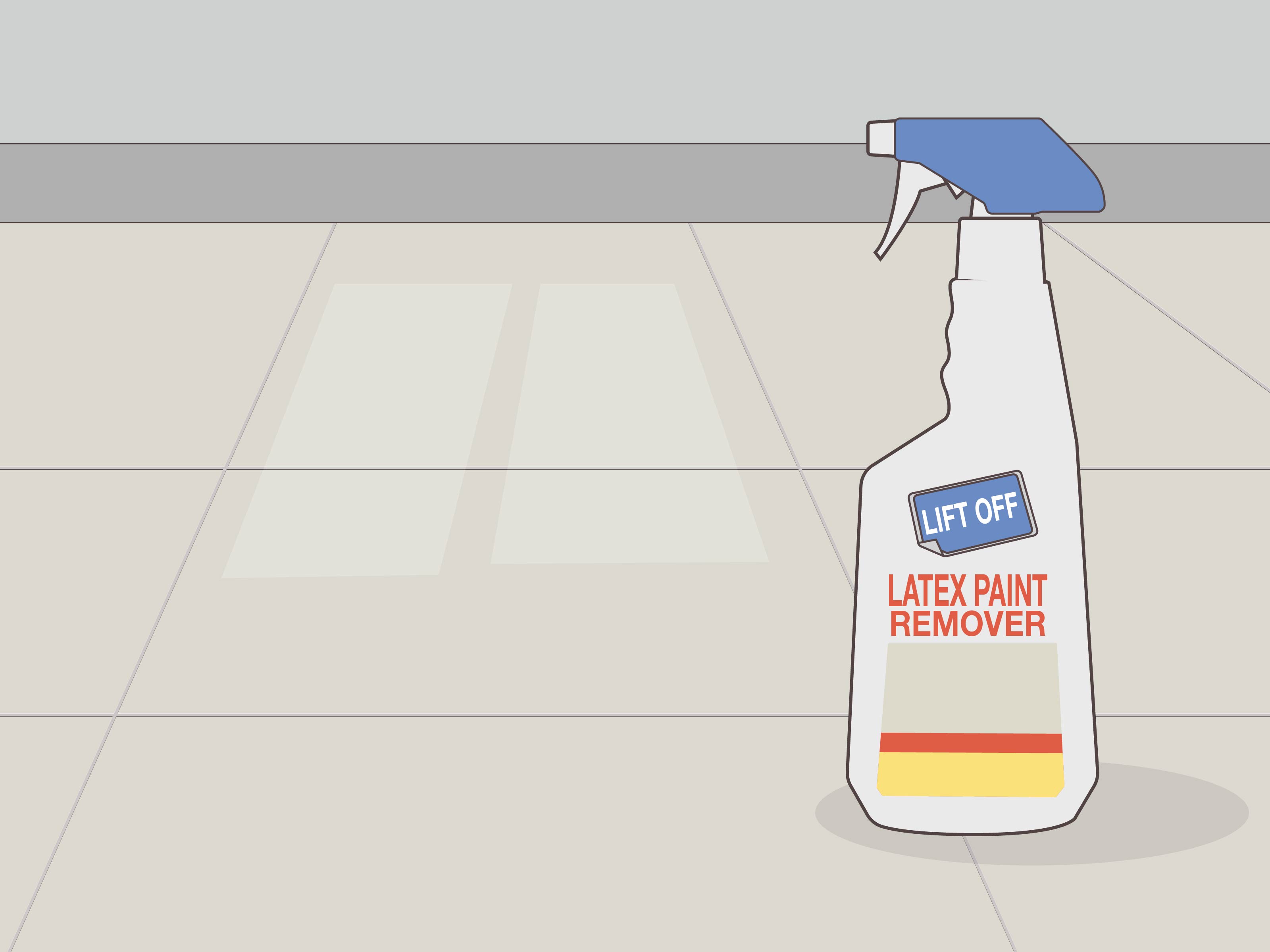
Method 6: Use a Commercial Paint Remover
When soap, scraping, alcohol, and heat are not enough, a commercial paint remover may help. Choose a product labeled safe for tile or the specific surface you are cleaning. Latex paint removers are often less aggressive than heavy-duty paint strippers and may be enough for splatters, drips, and overspray.
Steps
- Read the product label completely. Yes, the boring label. It is the tiny instruction novel that keeps your floor alive.
- Wear gloves and ventilate the room.
- Spot test in a hidden area.
- Apply a small amount to the paint, not the entire floor.
- Let it sit for the recommended time.
- Scrape gently with a plastic scraper or wipe with a cloth.
- Rinse thoroughly according to the label instructions.
Avoid harsh chemical strippers on natural stone unless the product specifically says it is stone-safe. Also avoid mixing cleaning chemicals. Bleach, vinegar, ammonia, and solvent-based removers should never be combined. Cleaning is not chemistry class, and your bathroom should not become a science fair volcano.
How to Get Paint Off Grout
Paint on grout is trickier than paint on tile because grout is porous. It can absorb pigment, especially if it is unsealed, sandy, or old. Start with gentle cleaning before using stronger methods.
Steps for Paint on Grout
- Blot fresh paint immediately with a damp cloth.
- Scrub lightly with warm water, dish soap, and a soft toothbrush.
- For dried latex paint, apply a small amount of rubbing alcohol to a cloth and dab the stain.
- Use a grout brush gently, working along the grout line.
- Rinse and dry.
If paint remains embedded, you may need a grout-safe paint remover or, in stubborn cases, grout touch-up colorant. For a tiny speck, removing the top layer of grout with a grout saw may be possible, but this is a delicate repair. Do not dig into grout unless you are prepared to regrout that section.
How to Remove Paint From Different Tile Surfaces
Ceramic Tile
Glazed ceramic tile is usually the easiest surface to clean. Try soap and water, scraping, vinegar solution, rubbing alcohol, or latex paint remover. Be careful with cracked glaze because cleaners can seep underneath and cause staining.
Porcelain Tile
Porcelain is dense and durable. Most dried paint splatters can be scraped gently or softened first. Textured porcelain may trap paint in tiny grooves, so use a soft brush after applying warm soapy water.
Natural Stone Tile
Natural stone needs the gentlest approach. Avoid vinegar, lemon juice, abrasive powders, and harsh solvents unless approved for that stone. Use pH-neutral stone cleaner, a plastic scraper, and patience. If the paint is large or old, contact a stone restoration professional.
Glass Tile
Glass tile can scratch if you use metal tools carelessly. A razor scraper may work on flat glass tile, but it must be held at a shallow angle. Avoid abrasive pads. Warm water, dish soap, and a soft cloth are usually best for fresh paint.
Textured Tile
Textured tile loves to hide paint in little valleys like it is protecting treasure. Soften the paint first, then use a nylon brush or toothbrush. Avoid wire brushes, which can scratch tile and damage grout.
Common Mistakes to Avoid
Paint removal from tile becomes harder when people rush. Here are the most common mistakes and how to avoid them.
- Using a scraper too aggressively: This can scratch tile or chip glaze.
- Skipping the spot test: Always test cleaners and solvents before using them in visible areas.
- Using vinegar on natural stone: Acid can etch marble, travertine, limestone, and similar stone.
- Mixing cleaners: Never mix bleach with vinegar, ammonia, or other cleaners.
- Overheating tile: Too much heat can crack tile or damage nearby finishes.
- Sanding old paint: This can create dust and is unsafe if lead paint is present.
- Ignoring grout: Paint can stain grout faster than tile, so treat it gently and quickly.
What About Lead Paint?
If your home was built before 1978, there is a chance old paint contains lead. This matters because scraping, sanding, heating, or grinding lead-based paint can create dangerous dust or fumes. If you suspect lead paint, do not dry scrape or sand it. Use a lead test kit or contact a certified lead-safe professional.
For small modern paint splatters from a recent painting project, lead is usually not the issue. But if you are removing old layers of paint from vintage tile, bathroom trim, baseboards, or a backsplash in an older house, safety comes first. The tile can wait. Your lungs are busy being important.
How to Prevent Paint From Getting on Tile Next Time
The easiest paint to remove is the paint that never lands on the tile in the first place. Before painting near tile, cover floors with canvas drop cloths or plastic sheeting. Use painter’s tape along baseboards, grout edges, shower tile, and backsplash lines. Press tape firmly so paint cannot sneak underneath like a tiny colorful criminal.
Keep a damp cloth nearby while painting. Wipe drips immediately. Work with smaller amounts of paint on the brush or roller to prevent splatter. If you are painting above tile floors, do not overload the roller. A roller full of paint is useful on the wall and chaotic everywhere else.
When to Call a Professional
Most small paint splatters are DIY-friendly. However, call a professional if you are dealing with large painted areas, expensive natural stone, antique tile, old lead-based paint, damaged grout, or paint that has bonded into textured surfaces. A tile restoration specialist can remove residue without making the surface worse.
You should also call for help if your attempts are dulling the tile, spreading the stain, or causing scratches. There is no shame in stopping early. In home improvement, knowing when to put down the scraper is a life skill.
Real-World Experiences: What Actually Works When Paint Meets Tile
In real homes, paint removal rarely happens in perfect textbook conditions. It usually happens after a project that started with optimism and ended with someone whispering, “Was that splatter there before?” The most reliable experience-based lesson is simple: the sooner you act, the easier the cleanup. Fresh latex paint on ceramic or porcelain tile often disappears with warm water and dish soap in less than five minutes. The same paint, left overnight, may need scraping, alcohol, and much more muttering.
One common scenario is bathroom wall painting. A few drops land on glossy floor tile near the vanity. If the homeowner wipes them right away, the problem is over. If the drops dry, a plastic scraper usually lifts the thick spots, while a damp cloth with rubbing alcohol handles the faint paint shadow. The key is to work in small areas. People often make the mistake of spreading alcohol or remover across a large section of floor, which creates slippery residue and more cleanup. Small spot, small cloth, small victory.
Kitchen backsplashes create a different challenge. Paint can settle into grout lines, especially when painting cabinets or walls around tile. In this case, aggressive scraping is not helpful because grout can crumble or discolor. A better approach is to soften the paint with warm soapy water, then use a toothbrush in short strokes. If the grout is white, a tiny remaining stain may be less noticeable after cleaning. If the grout is dark or colored, test any cleaner first because some products can lighten it.
Another real-world lesson: old credit cards are surprisingly useful. They are stiff enough to lift dried paint from smooth tile but less likely to scratch than metal blades. A plastic scraper is better for larger jobs, but a card works well around corners, baseboards, and toilet bases. It is also emotionally satisfying to make an expired card finally contribute to the household.
Heat works, but it should be used carefully. A hair dryer is often enough for small latex drips. It gently warms the paint without the intensity of a heat gun. The paint softens, the edge lifts, and a scraper can slide underneath. Heat guns are better reserved for experienced users because too much heat can damage caulk, soften nearby finishes, or crack tile if used carelessly. If you choose heat, keep it moving and never aim it at one spot like you are interrogating the floor.
Commercial paint removers can be helpful, but they should be the “last sensible step,” not the first reaction. Many homeowners reach for the strongest chemical too soon, especially when frustrated. A safer routine is to clean, soften, scrape, try alcohol, then consider a paint remover. This protects the tile and avoids unnecessary fumes. Always rinse thoroughly afterward because leftover remover can make tile slippery or attract dirt.
Natural stone is where caution pays off most. Marble and travertine can look sturdy but react badly to acidic cleaners. Someone may use vinegar successfully on porcelain tile and assume it works everywhere. It does not. On stone, vinegar can leave dull marks that are harder to fix than the original paint spot. For stone tile, gentle pH-neutral cleaner, a plastic scraper, and professional advice are often the smartest combination.
The final experience-based tip is to inspect the tile from different angles after cleaning. Paint haze can hide under bright overhead lights but show up when sunlight hits the floor. Wipe, dry, step back, and check again. If the tile looks clean, finish with a mild wash and dry towel. If a faint mark remains, repeat the gentlest successful method rather than escalating immediately. Paint removal is not a wrestling match. It is more like negotiation, except the paint never pays rent and still acts entitled.
Conclusion
Getting paint off tile is usually easy when you start gently and move step by step. Fresh paint often needs only warm water and dish soap. Dried paint may require careful scraping, rubbing alcohol, heat, or a tile-safe paint remover. Ceramic and porcelain tile are generally more forgiving, while natural stone and grout need extra caution. The golden rule is simple: test first, work slowly, and avoid harsh methods unless you are sure the tile can handle them.
Whether you are cleaning a bathroom floor, kitchen backsplash, shower wall, or entryway tile, the best paint removal method is the one that removes the paint without leaving damage behind. Be patient, use the mildest effective solution, and protect the surface before your next painting project. Your tile will look clean again, and your paintbrush will hopefully behave better next time.
Note: This article was written for web publication and synthesized from real home-improvement, cleaning, paint-removal, and household safety guidance. Always follow product labels, test cleaners in a hidden area, and use professional help for old paint that may contain lead or for delicate natural stone tile.