
Dividing fractions by a whole number sounds like one of those math topics designed to make students stare dramatically out the window. Thankfully, it is much easier than it looks. Once you understand the logic, the process becomes predictable, quick, and maybe even a little satisfying. Yes, math can be satisfying. Let us not make eye contact and ruin the moment.
If you have ever looked at a problem like 3/4 ÷ 2 and thought, “Why is the fraction being punished?” this guide will clear things up. In standard American math instruction, dividing a fraction by a whole number means splitting that fractional amount into equal smaller parts. That is why the answer usually gets smaller. You are not making more pizza. You are sharing the same pizza with more people.
In this article, you will learn the exact rule, why it works, how to simplify the result, how to handle mixed numbers, and how to avoid the classic mistakes that love to appear on homework. By the end, you should be able to solve fraction division problems confidently without feeling like your pencil is filing a complaint.
What Does It Mean to Divide Fractions by a Whole Number?
Before jumping into the steps, it helps to understand the idea. A fraction represents part of a whole. A whole number, in this case, tells you into how many equal groups you are dividing that fraction.
For example, imagine you have 1/2 of a sandwich and you want to divide it equally among 2 people. Each person gets 1/4 of the whole sandwich. So:
1/2 ÷ 2 = 1/4
You started with half, split it into two equal pieces, and each piece became smaller. That is the heart of the concept.
The Rule in One Sentence
To divide a fraction by a whole number, multiply the fraction by the reciprocal of the whole number.
That means:
a/b ÷ n = a/b × 1/n
Another shortcut, once you understand why the rule works, is this:
a/b ÷ n = a/(b × n)
In other words, keep the numerator the same and multiply the denominator by the whole number. Then simplify if needed.
How to Divide Fractions by a Whole Number in 7 Steps
Step 1: Write the Fraction Division Problem Clearly
Start by identifying the fraction and the whole number.
Example:
3/5 ÷ 4
This means you are dividing three-fifths into 4 equal parts.
Writing the problem neatly matters more than people like to admit. Many fraction mistakes begin when numbers are copied in a rush and suddenly 3/5 becomes 5/3, which is a completely different mathematical creature.
Step 2: Rewrite the Whole Number as a Fraction
Every whole number can be written as a fraction by putting it over 1.
So:
4 = 4/1
Your problem now looks like this:
3/5 ÷ 4/1
This step makes the problem easier because division with fractions follows one reliable pattern. Fractions like consistency. People do not always get that luxury.
Step 3: Flip the Whole Number to Find Its Reciprocal
The reciprocal of a number is what you get when you switch the numerator and denominator.
So the reciprocal of 4/1 is 1/4.
Now change the problem from division to multiplication:
3/5 × 1/4
This is the most important move in fraction division. It is the reason students are often taught “keep, change, flip.” The phrase is a little cheesy, but it works.
Step 4: Multiply the Numerators
Now multiply the top numbers:
3 × 1 = 3
So your new numerator is 3.
Your unfinished answer looks like this:
3 / ?
This is the easy part. The numerator often behaves itself. The denominator, meanwhile, tends to create the drama.
Step 5: Multiply the Denominators
Next, multiply the bottom numbers:
5 × 4 = 20
Now the full answer is:
3/20
So:
3/5 ÷ 4 = 3/20
This makes sense because if you take three-fifths of something and split it into four equal pieces, each piece should be smaller than three-fifths.
Step 6: Simplify the Fraction if Possible
Always check whether the fraction can be reduced to simplest form. A fraction is simplified when the numerator and denominator have no common factor greater than 1.
Example:
6/7 ÷ 3
Rewrite it:
6/7 × 1/3 = 6/21
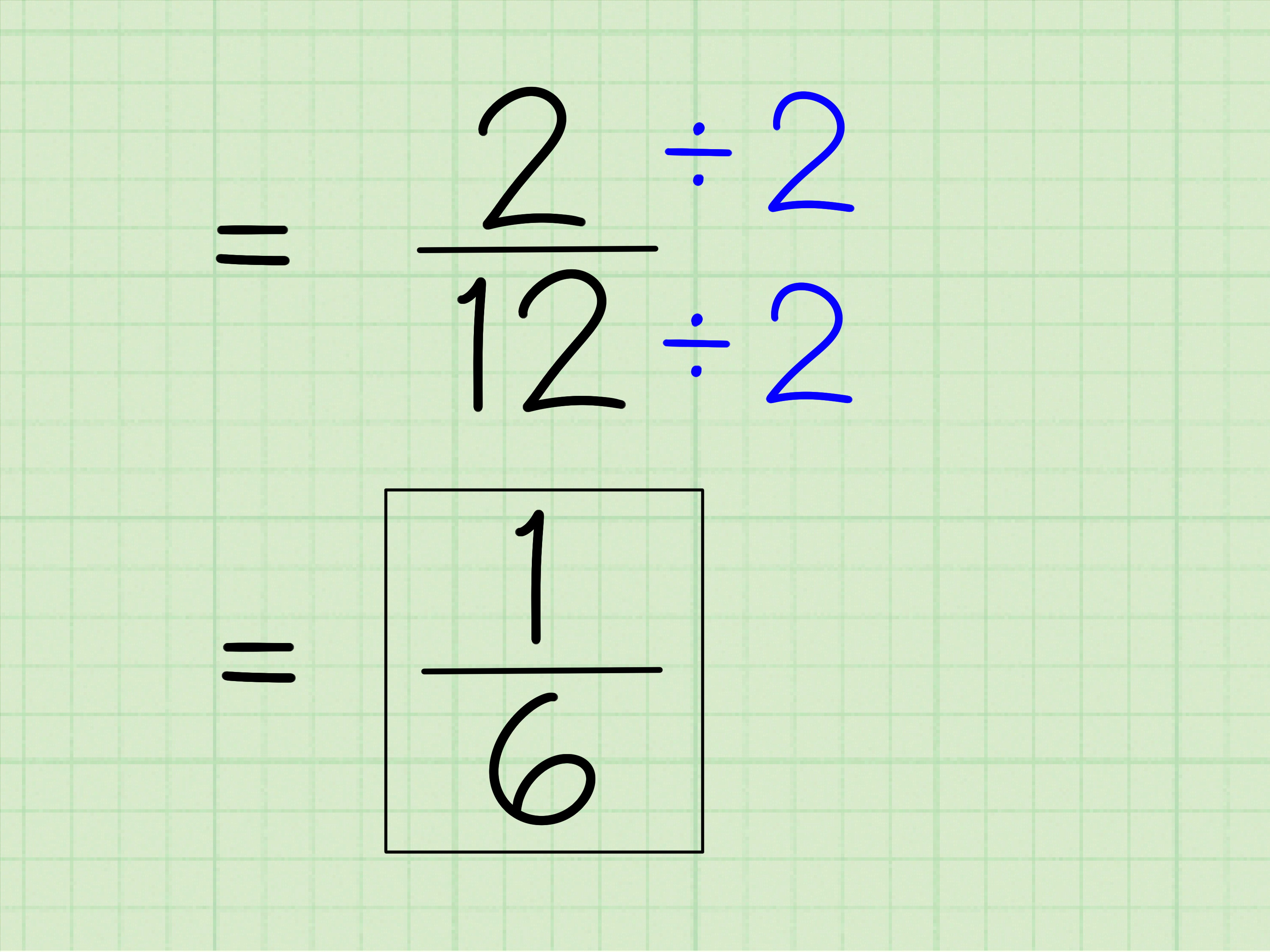
Simplify 6/21 by dividing both numerator and denominator by 3:
6/21 = 2/7
Final answer:
6/7 ÷ 3 = 2/7
Simplifying is not optional decoration. It is part of the final answer. Think of it as cleaning the kitchen after cooking instead of proudly presenting the mess as part of the meal.
Step 7: Check Whether the Answer Makes Sense
This step is the quiet hero of math. Ask yourself: Should the answer be bigger or smaller than the original fraction?
When you divide a positive fraction by a whole number greater than 1, the answer should be smaller.
For example:
7/8 ÷ 4 = 7/32
Since 7/32 is smaller than 7/8, the answer passes the common-sense test.
If you ever divide by 4 and somehow get a number larger than what you started with, something has gone very wrong and it is time to revisit the reciprocal step.
Why the Shortcut Works
Once you understand the reciprocal rule, you can spot a faster pattern. Dividing a fraction by a whole number is the same as multiplying the denominator by that whole number.
For example:
5/6 ÷ 3 = 5/(6 × 3) = 5/18
This works because:
5/6 ÷ 3 = 5/6 × 1/3 = 5/18
The shortcut is handy, but it should come after you understand the actual reasoning. Otherwise, math starts to feel like random spells from an ancient book nobody explained properly.
Examples of Dividing Fractions by Whole Numbers
Example 1: Proper Fraction
2/9 ÷ 2
Change to multiplication:
2/9 × 1/2 = 2/18 = 1/9
Example 2: Fraction That Simplifies
4/5 ÷ 2
4/5 × 1/2 = 4/10 = 2/5
Example 3: Improper Fraction
9/4 ÷ 3
9/4 × 1/3 = 9/12 = 3/4
Example 4: Mixed Number
1 1/2 ÷ 3
First convert the mixed number to an improper fraction:
1 1/2 = 3/2
Then divide:
3/2 × 1/3 = 3/6 = 1/2
How to Divide a Mixed Number by a Whole Number
If the problem starts with a mixed number, do not try to divide it in mixed-number form. Convert it first.
Example:
2 2/3 ÷ 4
Convert 2 2/3 to an improper fraction:
2 × 3 + 2 = 8
8/3 ÷ 4
Now multiply by the reciprocal:
8/3 × 1/4 = 8/12 = 2/3
Final answer:
2 2/3 ÷ 4 = 2/3
Common Mistakes to Avoid
Flipping the Wrong Number
Only the divisor gets flipped. In 3/4 ÷ 2, you flip the 2, not the 3/4.
Forgetting to Change Division to Multiplication
Once you use the reciprocal, the operation becomes multiplication. You cannot keep the division sign and expect math to smile politely.
Skipping Simplification
Answers should usually be written in simplest form. 4/12 is correct in value, but 1/3 is the better final answer.
Ignoring Mixed Number Conversion
Always convert mixed numbers to improper fractions before dividing.
Dividing by Zero
You cannot divide by 0. If the whole number is zero, the expression is undefined.
Real-World Uses for Dividing Fractions by Whole Numbers
This skill is more practical than it looks. It appears in everyday situations like:
- Splitting a recipe ingredient among several smaller batches
- Sharing a remaining piece of food equally
- Dividing craft materials, fabric, or wood into equal parts
- Planning time blocks when only part of an hour is available
- Breaking up measurements in home projects
For example, if you have 3/4 cup of batter left and want to divide it between 3 muffins, each muffin gets 1/4 cup. That is fraction division doing perfectly normal kitchen work while the measuring cups judge everyone silently.
Quick Practice Problems
- 1/3 ÷ 2
- 5/8 ÷ 4
- 7/10 ÷ 5
- 3/2 ÷ 3
- 2 1/4 ÷ 2
Answers
- 1/6
- 5/32
- 7/50
- 1/2
- 9/8 = 1 1/8
Conclusion
Learning how to divide fractions by a whole number becomes much less intimidating once you see the pattern. Write the whole number as a fraction, flip it, multiply, and simplify. That is the core method. From there, everything else is just practice and careful attention to detail.
The best part is that the process is consistent. Whether you are working with a basic fraction, an improper fraction, or a mixed number, the logic stays the same. And when the logic stays the same, your brain gets to relax a little. In math, that is practically a vacation.
So the next time a worksheet throws 5/6 ÷ 3 at you like it is issuing a challenge, you will know exactly what to do. Smile politely, flip the divisor, multiply, simplify, and move on with your day like the fraction never had a chance.
Experiences Learning How to Divide Fractions by a Whole Number
One of the most common experiences students have with this topic is realizing that their fear had absolutely no reason to be so dramatic. At first glance, fraction division looks like it belongs in a category called “things invented to ruin afternoons.” Then someone draws a picture of half a sandwich being shared by two people, and suddenly the whole idea feels much more reasonable. That visual moment matters. Many learners do not struggle with the arithmetic as much as they struggle with the wording. The second they see that 1/2 ÷ 2 simply means splitting one-half into two smaller equal parts, the tension drops.
Another very real experience is mixing up which number gets flipped. This happens constantly, and honestly, it makes sense. When people are moving quickly, they remember the word flip but forget that only the divisor gets flipped. It is a classic classroom mistake. A student sees 3/4 ÷ 2, flips 3/4 into 4/3, and suddenly the answer balloons into something suspicious. That awkward moment is actually useful because it teaches a deeper lesson: math is not just about memorizing a chant, it is about knowing what the numbers mean.
Teachers and tutors also notice that recipes help this topic click fast. Fractions by themselves can feel abstract, but food has a way of getting everybody’s attention. Say you have 2/3 cup of sauce and want to divide it into 2 equal portions. People can picture that. They can imagine the measuring cup, the spoon, and possibly the tragedy of spilling it on the counter. Once students connect the math to something physical, the rule stops feeling random.
There is also the satisfying experience of discovering the denominator shortcut. Many learners first use the full reciprocal method and then realize that with a problem like 5/7 ÷ 3, the answer becomes 5/21. That leads to the lightbulb moment: “Wait, I can just multiply the denominator by the whole number.” That shortcut feels like finding a secret passage in a game. The important part is that it works best when the student already understands why it works. Otherwise, the shortcut becomes one more rule floating around with no anchor.
Finally, many people remember the confidence boost that comes from checking whether the answer makes sense. When students start asking, “Should this answer be smaller?” they stop doing math mechanically and start thinking like problem solvers. That is a powerful shift. It turns fraction division from a list of steps into a skill they can trust. And once that trust appears, the problems get less intimidating, the errors get easier to catch, and fraction division loses most of its villain energy.