
Asking your professor for a recommendation letter via email can feel a little like sending a tiny academic balloon into the sky and hoping it lands gently on the right desk. You want to sound professional, respectful, confident, and not like you wrote the message at 1:13 a.m. while surviving on instant noodles and panic. Good news: the process is not as scary as it looks.
A strong recommendation letter can help with graduate school, scholarships, internships, fellowships, jobs, research programs, study abroad applications, and other opportunities where someone important wants proof that you are more than a GPA with shoes. Professors can speak about your academic ability, work ethic, curiosity, writing, leadership, research skills, class participation, and growth over time. But they need enough notice, useful details, and a clear request.
This guide explains how to ask your professor for a recommendation letter by email, what to include, when to send it, how to follow up, and how to avoid the common mistakes that make professors quietly reach for their third coffee.
Why the Email Matters More Than You Think
Your email is not just a request. It is your first impression in this specific application process. Even if the professor knows you well, your message sets the tone. A clear, organized email tells your professor, “I respect your time, I prepared properly, and I will not turn this into a scavenger hunt.”
Professors are busy people. They teach, grade, advise, research, attend meetings, write papers, answer emails, and somehow still remember which student wrote the surprisingly excellent essay on labor economics or Shakespearean metaphors. When you make the recommendation process easy for them, you increase your chances of receiving a thoughtful, detailed letter.
When Should You Ask for a Recommendation Letter?
The best time to ask is at least four weeks before the deadline. If possible, give your professor four to six weeks. More time is even better for major applications such as graduate school, medical school, law school, fellowships, or competitive scholarships.
Why so early? Because a good letter takes thought. Your professor may need to review your work, compare your strengths to the program’s expectations, upload the letter to multiple portals, or write several versions. Asking two days before the deadline is technically an email, but spiritually it is a fire alarm.
Best timing rules
- Ask four to six weeks before the deadline whenever possible.
- Ask earlier if the deadline falls during finals, holidays, summer break, or conference season.
- If you are still in the professor’s class, ask near the end of the semester while your work is fresh.
- If you graduated already, remind the professor who you are and reconnect politely before making the request.
Who Should You Ask?
The best recommender is not always the most famous professor on campus. Choose someone who knows your work well and can write specific, positive, credible examples. A detailed letter from a professor who taught you in a small seminar, supervised your research, or saw your improvement may be stronger than a vague letter from a celebrity scholar who remembers you as “student in row three, probably.”
Good professors to ask include:
- A professor whose class you performed well in.
- A research adviser or thesis supervisor.
- A professor who knows your writing, lab work, presentations, or class contributions.
- A faculty mentor who understands your goals.
- A professor connected to the field you are applying to.
If you are applying to an academic program, academic recommenders usually carry the most weight. For internships or jobs, a professor may still be helpful, especially if they can discuss skills such as analysis, communication, teamwork, reliability, or problem-solving.
Ask for a Strong Letter, Not Just a Letter
Here is a small wording trick with a big payoff: ask whether the professor would feel comfortable writing a strong recommendation letter. This gives them room to say no if they do not know you well enough or cannot write enthusiastically. A polite “no” is better than a lukewarm letter that says, “This student attended class and appeared to own a notebook.”
For example, write: “Would you feel comfortable writing a strong letter of recommendation for my application?” That phrase is professional, clear, and respectful. It also shows that you understand recommendation letters are voluntary and should be positive, detailed, and honest.
What to Include in Your Email
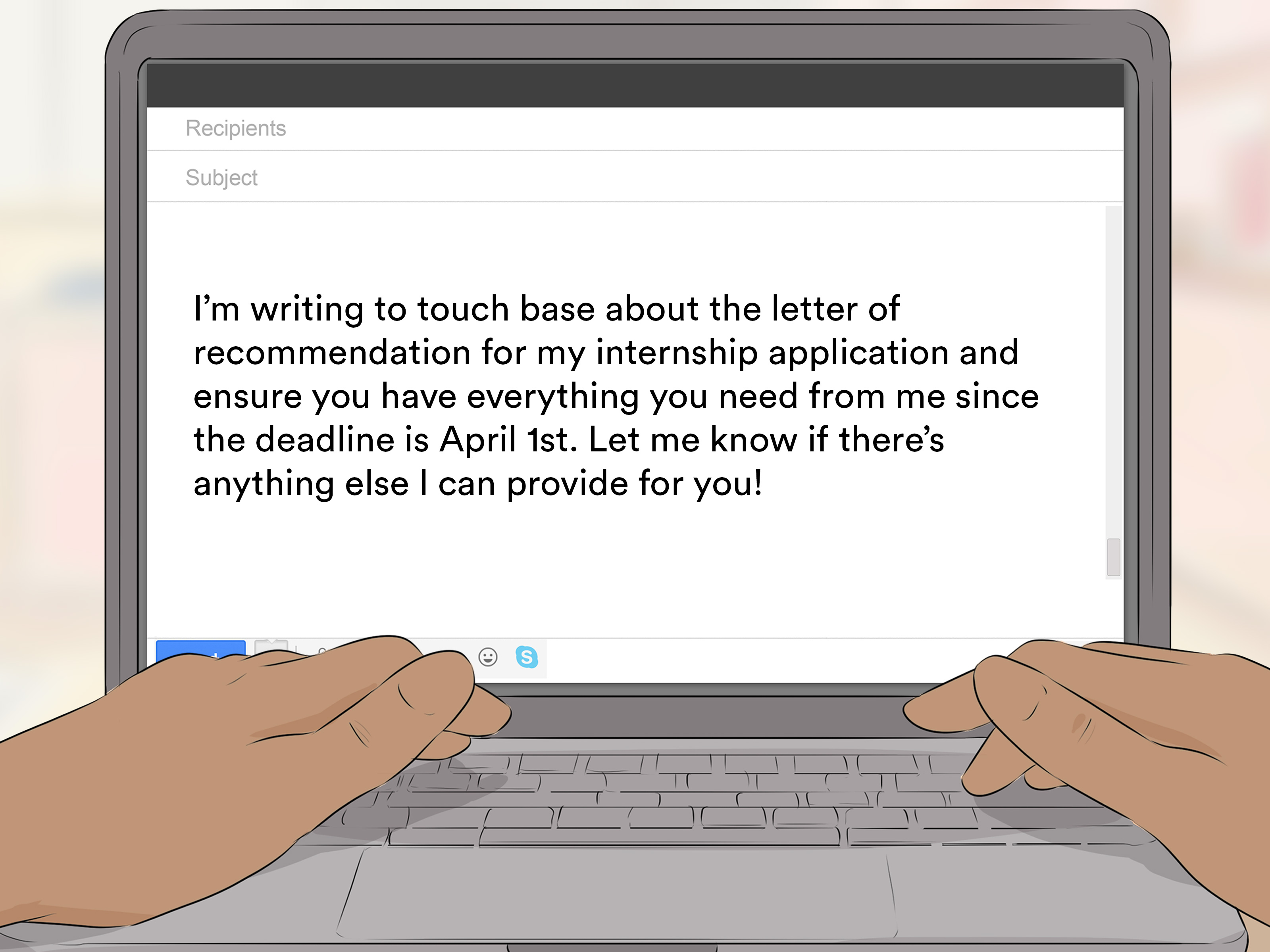
A great recommendation request email is not long, but it is complete. Your professor should be able to understand who you are, what you are applying for, why you are asking them, what the deadline is, and what materials you can provide.
Your email should include:
- A clear subject line.
- A polite greeting.
- A reminder of who you are and how the professor knows you.
- The opportunity you are applying for.
- Why you are asking this professor specifically.
- The deadline and submission method.
- A short list of attached materials.
- A respectful option to decline.
- A warm thank-you.
Best Subject Lines for Recommendation Letter Requests
Your subject line should be simple and searchable. Professors live in their inboxes, and a clear subject line helps them find your message later.
- Recommendation Letter Request [Your Name]
- Request for Graduate School Recommendation Letter
- Letter of Recommendation Request for [Program Name]
- Recommendation Request Deadline [Month Day]
- Request for Strong Recommendation Letter
Avoid subject lines like “Quick Question,” “Help,” or “Important!!!” The first is too vague, the second sounds alarming, and the third feels like your keyboard is wearing a cape.
Sample Email: Asking a Professor for a Recommendation Letter
Here is a polished email template you can adapt. Keep it personal. Professors can recognize copy-and-paste energy the same way teachers can detect suspiciously dramatic font choices.
Subject: Recommendation Letter Request Jordan Lee
Dear Professor Martinez,
I hope you are doing well. I was a student in your Introduction to Public Policy course last spring, and I especially enjoyed the final research project on housing policy. Your feedback on that paper helped me strengthen my analysis and made me more interested in policy research.
I am applying for the Master of Public Policy program at Greenfield University, and I wanted to ask whether you would feel comfortable writing a strong letter of recommendation for my application. I thought of you because your course was one of the most important academic experiences that shaped my interest in public policy, and I believe you could speak to my research, writing, and class participation.
The application deadline is December 15, and the letter would be submitted through the university’s online application portal. If you are willing, I can send my resume, unofficial transcript, draft statement of purpose, program details, and a short summary of the work I completed in your class.
I understand that this is a busy time of year, so please do not feel obligated if your schedule does not allow it. Thank you very much for considering my request.
Sincerely,
Jordan Lee
What Materials Should You Send?
Once your professor agrees, send a tidy packet of supporting materials. This is where you become the most organized version of yourself. Your goal is to help the professor write a letter full of specifics instead of generic compliments.
Useful materials include:
- Your resume or CV.
- Your unofficial transcript.
- Your personal statement, statement of purpose, or application essay draft.
- A description of the program, scholarship, internship, or job.
- The exact deadline.
- Submission instructions and links.
- A short reminder of your work with the professor.
- Examples of papers, projects, presentations, or research you completed.
- A few bullet points about skills or achievements you hope they can mention.
Do not attach fifteen mystery files named “final_final_REVISED_use_this_one.pdf.” Give each document a clear name, such as “Jordan Lee Resume,” “Jordan Lee Statement Draft,” and “Recommendation Instructions.” Future you will also thank present you.
How to Remind a Professor Who You Are
If you took a large lecture course or have not spoken with the professor in a while, include a short reminder. This is not awkward. It is helpful. Professors teach many students, and even excellent students can blur together after enough semesters.
You might write: “I took your Biology 210 course in Fall 2024 and earned an A-. My final project focused on antibiotic resistance in hospital settings. I also visited office hours twice to discuss research design.”
That short reminder gives the professor memory hooks. It also helps them write a letter with details, which is exactly what admissions committees and employers value.
How to Ask If You Are Short on Time
Sometimes life happens. Maybe you discovered an opportunity late, missed an internal deadline, or underestimated how long application portals take to load when your future is at stake. If you have less than two weeks, be honest and extra polite.
Acknowledge the short timeline directly. Give the professor an easy way to decline. Provide all materials immediately. Do not pressure them, guilt them, or imply that your entire destiny is now parked in their inbox.
Dear Professor Chen,
I apologize for the short notice, but I recently learned about a summer research program with a deadline of May 10. I completely understand if this timeline is too tight. If you would still feel comfortable writing a strong recommendation letter, I would be very grateful and can send all materials today.
This approach is honest and respectful. It does not magically create more hours in the day, but it does show maturity.
How to Follow Up Without Being Annoying
If your professor agrees to write the letter, send a polite reminder one to two weeks before the deadline. If the portal still shows the letter as missing a few days before the due date, send another brief reminder. Keep it friendly, factual, and calm.
Subject: Friendly Reminder Recommendation Letter Due December 15
Dear Professor Martinez,
I hope you are doing well. I wanted to send a friendly reminder that my recommendation letter for Greenfield University is due on December 15. The submission link should have come from the application portal. Thank you again for supporting my application. I truly appreciate your time.
Sincerely,
Jordan Lee
Notice the tone: polite, not panicked. You are reminding, not launching a courtroom cross-examination.
Should You Waive Your Right to View the Letter?
Many academic applications ask whether you waive your right to view the recommendation letter. In most U.S. academic contexts, students often waive this right because confidential letters may be viewed as more candid by admissions committees. If you are unsure, ask an academic adviser or career counselor at your school.
The important thing is not to pressure your professor about what they wrote. Recommendation letters work best when the writer can be honest, specific, and professional.
Common Mistakes to Avoid
1. Asking too late
Last-minute requests can lead to rushed letters or no letter at all. Give your professor enough time to write something thoughtful.
2. Choosing someone who barely knows you
A famous name is less useful than a detailed letter. Choose a professor who can discuss your actual work.
3. Sending a vague request
“Can you write me a letter?” is not enough. Include the opportunity, deadline, reason for asking, and supporting materials.
4. Forgetting submission instructions
If the professor has to chase you for links, forms, or deadlines, you have accidentally assigned homework to the person doing you a favor.
5. Not saying thank you
Always thank your professor. A recommendation letter takes time, effort, and thought. Gratitude is not optional; it is the academic version of closing the fridge door.
How to Thank Your Professor
After the letter is submitted, send a thank-you email. If you get accepted, win the scholarship, land the internship, or receive good news, update them later. Professors often appreciate hearing the outcome, especially when they helped you along the way.
Dear Professor Martinez,
Thank you again for writing my recommendation letter for the Master of Public Policy program. I really appreciate the time and support you gave to my application. I will keep you updated when I hear back.
Sincerely,
Jordan Lee
Complete Recommendation Letter Request Checklist
- Choose a professor who knows your work well.
- Ask four to six weeks before the deadline.
- Use a clear subject line.
- Ask whether they can write a strong letter.
- Explain what you are applying for.
- Remind them how they know you.
- Provide your resume, transcript, statement, and program details.
- Include the deadline and submission instructions.
- Send a polite reminder before the deadline.
- Send a thank-you message after submission.
Experience Notes: What Students Learn When Asking Professors for Recommendation Letters
One experience many students share is realizing that the hardest part is not writing the email. It is deciding whom to ask. Students often assume they need the professor with the biggest title, the longest publication list, or the office with the most intimidating bookshelf. In reality, the best letter usually comes from someone who remembers your thinking. A professor who watched you revise a messy first draft into a sharp final paper can often write a stronger letter than a department chair who only saw your name in the gradebook.
Another common lesson is that professors are usually kinder than students expect. Many students delay asking because they imagine the professor opening the email, sighing dramatically, and whispering, “How dare this student request professional support from a professional educator?” That is rarely what happens. Writing recommendation letters is a normal part of academic life. Professors understand that students need them for graduate school, scholarships, internships, and research opportunities. What they appreciate most is a respectful request and enough information to do the job well.
Students also learn that preparation reduces awkwardness. When you send your resume, transcript, statement draft, deadline, and a few reminders of your work, the email becomes less like begging and more like collaboration. You are not asking the professor to invent your life story from memory. You are giving them a clean folder of evidence. That makes their letter more accurate, more specific, and more persuasive.
Some students discover the value of maintaining relationships before they need anything. Visiting office hours, asking thoughtful questions, participating in class, and following up after a course can make future recommendation requests feel natural. This does not mean you need to become the professor’s unofficial shadow. It simply means that academic relationships are built through genuine engagement over time. A five-minute conversation after class can become surprisingly useful months later.
There is also an emotional side. Asking for a recommendation can make students feel exposed. You are asking someone to evaluate your potential, and that can stir up doubt. But the process can also be encouraging. A professor may remember strengths you forgot you had. They may point out how much your writing improved or how seriously you approached a project. Sometimes the act of asking reminds you that your work has been seen.
Finally, students learn that professionalism is a habit. Sending a clear email, meeting deadlines, organizing documents, following up politely, and saying thank you are small actions, but they show maturity. These habits matter beyond recommendation letters. They help in job searches, networking, research, internships, and graduate school. In other words, learning how to ask your professor for a recommendation letter via email is not just about getting one letter. It is practice for communicating like someone ready for the next opportunity.
Conclusion
Asking your professor for a recommendation letter via email does not need to be dramatic. The formula is simple: ask early, choose wisely, be specific, provide helpful materials, and show gratitude. Your professor is not a mind reader, a deadline magician, or a document detective. Make the process easy, and you give them the best chance to write a letter that presents you as prepared, capable, and ready for the opportunity ahead.
A strong recommendation request email is polite, organized, and personal. It reminds the professor who you are, explains why their perspective matters, and gives them the information they need to support you well. Do that, and your email will not just ask for a letter. It will demonstrate the professionalism that makes you worth recommending in the first place.