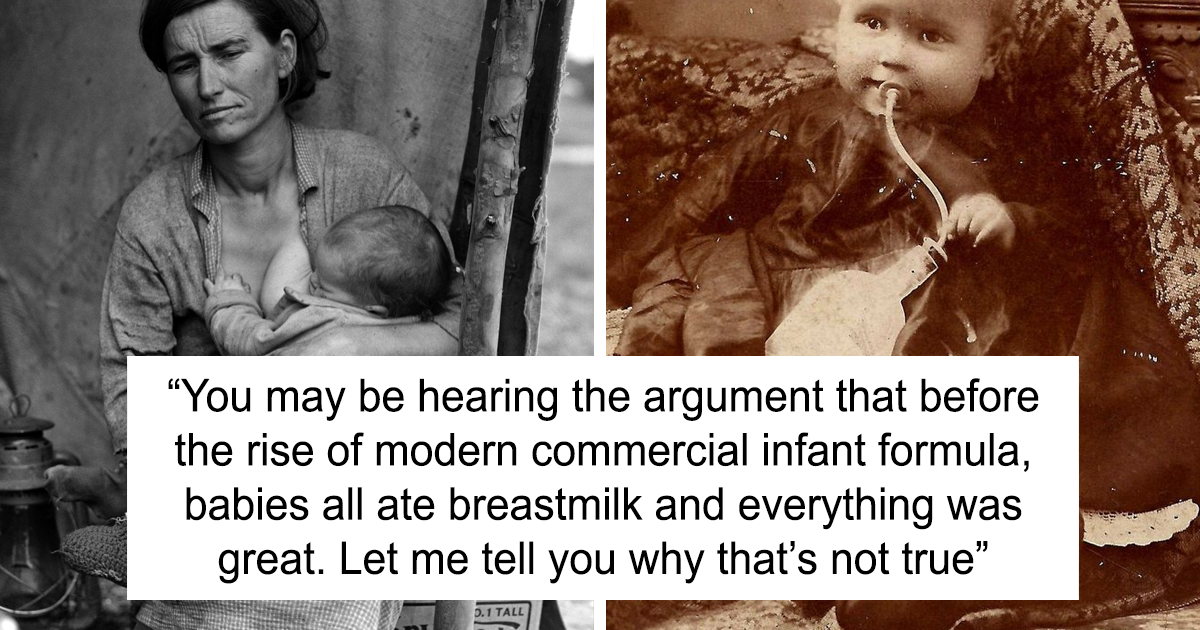

Every so often, the internet rediscovers an old idea, dusts it off, and presents it like a shiny life hack from Grandma’s pantry. During the U.S. baby formula shortage, one of those ideas came roaring back: “Why don’t mothers just breastfeed like they did before formula?”
It sounds simple if you imagine history as a sepia-toned painting where everyone churned butter, babies slept peacefully, and nobody had to Google “why is my newborn screaming at 3 a.m.” But as historian Dr. Carla Cevasco and other infant-feeding scholars have pointed out, the “pre-formula days” were not a cozy breastfeeding paradise. They were often dangerous, desperate, and heartbreaking.
The truth is that breastfeeding has always been important, but it has never been possible for every parent or every baby. Before modern infant formula became safe and nutritionally reliable, families who could not breastfeed faced terrifying choices: wet nursing, animal milk, grain mixtures, broth, spoon-feeding, bottle-feeding with unsanitary equipment, or watching an infant slowly fail to thrive. That is not nostalgia. That is a horror story with lace bonnets.
The Myth: “Everyone Breastfed Before Formula”
The internet loves a neat answer, especially when that answer fits into a comment box and makes the writer feel like they have personally solved public health. “Just breastfeed” is one of those answers. It assumes every mother produces enough milk, every baby can latch, every parent is alive and medically able, and every household has the time, support, privacy, nutrition, and safety needed to make breastfeeding work.
History disagrees. Loudly.
Parents in the past struggled with low milk supply, postpartum illness, maternal death, infant prematurity, cleft palate, poor latch, infection, exhaustion, poverty, and work demands. Babies were adopted, orphaned, enslaved, abandoned, or cared for by relatives. Some mothers had to return to labor quickly because the alternative was hunger for the entire household. Others were too malnourished or sick to nurse successfully.
So no, the pre-formula world was not a magical land where breasts functioned like perfect little dairy factories with 24-hour customer service. People needed alternatives. The problem was that many alternatives were risky, contaminated, nutritionally incomplete, or socially brutal.
Wet Nursing: The “Safer” Alternative With a Dark Side
Before modern formula, wet nursing was often considered the best alternative when a baby’s own mother could not breastfeed. A wet nurse is a lactating woman who nurses another person’s child. In many societies, this was common, especially among wealthy families who could pay or force someone else to do the work.
For some babies, wet nursing saved lives. Human milk was far safer than most substitutes available before refrigeration, clean water, antibiotics, and modern food safety. But wet nursing also carried serious ethical and health problems. Wealthy families could hire a wet nurse, but the wet nurse’s own baby might receive less milk or be weaned too early. In slaveholding societies, enslaved women were sometimes forced to nurse the babies of enslavers while their own infants suffered. That is not a charming historical workaround. That is exploitation with a nursery wallpaper border.
Wet nursing could also spread disease, and quality varied widely depending on the nurse’s health, nutrition, and circumstances. Families sometimes sent infants away to be nursed, which created distance, neglect, and additional danger. It may have been one of the safer options in some periods, but “safer” in history often means “less catastrophic than the other options,” not “good.”
Dry Nursing, Pap, Panada, and Other Terrible Menu Items
When wet nursing was unavailable, families turned to what historians call dry nursing: feeding infants without breast milk. This could involve animal milk, bread soaked in water, flour mixtures, broth, sugar water, or cereal-based foods known as pap or panada. If this sounds like a toddler’s rejected lunch, remember that these were sometimes given to newborns whose digestive systems were absolutely not prepared for them.
Animal milk was nutritionally different from human milk. Cow’s milk, goat’s milk, or other substitutes could be too high in some nutrients, too low in others, hard to digest, or dangerous without proper handling. Grain mixtures could fill a baby’s stomach without providing enough protein, fat, vitamins, minerals, or immune support. Babies might appear fed while actually becoming malnourished.
Then came contamination. Before safe water, refrigeration, sterilized bottles, pasteurization, and antibiotics, a bottle of milk could become a microbial theme park. Feeding equipment was often difficult to clean. Long-tube bottles, once popular, trapped old milk and bacteria in places nobody could scrub properly. Babies fed contaminated milk or gruel were at high risk of diarrhea, dehydration, infection, and death.
So when someone says, “People managed before formula,” the accurate response is: many did not. Many babies died.
Modern Formula Is Not a Luxury Item
Modern infant formula is not powdered laziness. It is a regulated food designed to provide essential nutrition when breast milk is unavailable, insufficient, or not the chosen feeding method. In the United States, infant formula must meet federal nutrient requirements and manufacturing standards. It is not perfect, and recalls prove why oversight matters, but regulated formula is a lifesaving development compared with homemade substitutes and historical guesswork.
The FDA requires infant formula sold in the U.S. to contain a specific set of nutrients, including protein, fat, vitamins, minerals, and other components needed for infant growth. Pediatric organizations continue to recommend breastfeeding when possible and desired, but they also recognize that safe formula is necessary for many babies.
That distinction matters. Supporting breastfeeding does not require shaming formula feeding. Promoting formula safety does not mean attacking breastfeeding. Babies need to eat. Parents need support. The enemy is not a bottle or a breast. The enemy is pretending one feeding method can solve every medical, social, and economic reality.
Why “Just Breastfeed” Is Not a Serious Public Health Plan
Breastfeeding can be beautiful, practical, emotionally meaningful, and nutritionally valuable. It can also be painful, difficult, impossible, or unwanted. A serious conversation about infant feeding must include real barriers.
Milk Supply Does Not Always Match the Baby’s Needs
Some parents produce plenty of milk. Others do not. Low supply can happen because of hormonal issues, breast surgery, retained placenta, thyroid conditions, premature birth, insufficient glandular tissue, certain medications, stress, poor nutrition, or inadequate early feeding support. Telling a parent with low supply to “just breastfeed” is like telling someone with a broken leg to “just sprint.” Inspirational? Maybe. Useful? Absolutely not.
Babies Are Not Always Able to Nurse Effectively
Some infants have tongue-tie, cleft palate, neurological issues, prematurity, illness, weakness, or difficulty coordinating sucking and swallowing. A baby who cannot transfer milk effectively can become dehydrated or lose too much weight even if the parent is trying constantly. In these cases, formula, donor milk, expressed milk, feeding tubes, or specialized feeding plans can be medically necessary.
Parents May Have Medical or Practical Barriers
Some parents take medications that are not compatible with breastfeeding. Some are undergoing cancer treatment. Some have infections, trauma histories, mental health needs, disabilities, or severe pain. Some are adoptive parents, foster parents, fathers, grandparents, or other caregivers. Some must return to work quickly in jobs without private pumping space or predictable breaks. “Just breastfeed” collapses all of these realities into one smug sentence and then acts surprised when reality refuses to cooperate.
The Formula Shortage Proved How Fragile Infant Feeding Systems Can Be
The 2022 U.S. formula shortage was frightening because it revealed how many families depend on reliable access to infant formula. The shortage was worsened by recalls, supply-chain disruptions, market concentration, regulatory barriers, and panic buying. For parents of babies with allergies, metabolic conditions, or special medical needs, the crisis was especially terrifying.
When shelves went empty, some people recommended unsafe substitutions: homemade formula, watered-down formula, cow’s milk for very young infants, or unregulated imported products. Pediatric experts and public health agencies warned against these choices because babies require precise nutrition and are vulnerable to contamination and electrolyte imbalances. In plain English: babies are not tiny adults who can survive on “close enough.” Their bodies are small, fast-growing, and extremely unforgiving of feeding mistakes.
The shortage did not prove formula is unnecessary. It proved the opposite. Formula is so essential that when access falters, families panic for very good reasons.
What the History Professor Was Really Saying
The historian’s argument was not that breastfeeding is bad. It was that history should not be used as a weapon against modern parents. Before formula, families did not have a single perfect system. They had a patchwork of survival strategies. Some worked. Some failed. Some saved one baby while endangering another. Some were built on inequality, poverty, and women’s unpaid or coerced labor.
When people romanticize the pre-formula past, they often erase the babies who died, the mothers who suffered, the wet nurses whose own children were harmed, and the families who had no safe options. That romantic version of history is tidy because it leaves the bodies out.
Real history is messier. It includes grief, diarrhea, starvation, infected bottles, desperate spoon-feeding, exhausted mothers, and infants who never reached their first birthday. It also includes community care, maternal ingenuity, medical progress, and the long struggle to make infant feeding safer.
Breastfeeding Support and Formula Access Should Not Be Enemies
A healthier approach is not “breast versus bottle.” It is “feed babies safely.” That means supporting breastfeeding parents with paid leave, lactation help, workplace pumping protections, insurance coverage for pumps, respectful medical care, and social acceptance. It also means protecting formula access with strong safety regulations, diversified supply chains, affordable pricing, emergency planning, and accurate public guidance.
Families should not have to choose between shame and starvation. A parent who breastfeeds deserves support. A parent who formula feeds deserves support. A parent who combination feeds deserves support. A parent who tried breastfeeding and stopped deserves support. A parent who never wanted to breastfeed deserves support. The baby does not care whether the adult on the internet approves. The baby cares about being fed.
The Real Lesson From the Pre-Formula Days
The lesson from history is not that modern parents are weak. It is that modern infant feeding options are precious. Breast pumps, lactation consultants, donor milk banks, regulated formula, clean bottles, safe water, refrigeration, pediatric care, and emergency formula programs are not signs of failure. They are signs that society learned a few things after centuries of infant loss.
There is a reason public health experts warn against homemade formula. There is a reason pediatricians monitor newborn weight gain. There is a reason hospitals track jaundice and dehydration. There is a reason formula cans come with careful instructions instead of “mix until it looks baby-ish.” We learned the hard way that infant nutrition is exacting.
History does not say, “Go back.” History says, “Please do not make us repeat this.”
Experiences Related to the Topic: What Modern Parents Still Go Through
Ask parents about feeding a newborn, and you will hear stories that are tender, funny, exhausting, and occasionally worthy of a dramatic soundtrack. One mother may describe nursing her baby at 2 a.m. with one eye open and the other eye negotiating with the universe. Another may remember sitting beside a hospital bassinet while a nurse explained that the baby had lost too much weight and needed supplementation. That moment can feel crushing, especially for parents who were told that breastfeeding would be natural, instinctive, and glowing. Natural, yes. Always easy? Absolutely not. Volcanoes are natural too.
Some parents experience the shock of low milk supply. They drink water, eat oatmeal, pump after feeds, track diapers, meet lactation consultants, and still watch the scale refuse to move. For them, formula can feel like both relief and grief: relief because the baby is finally satisfied, grief because the feeding journey does not match the fantasy they were sold. That emotional complexity deserves compassion, not a comment section full of people yelling, “Try harder!”
Other parents have the opposite experience. They breastfeed successfully but feel trapped by the constant physical demand. A newborn may feed every two to three hours, sometimes more often during cluster feeding. That means the breastfeeding parent’s body becomes the kitchen, comfort object, hydration station, and all-night diner. Without paid leave, family help, or workplace pumping support, even parents who want to continue nursing can be pushed into impossible choices.
Formula-feeding parents have their own challenges. They measure scoops at midnight, sterilize bottles, compare brands, watch for digestive reactions, budget for rising costs, and sometimes drive from store to store looking for the one formula their baby tolerates. During shortages, that anxiety can become overwhelming. Parents of babies needing hypoallergenic or specialty formula know this fear especially well. You cannot simply swap products when a baby has allergies, reflux, metabolic conditions, or medical fragility.
Then there are combination-feeding families, who often become experts in logistics. They breastfeed, pump, supplement, wash parts, label milk, prepare bottles, and somehow still get asked whether they are “really breastfeeding.” These parents deserve medals, snacks, and perhaps a small parade consisting entirely of people carrying clean burp cloths.
Many families also carry cultural pressure. One grandparent may insist breast milk is best. Another may say formula made their children “turn out fine.” Social media adds another layer, serving up perfect freezer stashes, spotless nurseries, and influencers who appear to breastfeed while wearing white linen and inner peace. Meanwhile, real parents are trying to remember whether they washed the bottle nipple or just thought about washing it very sincerely.
The most important experience is this: feeding decisions are rarely abstract. They happen in kitchens, hospital rooms, cars, workplaces, and bedrooms where exhausted adults are trying to keep a tiny human alive. The history professor’s point lands so strongly because it restores seriousness to a conversation that too often becomes moral theater. Babies have always needed safe food. Parents have always needed help. The pre-formula past shows what happens when families are left with too few options.
So the next time someone says, “Mothers should just breastfeed like they did in the old days,” picture the old days honestly. Picture the wet nurse whose own baby went hungry. Picture the bottle that could not be properly cleaned. Picture the infant fed bread mush because there was no better choice. Picture the mother who died in childbirth, the baby who could not latch, the family with no money, no doctor, no refrigerator, and no safe substitute. Then picture a modern parent opening a can of regulated formula and feeding a baby who needs it.
That is not failure. That is progress.
Conclusion
The argument that mothers should simply breastfeed “like in the pre-formula days” falls apart the moment we look at actual history. Breastfeeding has always been valuable, but it has never been universally possible. Before modern infant formula, many babies depended on risky substitutes, exploited wet nurses, unsanitary bottles, or nutritionally poor mixtures. Too many paid with their lives.
Modern families need more support, not more shame. The goal should be safe feeding, informed choices, strong breastfeeding resources, reliable formula access, and compassion for parents doing one of the hardest jobs on earth with very little sleep and an alarming amount of laundry.
Note: This article is for educational and informational purposes only. Parents and caregivers should consult a pediatrician, lactation consultant, or qualified healthcare professional for infant-feeding decisions.