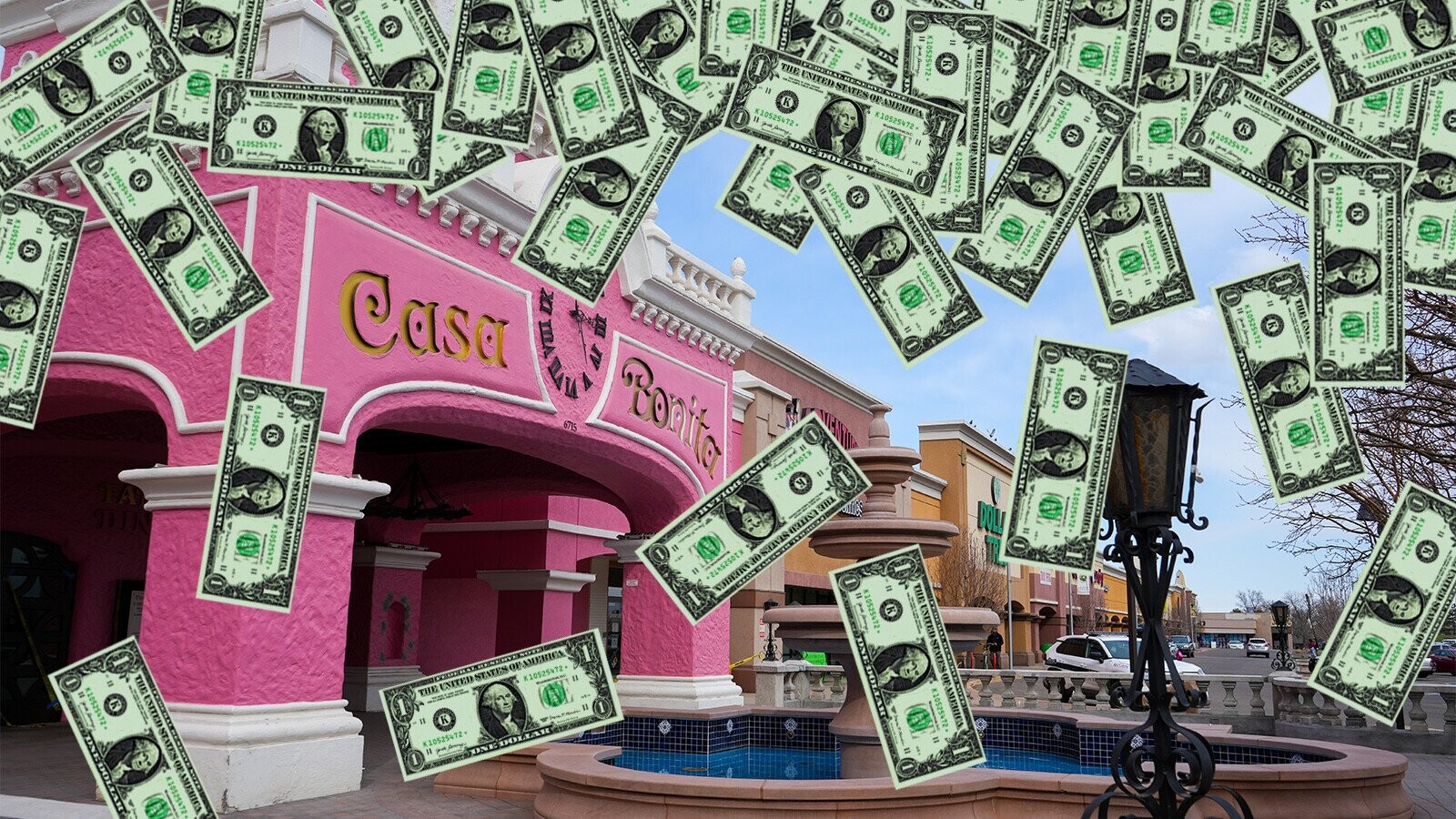

There are expensive passion projects, and then there is buying a beloved Colorado restaurant with cliff divers, puppet shows, mystery caves, nostalgia fumes, and a renovation bill that appears to have looked at sanity, laughed, and ordered another round of sopapillas.
When Trey Parker and Matt Stone, the creators of South Park, bought Casa Bonita, it sounded like the kind of rich-person decision that could only happen after someone said, “Wouldn’t it be funny if…” and nobody in the room was brave enough to hide the checkbook. The Lakewood, Colorado landmark had closed during the pandemic, gone through bankruptcy, and looked in need of rescue. Parker and Stone, who grew up with Casa Bonita as a childhood legend and later immortalized it in a classic South Park episode, stepped in to save the pink palace.
Then the renovation happened. What began as a restoration dream reportedly ballooned past $40 million, with later coverage and interviews describing the total as closer to $50 million. That is not a remodel. That is what happens when a building inspection opens a trapdoor and the trapdoor leads to another, more expensive trapdoor.
So, in the spirit of lovingly roasting two men who turned cartoon money into a real-life Mexican restaurant theme park, let’s ask the important question: What else could Trey Parker and Matt Stone have done with the money they sunk into Casa Bonita?
The Casa Bonita Money Pit: A Very Pretty House With Very Ugly Receipts
Casa Bonita was never just a restaurant. It was a sensory event. Since opening in Lakewood in 1974, it became famous for cliff divers, caves, mariachi music, arcade games, puppet shows, a pink tower, and food that many visitors historically described with the kind of politeness usually reserved for a cousin’s experimental casserole.
That strange mix of spectacle and questionable dining is exactly why people loved it. Casa Bonita was not selling dinner. It was selling childhood, chaos, and the right to say, “Yes, I ate enchiladas near an indoor waterfall.”
After Parker and Stone bought it out of bankruptcy, they did not simply repaint the walls, fix the menu, and call it a day. They hired chef Dana Rodriguez to improve the food, restored the entertainment, repaired major structural issues, and tried to preserve the soul of a place that was somehow both a restaurant and a fever dream with table service.
The result has been wildly popular. Public reservation releases drew enormous online demand, and reports described tens of thousands of hopeful diners trying to get a table. Casa Bonita is now less “forgotten roadside oddity” and more “culinary Disneyland for people who grew up on Colorado field trips and Cartman quotes.”
Still, $40 million to $50 million is a lot of money. It is enough money to change a neighborhood, produce movies, fund scholarships, open normal restaurants, and possibly build a golden statue of a sopapilla visible from space. Let’s explore the alternatives.
1. They Could Have Produced a Small Army of Indie Movies
For the reported cost of Casa Bonita’s renovation, Parker and Stone could have financed a mini film studio devoted entirely to weird, funny, risky independent movies. Not one movie. Not two. A whole slate.
Independent films often live in the $3 million to $10 million range, and some acclaimed movies are made for far less. A $40 million budget could fund eight $5 million films or four $10 million films with room left over for marketing, festival travel, and emergency burritos.
Imagine the possibilities: a mockumentary about competitive mall fountain maintenance, a horror-comedy set in a haunted buffet, a prestige drama about a man who discovers his father was a theme-restaurant magician, or a musical called Equity: The Sopapilla Story. Would every film be good? Absolutely not. But would at least one become a cult classic watched by film students at 2 a.m.? Almost certainly.
This option would also align with what Parker and Stone do best: storytelling. Instead of restoring one nostalgia palace, they could have created a production pipeline for strange voices, Colorado filmmakers, animators, and comedians who need funding more than Hollywood needs another franchise reboot involving a laser in the sky.
2. They Could Have Opened Several Normal Restaurants
Casa Bonita is not a normal restaurant. Normal restaurants do not require divers, cave maintenance, theatrical lighting, crowd flow strategy, and a spiritual advisor for the accounting department.
Typical restaurant build-outs can vary widely, but industry estimates often place many restaurants in the hundreds of thousands to low millions depending on size, location, design, equipment, and lease conditions. Even at a generous $2 million to $3 million per restaurant, Parker and Stone could have opened a dozen or more smaller restaurants across Colorado.
They could have launched a Denver comedy diner, a Colorado-style breakfast joint, a legit taco shop, a late-night animation-themed burger bar, or a place called Matt & Trey’s Reasonable Financial Decision Café, which would serve coffee, salads, and investor relief.
But would any of those restaurants have indoor cliff diving? Probably not. And that is where Casa Bonita wins. A normal restaurant can serve excellent food. Casa Bonita serves excellent absurdity with a side of “What room are we in now?”
3. They Could Have Paid Hundreds of Teachers for a Year
Let’s get practical for a moment before the next joke falls into Black Bart’s Cave. Tens of millions of dollars could do serious public good. Based on recent teacher salary averages, the money spent on Casa Bonita could have covered a year of pay for hundreds of educators.
That does not mean Parker and Stone were morally obligated to become a school district. They earned their money, and saving a cultural landmark is not the same as buying a yacht shaped like your own face. Still, the comparison is striking.
With $40 million, a foundation could fund teacher bonuses, classroom supplies, arts programs, after-school clubs, theater equipment, school lunch support, or media education programs across Colorado. Given Parker and Stone’s long history of satire, free speech, animation, and musical theater, an education fund for young writers and artists would have been a natural fit.
Then again, Casa Bonita itself is now a kind of classroom. It teaches children about performance, architecture, restaurant logistics, Denver history, and the economic danger of nostalgia. Especially that last one.
4. They Could Have Built the World’s Most Unnecessary Sopapilla Research Institute
Now we arrive at the obvious philanthropic opportunity: the Parker-Stone Institute for Advanced Sopapilla Studies.
For a fraction of the Casa Bonita renovation budget, they could have funded a serious culinary research center dedicated to fried dough, honey application strategy, powdered sugar distribution, and the eternal question: How many sopapillas are too many sopapillas?
The institute could have had laboratories, tasting rooms, visiting scholars, and a peer-reviewed journal called The Journal of Puffy Dessert Bread. Researchers might study structural integrity, optimal honey absorption, and whether sopapillas taste better when delivered by a person dressed like they are late for a 1978 dinner theater audition.
Would this help humanity? Maybe not directly. But neither did most of the internet, and look how much money we spent on that.
5. They Could Have Funded a Colorado Arts and Comedy Incubator
Here is one alternative that actually makes a lot of sense. Parker and Stone could have used the money to fund an arts incubator for young comedians, animators, playwrights, filmmakers, musicians, and weird kids who do not fit anywhere else.
That would have been a powerful legacy project. Imagine a Denver-based creative campus with recording studios, black-box theaters, animation labs, editing suites, comedy writing workshops, and grants for experimental work. The program could help unknown creators make pilots, short films, stage shows, podcasts, and web series.
In a way, Casa Bonita is already adjacent to this idea. It employs performers, cooks, servers, divers, magicians, musicians, designers, technicians, and operations staff. It is a working entertainment machine. But a formal arts fund would have spread the opportunity wider and created a pipeline for future weird geniuses.
Of course, “We built a comedy incubator” does not sound as funny as “We spent the GDP of a small island fixing a restaurant with a gorilla.” Comedy, like renovation, sometimes demands poor financial judgment.
6. They Could Have Sponsored One Absurdly Overproduced Episode of South Park
Another option: take the Casa Bonita money and pour it into a single, completely unnecessary, feature-length South Park special with the production values of a superhero blockbuster.
Picture it: orchestral score, 4K paper cutout animation, celebrity cameos, a 300-person choir, elaborate musical numbers, and a final battle staged inside a suspiciously familiar pink restaurant. The episode could be called Casa Bankruptcy or The Passion of the Sopapilla.
Would spending $40 million on one animated comedy episode be ridiculous? Yes. Would it be less ridiculous than spending that amount on a real restaurant where people watch cliff divers between courses? Debatable.
The difference is that an episode ends. Casa Bonita keeps going. It exists in the physical world, where pipes leak, staff must be paid, ovens break, reservations melt servers, and customers expect the magic to work every single night.
7. They Could Have Bought a Lot of Actual Houses
The name Casa Bonita means “pretty house,” which invites another comparison. Instead of restoring one very famous pretty house, Parker and Stone could have helped buy, build, or support many real homes.
Housing costs vary wildly by market, but tens of millions of dollars could support affordable housing projects, emergency shelter programs, rental assistance, or down-payment funds. In a region where housing affordability is a major issue, that kind of money could have had a major impact.
This is where the joke gets a little uncomfortable, because the math is real. A cultural landmark matters. Jobs matter. Local history matters. But housing also matters. The Casa Bonita renovation shows how one beloved building can attract huge private investment, while less glamorous needs often struggle for attention.
Still, Casa Bonita’s revival did preserve a landmark, restore jobs, and create a tourism draw. It is not as if they burned the money in a ceremonial queso fountain. They spent it on a place that people genuinely love.
8. They Could Have Launched a National Chain of “Sane Bonita” Restaurants
If the goal was business logic, the smarter move might have been to create a simplified Casa Bonita-inspired chain without the historic building, hidden defects, or renovation goblins.
Call it Sane Bonita. Each location would have decent Mexican food, one modest waterfall, a tiny puppet stage, and a legal department that forbids indoor caves. Instead of cliff divers, one employee named Kyle hops off a two-foot platform every hour and everyone claps politely.
This concept could have scaled. Families love themed dining. Nostalgia sells. People want restaurants that feel like experiences. A modern, smaller, financially stable version of Casa Bonita could have spread to multiple cities.
But that would miss the point. Casa Bonita is not beloved because it is efficient. It is beloved because it is inefficient in a spectacular way. It is too big, too strange, too theatrical, too specific, and too committed to being itself. You cannot franchise that easily. You can only rescue it, panic, and start writing checks.
9. They Could Have Created a Scholarship for Kids Who Make Weird Cartoons
Before Parker and Stone were entertainment moguls, they were creators making strange, low-budget animation that did not look like the obvious path to success. A scholarship fund for young animators and satirists would be poetic.
With tens of millions, they could fund college scholarships, equipment grants, animation software access, summer workshops, mentorship programs, and student film festivals. The fund could support teenagers and young adults who have the talent but not the money to make their first real project.
The best part is that the selection criteria could be wonderfully specific: originality, comic timing, willingness to offend responsibly, and ability to finish a short film without replacing the plot with “and then aliens arrive.”
Such a fund would create future Parkers and Stones. Casa Bonita, by contrast, creates future people who say, “Remember when we waited six months for reservations and then got emotionally moved by a cliff diver?” Both are valuable. One is just stickier with honey.
10. They Could Have Done Nothing and Earned Interest
This is the boring answer, which is why it hurts. They could have invested the money conservatively and done absolutely nothing.
No construction delays. No ventilation problems. No historic preservation headaches. No reservation system chaos. No public debates about wages. No documentary about a dream turning into a financial endurance sport.
Just money sitting there, quietly becoming more money. Responsible. Dull. Elegant. Completely unworthy of the men who made South Park.
Doing nothing may be wise, but it rarely becomes a story people care about. Casa Bonita became a story precisely because it was unreasonable. It had stakes, nostalgia, risk, comedy, and a building that seemed determined to punish love.
Why Casa Bonita Was Probably Still the Perfect Bad Idea
Here is the twist: the money may have been absurd, but the decision makes emotional sense.
Parker and Stone did not buy Casa Bonita because a spreadsheet whispered sweet projections into their ears. They bought it because the place meant something. It represented childhood, Colorado, weird American roadside entertainment, and the kind of local landmark that disappears when nobody with money is sentimental enough to be reckless.
Many old attractions vanish because they are too expensive to maintain and too strange to replace. Casa Bonita survived because two famous creators looked at a crumbling pink palace and saw not just asbestos, plumbing issues, and operational terror, but memory.
That is why people keep trying to get reservations. They are not simply buying dinner. They are buying a ticket into a restored piece of collective imagination. The food matters more now, thankfully, but the real entrée is the feeling of walking into a place that should not exist and somehow does.
Could the money have done other things? Absolutely. It could have made movies, funded schools, opened restaurants, supported artists, helped housing programs, or created a sopapilla think tank of historic importance. But none of those alternatives would be Casa Bonita.
And for better or worse, Casa Bonita is exactly the kind of financially irrational, culturally specific, deeply funny project that makes Parker and Stone’s involvement feel inevitable.
Extra Experiences and Reflections: What Casa Bonita Teaches About Nostalgia, Money, and Going All In
The Casa Bonita story feels funny because it is extreme, but it also says something relatable about how people spend money on memories. Most of us do not have tens of millions to rescue a childhood restaurant. We have smaller versions of the same impulse. We buy old video game consoles, restore beat-up cars, keep family recipes alive, visit hometown diners, and pay too much for concert tickets because the band reminds us of being seventeen and emotionally dramatic in a parking lot.
Nostalgia is not always rational. In fact, it is usually standing outside rationality’s house holding a boombox. It convinces people that an object, place, song, or meal is worth more than its practical value. Casa Bonita is the giant, pink, cliff-diving version of that feeling.
Anyone who has taken on a personal project knows the pattern. First, you say, “This will be easy.” Then you remove one panel, open one cabinet, read one inspection report, or check one invoice, and suddenly the project has developed a personality. It wants money. It wants time. It wants you to apologize to your savings account.
Casa Bonita’s renovation is basically the world’s most dramatic home improvement story. Instead of fixing a bathroom, they fixed an entertainment restaurant. Instead of discovering bad tile, they discovered major structural and operational problems. Instead of telling friends, “The contractor says two more weeks,” they had national media asking when the pink palace would finally reopen.
That is why the story works so well as comedy. It is huge, but the emotional structure is familiar. Everyone has a Casa Bonita. It might be a project car, a vintage guitar, a family cabin, a small business, a wedding plan, a backyard remodel, or a hobby that started with “I only need one thing” and ended with twelve browser tabs, a specialist, and a suspicious package arriving on Tuesday.
The key difference is that Parker and Stone’s Casa Bonita became public. Their nostalgia had employees, customers, journalists, reservation systems, and documentary cameras. The stakes were not just personal. If the restaurant failed, it would not be a private mistake. It would be a very pink public lesson in overconfidence.
That makes the project strangely admirable. It is easy to joke about rich creators spending wild money on a restaurant, because yes, that is objectively hilarious. But it is also rare to see people put real resources behind a cultural landmark instead of letting it fade into a “Remember that place?” conversation. They did not flatten Casa Bonita and build luxury apartments called The Sopapilla Residences. They tried to keep the weirdness alive.
Visitors seem to respond to that. The intense demand for reservations suggests people still want physical places that feel different from everything else. In an era when so many restaurants are designed to look good on a phone screen, Casa Bonita offers something messier and more memorable: wandering, noise, theatricality, surprise, and the possibility that you will get lost on the way back from a puppet show.
The broader lesson is not that everyone should spend wildly on nostalgia. Please do not read this and buy a bankrupt theme restaurant unless you have accountants, lawyers, engineers, and nerves made of reinforced concrete. The lesson is that some places matter because they are irrational. Their value is cultural, emotional, and communal. They survive because someone decides the math is not the only thing worth measuring.
So yes, Parker and Stone could have spent the Casa Bonita money in many smarter ways. They could have funded films, schools, scholarships, restaurants, housing, or a world-class fried-dough academy. But smart is not always memorable. Casa Bonita is memorable. It is ridiculous, expensive, sincere, funny, and oddly touching.
In other words, it is exactly the kind of place where a bad financial decision can become a good story. And if Parker and Stone have taught audiences anything over the years, it is that a good story can be worth an awful lot of moneyespecially when it comes with cliff divers and warm sopapillas.
Conclusion
Trey Parker and Matt Stone’s Casa Bonita adventure is one of the strangest celebrity business stories in recent memory: part rescue mission, part renovation nightmare, part love letter to Colorado, and part cautionary tale for anyone who thinks “How bad could it be?” is a business plan.
They could have spent the money on independent films, teacher support, new restaurants, creative scholarships, affordable housing efforts, or the most important sopapilla research facility in American history. Instead, they poured it into a beloved pink landmark with cliff divers, caves, puppets, and decades of emotional baggage.
Was it the most financially sensible choice? Probably not. Was it the most Parker-and-Stone choice imaginable? Absolutely. Casa Bonita proves that sometimes the worst spreadsheet can still create the best story.