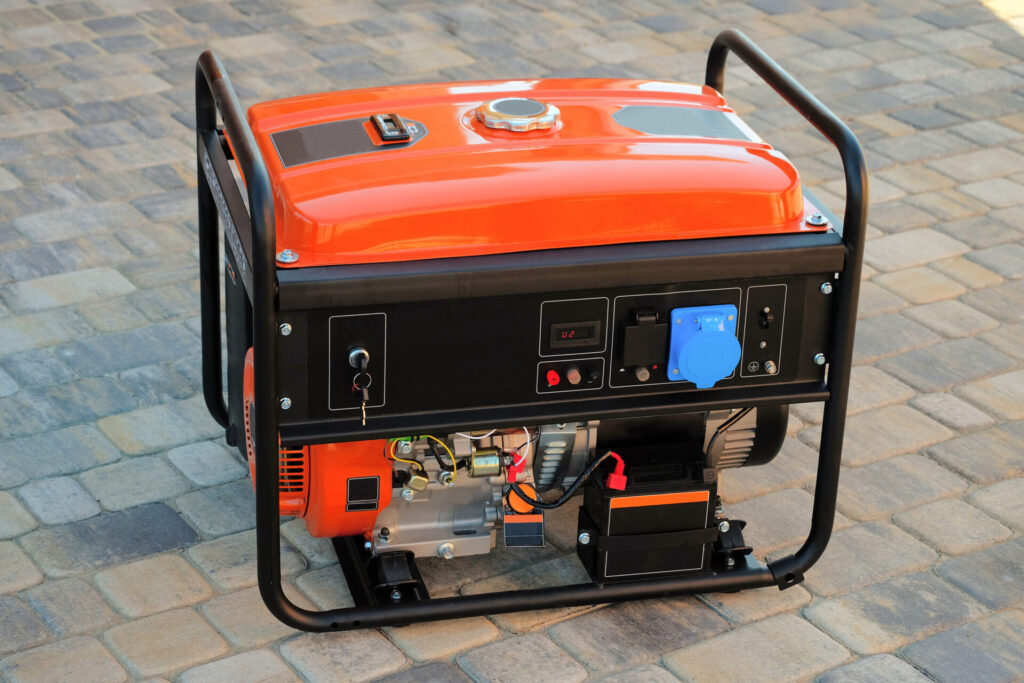

A generator can keep the refrigerator cold, the sump pump moving, and the Wi-Fi alive when the utility grid decides to take an unscheduled vacation. However, buying the wrong generator can leave you with too little power, too much noise, or a machine that is approximately as portable as a small rhinoceros.
This generator buying guide explains how to choose the right type, calculate the wattage you need, compare fuel options, understand essential safety features, and avoid expensive shopping mistakes. Whether you need emergency home backup power, electricity for an RV, or a dependable job-site machine, the best generator is not necessarily the biggest one. It is the one that safely matches your actual loads, fuel access, installation plan, and tolerance for maintenance.
Start With the Job Your Generator Must Do
Before comparing engines, outlets, and impressively muscular wattage labels, decide what you expect the generator to power. A camping generator and a whole-house backup system solve very different problems.
Emergency essentials during an outage
Many households only need to operate a refrigerator, several lights, phone chargers, a television, a modem, and perhaps a furnace blower or sump pump. A correctly sized portable or inverter generator may handle these essential loads without the cost of a permanent standby system.
Major household systems
Running a well pump, central air conditioner, electric water heater, large furnace, or several kitchen circuits usually requires more capacity. Some of these appliances also need 240-volt power, which smaller 120-volt generators cannot provide. Whole-home or managed-home backup often calls for a large portable generator connected through approved equipment or a professionally installed standby generator.
Recreation, RVs, and tailgating
For recreational use, portability, fuel efficiency, and low noise may matter more than maximum output. Inverter generators are popular in this category because they can produce stable power for electronics while adjusting engine speed to match the load.
Tools and job-site equipment
Compressors, table saws, pumps, welders, and other motor-driven tools can demand substantial starting power. A traditional open-frame generator may deliver more watts per dollar, although it will generally be heavier and louder than an enclosed inverter model.
Understand the Main Types of Generators
Conventional portable generators
A conventional portable generator uses an engine to turn an alternator at a relatively constant speed. These machines are widely available and usually offer strong output for the price. They are useful for home backup, construction, and situations where noise is not the top concern.
Portable does not always mean easy to lift. High-output models can weigh well over 150 pounds, so look for pneumatic or never-flat wheels, folding handles, balanced lifting points, and a frame that will fit through your storage doorway.
Inverter generators
An inverter generator electronically conditions its output, making it well suited to computers, televisions, communication equipment, and other sensitive electronics. Many models can reduce engine speed under light loads, improving fuel economy and lowering noise.
Inverter generators usually cost more per watt, but the extra expense may be worthwhile for camping, neighborhoods with close property lines, or anyone who would prefer not to announce an outage to three surrounding ZIP codes. Some inverter models can be paired with a compatible second unit through a manufacturer-approved parallel kit.
Home standby generators
A standby generator is permanently installed outside the home and connected to the electrical system through an automatic transfer switch. When utility power fails, the system can start automatically and supply selected circuits or most of the house. It commonly runs on natural gas or propane.
This is the most convenient option for frequent or extended outages, especially for homes with medical equipment, well pumps, sump pumps, refrigeration, or climate-control needs. Installation requires professional planning, permits, code compliance, fuel-system work, and periodic maintenance. The generator itself is only part of the total project cost.
Portable power stations
A portable power station stores electricity in a battery rather than producing it with a combustion engine. It can be recharged from a wall outlet, vehicle connection, or compatible solar panels. Because it has no engine exhaust, it can power appropriate devices indoors according to the manufacturer’s instructions.
Power stations are quiet and convenient for electronics, lights, CPAP machines, and short outages. Their limitations are battery capacity, recharge time, cold-weather performance, and the high energy demands of heating, air conditioning, pumps, and large appliances. Products marketed as “solar generators” are usually battery power stations bundled with or designed for solar panels.
How to Calculate the Generator Size You Need
Generator advertisements commonly show two numbers: starting watts and running watts. Confusing them is one of the fastest ways to overload a new machine.
Running watts
Running watts represent the power an appliance normally consumes while operating. Add the running wattage of all devices you intend to use at the same time.
Starting watts
Motors and compressors may briefly require extra power when they start. Refrigerators, freezers, pumps, air conditioners, and power tools are common examples. Generator capacity must accommodate the combined running load plus the largest single starting surge likely to occur.
A practical sizing example
Imagine that you want to operate the following equipment:
- Refrigerator: approximately 700 running watts
- Sump pump: approximately 1,000 running watts
- Furnace blower: approximately 800 running watts
- Lights, modem, and chargers: approximately 300 running watts
The combined running load is about 2,800 watts. If the sump pump has the largest additional starting requirementperhaps another 1,500 to 2,000 wattsyou may need a generator capable of roughly 4,300 to 4,800 starting watts. Choosing some reserve capacity helps prevent nuisance overloads and gives you room for an overlooked device.
These numbers are examples, not universal ratings. Read the appliance nameplate, manual, or manufacturer specifications. A clamp meter or consultation with an electrician can provide a more accurate assessment for hardwired equipment.
Do not oversize blindly
A larger generator may consume more fuel, create more noise, cost more to purchase, and be harder to move. Oversizing can be reasonable when future loads are expected, but buying twice the capacity you need “just in case” may create more inconvenience than protection.
Choose the Right Fuel Type
Gasoline
Gasoline generators are common, widely available, and often produce their highest rated output on gasoline. The drawbacks include fuel deterioration during storage, flammability, station shortages during regional emergencies, and the need to drain or stabilize fuel according to the manual.
Propane
Propane stores well in approved cylinders and does not degrade like gasoline. It can simplify long-term emergency preparation, although generators commonly produce fewer running watts on propane than on gasoline. Cylinder pressure and usable output can also be affected by low temperatures and heavy fuel demand.
Natural gas
Natural gas is convenient for permanently installed standby generators and some tri-fuel portable models. A connected supply eliminates the need to refill a small onboard tank, but natural gas output may be lower than gasoline output. Service can also be interrupted during certain disasters, so it should not be treated as indestructible magical pipe fuel.
Diesel
Diesel generators are valued for durability and efficiency in many commercial or heavy-duty applications. Residential diesel models tend to be more expensive, noisier, and less common than gasoline or propane alternatives. Fuel storage, cold-weather starting, and maintenance requirements should be considered.
Dual-fuel and tri-fuel models
A dual-fuel generator typically runs on gasoline or propane, while a tri-fuel model may add natural gas. Multiple fuel choices provide flexibility when one supply is unavailable. Compare the rated output for each fuel because the number printed most prominently on the box may represent gasoline performance only.
Generator Features Worth Paying For in 2025
- Automatic carbon monoxide shutoff: Choose a portable model with a recognized CO-detection and shutoff system, preferably one designed to meet the current ANSI/PGMA G300 standard. This feature adds protection but does not make indoor or near-home operation safe.
- Electric start: A battery-powered starter is easier than repeatedly pulling a recoil cord, especially in cold weather. Check whether the battery is included and how it is maintained.
- Fuel gauge: A gauge helps prevent the generator from performing its dramatic “out of fuel” finale at 2:00 a.m.
- Low-oil shutdown: This feature can stop the engine before inadequate lubrication causes serious damage.
- Hour meter: Engine hours are more useful than calendar guesses when scheduling oil changes and service.
- 120/240-volt output: This may be necessary for well pumps, certain HVAC equipment, transfer-switch connections, and other 240-volt loads.
- GFCI-protected outlets: Ground-fault protection is valuable where required and in environments with increased shock risk.
- Covered outlets: Covers help protect receptacles from dirt and debris during storage and transport.
- Remote monitoring: Some standby and premium portable models provide status information, maintenance alerts, or app-based monitoring.
- Electronic fuel injection: EFI may improve starting and reduce carburetor-related storage problems, although it adds cost and electronic complexity.
Noise, Runtime, and Power Quality
Compare noise ratings carefully
Noise ratings may be measured at different distances and loads, so two published decibel figures are not always directly comparable. Enclosed inverter generators are generally quieter than traditional open-frame machines, but output, engine speed, placement, terrain, and surrounding walls all influence perceived noise.
Runtime numbers need context
A claim such as “runs for 12 hours” often assumes a light load, commonly around 25 percent of rated capacity. Runtime will shrink as electrical demand rises. Compare tank size, test load, fuel type, and output rather than treating the biggest hour number as a guarantee.
Check total harmonic distortion
For sensitive electronics, ask for the generator’s total harmonic distortion specification. Inverter generators are designed to supply stable, electronically conditioned power, but buyers should still check the published specification instead of assuming every product bearing the word “inverter” performs identically.
Safe Connection Options
Direct connection with extension cords
For a few essential devices, appliances can be connected directly to generator receptacles using outdoor-rated extension cords of adequate gauge and wattage capacity. Inspect cords for damaged insulation, missing grounding pins, loose plugs, and overheating.
Manual transfer switch or approved interlock system
A professionally installed transfer switch or code-compliant interlock arrangement can supply selected household circuits while isolating the home from utility power. This prevents backfeeding, a potentially deadly condition that can energize utility lines and endanger repair crews. The equipment must be correctly sized, compatible with the electrical panel, and installed according to applicable codes.
Never improvise a backfeed connection
Do not connect a generator to a home through a dryer outlet or other receptacle using a double-male “suicide cord.” The nickname is not an example of marketing exaggeration. It can expose live prongs, bypass normal protection, damage equipment, start a fire, and send electricity onto utility lines.
Generator Safety Rules That Are Not Optional
Portable fuel-burning generators create carbon monoxide, an invisible and odorless gas that can cause illness or death. The U.S. Consumer Product Safety Commission, CDC, and Ready.gov advise operating portable generators outdoors at least 20 feet from the home, with exhaust directed away from doors, windows, vents, and other buildings. Never operate one in a house, basement, garage, carport, porch, crawlspace, shed, or other enclosed or partially enclosed location. Opening a garage door does not make the garage safe.
- Install working carbon monoxide alarms on every level and outside sleeping areas.
- Keep the generator dry and operate it on a dry surface under a properly designed open canopy when weather protection is needed.
- Never enclose the generator to reduce noise; restricted airflow can trap exhaust and cause overheating.
- Shut the generator off and allow it to cool before adding fuel.
- Store fuel in approved, labeled containers outside living areas and away from ignition sources.
- Do not touch the generator or connected equipment with wet hands.
- Keep children and pets away from hot surfaces, outlets, cords, and exhaust.
- Follow the grounding instructions in the manual and applicable electrical requirements.
CO shutoff technology is valuable, but it is a backup safeguard rather than permission to place a generator closer to the house. Placement remains the first line of defense. The primary generator hazards are carbon monoxide poisoning, electric shock, and fire.
Plan for Maintenance Before You Buy
A generator that has not started in four years is not emergency equipment; it is an extremely heavy garage ornament. Review the maintenance schedule before choosing a model.
Portable-generator ownership may include engine-oil changes, air-filter service, spark-plug inspection, battery charging, fuel-system care, and periodic test runs. Some engines require an early first oil change after a short break-in period. Standby generators need scheduled professional service, battery inspection, and testing of the transfer equipment.
Confirm that replacement filters, spark plugs, batteries, service parts, and qualified technicians are available in your area. A slightly more expensive model with strong parts support can be a better long-term purchase than a bargain machine whose carburetor becomes an archaeological artifact after one season.
Common Generator Buying Mistakes
- Shopping by peak watts alone: Running capacity determines what the generator can continuously support.
- Ignoring starting loads: Pumps, compressors, and motors may overload an otherwise adequate generator during startup.
- Forgetting voltage requirements: A high-wattage 120-volt generator still cannot directly supply equipment that requires 240 volts.
- Assuming all outlets are equally useful: Check receptacle types, amperage limits, breaker ratings, and transfer-equipment compatibility.
- Believing the advertised runtime without checking load: Runtime at 25 percent load will not predict performance near full capacity.
- Skipping the installation budget: Transfer equipment, inlet boxes, permits, concrete pads, gas work, cords, covers, and electrician labor can add significantly to the project.
- Buying fuel without a rotation plan: Fuel availability during an outage is only useful when the stored supply remains safe and usable.
- Waiting for the storm warning: Popular models, cords, fuel cans, and installation appointments often disappear when severe weather is already approaching.
A Simple Generator Buying Checklist
- List the devices and circuits you truly need during an outage.
- Record both running watts and starting watts.
- Identify all 240-volt appliances.
- Choose portable, inverter, standby, or battery power based on the intended use.
- Compare output on every fuel you expect to use.
- Confirm CO shutoff, overload protection, and low-oil protection.
- Review noise ratings and how they were measured.
- Check outlet types, extension-cord needs, and transfer-switch compatibility.
- Measure the storage space and the route used to move the machine outdoors.
- Price installation, accessories, fuel storage, and maintenancenot just the generator.
- Read the warranty and locate an authorized service provider.
- Create a safe outdoor operating location at least 20 feet from the home.
Practical Generator Ownership Experiences and Lessons
Real-world generator ownership tends to teach lessons that product pages politely leave in the fine print. One of the most common discoveries is that wattage planning works better when loads are introduced gradually. Starting the refrigerator, sump pump, and furnace blower at the same moment can cause an overload even when their combined running wattage appears acceptable. Experienced users often connect the largest motor load first, allow it to stabilize, and then add smaller devices.
Fuel management is another major lesson. A generator may be capable of running through the night, but that does not mean the owner will enjoy refueling it in freezing rain while wearing slippers. Households that experience frequent outages often create a written fuel plan covering safe storage, rotation, expected consumption, and local availability. Dual-fuel owners may reserve propane for long-term storage while using fresh gasoline when maximum output is needed.
Noise can also be more disruptive than expected. An open-frame generator that sounds acceptable during a daytime store demonstration may seem much louder at midnight, especially when sound reflects from a fence, brick wall, or neighboring house. Safe placement should prioritize exhaust distance and ventilation, but orientation and location can still influence how much noise reaches bedrooms. Owners should never solve a noise problem by putting the generator in a garage or wrapping it in an improvised enclosure.
Extension cords frequently become the weak link. Long, undersized cords can experience voltage drop and heat buildup. A practical setup uses the shortest suitable outdoor-rated cords, with enough conductor capacity for the connected load. Labeling each cord and storing it with the generator prevents a scavenger hunt during a blackout.
Maintenance habits separate dependable generators from stubborn ones. Gasoline left in a carburetor for an extended period can contribute to starting problems. Owners who follow the manufacturer’s shutdown, storage, oil-change, battery, and fuel recommendations generally have fewer surprises. A brief scheduled test run can reveal a weak starter battery, damaged cord, flat tire, or missing fuel hose before severe weather arrives.
Another frequently reported lesson is that convenience features matter more after the purchase. Electric start may seem unnecessary in a showroom, but it becomes valuable when the engine is cold or the operator has limited upper-body strength. A fuel gauge, hour meter, accessible oil drain, and clear control panel can make routine operation far less frustrating.
Finally, a generator does not make every outage a normal day. Even a large portable unit may require load management. Owners often postpone laundry, electric cooking, water heating, or central air-conditioning while prioritizing refrigeration, medical equipment, pumps, lights, and communication. That approach uses less fuel and reduces stress on the machine. The successful backup-power plan is not “run everything.” It is “keep the important things running safely until utility service returns.”
Final Thoughts
The best generator for 2025 is one that matches your real electrical needs, starts reliably, uses fuel you can obtain and store safely, and connects to your equipment without dangerous improvisation. Calculate your loads before shopping, pay attention to both running and starting watts, and include installation and maintenance in the budget.
Above all, treat generator placement and electrical connections as safety decisions rather than matters of convenience. Keep portable fuel-burning generators outdoors at least 20 feet from the home, use working CO alarms, and involve a qualified electrician whenever household wiring is part of the plan. A little preparation now can turn the next outage from a household crisis into a mildly inconvenient evening with cold food, warm rooms, and functioning Wi-Fi.