
Outdoor furniture has a mysterious talent for being wildly expensive. One minute you are casually browsing patio sofas, and the next minute a sectional with three cushions and a cup holder is asking for the same commitment level as a used car. Thankfully, there is a charming, budget-friendly alternative sitting behind warehouses, garden centers, and local businesses: wooden pallets.
Learning how to DIY an outdoor sofa from pallets is one of the most satisfying backyard projects you can tackle. It is affordable, beginner-friendly, customizable, and surprisingly stylish when done right. With a few clean pallets, exterior screws, sandpaper, paint or stain, and weather-resistant cushions, you can turn rough shipping wood into a relaxed patio sofa that says, “Yes, I built this,” without also saying, “Please ignore the splinters.”
This guide walks through the entire process: choosing safe pallets, designing the sofa, prepping the wood, assembling the frame, adding comfort, weatherproofing the finished piece, and avoiding common DIY mistakes. By the end, your patio, deck, balcony, or backyard corner can have a cozy handmade seat that looks intentional instead of accidentally abandoned.
Why Build an Outdoor Sofa From Pallets?
A pallet outdoor sofa is popular for one very good reason: it gives you a lot of seating for a little money. Pallets are often available for free or at low cost, and their built-in structure makes them ideal for simple furniture frames. Instead of starting with loose lumber and a complicated cut list, you begin with a ready-made platform.
Pallet furniture also fits beautifully with many outdoor styles. Want a rustic farmhouse patio? Leave the wood natural and add cream cushions. Prefer a cheerful boho balcony? Paint the pallets turquoise, mustard, or coral and pile on patterned pillows. Going modern? Use black exterior paint, square cushions, and clean-lined side tables. Pallets are like the plain white T-shirt of DIY furniture: basic at first glance, but very willing to become cool.
Safety First: Choose the Right Pallets
Before you grab the first pallet you see, pause. Not every pallet is a good candidate for furniture. Some pallets have carried chemicals, food spills, industrial materials, or mystery goo. Mystery goo is not a design style.
Look for Clean, Dry Pallets
Choose pallets that are dry, solid, and free from dark stains, oily patches, mold, strong odors, or broken boards. Avoid pallets that look like they have spent three years under a leaking dumpster behind a seafood warehouse. If the wood smells strange, looks contaminated, or feels damp and rotten, leave it alone.
Check the Pallet Stamp
Many shipping pallets have an IPPC marking stamped on the side. For DIY furniture, look for pallets marked HT, which means heat-treated. Heat-treated pallets are generally preferred for home projects because the wood was treated with heat rather than fumigated with methyl bromide.
Avoid pallets marked MB. That code indicates methyl bromide fumigation, and it is not the kind of thing you want hanging around your patio sofa while you sip lemonade and pretend you are on vacation.
Also avoid painted commercial pallets, especially brightly colored ones, unless you know exactly where they came from. Some branded pallet systems are reused in industrial supply chains and may not be intended for casual DIY use.
Tools and Materials You’ll Need
You do not need a professional workshop to build a pallet sofa. A small set of basic tools will get the job done.
Materials
- 3 to 6 clean, heat-treated wooden pallets, depending on sofa size
- Exterior-grade deck screws or stainless-steel screws
- Wood glue rated for exterior use, optional
- Outdoor wood stain, exterior paint, spar urethane, or waterproofing sealer
- Outdoor cushions or foam covered in weather-resistant fabric
- Outdoor pillows
- Furniture feet, casters, or scrap wood blocks, optional
- Angle brackets or mending plates for extra reinforcement, optional
Tools
- Work gloves
- Safety glasses
- Dust mask
- Tape measure
- Drill and driver bits
- Orbital sander or sanding block
- Medium- and fine-grit sandpaper
- Hammer or pry bar
- Circular saw or reciprocating saw, optional
- Paintbrush, roller, or sprayer
Plan Your Pallet Sofa Design
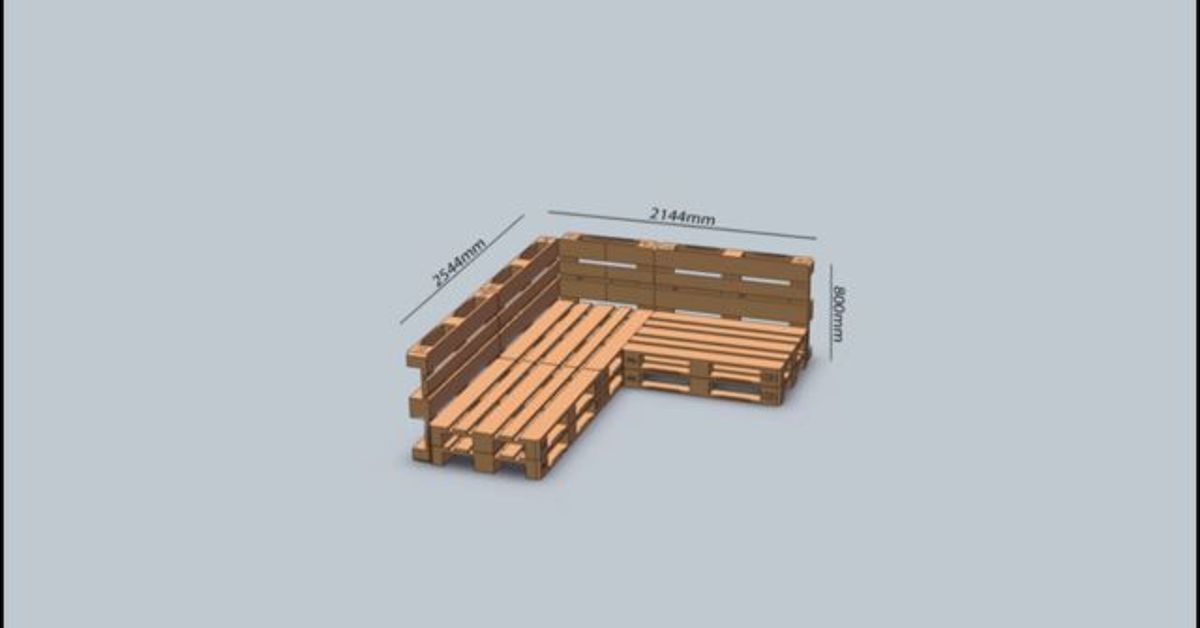
The easiest outdoor pallet sofa uses two stacked pallets for the seat and one upright pallet for the backrest. That gives you a simple bench-style couch with a relaxed lounge height. For a larger sofa, place two pallet bases side by side. For a sectional, add a second unit at a right angle. Congratulations, you are now basically an outdoor furniture designer with sawdust on your shoes.
Common Pallet Sofa Layouts
Simple loveseat: Use two pallets stacked as the base and one pallet attached vertically as the back. This works well for small patios and balconies.
Full outdoor sofa: Use four pallets for a wider base, usually two on the bottom and two stacked on top, plus two pallets for the backrest.
L-shaped sectional: Build two pallet sofas and connect them at a corner. This is great for fire pits, garden lounges, and families who believe sitting outside requires snacks, blankets, and at least three throw pillows per person.
Daybed-style sofa: Skip the upright back or use a low backrest. Add a deep cushion and oversized pillows for a nap-friendly outdoor bed.
Step-by-Step: How to DIY an Outdoor Sofa From Pallets
Step 1: Clean the Pallets Thoroughly
Start by brushing off loose dirt, cobwebs, and debris. Use a stiff brush and mild soapy water to scrub the wood. Rinse lightly and let the pallets dry completely in the sun. Do not seal damp wood; it traps moisture and can lead to mildew or finish failure later.
Step 2: Inspect and Repair
Check every board. Tighten loose slats with exterior screws. Remove protruding nails or hammer them flush. Replace cracked boards with spare pallet wood if needed. The goal is a frame that feels sturdy before anyone sits on it. A sofa should say “welcome,” not “good luck.”
Step 3: Sand Like You Mean It
Pallet wood is rough, and rough wood becomes splinter city. Sand all visible surfaces, edges, and corners. Start with medium-grit sandpaper to knock down rough spots, then follow with finer grit for a smoother touch. Pay special attention to armrests, front edges, and any area where legs or hands may brush the wood.
You do not need to make pallet wood feel like a baby grand piano, but you do want it smooth enough that guests can sit down without signing a waiver.
Step 4: Stack the Seat Base
Place one pallet flat on the ground. Add a second pallet directly on top to create a comfortable seat height. Align the corners and edges. Use exterior screws to fasten the pallets together through the support blocks. For extra strength, add metal brackets along the inside corners.
If the sofa will sit on a deck or patio, consider adding short feet, rubber pads, or locking casters underneath. Raising the sofa slightly improves airflow and helps keep the bottom pallet away from standing water.
Step 5: Attach the Backrest
Stand another pallet upright behind the base. Tilt it back slightly for comfort or attach it straight for a more structured look. Secure it with long exterior screws driven through the back pallet into the seat base. Angle brackets can make the connection stronger.
If you prefer a lower back, cut the backrest pallet down before attaching it. This can give the sofa a cleaner, more modern profile. Just remember to sand the cut edges well.
Step 6: Add Armrests
Armrests are optional, but they make the sofa feel finished. You can cut pallet sections to size and attach them vertically on each side. Another option is to use 2×4 boards or wide scrap boards as side supports. Keep the tops flat enough to hold a drink, book, or plate of barbecue. In outdoor furniture, a good armrest is basically a tiny table with confidence.
Step 7: Paint, Stain, or Seal the Wood
Outdoor pallet furniture needs protection from sun, rain, humidity, and temperature changes. Choose an exterior-rated finish. For a natural look, use an outdoor stain and sealer. For a bold design, apply exterior paint. For extra moisture protection, consider a spar urethane or outdoor waterproofing sealer.
Apply finish according to the product instructions, including drying time between coats. Two thin coats usually perform better than one gloopy coat that looks like the sofa got dipped in pancake syrup.
Step 8: Add Cushions and Pillows
Comfort is where a pallet sofa becomes a real sofa. Use outdoor cushions designed for patio furniture, or cut high-density foam to size and cover it with weather-resistant fabric. Seat cushions should be thick enough to soften the pallet boards. Back pillows can be loose, oversized, and easy to move.
Choose cushion covers that can be removed and washed. Outdoor life includes pollen, dust, rain, sunscreen, snack crumbs, and the occasional bird with questionable manners.
Design Ideas for a Stylish Pallet Outdoor Sofa
Rustic Natural Wood
Sand the pallets smooth and use a clear or semi-transparent exterior sealer. Pair the natural wood with beige, white, olive, or navy cushions. This style works well in gardens and covered patios.
Modern Black Frame
Paint the pallet frame matte black and add light cushions for contrast. This look feels more expensive than it is, which is always a delightful little DIY victory.
Coastal White Sofa
Use white exterior paint and blue striped cushions for a beach-house effect. Add lanterns, potted grasses, and a small pallet coffee table to complete the scene.
Boho Lounge Corner
Paint the frame in a warm neutral or leave it natural. Add layered pillows, textured throws, string lights, and a low table. This is perfect for renters because it creates a cozy outdoor room without permanent construction.
How to Make Your Pallet Sofa Last Longer
Pallet wood was not originally designed to become luxury patio furniture, so maintenance matters. Keep the sofa on a level surface where water does not pool. If possible, place it under a covered patio, pergola, or shade sail. Store cushions indoors during heavy rain or winter weather.
Inspect the sofa every season. Tighten screws, check for cracks, and look for signs of mildew. Clean the frame with mild soap and water when needed. Reapply outdoor stain, sealer, or varnish as recommended by the finish manufacturer. A little upkeep keeps the sofa looking charming instead of “haunted garden bench.”
Common Mistakes to Avoid
Using Unsafe Pallets
Never use pallets with suspicious stains, chemical smells, mold, or an MB stamp. Your project starts with the wood, so choose carefully.
Skipping Sanding
Sanding is not glamorous, but neither is pulling a splinter out of your thigh during a cookout. Smooth the wood before painting or sealing.
Using Indoor Screws
Indoor screws can rust outdoors. Use exterior-rated deck screws, stainless-steel screws, or fasteners labeled for outdoor use.
Forgetting Drainage
Do not let the sofa sit directly in puddles. Lift it slightly with feet or blocks, and keep it where air can circulate.
Buying Cushions Too Early
Measure the finished sofa before buying cushions. Pallet sizes vary, and guessing can lead to cushions that fit with all the elegance of socks on a rooster.
Budget Breakdown
The cost of a DIY pallet outdoor sofa depends on what you already own and how fancy you want to get. If you find free pallets and already have tools, your biggest expenses may be screws, sandpaper, finish, and cushions. A basic build can be very affordable. A more polished version with thick custom cushions, premium exterior paint, locking casters, and decorative pillows will cost more but still usually beats buying a comparable outdoor sofa.
To save money, look for end-of-season patio cushions, outdoor fabric remnants, and leftover exterior stain from other projects. Just do not save money by skipping safety gear, good fasteners, or wood protection. That is not budgeting; that is inviting chaos over for iced tea.
of Real-World Experience: What Building a Pallet Sofa Actually Teaches You
The first lesson of building an outdoor sofa from pallets is that pallets have personality. Some are straight and cooperative. Others are warped, stubborn, and apparently trained in emotional resistance. That is why the best approach is to collect more pallets than you think you need. If your plan requires three pallets, try to gather five. This gives you options for matching sizes, replacing cracked boards, and using spare pieces for armrests or repairs.
The second lesson is that sanding takes longer than expected, but it changes everything. At first, pallet wood can look too rough for furniture. After a focused sanding session, the same boards suddenly look rustic in a stylish way rather than rustic in a “found near a loading dock during a thunderstorm” way. An orbital sander makes the job easier, but a sanding block works if you are patient. Put on music, wear a dust mask, and accept that your arms may briefly file a complaint.
Another practical lesson is to test the layout before fastening anything. Stack the pallets, sit on them, lean a backrest in place, and check the height. Pallet sofas can feel too deep or too upright if you copy a design without testing it. A slightly reclined backrest is usually more comfortable than a perfectly vertical one. If the seat feels too low, add feet or another support layer. If it feels too high, use thinner cushions. This is the beauty of DIY: you are allowed to adjust the furniture to actual humans.
Cushions are also more important than beginners expect. The frame creates the structure, but the cushions create the “I want to sit here for two hours” feeling. Thick outdoor cushions make even basic pallet construction feel lounge-worthy. Thin cushions, on the other hand, may let you feel every board underneath, which is great only if your goal is to memorize pallet anatomy through your knees.
Painting or staining is where the project becomes personal. Natural stain gives the sofa a relaxed garden look. White paint feels coastal. Black paint feels modern. Bright colors turn the sofa into a cheerful statement piece. Whatever finish you choose, apply it before adding cushions and give it proper time to cure. Rushing this step can lead to sticky surfaces, smudges, or cushions that accidentally become part of the sofa forever.
One of the best experiences with this project is how quickly it changes an outdoor space. A bare patio can feel unfinished, but a pallet sofa instantly creates a gathering zone. Add a small table, a potted plant, and string lights, and suddenly the backyard looks like it has plans for the weekend. The sofa becomes a place for morning coffee, evening chats, reading, scrolling, snacking, and pretending you are “just going outside for five minutes” before disappearing for an hour.
The final lesson is that handmade furniture does not need to be perfect to be loved. A pallet sofa may have knots, uneven boards, and small quirks. That is part of its charm. Build it safely, sand it well, seal it properly, and make it comfortable. The result is not just outdoor seating; it is a story with cushions.
Conclusion
A DIY outdoor sofa from pallets is one of the smartest ways to create comfortable patio seating without emptying your wallet. The project is approachable for beginners, flexible enough for different spaces, and easy to personalize with color, cushions, and layout choices. The key is to start with safe, clean, heat-treated pallets, use exterior-rated hardware, sand thoroughly, and protect the wood with a proper outdoor finish.
Whether you build a small loveseat for a balcony or a full L-shaped sectional for backyard entertaining, pallet furniture proves that great outdoor style does not have to arrive in a giant box with an alarming price tag. Sometimes it starts with reclaimed wood, a drill, a Saturday afternoon, and the bold belief that your patio deserves better than one lonely folding chair.