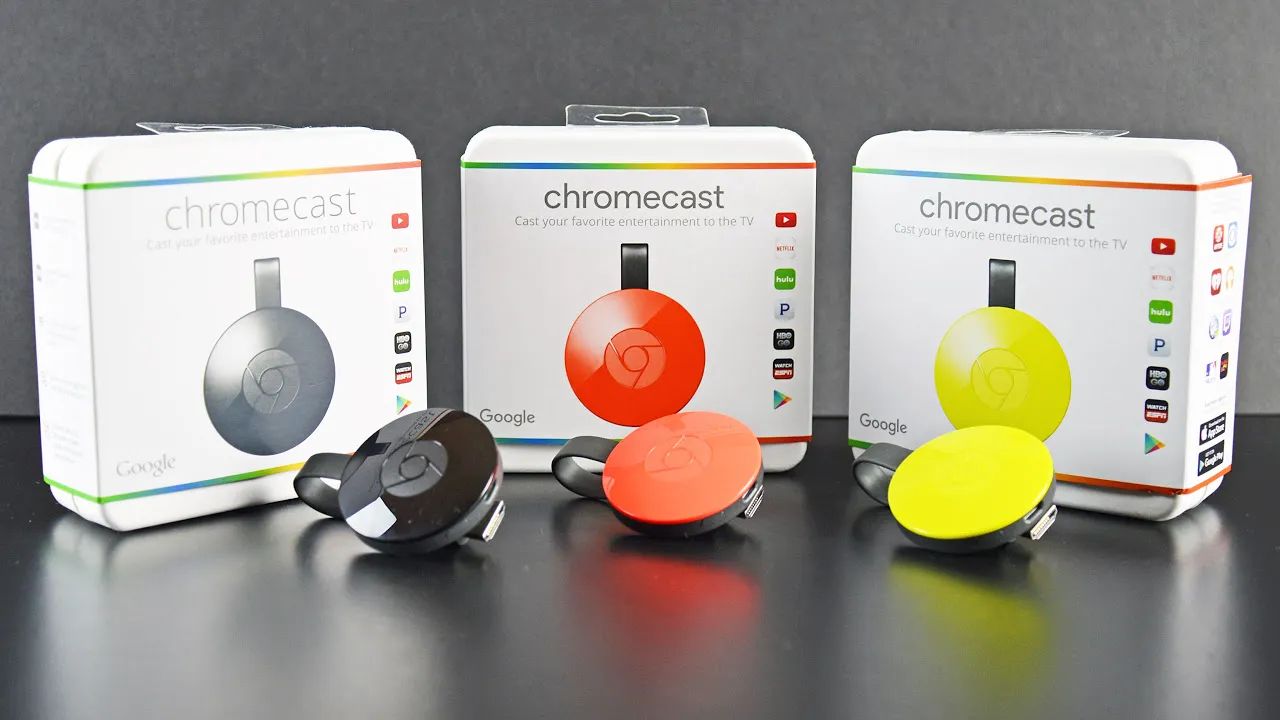

In 2015, Google looked at the humble Chromecast and apparently said, “What if this tiny streaming stick became a tiny streaming cookie?” The result was Google’s second-generation Chromecast: a round, colorful, $35 media streaming device that plugged into a TV’s HDMI port, disappeared behind the screen, and quietly made older televisions feel a little less like museum exhibits.
Looking back, Google’s 2015 Chromecast was not a dramatic reinvention. It did not arrive with a remote control, a full TV interface, 4K video, or the swagger of a premium set-top box. Instead, it refined the original Chromecast idea: use the phone, tablet, or laptop you already own as the controller, then let the TV handle the big-screen glory. It was small, cheap, simple, and surprisingly influential. In other words, it was very Google: half gadget, half experiment, and somehow already in your junk drawer three years later.
This review-style retrospective looks at what made the 2015 Chromecast important, where it improved over the first-generation model, where it still felt limited, and why it remains a memorable chapter in streaming device history.
What Was Google’s 2015 Chromecast?
The 2015 Chromecast was Google’s second-generation video streaming dongle. It followed the original 2013 Chromecast, which had helped popularize the idea that a cheap HDMI device could turn almost any TV into a smarter entertainment screen. The basic pitch stayed the same: plug the device into an HDMI port, connect it to Wi-Fi, open a supported app on your phone, tap the Cast icon, and watch the content appear on your television.
That sounds ordinary today, but in 2015 it was still a refreshingly lightweight alternative to traditional streaming boxes. Roku, Apple TV, and Amazon Fire TV focused on remote-driven menus. Chromecast focused on the device already in your hand. Instead of scrolling through a clunky TV interface, you searched Netflix, YouTube, Hulu, Google Play, or other supported apps from your phone and sent the stream to the TV.
Importantly, Chromecast was not simply mirroring your phone screen in most cases. When you cast from a supported app, the Chromecast pulled the video stream directly from the internet. Your phone became the remote, not the exhausted waiter carrying every pixel across the living room.
The Big Design Change: From Stick to Puck
The most obvious change in the 2015 Chromecast was physical. The original Chromecast looked like a chunky USB flash drive with an HDMI plug. It worked, but it could be awkward behind crowded TVs, especially when HDMI ports were close together or facing a wall. Google’s 2015 model switched to a round puck design with a short, flexible HDMI cable attached.
This redesign was practical. The flexible cable made it easier to fit the Chromecast into tight ports, while the circular body could hang behind the television instead of sticking straight out like a tiny plastic diving board. Google also added a magnet so the HDMI plug could snap to the back of the device for storage. It was a small touch, but a smart one. If you traveled with the Chromecast, the cable was less likely to flop around like a caffeinated noodle.
Colors Nobody Saw, But Everybody Noticed
The 2015 Chromecast came in black, yellow, and red color options. This was both fun and slightly absurd, because once installed, the device usually lived behind the TV where only dust bunnies and lost HDMI cables could admire it. Still, the colors gave the device personality. At a time when many streaming products looked like serious little office supplies, Chromecast looked friendlier, almost playful.
That design language mattered. Google was selling a gadget that was supposed to feel easy, affordable, and non-intimidating. The puck shape and bright colors helped communicate that this was not a complicated home theater component. It was a plug-in-and-go entertainment helper.
Improved Wi-Fi: The Real Upgrade Behind the Curtain
The 2015 Chromecast’s biggest technical improvement was better wireless performance. Google added support for more modern Wi-Fi standards, including 802.11ac and 5 GHz networks, and used a three-antenna design to improve streaming reliability. That mattered because Chromecast lived or died by Wi-Fi. There was no magic here: bad wireless meant buffering, stutters, and the ancient human ritual of angrily staring at a loading circle.
For homes with crowded networks or routers placed far from the TV, the improved Wi-Fi could make the second-generation Chromecast feel faster and more stable than the original. It did not turn slow internet into fiber overnight, of course. The device was not a wizard wearing a Google-colored robe. But it reduced one of the biggest annoyances with streaming: waiting.
In day-to-day use, reviewers at the time often described the speed improvements as noticeable but not revolutionary. Content could start a little faster, and skipping around inside videos felt smoother. For new buyers, that made the 2015 Chromecast an easy recommendation. For owners of the original Chromecast, the upgrade decision depended on whether their existing device had Wi-Fi issues.
Fast Play: Google Tried to Make Waiting Disappear
Another notable feature announced with the 2015 Chromecast was Fast Play. The idea was simple: reduce the delay between choosing something and watching it. Fast Play was designed to preload or prepare content so videos could begin more quickly after a user tapped play.
Conceptually, Fast Play showed where streaming was headed. The best streaming experience is the one where technology gets out of the way. Nobody wants to admire a spinning buffer icon in 1080p. The goal was to make casting feel closer to turning on a channel, even though the actual chain involved a phone, an app, a cloud service, Wi-Fi, and a tiny device hiding behind the TV like a tech-savvy gecko.
Fast Play was not an instant cure for every delay, partly because services and app developers had to support the experience. Still, it reflected Google’s broader strategy: Chromecast hardware was only one part of the product. The app ecosystem, discovery tools, and cloud streaming behavior were just as important.
The Redesigned Chromecast App Made Discovery Easier
Google also redesigned the Chromecast app in 2015. This was a bigger deal than it sounds. The original Chromecast experience worked well once you knew what you wanted to watch, but it was not always great for discovery. You had to open individual apps, browse inside them, and remember which service had which show. It was like having a buffet where every dish was in a different building.
The updated Chromecast app tried to solve that by giving users a more central place to browse and search content from supported apps. Features such as “What’s On” helped surface available entertainment from apps already installed on the user’s phone. Google also made it easier to find Cast-compatible apps.
This was one of the smartest parts of the 2015 Chromecast story. Google understood that streaming was becoming less about whether content existed and more about whether people could find it without needing a detective board, red string, and three subscription passwords.
Chromecast Audio: The Interesting Sibling
Alongside the 2015 Chromecast, Google introduced Chromecast Audio. While the video Chromecast connected to a TV, Chromecast Audio connected to speakers through an audio input and let users stream music over Wi-Fi. It was designed to make ordinary speakers smarter without forcing people to buy an entirely new sound system.
Chromecast Audio deserves a mention because it shared the same philosophy as the video model: keep the hardware inexpensive, let the phone handle control, and use the cloud for content. For people with older speakers, it was a clever way to modernize audio gear. In some ways, Chromecast Audio became even more beloved than the video Chromecast because it solved a specific problem elegantly.
Google eventually moved away from the Chromecast Audio line, but the 2015 launch showed how flexible the Cast idea could be. It was not just about TV. It was about sending media from one device to another with minimal fuss.
What the 2015 Chromecast Did Well
It Was Still Cheap
At $35, the 2015 Chromecast remained one of the easiest streaming purchases to justify. It was affordable enough for a main TV, a bedroom TV, a guest room, or that mysterious old television in the basement that everyone claims still works. Google did not try to push it into premium territory. The value was the point.
It Was Simple to Set Up
Setup was one of Chromecast’s biggest strengths. Plug it into HDMI, provide power through USB or an adapter, connect it to Wi-Fi, and use the app to finish configuration. For many users, that was far less intimidating than setting up a full streaming box.
It Worked Across Popular Apps
By 2015, Chromecast support had grown far beyond the limited app selection available at the original launch. YouTube, Netflix, Hulu, Google Play, HBO-related services, sports apps, photo apps, and many others helped make the device feel genuinely useful. The more apps added Cast support, the more valuable the tiny puck became.
It Was Great for Sharing
Chromecast was excellent for group settings. At a party, people could cast YouTube clips, music videos, vacation photos, or presentations without passing around a remote. This also occasionally turned living rooms into chaotic democracy experiments, but that is the price of freedom.
Where Google’s 2015 Chromecast Fell Short
No Remote Control
The phone-as-remote idea was clever, but not perfect. Sometimes you just want to pause a movie without unlocking your phone, finding the app, and remembering whether the video is playing through Netflix, YouTube, or some app you downloaded during a moment of questionable judgment. A traditional remote has one job. A smartphone has about 700 jobs and a notification from someone asking, “Did you see my message?”
This was Chromecast’s biggest philosophical weakness. The device was brilliant when phone control felt natural. It was annoying when phone control felt like extra homework.
No 4K Support
The 2015 Chromecast was a 1080p streaming device. That was fine for many households at the time, but 4K TVs were becoming more common. Google would later address higher-resolution streaming with Chromecast Ultra, but the 2015 model was not built for the 4K future.
Limited Native TV Experience
Unlike Roku or Apple TV, Chromecast did not provide a full on-screen app grid or remote-driven interface. That kept it simple, but it also meant users who preferred browsing directly on the TV might feel left out. Chromecast was not trying to be a traditional streaming box. Whether that was a strength or weakness depended on the person holding the popcorn.
How It Compared With Streaming Rivals
In 2015, the streaming device market was getting crowded. Roku offered strong app support and a familiar remote. Apple TV had a polished ecosystem and deep ties to iTunes and Apple devices. Amazon Fire TV pushed Prime Video and voice features. Google’s Chromecast took a different route: no bulky box, no traditional interface, and no expensive hardware.
This made Chromecast especially appealing to casual streamers. It was not necessarily the best main living-room device for every household, but it was an excellent add-on. It worked well for people who already watched most things on their phones and simply wanted an easy way to move video to the TV.
That distinction is important. The 2015 Chromecast did not need to win every category. It won by being cheap, convenient, and good enough for a huge number of everyday uses.
The Legacy of Google’s 2015 Chromecast
The 2015 Chromecast helped cement the idea that casting was not a gimmick. It proved that the original Chromecast formula had room to grow through better Wi-Fi, improved app discovery, and a more practical design. It also showed that a streaming device did not need to look or behave like a miniature cable box.
Over time, Google’s streaming hardware evolved. Chromecast Ultra brought 4K. Chromecast with Google TV added a remote and full interface. Eventually, Google moved toward the Google TV Streamer and ended production of the Chromecast line after more than a decade. That later shift makes the 2015 Chromecast feel even more like a snapshot of a specific moment in streaming history: the age when the phone was becoming the center of everything.
Today, many smart TVs include casting or similar features built in. That is partly why the original Chromecast idea became less essential as a separate product. But in 2015, the Chromecast still felt like a clever shortcut into the future. It was the little gadget that said, “Your TV can be smarter, and no, you do not need to spend $150 to make that happen.”
Experience Notes: Living With the 2015 Chromecast Idea
The most memorable experience around the 2015 Chromecast was not opening the box or admiring its design. It was the moment when someone tapped the Cast button and the TV suddenly obeyed. That tiny action made the device feel almost magical. There was no dramatic setup screen, no giant menu, no remote with buttons labeled by someone who apparently lost a bet. Just tap, cast, watch.
In a real living room, that simplicity was the charm. A friend could come over, connect to the same Wi-Fi, and send a YouTube video to the TV. A family member could show vacation photos without forcing everyone to crowd around a phone. Someone could start a Netflix show from the couch and control playback without learning a new interface. The Chromecast turned the TV into a shared display for the devices people already used every day.
Of course, the experience had its awkward comedy. When casting worked, it felt smooth and futuristic. When it did not, everyone became an unpaid network technician. Was the phone on the right Wi-Fi? Was the Chromecast awake? Did the app still see the device? Did someone accidentally cast to the bedroom TV and terrify a sleeping relative with a sudden cooking video? These were the tiny dramas of early casting life.
The phone-as-remote concept also created funny habits. People would start a movie, set the phone down, then spend thirty seconds searching for the phone when they needed to pause. A traditional remote could hide between couch cushions, but a smartphone could hide anywhere: under a blanket, in the kitchen, in a hoodie pocket, or in someone’s hand while they loudly asked, “Where’s my phone?” Chromecast did not invent this problem, but it gave it a starring role.
Still, the overall experience was more good than frustrating. The 2015 Chromecast was especially useful for secondary TVs. It was perfect for the TV in a bedroom, dorm room, rental apartment, or guest space. It did not ask for much. Give it power, Wi-Fi, and an HDMI port, and it gave back streaming access with very little ceremony.
It also made older TVs feel relevant again. Before smart TVs became common and affordable, many people had perfectly good flat screens with very limited internet features. The 2015 Chromecast extended the life of those screens. That may be one of its underrated contributions: it reduced the pressure to replace a television just to get modern apps.
Looking back, the experience of the 2015 Chromecast was a mix of elegance and compromise. It was elegant because casting was fast, affordable, and easy to understand. It was a compromise because it depended heavily on Wi-Fi, app support, and the user’s phone. But that balance was exactly why the device mattered. It was not trying to be the ultimate entertainment machine. It was trying to remove friction from one common task: getting internet video onto the biggest screen in the room.
And for $35, that was more than enough. The 2015 Chromecast may not look flashy today, but its influence is everywhere. When people casually cast videos, mirror tabs, share screens, or expect TVs to communicate with phones, they are living in the world that Chromecast helped normalize. Not bad for a little puck hiding behind the television like a very productive coaster.
Final Verdict: Why the 2015 Chromecast Still Matters
Google’s 2015 Chromecast was not a perfect streaming device, but it was an important one. It improved the original formula without ruining what made Chromecast attractive in the first place. The new puck design made installation easier. Better Wi-Fi made streaming more reliable. The redesigned app improved discovery. Fast Play aimed to reduce waiting. Chromecast Audio expanded the idea beyond television. And the $35 price kept the whole package friendly.
Its limitations were real: no remote, no 4K, no full TV interface, and occasional dependence on the patience of your Wi-Fi router. Yet those weaknesses did not erase its strengths. The 2015 Chromecast succeeded because it understood a simple truth: people wanted an easy way to move entertainment from small screens to big screens without buying a complicated box.
Years later, as streaming devices have become more powerful and smart TVs more common, the 2015 Chromecast still deserves a fond look back. It was small, affordable, practical, and quietly influential. Also, it looked like a tiny plastic hockey puck, which is not usually a compliment in consumer electronics, but in this case, we will allow it.