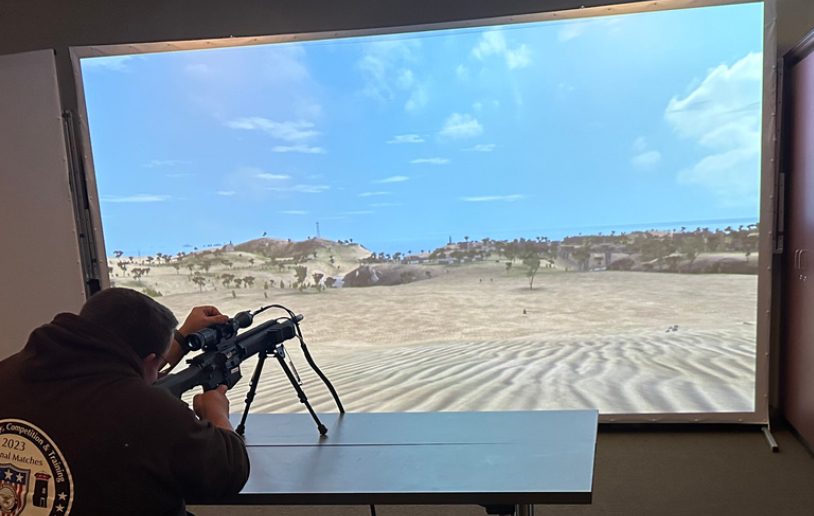
For firearm enthusiasts and professional shooters, the gap between range time and actual skill mastery can feel significant. Integrating target practice range simulators into your personal training regimen offers a bridge, providing a high-fidelity environment to refine your mechanics without the overhead of ammunition costs or travel requirements. Whether you are looking to master precision sniper simulation, experiment with weapon upgrade and customization, or engage in squad based tactical assault drills, modern technology has moved well beyond simple static targets.
In this guide, we will explore the essential hardware and software components necessary to build a high-performance training setup at home. You will learn how to evaluate tracking technologies, configure your space for optimal accuracy, and interpret data to improve your muscle memory. By understanding the underlying physics of ballistic trajectory games and performance metrics, you can transform your home training space into a professional-grade facility, ensuring every trigger press counts toward your long-term developmental goals.
1. Selecting and Configuring Target Practice Range Simulators for Your Training Goals
1.1 Understanding Essential Hardware and Software Architecture
1.1.1 Evaluating High-Speed Camera Tracking versus Infrared Laser Detection
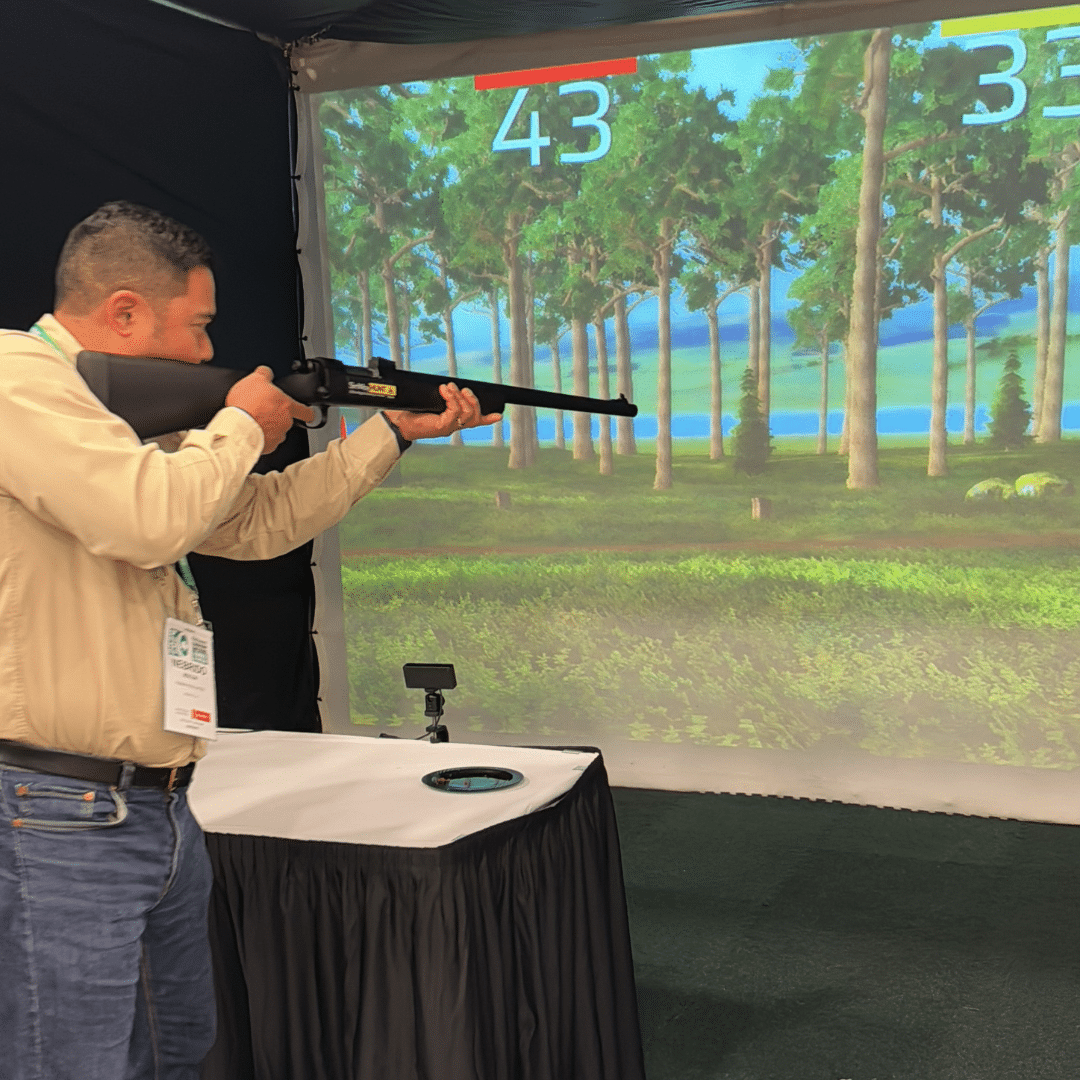
Choosing the right detection method is the foundation of your simulator setup. Infrared laser systems are the industry standard for home use, utilizing a laser emitter within the firearm or a drop-in cartridge to register hits on a projected surface. These systems are highly responsive for standard marksmanship drills. Conversely, high-speed camera tracking systems—often used in professional law enforcement training—analyze the actual movement of the firearm and the shooter’s mechanics. While camera-based systems offer more granular feedback, they require more complex lighting environments and calibration, making them a more significant investment for dedicated training spaces.
1.1.2 Choosing Between PC-Based Systems and Mobile Integration
Your choice of platform depends on your need for graphical fidelity and long-term data logging. PC-based systems act as the command center, supporting complex ballistic trajectory games and high-resolution environments that are essential for long-range and precision sniper simulation. These setups allow for expansive screen real estate and multi-sensor support. Mobile-integrated simulators offer unparalleled portability. They are ideal for shooters who need to set up and tear down their equipment quickly. While mobile apps have become increasingly sophisticated, PC systems remain the preferred choice for those tracking long-term progress through deep analytical reporting.
1.1.3 The Role of Inert Training Pistols and Recoil-Enabled Conversions
The tactile experience is vital for developing muscle memory. Inert training pistols provide a realistic weight and grip profile, which is perfect for practicing the draw and sight alignment without the cost of live ammunition. For shooters looking to simulate the mechanical function of their firearm, recoil-enabled conversions use compressed gas (CO2 or Green Gas) to cycle the slide. This feature is a game-changer for mastering recoil management, as it forces the shooter to re-acquire their target after every simulated shot.
1.2 Critical Features for Skill Development and Data Analysis
1.2.1 Real-Time Shot Placement Feedback and Grouping Diagnostics
Modern simulators transform the training experience by providing instant visual confirmation. As you engage targets, the software plots your shots in real-time, allowing you to see your grouping patterns immediately. If you notice a consistent bias in your shots, you can adjust your grip or trigger finger placement on the fly. This diagnostic capability is essential for identifying bad habits before they become ingrained, effectively acting as an automated coach that tracks your progress through every session.
1.2.2 Measuring Draw Times, Split Times, and Trigger Manipulation
Precision training relies on data. High-quality software tracks split times between shots and the total duration of your draw from a holster. By benchmarking your performance against standardized drills, you can objectively measure how your speed and accuracy improve over time. Furthermore, sophisticated trigger diagnostics monitor for “flinching” or “jerking” during the press, offering a clear visual representation of your consistency. You can refine these technical skills through targeted [url=https://gameturn.net/reaction-speed-test-games-improve-reflexes-accuracy/]reaction speed test games[/url] that help sharpen the reflexes required for rapid, accurate engagement.
1.2.3 Selecting Software for Marksmanship Drills versus Shoot-Don’t-Shoot Judgment Training
It is important to categorize your training software by objective. Marksmanship-focused programs offer static and moving targets designed to hone sight alignment and breath control. If your goal is tactical preparedness, look for software that incorporates squad based tactical assault scenarios. These programs challenge you with dynamic shoot-don’t-shoot decision-making, forcing you to identify threats in complex environments. Combining both types of software ensures a well-rounded training regimen that balances raw mechanical skill with cognitive threat assessment.
1.3 Assessing Your Environment and Physical Setup
1.3.1 Defining Space Requirements for Portable versus Permanent Installations
Your available space will dictate your hardware configuration. A portable setup can function in a small office or spare bedroom, utilizing a high-lumen short-throw projector to maximize the image size in a limited footprint. For a permanent installation, you should aim for enough depth to allow for tactical movement, such as lateral stepping or searching corners. Dedicated spaces also allow for better equipment organization, ensuring your laser-equipped training tools remain calibrated and protected when not in use.
1.3.2 Optimizing Ambient Lighting and Projection Surface Contrast
Lighting is the silent killer of simulator performance. Excessive ambient light washes out the projected image, making it difficult for the sensors to track laser impacts accurately. Use blackout curtains or dimmable smart lighting to create a high-contrast environment. A specialized high-contrast projector screen or a neutral-gray matte wall will significantly improve sensor detection, ensuring that every shot is registered accurately even during low-light simulations.
1.3.3 Calibration Procedures for Aligning Laser Optics with Iron Sights and Red Dots
Calibration is the bridge between your physical firearm and the digital world. After installing a laser insert, take the time to “zero” the laser to your specific optics or iron sights at your intended training distance. Most software suites include a built-in calibration wizard that guides you through this process. Periodically re-verifying this alignment is critical, especially if you have been practicing weapon upgrade and customization, as any shift in your optic’s zero will result in inaccurate performance data.
2. Implementation Strategies, Safety, and Long-Term Training ROI
2.1 Establishing Professional Safety Protocols at Home
When you bring target practice range simulators into a home environment, the convenience of training must never overshadow the necessity of strict discipline. Safety is not merely a suggestion; it is the foundation of effective marksmanship training.
2.1.1 Implementing the Four Rules of Firearm Safety in Simulated Environments
Even when using laser-based systems, you should treat your training tool as if it were a functional firearm. Always maintain muzzle discipline by keeping the laser pointed in a safe direction, keep your finger off the trigger until your sights are on target, and be aware of your surroundings. By strictly adhering to these four universal rules of firearm safety during every session, you build the muscle memory and mental habits required for real-world range success.
2.1.2 Managing Equipment Storage to Avoid Confusing Inert Training Guns with Live Firearms
One of the most critical safety concerns is the potential for confusion between inert training tools and your actual carry or home defense weapons. Store your simulation hardware in a separate container from your live ammunition. Many experts recommend adding a high-visibility marking, such as a colored end cap or tactical tape, to your simulator pistols to provide a visual cue that distinguishes them from duty firearms.
2.1.3 Designing Secure Training Zones to Prevent Unintended Access
Dedicate a specific, enclosed space for your target practice range simulators. Ensure that this area is secured from unauthorized access, particularly if children or guests are present. A dedicated room or a partitioned basement section serves as an ideal training zone where you can focus on marksmanship without external distractions or accidental interruptions.
2.2 Maximizing Training Return on Investment through Structured Practice
To ensure your simulation setup provides more than just entertainment, you must approach your sessions with a clear, goal-oriented methodology.
2.2.1 Tiered Training Programs for Beginners, Advanced Shooters, and Professionals
Structure your development by following a tiered approach. Beginners should focus on fundamental sight alignment and trigger press, while intermediate shooters can transition to movement drills and stress-loading scenarios. Professionals often utilize simulators for squad based tactical assault exercises, which require high-level communication and coordination that go far beyond stationary marksmanship.
2.2.2 Integrating Simulator Data Logging with Live-Fire Range Performance
Modern software allows for detailed data logging of your performance. Use these metrics to track your progress over time, and compare them against your performance during live-fire sessions. By analyzing consistent trends, you can identify if your simulator training is effectively translating to the range or if you need to adjust your focus toward specific mechanics like recoil management.
2.2.3 Utilizing Analytical Reports to Identify Persistent Flaws in Recoil Management and Sight Alignment
If you find that your shot groups are consistently skewed, use the simulator’s diagnostic feedback to pinpoint the issue. Many platforms provide visual data on your trigger manipulation and sight picture during the split second before the shot breaks. These insights are invaluable for correcting technical errors that might otherwise go unnoticed in traditional environments.
2.2.4 Determining When to Upgrade Components as Skill Levels Advance
As your accuracy improves, you may find that entry-level hardware becomes a bottleneck. Whether you need a more sensitive camera for precision sniper simulation or a more durable recoil-enabled slide for realistic weight distribution, investing in modular upgrades ensures your equipment grows alongside your capabilities. Consider how reaction speed test games can also be used as supplementary tools to refine your cognitive focus and speed during high-pressure scenarios.
Investing in a high-quality target practice range simulator is more than just a convenient way to sharpen your aim; it is a commitment to structured, data-driven skill development. By integrating advanced ballistic trajectory games and precision sniper simulation software into your routine, you move beyond simple target acquisition. You gain the ability to analyze your performance in microscopic detail, identifying mechanical flaws that might otherwise go unnoticed during high-stress live-fire sessions. As you refine your grip, sight alignment, and trigger control through consistent, repeatable practice, the bridge between simulation and real-world proficiency becomes significantly shorter.
Remember that the true value of these systems lies in the quality of your training, not just the hardware itself. Whether you are focusing on squad based tactical assault scenarios or nuanced marksmanship drills, maintaining a balance between safety, repetition, and analytical review is the secret to mastery. If you are looking to further refine your reflexes and precision, exploring reaction speed test games can provide additional benefits for your overall hand-eye coordination. Ultimately, a well-configured simulator empowers you to practice safely, frequently, and with a level of intentionality that transforms your performance on the range. Stay consistent, monitor your data, and continue to challenge your boundaries to reach new levels of shooting excellence.