Have you ever found yourself logging into an app just to claim a digital treasure chest or feed a virtual companion, even when you didn’t intend to play? You are certainly not alone. Daily reward engagement games have become a cornerstone of the mobile gaming industry, specifically designed to turn casual sessions into habitual, long-term routines. By offering consistent incentives for returning, developers create a cycle that rewards both time and consistency.
In this guide, we explore the intricate mechanics behind these systems, from psychological triggers like loss aversion to the carefully calibrated economies that keep players returning. Whether you are curious about the addictive nature of idle clicker progression games or simply want to understand why your favorite virtual pet demands your attention every morning, we break down what makes these loops so effective. You will learn how developers balance player value with retention metrics and how you can identify the line between healthy gaming habits and digital burnout.
1. The Psychology and Mechanics of Daily Reward Engagement Games
1.1 The Cognitive Drivers Behind Gaming Retention
1.1.1 Operant Conditioning and the Skinner Box Effect
At the heart of many daily reward engagement games lies the principle of operant conditioning. Developers often utilize what is known as the “Skinner Box” effect, where players receive a positive stimulus—such as in-game currency or rare items—as a direct result of performing a specific, repeatable action like logging in. By providing these rewards on a consistent schedule, the game reinforces the behavior, training the player to associate opening the app with a sense of accomplishment or progress.
1.1.2 The Endowment Effect and the Fear of Loss
Humans are naturally wired to value things they already possess more than things they have yet to acquire. This is the “Endowment Effect.” When a game gifts a player a starter pack or a virtual home, that player immediately feels a sense of ownership. Once ownership is established, the prospect of losing that progress becomes a powerful motivator. Daily reward systems often exploit this by framing the absence of a login as a potential loss of a streak, pushing players to stay committed to protect their virtual assets.
1.1.3 Leveraging FOMO for Consistent Daily Logins
Fear of Missing Out, or FOMO, is a significant psychological trigger. When games implement limited-time events or rewards that reset every 24 hours, they create an artificial sense of urgency. Players return not just for the reward itself, but to avoid the psychological sting of missing an exclusive opportunity. This is particularly prevalent in idle clicker progression games, where missing a day can feel like a setback in a long-term efficiency loop.
1.2 Essential Components of Effective Reward Systems
1.2.1 Designing Compelling Login Streaks and Milestones
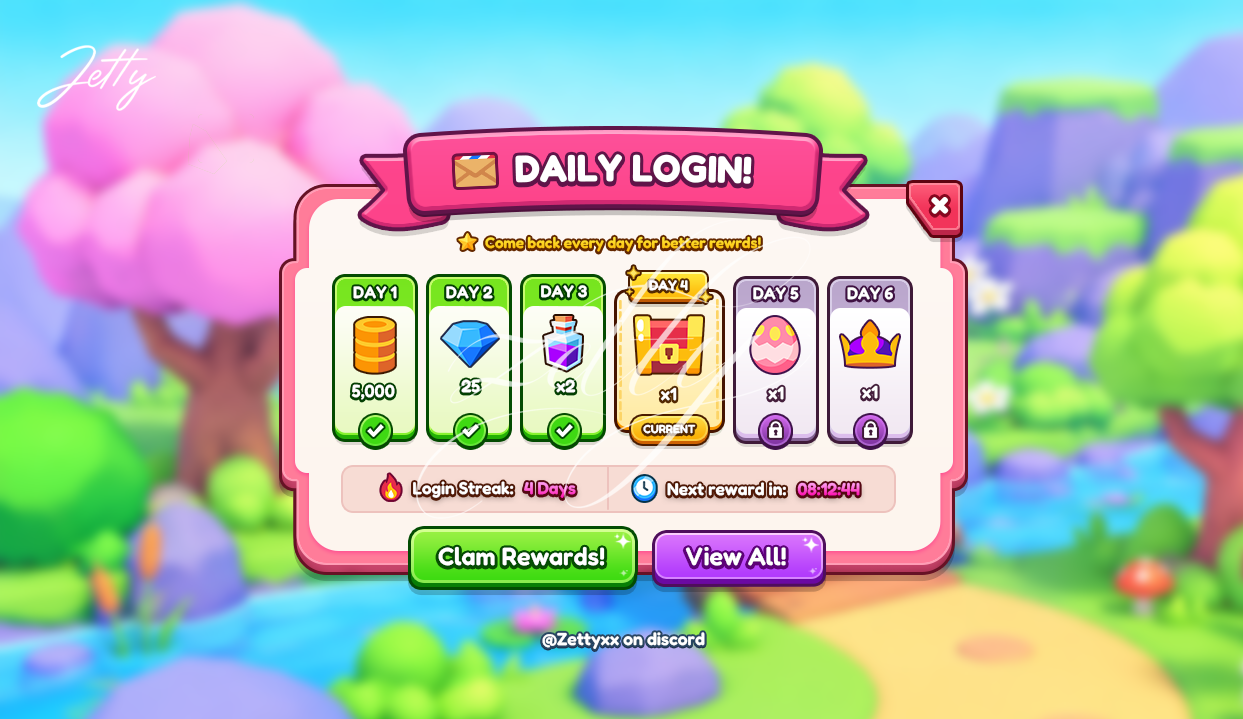
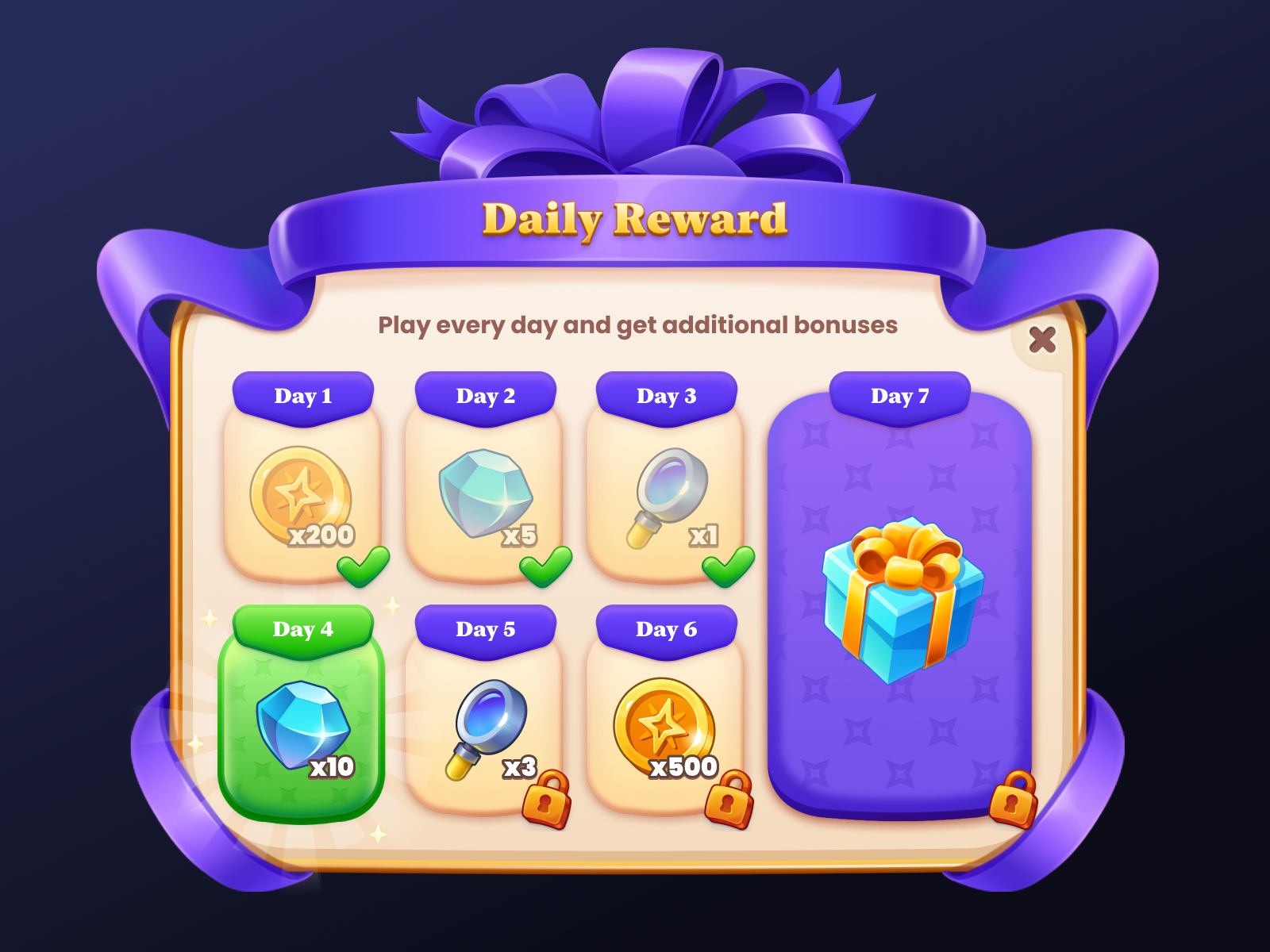
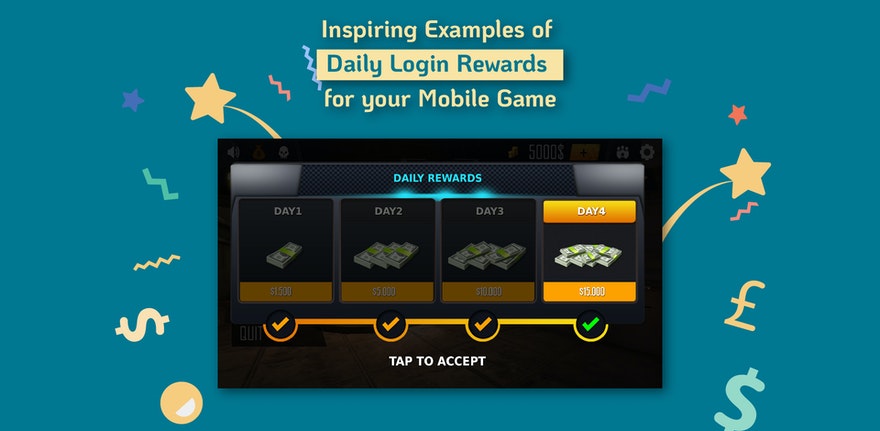
A well-designed login streak provides visual confirmation of commitment. By increasing the value of the reward as the streak grows, developers build anticipation. Milestones, such as a “Day 7 Special Chest,” provide a short-term goal that keeps players looking forward, transforming a mundane task into a rewarding pursuit.
1.2.2 Differentiating Between Passive Attendance and Active Daily Quests
Passive attendance rewards require nothing more than a button press, which can eventually feel like a chore. Conversely, active daily quests encourage engagement with game mechanics, such as defeating a specific enemy or completing a mini-game. Balancing these two ensures that the game remains interactive rather than just a daily administrative duty.
1.2.3 Utilizing Variable Ratio Reinforcement for Sustained Excitement
While predictable rewards build habits, variable rewards—such as random loot boxes or surprise bonus events—keep gameplay exciting. By introducing an element of chance, developers tap into the same neurological pathways as traditional gaming, ensuring that the daily login experience remains surprising and fresh rather than purely mechanical.
1.3 Balancing Player Value and Game Economy
1.3.1 Setting Tiered Rewards to Match Player Progression
A “one-size-fits-all” reward system often fails. New players need resources to build their base, while veterans require rare materials for late-game crafting. Effective systems adapt their rewards to the player’s current level, ensuring that every gift remains relevant and useful throughout the entire lifecycle of the game.
1.3.2 Avoiding Economy Inflation Through Strategic Scarcity
If every daily reward provides top-tier items, the game’s economy will quickly deflate. Designers must practice strategic scarcity, ensuring that highly desirable items remain rare. This maintains the perceived value of the rewards and ensures that players remain motivated to continue playing over the long term.
1.3.3 The Role of Visual and Audio Delighters in Reward Presentation
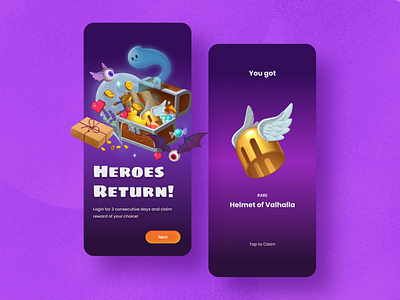
The delivery of a reward is just as important as the content itself. Satisfying animations, distinct sound effects, and celebratory visuals create a dopamine-inducing moment. These “delighters” reinforce the positive experience, ensuring that the act of logging in is satisfying on a sensory level, which ultimately encourages long-term player retention.
2. Mitigating Player Burnout in Daily Reward Engagement Games
2.1 Identifying the Line Between Engagement and Compulsion
2.1.1 Recognizing Signs of Churn Caused by Chore-Based Gameplay
When a game begins to feel like a second job, the transition from voluntary play to obligation is often the primary driver of player churn. Players typically realize they are experiencing burnout when the mechanics they once enjoyed, such as [url=https://gameturn.net/mastering-idle-clicker-progression-games-tips-strategies/]mastering idle clicker progression games[/url], shift from being rewarding experiences to tedious daily tasks. Signs include shorter play sessions, feelings of resentment toward login requirements, and a noticeable decline in creative interaction with the game world.
2.1.2 The Impact of Excessive Daily Tasks on Long-Term Enjoyment
Excessive daily quests can lead to cognitive fatigue. When developers pack too many requirements into a 24-hour cycle, they inadvertently diminish the value of the rewards. Over time, the perceived effort required to secure a daily login bonus outweighs the actual utility of the item received. This imbalance causes players to view their progress as a stagnant chore rather than an ongoing achievement, ultimately degrading the emotional bond between the user and the title.
2.1.3 Designing Ethical Systems That Respect Player Time
Ethical game design prioritizes the player’s well-being by acknowledging that life outside the screen happens. Developers who implement “respectful” mechanics allow players to step away without losing significant progress. Systems that do not punish a missed day—or that offer flexible completion windows for quests—foster a healthier community. When players feel their time is respected, they are more likely to return voluntarily, resulting in higher long-term retention compared to forced, high-pressure engagement tactics.
2.2 Implementing Player-Centric Retention Strategies
2.2.1 Integrating Rested Experience Points and Catch-Up Mechanics
Rested experience systems are highly effective at preventing burnout. By granting players bonus progress for returning after a break, developers transform a missed session from a “loss” into a rewarding comeback. Catch-up mechanics serve a similar function, allowing casual players to acquire essential items through alternative paths if they cannot commit to every daily event.
2.2.2 Transitioning from Repetitive Chores to Meaningful Value-Based Interactions
Moving away from rote tasks requires shifting the focus to meaningful progression. Instead of forcing a daily login to check a box, systems should provide dynamic, bite-sized content that offers immediate enjoyment. Whether it is through social interaction or aesthetic customization, shifting the focus toward player-driven goals keeps engagement organic and sustainable.
2.2.3 Analyzing Successful Case Studies Across Mobile and Console Genres
The most successful titles often abandon punishing “streaks” in favor of cumulative reward structures. By looking at games that thrive over years rather than weeks, we see a shift toward rewarding quality engagement over quantity. These titles maintain a vibrant player base by ensuring that rewards feel earned through genuine interest rather than mere attendance.
2.3 Addressing Frequently Asked Questions
2.3.1 How to Identify and Avoid Gaming Burnout
Burnout is characterized by a loss of interest and a feeling of dread before playing. To avoid it, set boundaries: play when you want to, not because a timer dictates it. If a game starts to feel like a chore, take a break.
2.3.2 Determining Optimal Reward Structures for Different Player Tiers
Effective reward structures should scale. Casual players need achievable goals that provide satisfaction within minutes, while dedicated players should have access to depth and long-term prestige rewards that don’t rely on simple attendance.
2.3.3 Understanding the Reality of Artificial User Metric Inflation
Developers sometimes use daily login rewards to boost artificial engagement metrics. While this improves short-term data, it is rarely sustainable. Authentic engagement is built on fun, not metrics, and players generally gravitate toward games that prioritize player satisfaction over data-driven retention hacks.
At their core, daily reward engagement games are designed to bridge the gap between casual play and consistent habit formation. By leveraging principles like the endowment effect and variable reinforcement, these systems successfully transform routine check-ins into meaningful milestones. While the pull of daily rewards is undeniably powerful, the long-term health of your gaming experience depends on maintaining a balance between progress and personal time. Understanding these psychological triggers allows you to enjoy the benefits of daily bonuses without falling into the trap of chore-based burnout.
Whether you are maximizing your gains in idle clicker progression games or simply ensuring your digital pets stay happy and fed, remember that these games should serve your enjoyment first. The most sustainable way to engage with these mechanics is to prioritize games that offer flexibility, catch-up mechanics, and genuine rewards rather than those that demand constant attendance. By keeping a critical eye on how these systems impact your daily routine, you can curate a gaming library that remains fun and rewarding rather than feeling like an obligation. Stay mindful of your play patterns, embrace the rewards that enhance your fun, and always prioritize your own well-being over hitting another arbitrary daily milestone.